production
/viewbook/list/all/?page=3358
/
/static/
None
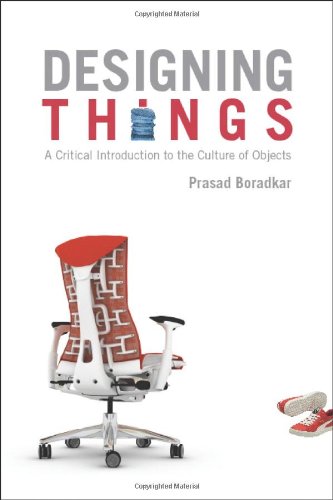
Designing Things: A Critical Introduction to the Culture of Objects
Authors:
Prasad Boradkar
Publisher:
Berg Publishers
Publication Date:
Not available
ISBN:
1845204271
When and why did the turntable morph from playback device to musical instrument? Why have mobile phones evolved changeable skins? How many meanings can... one attach to such mundane things as tennis balls? The answers to such questions illustrate this provocative book, which examines the cultural meanings of things and the role of designers in their design and production. Designing Things provides the reader with a map of the rapidly changing field of design studies, a subject which now draws on a diverse range of theories and methodologies - from philosophy and visual culture, to anthropology and material culture, to media and cultural studies. With clear explanations of key concepts - such as form language, planned obsolescence, object fetishism, product semantics, consumer value and user needs - overviews of theoretical foundations and case studies of historical and contemporary objects, Designing Things looks behind-the-scenes and beneath-the-surface at some of our most familiar and iconic objects. Contents Introduction Theorizing Things: Disciplinary Diversity in Thinking about Objects Valued Possessions: What are Things Worth? Making Things: Labor in Production Producing Things: A History of Systems of Manufacture Beautiful Things: The Aesthetics of Surfaces The Greed Imperative: User Needs in Product Design Planned Obsolescence: Unsustainable Consumption Objects as Signs: What do Things Mean? The Obsession of Possession: Fetish Objects Conclusion See more at designingthings.org Prasad Boradkar is Associate Professor of Industrial Design and Director of InnovationSpace at Arizona State University.
Designing Training Programs, Second Edition: The Critical Events...
Authors:
Leonard Nadler Ph.D.
Publisher:
Gulf Professional Publishing
Publication Date:
Not available
ISBN:
088415100X
This new edition could be the single most important tool HRD professionals can have to create cost-effective, productivity-oriented training programs. ... It updates the unique training model, called the Critical Events Model, which HRD professionals can adapt to their particular training situation. The model is presented in a series of steps called events that provide the designer with a straightforward system for designing training programs to improve performance and efficiency in the workplace.
Designing Type
Authors:
Karen Cheng
Publisher:
Yale University Press
Publication Date:
Not available
ISBN:
0300111509
As one of a graphic designer’s most essential tools, typefaces influence the appearance of visual print materials perhaps more than any other... component. This essential book explains the processes behind creating and designing type. Author Karen Cheng discusses issues of structure, optical compensation, and legibility, with special emphasis given to the often overlooked relationships between letters and shapes in a font.The book is illustrated with numerous diagrams that demonstrate visual principles and letter construction, ranging from informal progress sketches to final type designs and diagrams. A wide range of classic and modern typefaces is analyzed, including those from many premier contemporary type foundaries. Introductory essays and diagrams emphasize the history of type, the primary systems of typeface classification, the two main proportional systems for type, the parts of a letter, the effects of new technology on design methodology, the optical illusions that affect density and balance in letterforms, and the differences in form between basic serif typestyles. The book provides detailed guidelines for creating serif and sans serif letters, numbers, punctuation, and accents. As design clients increasingly call for original and custom typefaces, Designing Type is a superb reference for both students and professional graphic designers.

Designing Unmanned Aircraft Systems: A Comprehensive Approach (Aiaa...
Authors:
Jay Gundlach
Publisher:
Amer Inst of Aeronautics &
Publication Date:
Not available
ISBN:
1600868436
Unmanned aircraft systems (UASs) are revolutionizing the way we explore our global environment. Whether it's to monitor severe weather events or used in... a military operation, these machines and the components that operate them are changing the way we approach flight. In his book, Designing Unmanned Aircraft Systems: A Comprehensive Approach, Jay Gundlach investigates all elements of UAS design, including architectural options, and design drivers across diverse systems classes. As the most authoritative single reference on UAS design, the book provides readers a solid understanding of the end-to-end unmanned aircraft system and gain a deeper appreciation for the multidisciplinary nature of UAS design. Topics Discussed Approach for developing competitive, balanced unmanned aircraft systems through a multidisciplinary systems philosophy Extensive survey and analysis of unmanned aircraft launch and recovery techniques, along with selection and design processes Communication systems Derivations of electric aircraft performance equations Overview of mission planning system and control station software functionality Design of aircraft geometry and payload placement Overview of ground control station types and functionality Cost analysis Special Features Equations with solutions at the chapter level Graphics such as line drawings, plots, and images illustrate the problem formulation, communicate data, or highlight system design features Use of examples Case histories
Designing Visual Language: Strategies for Professional...
Authors:
Charles Kostelnick
Publisher:
Longman
Publication Date:
Not available
ISBN:
0205616402
Written by two highly experienced teachers in the field of document design, Designing Visual Language, 2/e offers useful strategies and tools for... document design of all types. A chief goal of the text is to enable students to extend the rhetorical approach they employ in writing and editing courses to the creation of various forms of visual communication. The text focuses on the kinds of situations and practical documents that occur in the workplace and blends this focus with a rhetorical approach that ties design to the audience, purpose, and context of messages.
Designing Web-Based Training: How to Teach Anyone Anything Anywhere...
Authors:
William Horton
Publisher:
Wiley
Publication Date:
Not available
ISBN:
047135614X
The surge in the number of online training sites has created an unprecedented demand for experts who know all aspects of Web-based training (WBT) site... design. Written by bestselling author William Horton, this book provides the hands-on and practical guidance that trainers demand. Packed with over 100 examples, this well-illustrated guide walks you through every phase of designing WBT, from analyzing your course requirements and assessing the needs of potential students to designing a course for a global audience.You'll find out how to combine elements into effective and interesting learning sequences, discover how to overcome any technical hurdle that may arise, how to offer materials that motivate learning, and how to use Web technologies to create 21st-century alternatives to traditional courses.Praise for Designing Web-Based Training"Horton has done it again! He's addressed the cutting-edge problem of Web-based training design with his pragmatic, research-based approach. His work is task-oriented and down-to-earth. He doesn't waste our time with excessive educational philosophy. In short-comprehensive overview, practical advice, engaging presentation."-Robert E. Horn, Author, Visual Language: Global Communication for the 21st Century"As each new media wave is adopted for instructional pur-poses, there is a lag in effective exploitation of the unique features the medium brings for supporting learning. Designing Web-Based Training bridges the gap by providing a rich and detailed reference."-Ruth Clark, EdD, President, Clark Training & Consulting"Designers have been seeking guidance on how to exploit the Web's distribution potential while combining it with powerful instructional programs. Horton provides structure, stimulation, and substance in this important book. Web-based training is definitely what is happening now. Designing Web-Based Training will be a de facto classic in the field." -Gloria Gery, Principal, Gery Associates, Author, Making CBT HappenThe companion Web site at www.wiley.com/compbooks/horton/ features:* Design guidelines* Live versions of many examples from the book* A course shell and sample lessons* Links to helpful references
Designing Web Interfaces: Principles and Patterns for Rich...
Authors:
Bill Scott
Publisher:
O'Reilly Media
Publication Date:
Not available
ISBN:
0596516258
Want to learn how to create great user experiences on today's Web? In this book, UI experts Bill Scott and Theresa Neil present more than 75 design... patterns for building web interfaces that provide rich interaction. Distilled from the authors' years of experience at Sabre, Yahoo!, and Netflix, these best practices are grouped into six key principles to help you take advantage of the web technologies available today. With an entire section devoted to each design principle, Designing Web Interfaces helps you:Make It Direct-Edit content in context with design patterns for In Page Editing, Drag & Drop, and Direct Selection Keep It Lightweight-Reduce the effort required to interact with a site by using In Context Tools to leave a "light footprint" Stay on the Page-Keep visitors on a page with overlays, inlays, dynamic content, and in-page flow patterns Provide an Invitation-Help visitors discover site features with invitations that cue them to the next level of interaction Use Transitions-Learn when, why, and how to use animations, cinematic effects, and other transitions React Immediately-Provide a rich experience by using lively responses such as Live Search, Live Suggest, Live Previews, and more Designing Web Interfaces illustrates many patterns with examples from working websites. If you need to build or renovate a website to be truly interactive, this book gives you the principles for success.
Designing Web Navigation: Optimizing the User Experience
Authors:
James Kalbach
Publisher:
O'Reilly Media
Publication Date:
Not available
ISBN:
0596528108
Thoroughly rewritten for today's web environment, this bestselling book offers a fresh look at a fundamental topic of web site development: navigation... design. Amid all the changes to the Web in the past decade, and all the hype about Web 2.0 and various "rich" interactive technologies, the basic problems of creating a good web navigation system remain. Designing Web Navigation demonstrates that good navigation is not about technology-it's about the ways people find information, and how you guide them. Ideal for beginning to intermediate web designers, managers, other non-designers, and web development pros looking for another perspective, Designing Web Navigation offers basic design principles, development techniques and practical advice, with real-world examples and essential concepts seamlessly folded in. How does your web site serve your business objectives? How does it meet a user's needs? You'll learn that navigation design touches most other aspects of web site development. This book:Provides the foundations of web navigation and offers a framework for navigation design Paints a broad picture of web navigation and basic human information behavior Demonstrates how navigation reflects brand and affects site credibility Helps you understand the problem you're trying to solve before you set out to design Thoroughly reviews the mechanisms and different types of navigation Explores "information scent" and "information shape" Explains "persuasive" architecture and other design concepts Covers special contexts, such as navigation design for web applications Includes an entire chapter on tagging While Designing Web Navigation focuses on creating navigation systems for large, information-rich sites serving a business purpose, the principles and techniques in the book also apply to small sites. Well researched and cited, this book serves as an excellent reference on the topic, as well as a superb teaching guide. Each chapter ends with suggested reading and a set of questions that offer exercises for experiencing the concepts in action.
Designing Web Usability
Authors:
Jakob Nielsen
Publisher:
Peachpit Press
Publication Date:
Not available
ISBN:
156205810X
Users experience the usability of a web site before they have committed to using it and before making any purchase decisions. The web is the ultimate... environment for empowerment, and he or she who clicks the mouse decides everything. Designing Web Usability is the definitive guide to usability from Jakob Nielsen, the world's leading authority. Over 250,000 Internet professionals around the world have turned to this landmark book, in which Nielsen shares the full weight of his wisdom and experience. From content and page design to designing for ease of navigation and users with disabilities, he delivers complete direction on how to connect with any web user, in any situation. Nielsen has arrived at a series of principles that work in support of his findings: 1. That web users want to find what they're after quickly; 2. If they don't know what they're after, they nevertheless want to browse quickly and access information they come across in a logical manner. This book is a must-have for anyone who thinks seriously about the web.

Designing West Africa: Prelude to 21st Century Calamity
Authors:
Peter Schwab
Publisher:
Palgrave Macmillan
Publication Date:
Not available
ISBN:
1403965498
Many African countries are now described as "Fourth World nations," ones which essentially have no future. How could this have happened? Through the... scope of the 1960s, the first decade of African independence, Peter Schwab presents a compelling and provocative answer to this question. Designing West Africa tells the story of a pivotal decade in African history, when the fate of the continent was decided. Focusing on the six most visible leaders of the period--Sékou Touré, Kwame Nkrumah, and others--Schwab shows how Africa served as a grounds to play out larger international conflicts, namely the Cold War. He does not fall back solely on blaming non-African involvement for the failure to build a viable leadership for the continent; rather, he critiques the African leaders themselves for their individual failings.

Designing with Color: Concepts and Applications
Authors:
Chris Dorosz
Publisher:
Fairchild Pubns
Publication Date:
Not available
ISBN:
1563678594
This textbook/workbook takes an interactive approach to the study of color and design, highlighting the elemental importance for designers to understand... how color is perceived, experienced, and manipulated in order to be used effectively in their designs. Workbook activities and artist-inspired assignments include options for students to use paper and multimedia applications such as paint, color paper, digital and film cameras, and cell phones equipped with digital cameras. Workbook space is provided for students to input assignments illustrating their understanding of the concepts and connecting the student learning experience to the world around them. This highly visual text will explore and apply the principles of color and design and help stir the imagination of today's art and design students.

Designing with Creo Parametric
Authors:
Michael Rider
Publisher:
McGraw-Hill Science/Engineering/Math
Publication Date:
Not available
ISBN:
0078021227
This textbook is intended as a classroom text or a self-paced tutorial for the person who wants to learn Creo Parametric 1.0, formerly known as... ProEngineer Wildfire and Mechanica. This textbook discusses design intent while you are learning, and at the same time, it shows how knowledge covered in some basic engineering courses such as: statics, dynamics, strength of materials, and design of mechanical components can be applied to design. You do not need an engineering degree nor be working toward a degree in engineering to use this textbook.

Designing with Geosynthetics (5th Edition)
Authors:
Robert M Koerner
Publisher:
Prentice Hall
Publication Date:
Not available
ISBN:
0131454153
Geosynthetic materials have entered the mainstream in the professional arena and are no longer considered new construction material. Professionals need... to keep up with the nuances of how geosynthetics work. Emphasizes design by function; overviews all types of geosynthetics, with stand-alone units on particular materials. Uses S.I. units for all problems and examples. Expands coverage of containers and tubes in the geotextile chapter. Discusses walls and slope design, including seismic analysis, in the geogrid chapter. Treats wet landfills, agricultural waste, waste stability, and dam waterproofing in the geomembrane chapter. Discusses new products and related performances in the geosynthetic clay liner chapter. Discusses new products and related behavior, including fiber reinforcement and wall drainage, in the geocomposite chapter. Adds a completely new chapter on geofoam. A useful reference for transportation, geotechnical, environmental, and hydraulics professionals and engineers.

Designing with Light
Authors:
J. Michael Gillette
Publisher:
McGraw-Hill Humanities/Social Sciences/Languages
Publication Date:
Not available
ISBN:
0073514152
This comprehensive survey of the practical and aesthetic aspects of basic stage lighting design treats its subject as an art closely integrated with... that of the director, actor, and playwright, and as a craft that provides practical solutions for the manipulation of stage space. An eight-page color section provides a discussion of the practical applications of color theory as well as an analysis of the color choices for the lighting design of an actual production. Numerous illustrations of technical tools, equipment, and exemplary play designs visualize designing with light for students
Designing with Microcontrollers -- The 68HCS12
Authors:
Tom Almy
Publisher:
CreateSpace Independent Publishing Platform
Publication Date:
Not available
ISBN:
1463738501
Textbook for 2 quarter/term college level course in microcontroller programming, applications, and system design. The Freescale Semiconductor 68HCS12... microcontroller is studied in detail and the Wytec Dragon12-Plus development board is used in some examples where appropriate.
 '





