production
/viewbook/list/all/?page=3476
/
/static/
None

Digital- Writing : A Guide For College And Beyond Brief
Authors:
Not Available
Publisher:
Not available
Publication Date:
Not available
ISBN:
Not available
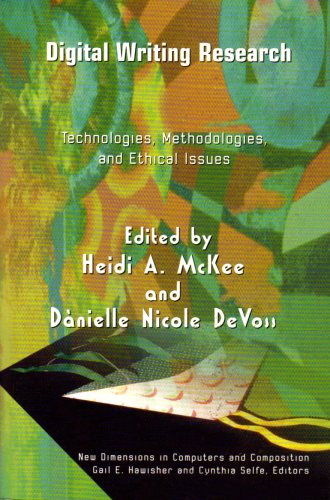
Digital Writing Research: Technologies, Methodologies and Ethical...
Authors:
Heidi A. McKee
Publisher:
Hampton Press
Publication Date:
Not available
ISBN:
1572737069
This volume focuses on how writing technologies, specifically digital technologies, affect research - shaping the questions asked, the sites studied,... the methodologies used, ethical issues, conclusions, and the actions taken by scholars, researchers, and teachers. The focus of each chapter is on articulating particular methodologies and ethical approaches for conducting digital research. It will offer experienced and new researchers an introduction to possible approaches and related methodological and ethical issues.
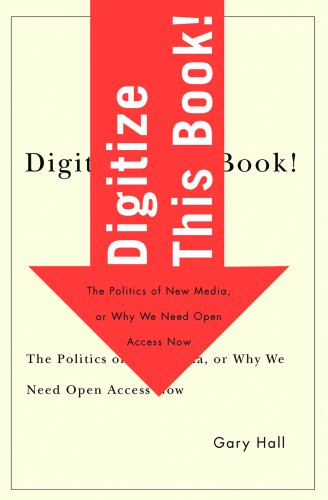
Digitize This Book!: The Politics of New Media, or Why We Need Open...
Authors:
Gary Hall
Publisher:
Univ Of Minnesota Press
Publication Date:
Not available
ISBN:
0816648719
In the sciences, the merits and ramifications of open access—the electronic publishing model that gives readers free, irrevocable, worldwide, and... perpetual access to research—have been vigorously debated. Open access is now increasingly proposed as a valid means of both disseminating knowledge and career advancement. In Digitize This Book! Gary Hall presents a timely and ambitious polemic on the potential that open access publishing has to transform both “papercentric” humanities scholarship and the institution of the university itself. Hall, a pioneer in open access publishing in the humanities, explores the new possibilities that digital media have for creatively and productively blurring the boundaries that separate not just disciplinary fields but also authors from readers. Hall focuses specifically on how open access publishing and archiving can revitalize the field of cultural studies by making it easier to rethink academia and its institutions. At the same time, by unsettling the processes and categories of scholarship, open access raises broader questions about the role of the university as a whole, forcefully challenging both its established identity as an elite ivory tower and its more recent reinvention under the tenets of neoliberalism as knowledge factory and profit center. Rigorously interrogating the intellectual, political, and ethical implications of open access, Digitize This Book! is a radical call for democratizing access to knowledge and transforming the structures of academic and institutional authority and legitimacy.
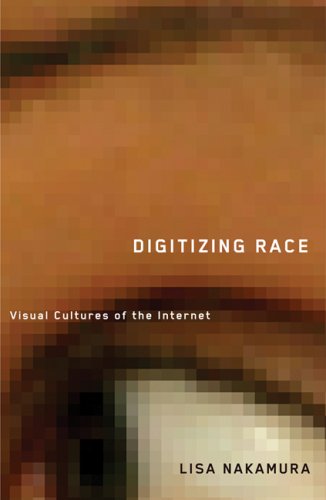
Digitizing Race: Visual Cultures of the Internet (Electronic...
Authors:
Lisa Nakamura
Publisher:
Univ Of Minnesota Press
Publication Date:
Not available
ISBN:
0816646139
In the nineties, neoliberalism simultaneously provided the context for the Internet’s rapid uptake in the United States and discouraged public... conversations about racial politics. At the same time many scholars lauded the widespread use of text-driven interfaces as a solution to the problem of racial intolerance. Today’s online world is witnessing text-driven interfaces such as e-mail and instant messaging giving way to far more visually intensive and commercially driven media forms that not only reveal but showcase people’s racial, ethnic, and gender identity. Lisa Nakamura, a leading scholar in the examination of race in digital media, uses case studies of popular yet rarely examined uses of the Internet such as pregnancy Web sites, instant messaging, and online petitions and quizzes to look at the emergence of race-, ethnic-, and gender-identified visual cultures. While popular media such as Hollywood cinema continue to depict nonwhite nonmales as passive audiences or consumers of digital media rather than as producers, Nakamura argues the contrary—with examples ranging from Jennifer Lopez music videos; films including the Matrix trilogy, Gattaca, and Minority Report; and online joke sites—that users of color and women use the Internet to vigorously articulate their own types of virtual community, avatar bodies, and racial politics. Lisa Nakamura is associate professor of speech communication and Asian American studies at the University of Illinois, Urbana-Champaign. She is the author of Cybertypes: Race, Ethnicity, and Identity on the Internet and coeditor, with Beth Kolko and Gilbert Rodman, of Race in Cyberspace.
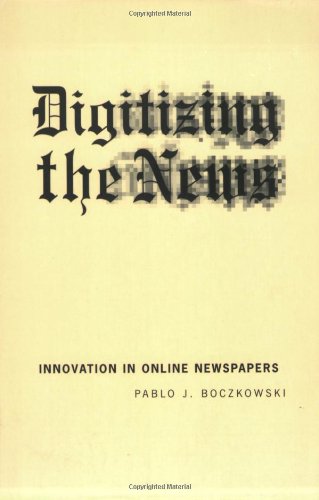
Digitizing the News: Innovation in Online Newspapers (Inside...
Authors:
Pablo J. Boczkowski
Publisher:
The MIT Press
Publication Date:
Not available
ISBN:
0262524392
In this study of how daily newspapers in America have developed electronic publishing ventures, Pablo Boczkowski shows that new media emerge not just in... a burst of revolutionary technological change but by merging the structures and practices of existing media with newly available technical capabilities. His multi-disciplinary perspectives of science and technology, communication, and organization studies allow him to address the connections between technical, editorial, and work facets of new media. This approach yields analytical insights into the material culture of online newsrooms, the production processes of new media products, and the relationships between offline and online dynamics.Boczkowski traces daily newspapers' early consumer-oriented non-print publishing initiatives, from the now-forgotten videotex efforts of the 1980s to the rise of the World Wide Web in the mid- 1990s. He then examines the formative years of news on the Web during the second half of the 1990s, when the content of online newspapers varied from simple reproduction of the print edition to new material with interactive and multimedia features. With this picture of the recent history of non-print publishing as background, Boczkowski provides ethnographic, fly-on-the-wall accounts of three innovations in content creation: the Technology section of the New York Times on the Web, which was initially intended as the newspaper's space for experimentation with online news; the Virtual Voyager project of the HoustonChronicle.com, in which reporters pushed the envelope of multimedia journalism; and the Community Connection initiative of New Jersey Online, in which users became content producers. His analyses of these ventures reveal how innovation in online newspapers became an ongoing process in which different combinations of initial conditions and local contingencies led publishers along divergent paths of content creation.

Dignifying Argentina: Peronism, Citizenship, and Mass Consumption...
Authors:
Eduardo Elena
Publisher:
University of Pittsburgh Press
Publication Date:
Not available
ISBN:
0822961709
During the mid-twentieth century, Latin American countries witnessed unprecedented struggles over the terms of national sovereignty, civic... participation, and social justice. Nowhere was this more visible than in Peronist Argentina (1946–1955), where Juan and Eva Perón led the region’s largest populist movement in pursuit of new political hopes and material desires. Eduardo Elena considers this transformative moment from a fresh perspective by exploring the intersection of populism and mass consumption. He argues that Peronist actors redefined national citizenship around expansive promises of a vida digna (dignified life), which encompassed not only the satisfaction of basic wants, but also the integration of working Argentines into a modern consumer society. From the mid-1940s onward, the state moved to boost purchasing power and impose discipline on the marketplace, all while broadcasting images of a contented populace. Drawing on documents such as the correspondence between Peronist sympathizers and authorities, Elena sheds light on the contest over the dignified life. He shows how the consumer aspirations of citizens overlapped with Peronist paradigms of state-led development, but not without generating great friction among allies and opposition from diverse sectors of society. Consumer practices encouraged intense public scrutiny of class and gender comportment, and everyday objects became freighted with new cultural meaning. By providing important insights on why Peronism struck such a powerful chord, Dignifying Argentina situates Latin America within the broader history of citizenship and consumption at mid-century, and provides innovative ways to understand the politics of redistribution in the region today.
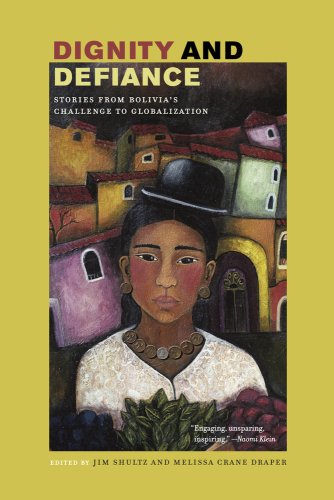
Dignity and Defiance: Stories from Bolivia's Challenge to...
Authors:
Not Available
Publisher:
University of California Press
Publication Date:
Not available
ISBN:
0520256999
Dignity and Defiance is a powerful, eyewitness account of Bolivia's decade-long rebellion against globalization imposed from abroad. Based on extensive... interviews, this story comes alive with first-person accounts of a massive Enron/Shell oil spill from an elderly woman whose livelihood it threatens, of the young people who stood down a former dictator to take back control of their water, and of Bolivia's dramatic and successful challenge to the policies of the World Bank and the International Monetary Fund. Featuring a substantial introduction, a conclusion, and introductions to each of the chapters, this well-crafted mix of storytelling and analysis is a rich portrait of people calling for global integration to be different than it has been: more fair and more just.

Dignity at Work
Authors:
Randy Hodson
Publisher:
Cambridge University Press
Publication Date:
Not available
ISBN:
0521778123
Working with dignity is a fundamental part of achieving a life well-lived, yet the workplace often poses challenging obstacles because of mismanagement... or managerial abuse. Defending dignity and realizing self-respect through work are key to workers' well-being. In this book Randy Hodson, a sociologist of work and organizational behavior, applies ethnographic and statistical approaches to this topic, offering both a richly detailed, inside look at real examples of dignity in action, and a broader analysis of the pivotal role of dignity at work.

Dignity for All: How to Create a World Without Rankism
Authors:
Robert W. Fuller
Publisher:
Berrett-Koehler Publishers
Publication Date:
Not available
ISBN:
1576757897
Dignity for All: It's Time! In his books Somebodies and Nobodies and All Rise, Robert Fuller exposed rankism--abuse of the power inherent in rank to... exploit or humiliate someone of lower rank. In Dignity for All, Fuller and Pamela Gerloff offer a concise, action-oriented guide to the concrete steps we can take to eradicate it. They focus on us as individuals--how we can recognize rankism in our own experiences, even in ourselves, and how, on a day-to-day basis, we can help others to see its insidious influence and work with them to create a better world. Fuller and Gerloff offer advice on the best ways to forcefully but compassionately bring rankist behavior to light. They include examples of rankism in action as well as the often surprisingly simple things people have done to counteract it. Perhaps most importantly, they show how we can prevent rankism from taking root in the first place. Dignity for All will help you map out your own personal strategy for creating a society in which every human being feels truly valued and respected.

Dignity: The Essential Role It Plays in Resolving Conflict
Authors:
Donna Hicks Ph.D
Publisher:
Yale University Press
Publication Date:
Not available
ISBN:
0300163924
The desire for dignity is universal and powerful. It is a motivating force behind all human interaction—in families, in communities, in the business... world, and in relationships at the international level. When dignity is violated, the response is likely to involve aggression, even violence, hatred, and vengeance. On the other hand, when people treat one another with dignity, they become more connected and are able to create more meaningful relationships. Surprisingly, most people have little understanding of dignity, observes Donna Hicks in this important book. She examines the reasons for this gap and offers a new set of strategies for becoming aware of dignity's vital role in our lives and learning to put dignity into practice in everyday life.Drawing on her extensive experience in international conflict resolution and on insights from evolutionary biology, psychology, and neuroscience, the author explains what the elements of dignity are, how to recognize dignity violations, how to respond when we are not treated with dignity, how dignity can restore a broken relationship, why leaders must understand the concept of dignity, and more. Hicks shows that by choosing dignity as a way of life, we open the way to greater peace within ourselves and to a safer and more humane world for all.

Dignity: The Essential Role It Plays in Resolving Conflict
Authors:
Donna Hicks Ph.D
Publisher:
Yale University Press
Publication Date:
Not available
ISBN:
0300188056
The desire for dignity is universal and powerful. It is a motivating force behind all human interaction - in families, in communities, in the business... world, and in relationships at the international level. When dignity is violated, the response is likely to involve aggression, even violence, hatred, and vengeance. On the other hand, when people treat one another with dignity, they become more connected and are able to create more meaningful relationships. Surprisingly, most people have little understanding of dignity, observes Donna Hicks in this important book. She examines the reasons for this gap and offers a new set of strategies for becoming aware of dignity's vital role in our lives and learning to put dignity into practice in everyday life. Drawing on her extensive experience in international conflict resolution and on insights from evolutionary biology, psychology, and neuroscience, the author explains what the elements of dignity are, how to recognize dignity violations, how to respond when we are not treated with dignity, how dignity can restore a broken relationship, why leaders must understand the concept of dignity, and more. Hicks shows that by choosing dignity as a way of life, we open the way to greater peace within ourselves and to a safer and more humane world for all.
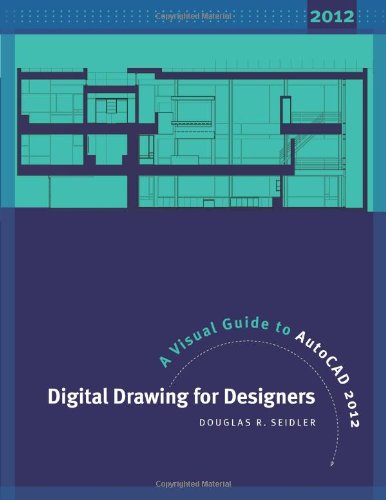
Digtal Drawing for Designers: A Visual Guide to AutoCAD 2012
Authors:
Douglas R. Seidler
Publisher:
Fairchild Pubns
Publication Date:
Not available
ISBN:
1609014111
AutoCAD is the industry standard for two-dimensional construction drawings, and this manual was created specifically to help designers master it.... Neither overly simplistic nor excessively technical, Digital Drawing for Designers teaches by relating to what architects and interior designers understand best: the visual world. Beginning with the building blocks of drawing (lines, circles, and arcs), the book progresses through architectural graphic standards, enabling students to create drawings that effectively communicate their design ideas. Advanced features such as annotative dimensions, annotative blocks, express tools, and linking drawings (XREFs) are also covered. Instructions are illustrated using language and concepts from manual drafting, facilitating a smooth transition to the digital environment for all designers. New learners will appreciate the step-by-step lessons and visual illustrations, while experienced design professionals can easily access material to refresh their knowledge. Clear, concise, and above all visual, this AutoCAD guide speaks directly to the needs of architects and interior designers.

Dig Your Well Before You're Thirsty: The Only Networking Book...
Authors:
Harvey Mackay
Publisher:
Currency Books
Publication Date:
Not available
ISBN:
0385485468
Bestselling author Harvey Mackay reveals his techniques for the most essential tool in business--networking, the indispensable art of building... contacts.Now in paperback, Dig Your Well Before You're Thirsty is Harvey Mackay's last word on how to get what you want from the world through networking. For everyone from the sales rep facing a career-making deal to the entrepreneur in search of capital, Dig Your Well explains how meeting these needs should be no more than a few calls away. This shrewdly practical book distills Mackay's wisdom gleaned from years of "swimming with sharks," including: What kinds of networks exist How to start a network, and how to wring the most from it The smart way to downsize your list--who to keep, who to dump How to keep track of favors done and favors owed--Is it my lunch or yours? What you can do if you are not good at small talkDig Your Well Before You're Thirsty is a must for anyone who wants to get ahead by reaching out.

Dilemma of a Ghost and Anowa
Authors:
Ama Ata Aidoo
Publisher:
Longman
Publication Date:
Not available
ISBN:
0582276020
These two witty and perceptive social dramas are sympathetic and honest explorations of the conflicts between the individualism of westernised culture... and the social traditions of Africa. Both plays have been performed throughout the world.
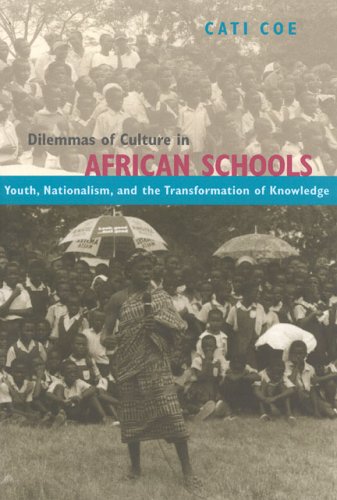
Dilemmas of Culture in African Schools: Youth, Nationalism, and the...
Authors:
Cati Coe
Publisher:
University Of Chicago Press
Publication Date:
Not available
ISBN:
0226111318
In working to build a sense of nationhood, Ghana has focused on many social engineering projects, the most meaningful and fascinating of which has been... the state's effort to create a national culture through its schools. As Cati Coe reveals in Dilemmas of Culture in African Schools, this effort has created an unusual paradox: while Ghana encourages its educators to teach about local cultural traditions, those traditions are transformed as they are taught in school classrooms. The state version of culture now taught by educators has become objectified and nationalized—vastly different from local traditions.Coe identifies the state's limitations in teaching cultural knowledge and discusses how Ghanaians negotiate the tensions raised by the competing visions of modernity that nationalism and Christianity have created. She reveals how cultural curricula affect authority relations in local social organizations—between teachers and students, between Christians and national elite, and between children and elders—and raises several questions about educational processes, state-society relations, the production of knowledge, and the making of Ghana's citizenry.
 '





