production
/viewbook/list/all/?page=3491
/
/static/
None
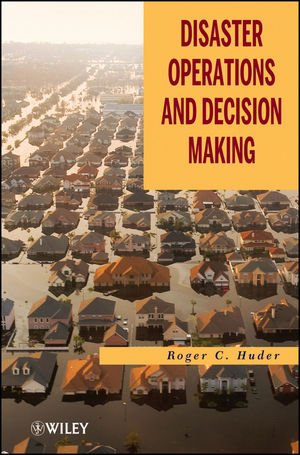
Disaster Operations and Decision Making
Authors:
Roger C. Huder
Publisher:
Wiley
Publication Date:
Not available
ISBN:
0470927933
The only book to combine emergency management principLEs with proven military concepts Good disaster plans do not guarantee a good response. Any... disaster plan rarely survives the first rain bands of a hurricane or the first tremors of an earthquake. While developing plans is essential, there must be systems in place to adapt these plans to the ever-changing operational environment of a disaster. Currently there is no set of standard disaster response principles to guide a community. The National Incident Management System (NIMS) and the Incident Command System (ICS) provide the framework to implement operational decisions, but they were never designed as operational concepts. The military has developed just such concepts and many of them can be adapted for civilian use. Disaster Operations and Decision Making adapts those military concepts and combines them with disaster lessons learned to create a new opera-tional paradigm. Emphasizing team building, Emergency Operations Center operational systems, and situational awareness, the book details easily adopted methods. All of these methods are designed to be incorporated into the NIMS and ICS framework to enhance a community's response to any type of disaster.Disaster Operations and Decision Making is an essential resource for emergency managers, fire chiefs, law enforcement officers, homeland security professionals, public health officials, and anyone else involved or interested in crisis management.
Disaster Policy and Politics: Emergency Management and Homeland...
Authors:
Richard Sylves
Publisher:
CQ Press
Publication Date:
Not available
ISBN:
0872894606
In this groundbreaking book, long-time expert and scholar in the field of disaster management, Richard Sylves, comprehensively surveys the field of... emergency management while building on his original research and sharing his insider knowledge. Providing much needed synthesis of the field s major findings, scholarship, and current developments, Sylves structures the book with an analytical framework that focuses on the challenge of effective intergovernmental relations both across levels of government and across types of disasters to guide readers through instructive and important political history as well as recent crises. Whether for an undergraduate studying the topic for the first time or a practitioner looking for professional development, Disaster Policy and Politics will prove to be a highly readable, informative text and handbook aimed at laying a foundation of knowledge and know-how. Ten chapters offer, among other topics: a contextual history of disaster policy and politics; a discussion of global issues and influences; an exploration of the politics of planning and funding for the next disaster; a look to the future, to where emergency management goes from here, including its maturation into a profession. A valuable learning resource available with the book is a website sponsored by the Public Entity Risk Institute that tracks presidential disaster declarations issued for every state and county from 1953 through 2006.
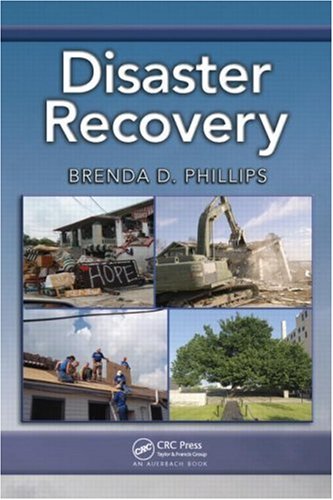
Disaster Recovery
Authors:
Brenda Phillips
Publisher:
Auerbach Publications
Publication Date:
Not available
ISBN:
1420074202
Disaster recovery is often unplanned for in the emergency management life cycle. Yet recovery is the key stage where funds, programs, professional... expertise, and volunteer efforts are applied to affected cities, states, and regions to get them up and running again. Providing a unique perspective on a highly focused area, Disaster Recovery is the first core text that tackles the myriad recovery issues faced by federal, state, and local emergency managers, public officials, and voluntary organizations in a long-term disaster recovery situation. The book takes a holistic approach, integrating the various challenges of recovery such as housing, the infrastructure, and workplaces. Disaster Recovery emphasizes three key themes by integrating vulnerable populations into each chapter, stressing the importance of tying mitigation measures into every aspect of recovery, and encouraging rebuilding in environmentally sustainable ways. Coverage includes topics such as recovery planning, housing, debris management, business and private sector recovery, public/governmental recovery and operations, historical and cultural preservation, environmental recovery, social and psychological recovery and services, voluntary non-governmental organizations (NGOs), federal assistance programs, grant-writing, and donations management. Pedagogical tools to clarify concepts Each chapter features pedagogy to encourage comprehension and retention, including key terms, learning objectives, highlighted practical applications, review questions, a summary, and references. Numerous classic and recent case studies ensure concepts are fully explained and illustrated. In addition, PowerPoint® slides are also available for adopters. Designed for professional and classroom use, this volume thoroughly covers the disaster recovery process, offering vital insight into the evolving field of emergency management.
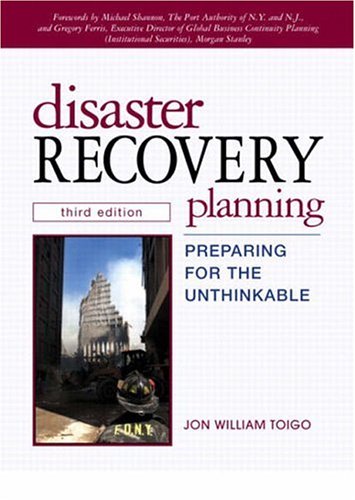
Disaster Recovery Planning: Preparing for the Unthinkable (3rd...
Authors:
Jon William Toigo
Publisher:
Prentice Hall
Publication Date:
Not available
ISBN:
0130462829
Disaster Recovery Planning, Third Edition is a comprehensive, up-to-the-minute, IT professional's guide to planning for disaster recovery without hiring... expensive consultants or implementing proprietary methodologies. It has been thoroughly revised and updated to reflect new strategies and technologies -- and the lessons of 9/11, as witnessed first-hand by the author, who wrote the Port Authority of New York and New Jersey's disaster recovery plan. Jon William Toigo presents step-by-step coverage of disaster recovery techniques that reflect the latest technologies in data storage, networks, server systems, and the Internet. Toigo presents focused, hands-on coverage of the disaster recovery issues that matter most to your organization, including Web, e-commerce, and ERP/supply chain disaster recovery; low-cost steps you can take right now to dramatically reduce your risks; and much more. This edition's extensive new coverage includes new data storage topologies, data re-hosting issues, protecting against ongoing power outages such as those recently faced in California; new mailroom procedures; new physical access controls; and much more.
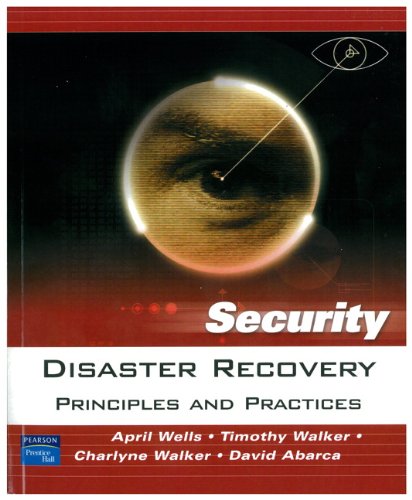
Disaster Recovery: Principles and Practices
Authors:
April Wells
Publisher:
Prentice Hall
Publication Date:
Not available
ISBN:
013171127X
For advanced information security courses on disaster recovery With real world examples, this text provides an extensive introduction to... disaster recovery focusing on planning the team, planning for the disaster and practicing the plan to make sure that, if ever needed, it will work.
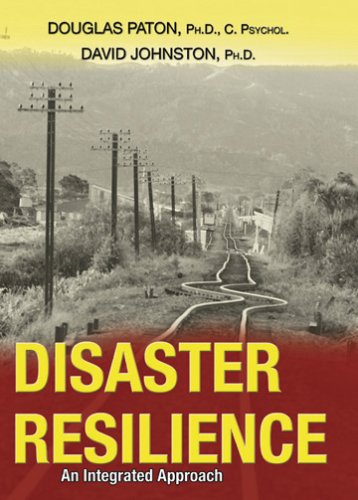
Disaster Resilience: An Integrated Approach
Authors:
Douglas Paton
Publisher:
Charles C Thomas Pub Ltd
Publication Date:
Not available
ISBN:
0398076642
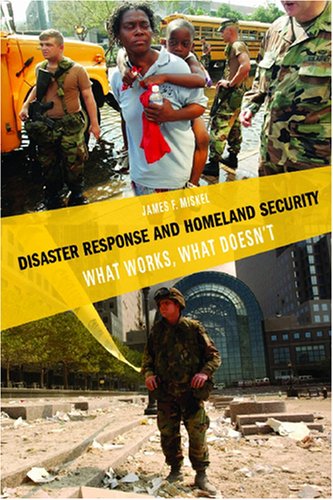
Disaster Response and Homeland Security: What Works, What Doesn't...
Authors:
James Miskel
Publisher:
Stanford University Press
Publication Date:
Not available
ISBN:
0804759723
Hurricane Katrina is the latest in a series of major disasters that were not well managed, but it is not likely to be the last. Category 4 and category... 5 hurricanes will, according to most predictions, become both more frequent and more intense in the future due to global warming and/or natural weather cycles. In addition, it is often said that another terrorist attack on the United States is inevitable; that it is a question of when, not whether. Add to that the scare over a possible avian flu pandemic. As a result, the United States should expect that disaster response—to natural and other types of disasters—will continue to be of vital concern to the American public and the policymakers and officials who deal with disaster response and relief, including the military. The U.S. disaster relief program reflects a basic division of responsibility between federal, state, and local governments that has generally stood the test of time. At the federal level, a single agency, FEMA—now under the Department of Homeland Security—has been charged with the responsibility for coordinating the activities of the various federal agencies that have a role in disaster relief. A successful disaster response requires three things: timely and effective coordination between state and federal governments; effective coordination among the federal agencies; and effective coordination between and among state and local government agencies. Miskel examines the effects that operational failures after Hurricanes Agnes, Hugo, Andrew, and Katrina have had on the organizational design and operating principles of the disaster response system program. He also discusses the impact of 9/11 and the evolving role of the military, and he identifies reforms that should be implemented to improve the nation's ability to respond in the future.
Disaster Response and Recovery
Authors:
David A. McEntire
Publisher:
Wiley
Publication Date:
Not available
ISBN:
0471789747
Providing readers with a well-rounded understanding of disaster responses, this book first explores the various types of disasters that may occur. It... then uncovers the myriad of actors that are involved in emergency management as well as the diverse theoretical frameworks from which post-disaster activities may be approached. Readers will gain a better understanding of the typical challenges to be expected during response efforts as well as the tools and techniques that will enhance the ability to protect lives, reduce property damage and minimize disruption.
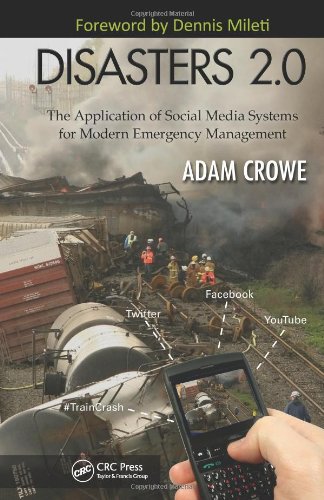
Disasters 2.0: The Application of Social Media Systems for Modern...
Authors:
Adam Crowe
Publisher:
CRC Press
Publication Date:
Not available
ISBN:
1439874425
Emerging social media and so-called Web 2.0 technologies will continue to have a great impact on the practice and application of the emergency... management function in every public safety sector. Disasters 2.0: The Application of Social Media Systems for Modern Emergency Management prepares emergency managers and first responders to successfully apply social media principles in the operations, logistics, planning, finance, and administrative aspects of any given disaster. Using real-life examples of domestic and international disasters, the book reveals how social media has quickly become a powerful tool for both providing emergency instruction to the public in real time and allowing responding agencies to communicate among themselves in crisis. A definitive and comprehensive source, the book explores topics such as: Social media basics Citizen journalism Strategic implementation Safety and responsibility Monitoring and analytics Operational implementation Geolocation systems Crowdsourcing Public notification Mobile and other emerging technologies Each chapter begins with a list of objectives and includes a collection of case examples of social media use in past events. Practitioner profiles show real people implementing the technology for real solutions. Demonstrating how to effectively apply social media technology to the next crisis, this is a must-read book for those charged with disaster management and response.
Disasters and Democracy: The Politics Of Extreme Natural Events
Authors:
Rutherford H. Platt
Publisher:
Island Press
Publication Date:
Not available
ISBN:
1559636963
In recent years, the number of presidential declarations of "major disasters" has skyrocketed. Such declarations make stricken areas eligible for... federal emergency relief funds that greatly reduce their costs. But is federalizing the costs of disasters helping to lighten the overall burden of disasters or is it making matters worse? Does it remove incentives for individuals and local communities to take measures to protect themselves? Are people more likely to invest in property in hazardous locations in the belief that, if worse comes to worst, the federal government will bail them out?."Disasters and Democracy" addresses the political response to natural disasters, focusing specifically on the changing role of the federal government from distant observer to immediate responder and principal financier of disaster costs.
Disasters and Public Health: Planning and Response
Authors:
Bruce Clements
Publisher:
Butterworth-Heinemann
Publication Date:
Not available
ISBN:
1856176126
From the San Diego wildfires to multi-drug-resistant strains of bacteria, communities are facing an ever-growing list of potential disasters. Some... events, like pandemic flu or anthrax attacks, are public health emergencies first and foremost. Hurricane Katrina taught us, however, that lack of planning for the frail, elderly, and impoverished population can turn a natural disaster into a healthcare nightmare and lead to needless death and suffering. Emergency managers and public health professionals must integrate their prevention and response efforts to serve their communities most effectively. The structure of each chapter offers an innovative approach to organizing key information: 1. Case Study or Historical Example 2. Disaster-specific Terms Defined 3. Disaster Description 4. Health Threat (Morbidity and Mortality) 5. Prevention 6. Immediate Actions 7. Recovery or Managing the Aftermath 8. Summary Disasters and Public Health is a crucial tool in planning for and responding to the health impact of any crisis situation. Bruce Clements served over 20 years in the U.S. Air Force and Air National Guard as a Public Health Officer and a Nuclear, Biological, and Chemical Warfare Defense Instructor, a Hazardous Materials Specialist with an Urban Search and Rescue Team, and as a Safety Officer with a Disaster Medical Assistance Team. He also served as the Public Health Preparedness Director of Missouri in 2006, when the state experienced a record number of disaster declarations. Throughout his years of experience, he frequently needed to track down a variety of references to quickly understand what was needed for an effective public health response in various situations. He has researched and compiled this information on the health impact of a wide range of disasters into one quick reference. Emergency managers can also no longer afford to be surprised by the next crisis that erupts. This book guides planners in both disciplines in preventing tragedies by most effectively preparing and responding when disaster strikes. * Prevent or respond to disasters from terrorism to pandemic flu* Examine the critical intersection of emergency management and public health* Benefit from the author's years of experience in emergency response
Disasters by Design: A Reassessment of Natural Hazards in the...
Authors:
Dennis Mileti
Publisher:
Joseph Henry Press
Publication Date:
Not available
ISBN:
0309063604
"Disasters by Design" provides an alternative and sustainable way to view, study, and manage hazards in the United States that would result in... disaster-resilient communities, higher environmental quality, inter- and intragenerational equity, economic sustainability, and improved quality of life. This volume provides an overview of what is known about natural hazards, disasters, recovery, and mitigation, how research findings have been translated into policies and programs; and a sustainable hazard mitigation research agenda. Also provided is an examination of past disaster losses and hazards management over the past 20 years, including factors - demographic, climate, social - that influence loss. This volume summarizes and sets the stage for the more detailed books in the series.

DISASTERS:GEOLOGY VS. HOLLYWOOD
Authors:
Not Available
Publisher:
Not available
Publication Date:
Not available
ISBN:
Not available
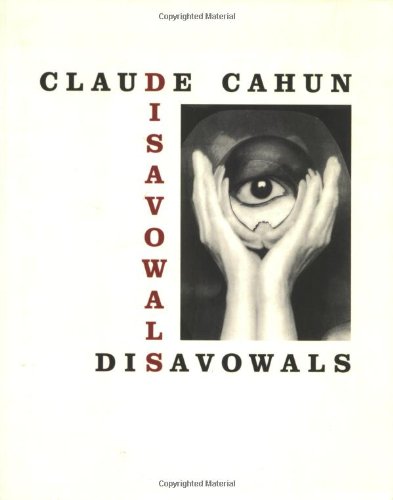
Disavowals: or Cancelled Confessions
Authors:
Claude Cahun
Publisher:
The MIT Press
Publication Date:
Not available
ISBN:
0262533030
Memories? Choice morsels. My soul is fragmentary.--from DisavowalsClaude Cahun (1894-1954), born Lucy Schwob, was a poet, performer, resistance fighter,... prisoner, Surrealist, "constructor and explorer of objects," photographer, and "queer freak" who invented her life by flaunting the interchangability of roles and playing with the ambivalence of identity. Whether feigning vulnerability on the arm of her lover and stepsister Suzanne Malherbe aka Marcel Moore ("the other me"), making theatrical public appearances in disguise (sailor, gymnast, gypsy), or making herself up (vampire, Buddha, mannequin, angel) for self-portraits and installations, she rendered opposites inoperative and exposed the thinness of gender and power constructs by reducing them to mere surface costumes. In May 1930 Éditions Carrefour of Paris published 500 copies of a book called Aveux non avenues, in which Cahun explored these same dialectics in book form. It is the nearest thing to a memoir Cahun wrote, but in fact the book is an anti-memoir, a critique of autobiography, where she uses subversive photomontages and statements to present herself as a force of genius possessed of the need to resist identification and to maintain within herself "the mania of the exception." Disavowals is the first appearance of that work, widely considered to be her most important text, in English. Reproductions of the original photomontages introduce the various sections, which in turn explore Cahun's distinctive ideas and obsessions--self-interrogation, narcissism, metamorphosis, love, gender-switching, humor, fear. An extensive introduction by Tate curator Jennifer Mundy sets the text in the context of Cahun's life and art. Also included is a translation of the original preface by Cahun's friend Pierre Mac Orlan, a comment by her biographer, François Leperlier, a note on the translation by Susan de Muth, and a postscript by Agnès Lhermitte.
DISC.AMERICAN PAST V.II PKG ]CUST4/12[
Authors:
Not Available
Publisher:
Not available
Publication Date:
Not available
ISBN:
Not available
 '





