production
/viewbook/list/all/?page=3581
/
/static/
None
Don Juan (Spanish Edition)
Authors:
Jose Zorrilla
Publisher:
Espasa Calpe
Publication Date:
Not available
ISBN:
8467021691
Hablando de Don Juan decia Wenceslao Fernandez Florez que Zorrilla «oia latir bajo su justillo de terciopelo el corazon de Espana: el corazon del... romanticismo nacional, su propio corazon». Tambien la estructura de la obra refleja perfectamente el ideal romantico: el misterio de los personajes, las mascaras, la conquista, la huida, el tenebrismo de la segunda parte, los dialogos amorosos, el enfrentamiento a Dios y la salvacion por el amor. Todo coincide en senalar a esta obra como uno de los hitos que marca con mayor precision el valor de lo sorprendente y de lo emocional como suprema forma del conocimiento del mundo. El lector, todavia hoy, tiembla, vibra, se aleja de cualquier racionalismo para sumergirse de pleno en el mundo de la pasion mas desbordante. Jose Zorrilla (1817-1893) supo dotar a la figura del Don Juan de una vision personal y propia que lo encumbra por encima de la mayoria de los autores que han tocado este mito tan atractivo y sugerente.

Don Juan Tenorio
Authors:
Jose Zorrilla Aniano Pena
Publisher:
Catedra
Publication Date:
Not available
ISBN:
8437602130
Hablando de Don Juan decia Wenceslao Fernandez Florez que Zorrilla «oia latir bajo su justillo de terciopelo el corazon de Espana: el corazon del... romanticismo nacional, su propio corazon». Tambien la estructura de la obra refleja perfectamente el ideal romantico: el misterio de los personajes, las mascaras, la conquista, la huida, el tenebrismo de la segunda parte, los dialogos amorosos, el enfrentamiento a Dios y la salvacion por el amor. Todo coincide en senalar a esta obra como uno de los hitos que marca con mayor precision el valor de lo sorprendente y de lo emocional como suprema forma del conocimiento del mundo. El lector, todavia hoy, tiembla, vibra, se aleja de cualquier racionalismo para sumergirse de pleno en el mundo de la pasion mas desbordante. Jose Zorrilla (1817-1893) supo dotar a la figura del Don Juan de una vision personal y propia que lo encumbra por encima de la mayoria de los autores que han tocado este mito tan atractivo y sugerente.
Don Juan Tenorio
Authors:
Not Available
Publisher:
AUSTRAL
Publication Date:
Not available
ISBN:
8467033444
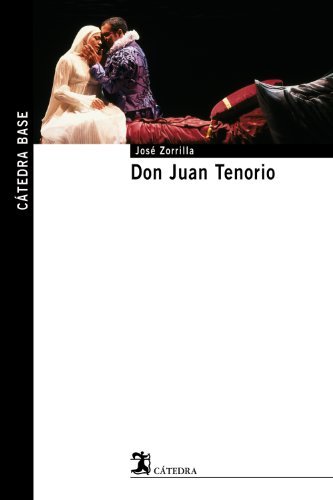
Don Juan Tenorio (Catedra Base) (Spanish Edition)
Authors:
Jose Zorrilla
Publisher:
Catedra
Publication Date:
Not available
ISBN:
8437624487
Jose Zorrilla recreo con deslumbrante maestria una figura de la literatura universal de dimensiones miticas: el personaje de don Juan, que nuestro ... autor bautizo como don Juan Tenorio. Siguiendo la tradicion romantica, Zorrilla situo la accion dramatica en la Sevilla del siglo XVI, y siguiendo tambien a sus modelos creo su version del burlador de mujeres y desafiador de los muertos. Sin embargo, este don Juan de Zorrilla brilla con luz mas intensa: dona Ines consiguio hacer de el, hombre sin escrupulos, un hombre delicado y amante, y al ligar su destino al del pecador, logro su arrepentimiento postumo.
Don Juan Tenorio (Clasicos Castalia) (Spanish Edition)
Authors:
Jose Zorrilla
Publisher:
Castalia
Publication Date:
Not available
ISBN:
8470396943
La obra de Zorrilla no fue tanto ""fuente"" sino catarata que inspiro a docenas de autores dramaticos a lo largo del siglo XIX y bien entrado el siglo... XX. (...)Desde el principio el autor concibio una obra profundamente cristiana, una obra que marcara el contraste entre el pagano mundo romantico que dominaba las tablas espanolas de su epoca y una nueva vision armonica del mundo.(...)Zorrilla adopto brillantemente, para su obra, elementos de otros dramas y de otros generos literarios.(Introduccion de David T. Gies)
Don Juan Tenorio (ED10+CD) [Don Juan Tenorio (ED10+CD)] (Leer En...
Authors:
Jose Zorilla
Publisher:
Espanol Santillana
Publication Date:
Not available
ISBN:
8497131053
Who is the most skilled swordsman and conqueror of women, Don Luis de Mejia or Don Juan Tenorio? They have made a bet to find out. Spanish Description:... Quien es el mas valiente con la espada y el mas habil conquistando mujeres? Don Luis Mejia o Don Juan Tenorio? Hicieron una apuesta hace un ano y, ahora, toda Sevilla espera la llegada de esos dos hombres a quienes ni las leyes humanas ni Dios mismo han podido nunca asustar.

Don Juan Tenorio (Spanish Edition)
Authors:
Jose Zorrilla
Publisher:
Critica (Grijalbo Mondadori)
Publication Date:
Not available
ISBN:
8484322076
Hablando de Don Juan decia Wenceslao Fernandez Florez que Zorrilla «oia latir bajo su justillo de terciopelo el corazon de Espana: el corazon del... romanticismo nacional, su propio corazon». Tambien la estructura de la obra refleja perfectamente el ideal romantico: el misterio de los personajes, las mascaras, la conquista, la huida, el tenebrismo de la segunda parte, los dialogos amorosos, el enfrentamiento a Dios y la salvacion por el amor. Todo coincide en senalar a esta obra como uno de los hitos que marca con mayor precision el valor de lo sorprendente y de lo emocional como suprema forma del conocimiento del mundo. El lector, todavia hoy, tiembla, vibra, se aleja de cualquier racionalismo para sumergirse de pleno en el mundo de la pasion mas desbordante. Jose Zorrilla (1817-1893) supo dotar a la figura del Don Juan de una vision personal y propia que lo encumbra por encima de la mayoria de los autores que han tocado este mito tan atractivo y sugerente.
Don Juan Tenorio (Spanish Edition)
Authors:
José Zorrilla
Publisher:
Juan de la Cuesta
Publication Date:
Not available
ISBN:
1589770188
Hablando de Don Juan decia Wenceslao Fernandez Florez que Zorrilla «oia latir bajo su justillo de terciopelo el corazon de Espana: el corazon del... romanticismo nacional, su propio corazon». Tambien la estructura de la obra refleja perfectamente el ideal romantico: el misterio de los personajes, las mascaras, la conquista, la huida, el tenebrismo de la segunda parte, los dialogos amorosos, el enfrentamiento a Dios y la salvacion por el amor. Todo coincide en senalar a esta obra como uno de los hitos que marca con mayor precision el valor de lo sorprendente y de lo emocional como suprema forma del conocimiento del mundo. El lector, todavia hoy, tiembla, vibra, se aleja de cualquier racionalismo para sumergirse de pleno en el mundo de la pasion mas desbordante. Jose Zorrilla (1817-1893) supo dotar a la figura del Don Juan de una vision personal y propia que lo encumbra por encima de la mayoria de los autores que han tocado este mito tan atractivo y sugerente.
Donkey Gospel: Poems
Authors:
Tony Hoagland
Publisher:
Graywolf Press
Publication Date:
Not available
ISBN:
1555972683
Winner of the 1997 James Laughlin Award of The Academy of American PoetsIn his second collection of poems, Hoagland's generous effervescence and a... jujitsu cleverness sparkle through line after line confronting negotiation and compromise, gender and culture, sex and rock music, sons and lovers, truth and beauty, and so forth. From the boy who speaks only in "Kung Fu" dialogue to the guy who visits a lesbian bar and sees his mother, this often funny and always thoughtful book of poems offers fresh, surprisingly frank meditations on the credentials for contemporary manhood.
Donner le temps (Collection La Philosophie en effet) (French Edition)
Authors:
Jacques Derrida
Publisher:
Not available
Publication Date:
Not available
ISBN:
2718603925
This book grows out of a longstanding fascination with the uncanny status of the mother in literature, philosophy,psychoanalysis, film, and photography.... The mother haunts Freud's writings on art and literature, emerges as an obscure stumbling block in his metapsychological accounts of the psyche, and ultimately undermines his patriarchalaccounts of the Oedipal complex as a foundation for human culture. The figure of the mother becomes associated with some of psychoanalysis's most unruly and enigmatic concepts (the uncanny, anxiety, the primal scene, the crypt, and magical thinking). Read in relation to deconstructive approaches to the work of mourning, this book shows how the maternal function challenges traditional psychoanalytic models of the subject, troubles existing systems of representation, and provides a fertile source for nonmimetic, nonlinear conceptions of time and space.The readings in this book examine the uncanny properties of the maternal function in psychoanalysis, technology, and literature in order to show that the event of birth is radically unthinkable and often becomes expressed through uncontrollable repetitions that exceed the bounds of any subject. The maternal body often serves as an unacknowledged reference point for modern media technologies such as photography and the telephone, which attempt to mimic its reproductive properties. To the extent that these technologies aim to usurp the maternal function, they are often deployed as a means of regulating or warding off anxieties that are provoked by the experience of loss that real separation from the mother invariably demands. As the incarnation of our first relation to the strange exile of language, the mother is inherently a literary figure, whose primal presence in literary texts opens us up to theunspeakable relation to our own birth and, in so doing, helps us give birth to new and fantasmatic images of futures that might otherwise have remained unimaginable.

Do No Harm: How Aid Can Support Peace, or War
Authors:
Mary B. Anderson
Publisher:
Lynne Rienner Pub
Publication Date:
Not available
ISBN:
1555878342

Donor Centered Fundraising
Authors:
Not Available
Publisher:
Not available
Publication Date:
Not available
ISBN:
Not available
Donor-Centered Fundraising
Authors:
Penelope Burk
Publisher:
Burk & Associates Ltd.
Publication Date:
Not available
ISBN:
0968797814
In this thought-provoking book, author, researcher, and consultant Penelope Burk describes a groundbreaking methodology that challenges accepted... fundraising practice and raises much more money. Working from research conducted over six years with hundreds of charities and donors, Donor-Centered Fundraising paints a candid picture of why donors stop giving to charities they once supported, and what it will take to preserve their loyalty in the future. In clear language and backed by statistical evidence, Penelope Burk explores the pitfalls of our traditional approaches to donor communication and recognition and articulates what donors want but seldom get from the charities they support. The book features straightforward and accessible calculations that show how much money charities are failing to raise, and offers a step-by-step procedure for testing a donor-centered alternative and gaining its acceptance in any organization. Filled with eye-opening, humorous, and often poignant anecdotes from both donors and charities, Donor-Centered Fundraising is both a revealing expose and an entertaining read. This book is written for fundraisers, executive directors, communications staff, board members, and any staff or volunteers who interact with donors or deal with the financial support of charitable organizations. Donor-Centered Fundraising sets a new standard for success and establishes itself as the essential fundraising methodology for the times.

Donor-Centered Planned Gift Marketing: (AFP Fund Development...
Authors:
Michael J. Rosen
Publisher:
Wiley
Publication Date:
Not available
ISBN:
0470581581
A fresh step-by-step guide for identifying your nonprofit's planned giving prospects and inspiring them to give generouslyDonor-Centered Planned Gift... Marketing helps nonprofit organizations move beyond traditional marketing techniques that have historically yielded only modest results and reveals how putting the focus on the donor can produce the best outcomes for all. Here, nonprofits new to gift planning will learn to market effectively from the start while those with established programs will discover ways to enhance their efforts. You will learn about various donor-centered marketing channels and techniques, as well as how to generate internal support for an improved planned gift marketing effort. Full of useful and proven tips you can implement for immediate resultsOffers practical tools including forms and checklistsIncludes a worksheet to help organizations calculate their planned giving potentialSharing the latest research findings, this book shows you how to identify who your planned giving prospects are. You will learn how to effectively focus on them through meaningful communication that ultimately inspires them to give-and give more.
Do Not Ask What Good We Do: Inside the U.S. House of Representatives
Authors:
Robert Draper
Publisher:
Free Press
Publication Date:
Not available
ISBN:
1451642083
The U.S. House of Representatives—a large, often unruly body of men and women elected every other year from 435 distinct microcosms of America—has... achieved renown as “the people’s House,” the world’s most democratic institution, and an acute Rorschach of biennial public passions. In the midterm election year 2010, recession-battered Americans expressed their discontent with a simultaneously overreaching and underperforming government by turning the formerly Democratically controlled House over to the Republicans. Among the new GOP majority were eighty-seven freshmen, many of them political novices with Tea Party backing who pledged a more open, responsive, and fiscally thrifty House. What the 112th Congress instead achieved was a public standing so low—a ghastly 9 percent approval rating— that, as its longest-serving member, John Dingell, would dryly remark, “I think pedophiles would do better.” What happened? Robert Draper explores this question just as he examined the Bush White House in his 2007 New York Times bestselling book Dead Certain: The Presidency of George W. Bush—by burrowing deeply inside the subject, gaining cooperation of the major players, and producing a colorful, unsparingly detailed, but evenhanded narrative of how the House of Representatives became a house of ill repute. Draper’s cast of characters spans the full spectrum of political experience and ideologies—from the Democrat Dingell, a congressman since 1955 (though elbowed out of power by the party’s House leader, Nancy Pelosi), to Allen West, a black Republican Tea Party sensation, former Army lieutenant colonel, and political neophyte with a talent for equal opportunity offending. While unspooling the boisterous, at times tragic, and ultimately infuriating story of the 112th Congress, Draper provides unforgettable portraits of Gabrielle Giffords, the earnest young Arizona congresswoman who was gunned down by a madman at the beginning of the legislative session; Anthony Weiner, the Democrats’ clown prince and self-made media star until the New Yorker self-immolated in a sex scandal; the strong-willed Pelosi and her beleaguered if phlegmatic Republican counterpart, House Speaker John Boehner; the affable majority whip, Kevin McCarthy, tasked with instilling team spirit in the iconoclastic freshmen; and most of all, the previously unknown new members who succeeded in shoving Boehner’s Republican Conference to the far right and thereby bringing the nation, more than once, to the brink of governmental shutdown or economic default. In this lively work of political narrative, Draper synthesizes some of the most talked-about breaking news of the day with the real story of what happened behind the scenes. This book is a timely and masterfully told parable of dysfunction that may well serve as Exhibit A of how Americans lost faith in their democratic institutions. *** “Congress will rise June 1st, as most of us expect. Rejoice when that event is ascertained. If we should finish and leave the world right side up, it will be happy. Do not ask what good we do: that is not a fair question, in these days of faction.” —Congressman Fisher Ames, May 30, 1796 In Do Not Ask What Good We Do, Robert Draper captures the prophetic sentiment uttered by Fisher Ames over two centuries ago. As he did in writing about President George W. Bush in Dead Certain, Draper provides an insider’s book like no one else can—this time, inside the U.S. House of Representatives. Because of the bitterly divided political atmosphere we live in, because of the combative nature of this Congress, this literary window on the backstage machinations of the House is both captivating and timely—revealing the House in full, from the process of how laws are made (and in this case, not made) to the most eye-popping cast of lawmakers Washington has ever seen.
 '





