production
/viewbook/list/all/?page=3648
/
/static/
None
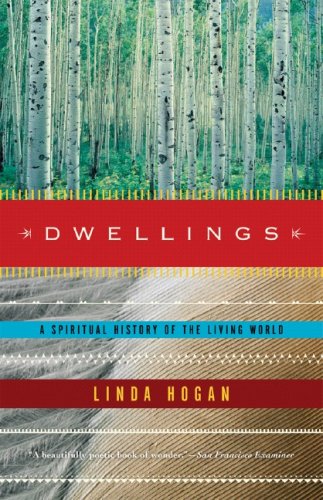
Dwellings: A Spiritual History of the Living World
Authors:
Linda Hogan
Publisher:
W. W. Norton & Company
Publication Date:
Not available
ISBN:
0393322475
Award-winning Chickasaw poet and novelist Linda Hogan explores her lifelong love of the living world and all its inhabitants."We... want to live as if there is no other place," Hogan tells us, "as if we will always be here. We want to live with devotion to the world of waters and the universe of life." In offering praise to sky, earth, water, and animals, she calls us to witness how each living thing is alive in a conscious world with its own integrity, grace, and dignity. In Dwellings, Hogan takes us on a spiritual quest borne out of the deep past and offers a more hopeful future as she seeks new visions and lights ancient fires.

Dwelling, Seeing, and Designing: Toward a Phenomenological Ecology...
Authors:
Not Available
Publisher:
State University of New York Press
Publication Date:
Not available
ISBN:
0791412784

Dwight D. Eisenhower
Authors:
Tom Wicker
Publisher:
Times Books
Publication Date:
Not available
ISBN:
0805069070
An American icon and hero faces a nation-and a world-in transitionA bona-fide American hero at the close of World War II, General Dwight Eisenhower rode... an enormous wave of popularity into the Oval Office seven years later. Though we may view the Eisenhower years through a hazy lens of 1950s nostalgia, historians consider his presidency one of the least successful. At home there was civil rights unrest, McCarthyism, and a deteriorating economy; internationally, the Cold War was deepening. But despite his tendency toward "brinksmanship," Ike would later be revered for "keeping the peace." Still, his actions and policies at the onset of his career, covered by Tom Wicker, would haunt Americans of future generations.
Dyadic Data Analysis (Methodology in the Social Sciences)
Authors:
David A. Kenny PhD
Publisher:
The Guilford Press
Publication Date:
Not available
ISBN:
1572309865
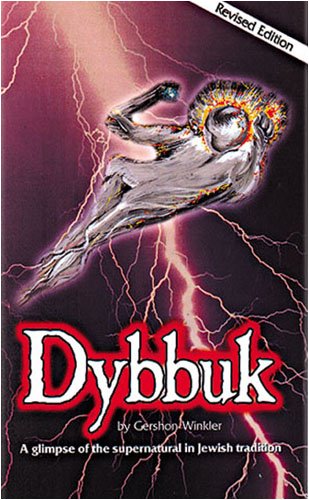
Dybbuk
Authors:
Gershon Winkler
Publisher:
Judaica Pr
Publication Date:
Not available
ISBN:
091081838X
An astonishing book chronicling and dramatizing six documented reports of possession and exorcism in the Jewish experience. Also features a fascinating... historical look at the traditional Jewish perspective on reincarnation, ghosts, apparitions, magic and superstition.

Dying: A Natural Passage
Authors:
Denys Cope
Publisher:
Three Whales Publishing
Publication Date:
Not available
ISBN:
0978750659
A Beside Manual for Being with Dying
A one-of-a kind guidebook, provides practical and insightful information about rarely addressed topics
such as What... best supports a peaceful death?
When is it time to call in hospice? If my loved one is not eating will he starve to death?
Are people hallucinating at the end of life?
Dying and Death in Canada, second edition
Authors:
Herbert Northcott
Publisher:
University of Toronto Press, Higher Education Division
Publication Date:
Not available
ISBN:
1551118734
Death, like sexuality, is ever present but was rarely discussed before the 1960s. Since then there has been a growing discourse in the social sciences... and helping professions about how to discuss the social construction of death. Dying and death in a society reflect the material and social conditions of that society. In turn, the society and culture in which we live influences what we think and do about dying and death. Similarly, dying is both a personal experience and a social role given shape and meaning by social practices and cultural definitions. The bereaved grieve and mourn in both personal and social terms, and the meaning assigned to dying and death is both personally and socially constructed. This new edition of Dying and Death in Canada is designed for students who wish to learn about dying and death, for practitioners who work with the dying and the bereaved, for the dying and the bereaved themselves, and for the general public. Part I explores the causes of dying and death in Canada both historically and at present. Part II examines the collective constructions of?that is, the social and cultural response to?dying and death in Canada. Part III discusses dying and death from the personal points of view of the dying and the bereaved.
Dying City
Authors:
Christopher Shinn
Publisher:
Theatre Communications Group
Publication Date:
Not available
ISBN:
1559363290
“The finest new American play I’ve seen in a long while . . . Dying City is a political play and also a psychodrama about what Arthur Miller called... the politics of the soul. It’s about public conscience and private grief, and real and symbolic catastrophes.”—The New York Observer“Anyone who doubts that Mr. Shinn is among the most provocative and probing of American playwrights today need only experience the . . . sophisticated welding of form and content that is Dying City.”—The New York TimesIn Christopher Shinn’s new play Dying City, a young therapist, Kelly, whose husband Craig was killed while on military duty in Iraq, is confronted a year later by his identical twin Peter, who suspects that Craig’s death was not accidental. Set in a spare downtown-Manhattan apartment after dark, scenes shift from the confrontation between Peter and Kelly, to Kelly’s complicated farewell with her husband Craig. Shinn’s creepy, sophisticated drama—infused with references to 9/11 and the war in Iraq—explores how contemporary politics and recent history have transformed the lives of these three characters.Christopher Shinn was born in Hartford, Connecticut, and lives in New York. His plays include Where Do We Live, Other People, What Didn’t Happen, and On the Mountain, which have been widely produced in New York, across the United States, and in London. He is the recipient of an OBIE Award in Playwriting, as well as the Robert S. Chesney Award. He teaches playwriting at The New School for Drama.
Dying, Death, and Grief in an Online Universe: For Counselors and...
Authors:
Not Available
Publisher:
Springer Publishing Company
Publication Date:
Not available
ISBN:
082610732X
This text provides current information about thanatechnology, the communication technology used in providing death education, grief counseling, and... thanatology research. It offers a broad overview of how the communication technology revolution affects individuals coping with end-of-life issues, death-related and non-death loss and grief, and implications of the digital divide between those who have access to modern technology and those who do not. It describes the proliferation of online support groups and social network sites to cope with loss, and mechanisms for its commemoration. It also highlights blogging as a means of storytelling and SKYPE as a communication tool during times of loss and grief. The issue of disenfranchised grief experienced by online community members is also explored along with ethical issues.
Dying Dying to Kill: The Allure of Suicide Terror
Authors:
Mia Bloom
Publisher:
Columbia University Press
Publication Date:
Not available
ISBN:
0231133219
What motivates suicide bombers in Iraq and around the world? Can winning the hearts and minds of local populations stop them? Will the phenomenon spread... to the United States? These vital questions are at the heart of this important book. Mia Bloom examines the use, strategies, successes, and failures of suicide bombing in Asia, the Middle East, and Europe and assesses the effectiveness of government responses. She argues that in many instances the efforts of Israel, Russia, and the United States in Iraq have failed to deter terrorism and suicide bombings. Bloom also considers how terrorist groups learn from one another, how they respond to counterterror tactics, the financing of terrorism, and the role of suicide attacks against the backdrop of larger ethnic and political conflicts. Dying to Kill begins with a review of the long history of terrorism, from ancient times to modernity, from the Japanese Kamikazes during World War II, to the Palestinian, Tamil, Iraqi, and Chechen terrorists of today. Bloom explores how suicide terror is used to achieve the goals of terrorist groups: to instill public fear, attract international news coverage, gain support for their cause, and create solidarity or competition between disparate terrorist organizations. She contends that it is often social and political motivations rather than inherently religious ones that inspire suicide bombers. In her chapter focusing on the increasing number of women suicide bombers and terrorists, Bloom examines Sri Lanka, where 33 percent of bombers have been women; Turkey, where the PKK used women feigning pregnancy as bombers; and the role of the Black Widows in the Chechen struggle against Moscow. The motives of individuals, whether religious or nationalist, are important but the larger question is, what external factors make it possible for suicide terrorism to flourish? Bloom describes these conditions and develops a theory of why terrorist tactics work in some instances and fail in others.

Dying for a Drink: What You and Your Family Should Know About...
Authors:
Anderson Spickard M.D.
Publisher:
Thomas Nelson
Publication Date:
Not available
ISBN:
0849908477
In the United States, alcoholism leads to 100,000 unnecessary deaths per year. Nearly 3 in 10 American adults are "risky drinkers." 18 million Americans... are abusing alcohol regularly. More than ½ of Americans have a close family member who is an alcoholic. Despite the scope of this problem, there are currently no books published for the broader Christian community that offer Dying for a Drink's unique combination of strong writing, compelling stories, the best in medical science and practice, and clear explication of the timeless spiritual principles of recovery. The revision of this classic work incorporates new information on topics such as: The role of mental illness, childhood trauma, and family origin issues Human motivation and new methods of intervention and treatment Understanding the role of the Holy Spirit and the church community in recovery Prevention and the church's role in an alcohol-saturated society
Dying for a Home: Homeless Activists Speak Out
Authors:
Cathy Crowe
Publisher:
Between the Lines
Publication Date:
Not available
ISBN:
1897071221
Cathy Crowe always wanted to be a nurse but she never planned to be a street nurse—a title she continues to use to evoke the horror of homelessness in... a rich country like Canada. In Dying for a Home Crowe brings us the voices of ten homeless activists advocating for change. The word homeless conjures many stereotypes, but rarely does it suggest bravery, courage, charisma, or intelligence, qualities demonstrated by each of these determined individuals.The contents of Crowe's nursing bag reveal the hard truth of her specialty. Her vitamins will not prevent the white plague of tuberculosis from taking another life. The duct tape to fix a cardboard shelter, or the bus ticket to get an elderly man to a hot air grate, will not ensure a peaceful night of safety and sleep. Crowe's experience has taught her that the only thing homeless people have in common is being de-housed and forced to live in conditions of poverty. It is this first-hand experience with the disgrace of homelessness that turned her into a housing advocate and introduced her to the ten contributors to Dying for a Home. (Sarah Polley )
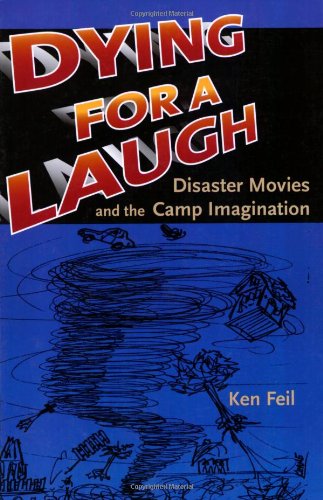
Dying for a Laugh: Disaster Movies and the Camp Imagination
Authors:
Ken Feil
Publisher:
Wesleyan
Publication Date:
Not available
ISBN:
0819567922
Dying for a Laugh looks at the evolution of the contemporary disaster film from the 1970s to the present. Ken Feil argues that contemporary camp culture... has influenced and reformed the conventions of the 1970s disaster film, in both its production and reception. The book chronicles how the genre rose to prominence, sank into critical and popular disrepute, and became unintentionally campy. Through close readings of films including The Poseidon Adventure, The Swarm, Ghostbusters, Independence Day, and Mars Attacks!, along with film reviews, entertainment reports and publicity materials as evidence, Feil shows that the renewal of the disaster genre in the 1990s hinged on self-parody, ironic self-consciousness, and state-of-the-art effects. Feil also looks at the impact of 9/11 on the genre's campy, sadistic pleasures through movies such as The Sum of All Fears, The Core, and The Day After Tomorrow. This analysis of "high concept camp" draws from diverse methodologies and theories, such as historical reception, textual analysis, neoformalism, political economy, genre analysis, feminism, and queer theory.
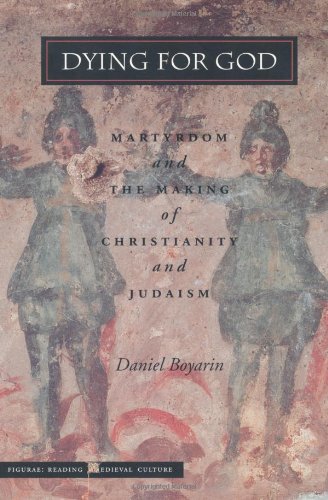
Dying for God: Martyrdom and the Making of Christianity and Judaism...
Authors:
Daniel Boyarin
Publisher:
Stanford University Press
Publication Date:
Not available
ISBN:
0804737045
Not long ago, everyone knew that Judaism came before Christianity. More recently, scholars have begun to recognize that the historical picture is quite... a bit more complicated than that. In the Jewish world of the first century, many sects competed for the name of the true Israel and the true interpreter of the Torah—the Talmud itself speaks of seventy—and the form of Judaism that was to be the seedbed of what eventually became the Christian Church was but one of these many sects. Scholars have come to realize that we can and need to speak of a twin birth of Christianity and Judaism, not a genealogy in which one is parent to the other.In this book, the author develops a revised understanding of the interactions between nascent Christianity and nascent Judaism in late antiquity, interpreting the two "new" religions as intensely and complexly intertwined throughout this period. Although the "officials" of the eventual winners in both communities—the Rabbis in Judaism and the orthodox leaders in Christianity—sought to deny it, until the end of late antiquity many people remained both Christians and Jews. This resulted, among other things, in much shared religious innovation that affected the respective orthodoxies as well.Dying for God aims to establish this model as a realistic one through close and comparative readings of contemporary Christian texts and Talmudic narratives that thematize the connections and differences between Christians and Jews as these emerged around the issue of martyrdom. The author argues that, in the end, the developing discourse of martyrology involved the circulation and exchange of cultural and religious innovations between the two communities as they moved toward sharper self-definition.
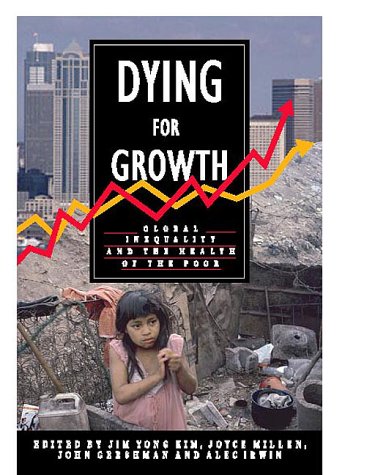
Dying For Growth: Global Inequality and the Health of the Poor
Authors:
Not Available
Publisher:
Common Courage Press
Publication Date:
Not available
ISBN:
1567511600
"This is a catalog [of costs] the Bush team never looked at. It's a catalog that they still don't want you to... see."—James GalbraithAmerica has already spent close to a trillion dollars on the wars in Iraq and Afghanistan, but there are hundreds of billions of bills still due—including staggering costs to take care of the thousands of injured veterans, providing them with disability benefits and health care. In this sobering study, Nobel Prize winner Joseph E. Stiglitz and Harvard University's Linda J. Bilmes reveal a wide range of costs that have been hidden from U.S. taxpayers and left out of the debate about our involvement in Iraq. That involvement, the authors conservatively estimate, will cost us more than $3 trillion. "Stiglitz and Bilmes have clearly demonstrated the need for Congress and the administration to ensure that those making sacrifices today will see those sacrifices honored in the future."—Dave W. Gorman, executive director, Disabled American Veterans
 '





