production
/viewbook/list/all/?page=370
/
/static/
None

Affrilachia: Poems by Frank X Walker
Authors:
Frank X Walker
Publisher:
Old Cove Press
Publication Date:
Not available
ISBN:
0967542405
Frank X Walker is a leading black poet in Kentucky. This book brings together his finest poems of the last ten years. Walker coined the word... "Affrilachia" to help make visible the experience of African-Americans living in rural areas like Appalachia. The book is a high-quality, smyth-sewn paperbook, printed on 70-lb vellum, with a tritone photograph on the cover. Kentucky author Gurney Norman writes: "The poems in Affrilachia are funny and sad, tragic and hopeful, angry and determined, and as filled with generosity and love as poetry by any American writer in a generation. This book is powerful and beautiful. It is honest and true."
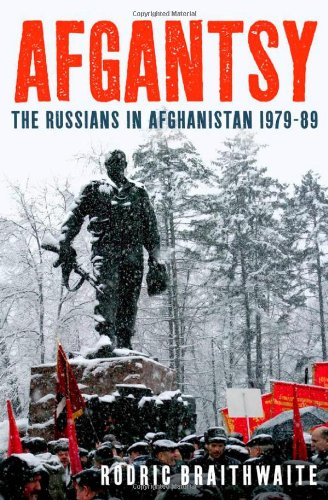
Afgantsy: The Russians in Afghanistan, 1979-1989
Authors:
Rodric Braithwaite
Publisher:
Oxford University Press, USA
Publication Date:
Not available
ISBN:
019983265X
The story of the Soviet occupation of Afghanistan is well known: the expansionist Communists overwhelmed a poor country as a means of reaching a... warm-water port on the Persian Gulf. Afghan mujahideen upset their plans, holding on with little more than natural fighting skills, until CIA agents came to the rescue with American arms. Humiliated in battle, the Soviets hastily retreated. It's a great story, writes Rodric Braithwaite. But it never happened. The Russian conscripts suffered badly from mismanagement and strategic errors, but they were never defeated on the battlefield, and withdrew in good order. In this brilliant, myth-busting account, Braithwaite--the former British ambassador to Moscow--challenges much of what we know about the Soviets in Afghanistan. He provides an inside look at this little-understood episode, using first-hand accounts and piercing analysis to show the war as it was fought and experienced by the Russians. The invasion, he writes, was a defensive response to a chaotic situation in the Soviets' immediate neighbor. They intended to establish a stable, friendly government, secure the major towns, and train the police and armed forces before making a rapid exit. But the mission escalated, as did casualties. In fact, the Soviet leadership decided to pull out a year before the first Stinger missile was used in combat. Braithwaite does not, of course, paint the occupation as a Russian triumph. To the contrary, he illustrates the searing effect of the brutal conflict on soldiers, their families, and the broader public, as returning veterans--the Afgansty of the title--struggled to regain their footing back home. A fine writer as well as an expert, Braithwaite carries readers through these complex and momentous events, capturing those violent and tragic days as no one has done before.
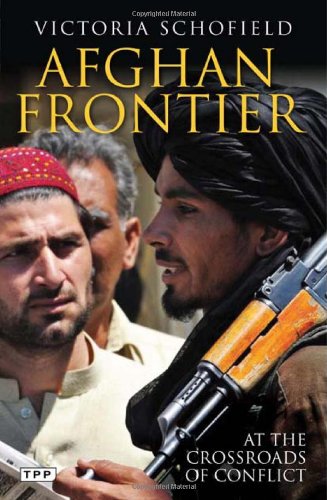
Afghan Frontier: At the Crossroads of Conflict
Authors:
Victoria Schofield
Publisher:
Tauris Parke Paperbacks
Publication Date:
Not available
ISBN:
184885188X
For centuries, men have fought and died on the Afghan frontier -- American soldiers and the Taliban are merely the latest. As the gateway to India and... the crossroads of Central Asia, Afghanistan has tempted the greed and hunger for power of countless invaders, from the Greek armies of Alexander the Great to Brezhnev’s Soviet forces. Refuge of spies and mountainous court of intrigue, this frontier world is one of the most haunting and gigantic battlefields on earth. This edition of Afghan Frontier includes a new afterword from the author, completing the gripping portrait of a region that is as treacherous as it is alluring.
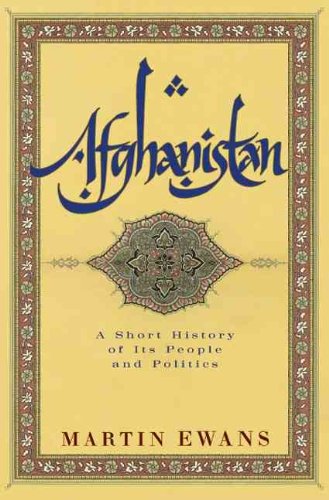
Afghanistan (02) by Ewans, Martin [Paperback (2002)]
Authors:
Ewans
Publisher:
Harpers, Paperback(2002)
Publication Date:
Not available
ISBN:
0060505087
A fascinating chronicle of a nation's turbulent history. Reaching back to earliest times, Martin Ewans examines the historical evolution of one of... today's most dangerous breeding grounds of global terrorism. After a succession of early dynasties and the emergence of an Afghan empire during the eighteenth century, the nineteenth and early twentieth century saw a fierce power struggle between Russia and Britain for supremacy in Afghanistan that was ended by the nation's proclamation of independence in 1919. A communist coup in the late 1970s overthrew the established regime and led to the invasion of Soviet troops in 1979. Roughly a decade later, the Soviet Union withdrew, condemning Afghanistan to a civil war that tore apart the nation's last remnants of religious, ethnic, and political unity. It was into this climate that the Taliban was born. Today, war-torn and economically destitute, Afghanistan faces unique challenges as it looks toward an uncertain future. Martin Ewans carefully weighs the lessons of history to provide a frank look at Afghanistan's prospects and the international resonances of the nation's immense task of total political and economic reconstruction.
Afghanistan: A Cultural and Political History (Princeton Studies in...
Authors:
Thomas Barfield
Publisher:
Princeton University Press
Publication Date:
Not available
ISBN:
0691145687
Afghanistan traces the historic struggles and the changing nature of political authority in this volatile region of the world, from the Mughal Empire in... the sixteenth century to the Taliban resurgence today. Thomas Barfield introduces readers to the bewildering diversity of tribal and ethnic groups in Afghanistan, explaining what unites them as Afghans despite the regional, cultural, and political differences that divide them. He shows how governing these peoples was relatively easy when power was concentrated in a small dynastic elite, but how this delicate political order broke down in the nineteenth and twentieth centuries when Afghanistan's rulers mobilized rural militias to expel first the British and later the Soviets. Armed insurgency proved remarkably successful against the foreign occupiers, but it also undermined the Afghan government's authority and rendered the country ever more difficult to govern as time passed. Barfield vividly describes how Afghanistan's armed factions plunged the country into a civil war, giving rise to clerical rule by the Taliban and Afghanistan's isolation from the world. He examines why the American invasion in the wake of September 11 toppled the Taliban so quickly, and how this easy victory lulled the United States into falsely believing that a viable state could be built just as easily. Afghanistan is essential reading for anyone who wants to understand how a land conquered and ruled by foreign dynasties for more than a thousand years became the "graveyard of empires" for the British and Soviets, and what the United States must do to avoid a similar fate.
Afghanistan: A Cultural and Political History (Princeton Studies in...
Authors:
Thomas Barfield
Publisher:
Princeton University Press
Publication Date:
Not available
ISBN:
0691154414
Afghanistan traces the historic struggles and the changing nature of political authority in this volatile region of the world, from the Mughal Empire in... the sixteenth century to the Taliban resurgence today. Thomas Barfield introduces readers to the bewildering diversity of tribal and ethnic groups in Afghanistan, explaining what unites them as Afghans despite the regional, cultural, and political differences that divide them. He shows how governing these peoples was relatively easy when power was concentrated in a small dynastic elite, but how this delicate political order broke down in the nineteenth and twentieth centuries when Afghanistan's rulers mobilized rural militias to expel first the British and later the Soviets. Armed insurgency proved remarkably successful against the foreign occupiers, but it also undermined the Afghan government's authority and rendered the country ever more difficult to govern as time passed. Barfield vividly describes how Afghanistan's armed factions plunged the country into a civil war, giving rise to clerical rule by the Taliban and Afghanistan's isolation from the world. He examines why the American invasion in the wake of September 11 toppled the Taliban so quickly, and how this easy victory lulled the United States into falsely believing that a viable state could be built just as easily. Afghanistan is essential reading for anyone who wants to understand how a land conquered and ruled by foreign dynasties for more than a thousand years became the "graveyard of empires" for the British and Soviets, and what the United States must do to avoid a similar fate.
Afghanistan: A Cultural History
Authors:
St. John Simpson
Publisher:
Interlink Pub Group
Publication Date:
Not available
ISBN:
1566568544
A fascinating illustrated introduction to the cultural history, peoples, art, and civilization of this ancient region-the gateway between East and West,... North and South -A highly topical guide to one of the most critically important places on the globe-both today and throughout history -Essential reading for anyone seeking a fuller context for the current situation in the region -Presents the extraordinarily rich heritage of a country that is one of the great cultural and artistic melting pots of the world -Illustrated with a large selection of objects, ancient and modern While the modern nation can trace its origins back to 1747, the history of Afghanistan is far more ancient. It has long been a focal point of the Silk Road and human migration and many native peoples such as the Kushans, Samanids, Saffarids, and Mughals have founded their empires here. Afghanistan has also been the target of numerous invasions and is therefore one of the most critically diverse places on earth. This lively book places this rich and ancient seam of creativity in its broad historical context and offers the reader a full appreciation of a most remarkable country.
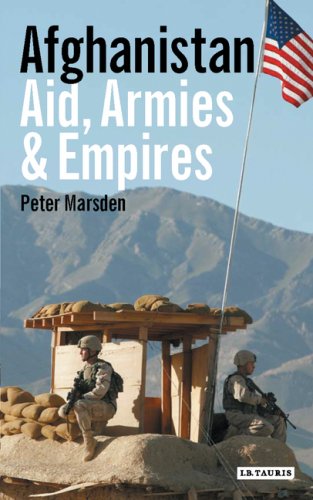
Afghanistan - Aid, Armies and Empires
Authors:
Peter Marsden
Publisher:
I. B. Tauris
Publication Date:
Not available
ISBN:
1845117514
As the battle for Afghanistan intensifies, with humanitarian workers increasingly finding themselves on the frontline, aid expert Peter Marsden draws on... decades of personal experience in the country to unravel the relationship between great power politics and development, from the Great Game era to the present day. While the US has recently been criticized for blurring the distinctions between military and humanitarian operations, the use of aid to further great power strategic objectives is, Marsden finds, nothing new. Examining the interventions of the British in the 19th Century, the Soviets in 1979, and the US in 2001, he brings to light significant new information on the use of aid in pursuit of strategic objectives. Drawing on his own experience, he explains the changing relationship between the aid community and different Afghan governments, including the Taliban. His rigorously argued conclusions are surprising; and make compelling reading matter for military and humanitarian policymakers alike. Afghanistan: Aid, Armies and Empires offers both a coruscating exploration of the relationship between aid and power, and a fresh and original history of Afghanistan through the prism of great power politics.
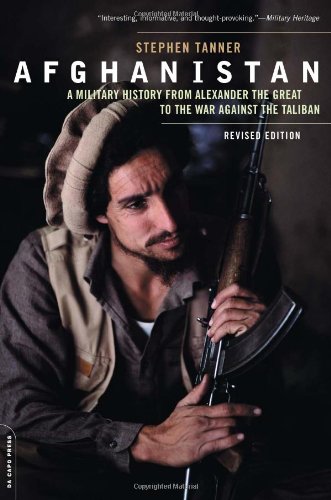
Afghanistan: A Military History from Alexander the Great to the War...
Authors:
Stephen Tanner
Publisher:
Da Capo Press
Publication Date:
Not available
ISBN:
0306818264
For over 2,500 years, the forbidding territory of Afghanistan has served as a vital crossroads for armies and has witnessed history-shaping clashes... between civilizations: Greek, Arab, Mongol, and Tartar, and, in more recent times, British, Russian, and American. When U.S. troops entered Afghanistan in the weeks following September 11, 2001, they overthrew the Afghan Taliban regime and sent the terrorists it harbored on the run. But America’s initial easy victory is in sharp contrast to the difficulties it faces today in confronting the Taliban resurgence.Originally published in 2002, Stephen Tanner’s Afghanistan has now been completely updated to include the crucial turn of events since America first entered the country.
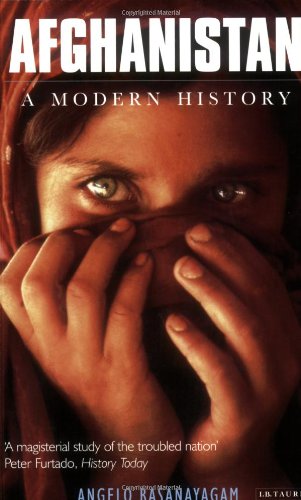
Afghanistan: A Modern History
Authors:
Angelo Rasanayagam
Publisher:
I. B. Tauris
Publication Date:
Not available
ISBN:
1850438579
Afghanistan has long been the focal point of East-West relations, from the 19th and early 20th centuries when its mountain ranges provided the arena... where the world's greatest powers sought to expand their influence to its center role in international struggles today. Squeezed between four empires--Russia, China, India, and Persia--Afghanistan's tortured history provides an extraordinary glimpse into the patterns of world movements. This serious, yet accessible history of modern Afghanistan is of vital importance for understanding the country's current crisis and is essential reading for historians, policy makers, and all those interested in the state of the world today.
Afghanistan, Arms and Conflict: Armed Groups, Disarmament and...
Authors:
Michael Vinay Bhatia
Publisher:
Routledge
Publication Date:
Not available
ISBN:
0415477344
This is the first book to provide a comprehensive assessment of small arms and security-related issues in post-9/11 Afghanistan. It includes case... studies which reveal the findings of in-depth field research on hitherto neglected regions of the country, and provides a distinctive balance of thematic analysis, conceptual models and empirical research. Exploring various facets of armed violence and measures to tackle it, the volume provides significant insight into broader issues such as the efficacy of international assistance, the ‘shadow’ economy, warlordism, and the Taliban-led insurgency. In an effort to deconstruct and demystify Afghanistan’s alleged ‘gun culture’, it also explores some of the prevailing obstacles and opportunities facing the country in its transition period. In so doing, the book offers valuable lessons to the state-builders of Afghanistan as well as those of other countries and regions struggling to emerge from periods of transition. This book will be of much interest to all students of Afghanistan, small arms, insurgency, Asian Studies, and conflict studies in general.
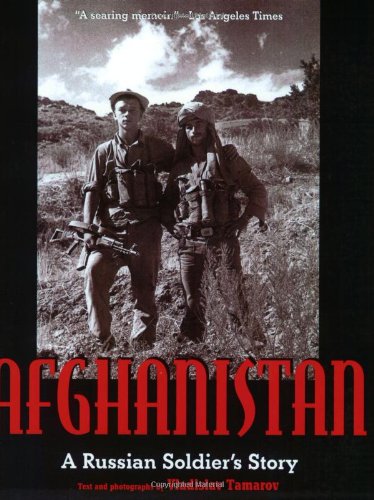
Afghanistan: A Russian Soldier's Story
Authors:
Vladislav Tamarov
Publisher:
Ten Speed Press
Publication Date:
Not available
ISBN:
1580084168
Drafted into the Soviet Army in April, 1984 and sent at the age of nineteen to serve in Afghanistan as a minesweeper, Vladislav Tamarov turned in... secret to the pen and the camera to chronicle his 621 days of war. Photographs depicting the haunted faces of both soldiers and civilians, the country's rugged yet beautiful mountain terrain, and the banality of daily life between missions are interspersed with Tamarov's unsentimental but passionate prose, in which he reveals his growing disorientation and takes to task his government for a campaign that has been widely dubbed "the Soviet Vietnam".
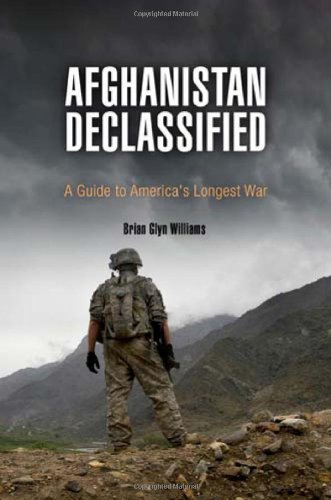
Afghanistan Declassified: A Guide to America's Longest War
Authors:
Brian Glyn Williams
Publisher:
University of Pennsylvania Press
Publication Date:
Not available
ISBN:
0812244036
Nearly 100,000 U.S. soldiers are deployed to Afghanistan, fighting the longest war in the nation's history. But what do Americans know about the land... where this conflict is taking place? Many have come to have a grasp of the people, history, and geography of Iraq, but Afghanistan remains a mystery.Originally published by the U.S. Army to provide an overview of the country's terrain, ethnic groups, and history for American troops and now updated and expanded for the general public, Afghanistan Declassified fills in these gaps. Historian Brian Glyn Williams, who has traveled to Afghanistan frequently over the past decade, provides essential background to the war, tracing the rise, fall, and reemergence of the Taliban. Special sections deal with topics such as the CIA's Predator drone campaign in the Pakistani tribal zones, the spread of suicide bombing from Iraq to the Afghan theater of operations, and comparisons between the Soviet and U.S. experiences in Afghanistan.To Williams, a historian of Central Asia, Afghanistan is not merely a theater in the war on terror. It is a primeval, exciting, and beautiful land; not only a place of danger and turmoil but also one of hospitable villagers and stunning landscapes, of great cultural diversity and richness. Williams brings the country to life through his own travel experiences—from living with Northern Alliance Uzbek warlords to working on a major NATO base. National heroes are introduced, Afghanistan's varied ethnic groups are explored, key battles—both ancient and current—are retold, and this land that many see as only a frightening setting for prolonged war emerges in three dimensions.
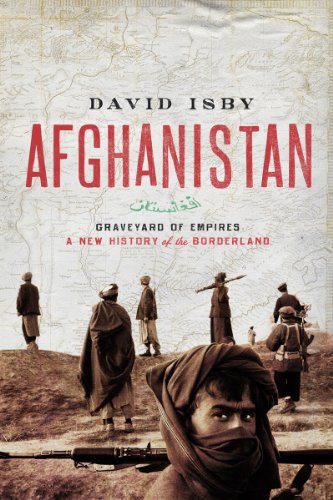
Afghanistan: Graveyard of Empires: A New History of the Borderland
Authors:
David Isby
Publisher:
Pegasus
Publication Date:
Not available
ISBN:
1605981893
A startling history of modern Afghanistan: the story of a country caught in a vortex of terror.Veteran defense analyst and Afghanistan expert David Isby... provides an insightful and meticulously researched look at the current situation in Afghanistan, her history, and what he believes must be done so that the US and NATO coalition can succeed in what has historically been known as “the graveyard of empires.” Afghanistan is one of the poorest countries in the world with one of the lowest literacy rates. It is rife with divisions between ethnic groups that dwarf current schisms in Iraq, and all the groups are lead by warlords who fight over control of the drug trade as much as they do over religion. The region is still racked with these confrontations along with conflicts between rouge factions from Pakistan, with whom relations are increasingly strained. After seven years and billions of dollars in aid, efforts at nation-building in Afghanistan has produced only a puppet regime that is dependent on foreign aid for survival and has no control over a corrupt police force nor the increasingly militant criminal organizations and the deepening social and economic crisis. The task of implementing an effective US policy and cementing Afghani rule is hampered by what Isby sees as separate but overlapping conflicts between terrorism, narcotics, and regional rivalries, each requiring different strategies to resolve. Pulling these various threads together will be the challenge for the Obama administration, yet it is a challenge that can be met by continuing to foster local involvement and Afghani investment in the region. This paperback edition includes a new 2011 afterword by the author.
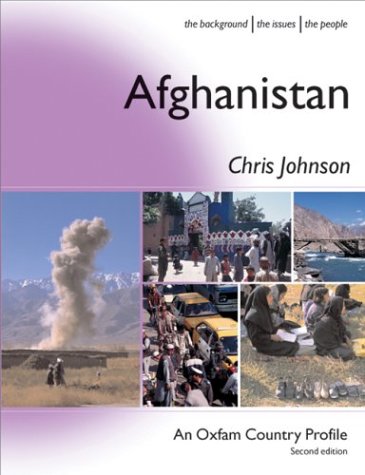
Afghanistan (Oxfam Country Profiles Series)
Authors:
Chris Johnson
Publisher:
Oxfam Publishing
Publication Date:
Not available
ISBN:
0855985038
Momentous changes have taken place in Afghanistan since the first edition of this Profile was published (Afghanistan: A Land in Shadow¸ Oxfam GB,... 1998). Taliban extremists were tightening their grip on power, but the full implications of their regime were still to be seen, and the events of September 11th 2001, and their consequences for the people of Afghanistan, were as yet unimaginable. In this new edition, Chris Johnson brings the story up to date, examining the impact of international and regional power politics on the everyday lives of ordinary Afghans, in their struggle to survive and rebuild their country.Chris Johnson is one of the few Western journalists currently living and working inside Afghanistan. Researching for this new edition of her book, she traveled widely to interview members of communities living on the edge of survival. The text is illustrated by her own dramatic photographs, and supplemented by an annotated list of resources and an up-dated file of facts and figures. It is essential reading for anyone who is concerned about the prospects for peace in this war-weary country, and the implications for regional stability and - ultimately - for global security.
 '
'