production
/viewbook/list/all/?page=3741
/
/static/
None
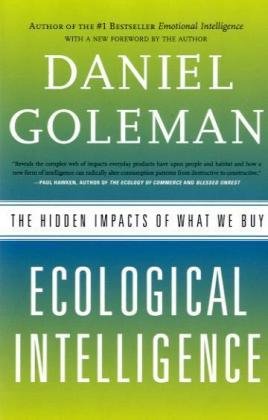
Ecological Intelligence: The Hidden Impacts of What We Buy
Authors:
Daniel Goleman
Publisher:
Crown Business
Publication Date:
Not available
ISBN:
0385527837
The bestselling author of Emotional Intelligence and Primal Leadership now brings us Ecological Intelligence—revealing the hidden environmental... consequences of what we make and buy, and how with that knowledge we can drive the essential changes we all must make to save our planet and ourselves.We buy “herbal” shampoos that contain industrial chemicals that can threaten our health or contaminate the environment. We dive down to see coral reefs, not realizing that an ingredient in our sunscreen feeds a virus that kills the reef. We wear organic cotton t-shirts, but don’t know that its dyes may put factory workers at risk for leukemia. In Ecological Intelligence, Daniel Goleman reveals why so many of the products that are labeled green are a “mirage,” and illuminates our wild inconsistencies in response to the ecological crisis.Drawing on cutting-edge research, Goleman explains why we as shoppers are in the dark over the hidden impacts of the goods and services we make and consume, victims of a blackout of information about the detrimental effects of producing, shipping, packaging, distributing, and discarding the goods we buy.But the balance of power is about to shift from seller to buyer, as a new generation of technologies informs us of the ecological facts about products at the point of purchase. This “radical transparency” will enable consumers to make smarter purchasing decisions, and will drive companies to rethink and reform their businesses, ushering in, Goleman claims, a new age of competitive advantage.

Ecological Literacy: Educating Our Children for a Sustainable World...
Authors:
David W. Orr
Publisher:
Sierra Club Books
Publication Date:
Not available
ISBN:
1578051533
Our efforts to build a sustainable world cannot succeed unless future generations learn how to partner with natural systems to our mutual benefit. In... other words, children must become ecologically literate.” The concept of ecological literacy advanced by this book’s creators, the Center for Ecoliteracy in Berkeley, California, goes beyond the discipline of environmental education. It aims, says David Orr in his foreword, toward a deeper transformation of the substance, process, and scope of education at all levels”familial, geographic, ecological, and political.The reports and essays gathered here reveal the remarkable work being done by the Center’s network of partners. In one middle school, for example, culinary icon Alice Waters founded a program that not only gives students healthy meals but teaches them to gardenand thus to study life cycles and energy flows. Other hands-on student projects described here range from stream restoration and watershed exploration to confronting environmental justice issues at the neighborhood level.With contributions from distinguished writers and educators, such as Fritjof Capra, Wendell Berry, and Michael Ableman, Ecological Literacy reflects the best thinking about how the world actually works and how learning occurs. Parents and educators everywhere will find it an invaluable resource.
Ecological Literacy (Suny Series, Constructive Postmodern Thought)
Authors:
David W. Orr
Publisher:
State University of New York Press
Publication Date:
Not available
ISBN:
0791408744
Orr has plenty to say about how the educational system can play a key role in ensuring that future generations better understand how to live in harmony... with the earth. For example, on pp. 85-86, he writes, "The failure to develop ecological literacy is a sin of omission and of commission. Not only are we failing to teach the basics about the earth and how it works, but we are in fact teaching a large amount of stuff that is simply wrong. By failing to include ecological perspectives in any number of subjects, students are taught that ecology is unimportant for history, politics, economics, society and so forth. And through television, they learn that the earth is theirs for the taking. The result is a generation of ecological yahoos without a clue why the color of the water in their rivers is related to their food supply, or why storms are becoming more severe as the planet warms. The same persons as adults will create businesses, vote, have families, and above all, consume. Orr's book is a wake-up call to educators worldwide. It is a lesson on the value of integrative teaching strategies. His underlying message: Don't be an ecological yahoo.
Ecological Methodology (2nd Edition)
Authors:
Charles J. Krebs
Publisher:
Benjamin Cummings
Publication Date:
Not available
ISBN:
0321021738
This coherent text translates the methods of statisticians into "ecological English" so that students may readily apply these methods to the real world.... Ecological Methodology, Second Edition provides a balance of material on animal and plant populations. It teaches students of ecology how to design the most efficient tests in order to obtain maximum precision with minimal work. The first part of the text focuses on biological and technical issues in statistical methodology. Students learn about advances that have been made in designing better sampling devices, along with the techniques and equipment used for sampling. The second part deals with creating solid statistical design, and presents all methods that are well-known to statisticians in a language and context that students will easily understand.
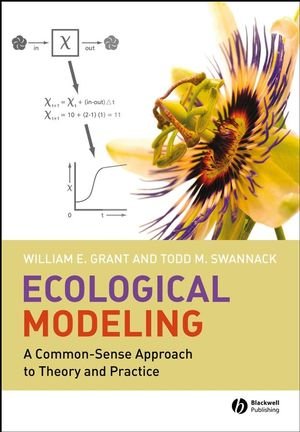
Ecological Modeling: A Common-Sense Approach to Theory and Practice
Authors:
William E. Grant
Publisher:
Wiley-Blackwell
Publication Date:
Not available
ISBN:
140516168X
Ecological Modeling:A Commonsense Approach to Theory and Practice explores how simulation modeling and its new ecological applications can offer... solutions to complex natural resource management problems. This is a practical guide for students, teachers, and professional ecologists.Examines four phases of the modeling process: conceptual model formulation, quantitative model specification, model evaluation, and model useProvides useful building blocks for constructing systems simulation modelsIncludes a format for reporting the development and use of simulation modelsOffers an integrated systems perspective for students, faculty, and professionalsFeatures helpful insights from the author, gained over 30 years of university teaching"I can strongly recommend the book as textbook for all courses in population dynamic modeling particularly when the course is planned for the second or third year of a bachelor study in ecology, environmental science or ecological engineering. It uncovers very clearly for the readers the scientific idea and thinking behind modeling and all the necessary steps in the development of models."Ecological Modeling Journal, 2009

Ecological Models and Data in R
Authors:
Benjamin M. Bolker
Publisher:
Princeton University Press
Publication Date:
Not available
ISBN:
0691125228
Ecological Models and Data in R is the first truly practical introduction to modern statistical methods for ecology. In step-by-step detail, the book... teaches ecology graduate students and researchers everything they need to know in order to use maximum likelihood, information-theoretic, and Bayesian techniques to analyze their own data using the programming language R. Drawing on extensive experience teaching these techniques to graduate students in ecology, Benjamin Bolker shows how to choose among and construct statistical models for data, estimate their parameters and confidence limits, and interpret the results. The book also covers statistical frameworks, the philosophy of statistical modeling, and critical mathematical functions and probability distributions. It requires no programming background--only basic calculus and statistics.Practical, beginner-friendly introduction to modern statistical techniques for ecology using the programming language R Step-by-step instructions for fitting models to messy, real-world data Balanced view of different statistical approaches Wide coverage of techniques--from simple (distribution fitting) to complex (state-space modeling) Techniques for data manipulation and graphical display Companion Web site with data and R code for all examples
Ecological Models and Dynamics: An Interactive Textbook
Authors:
Roger Schmitz
Publisher:
Garland Science
Publication Date:
Not available
ISBN:
0815344260
Ecological Models and Dynamics uses mathematical models and computer simulations to study the dynamics of ecosystems, both natural and in response to... disturbances. As an electronic 'pop-up' textbook, it features functional software programs deliberately placed to enhance learning. Links throughout the text jump to relevant parts of the book and to files in Microsoft Excel®, Mathcad®, Adobe Acrobat®, and LabVIEW™. Students can run simulations and models in immediate proximity to the concepts being explained and can work through exercises, cross reference concepts, read data tables in adjoining windows, and navigate the text instantaneously. The text starts with basic concepts and from there builds in complexity. Instructors can integrate additional research and data into the interactive examples and narrative, thereby customizing the coverage to suit their course needs. Exercises are included at the end of each chapter and hyperlinked to relevant concepts in the text. The book is written for advanced undergraduates and early graduate students in ecology, evolutionary biology, chemistry, and engineering; the book can also be used for graduate students in biology and as a self-tutorial. Solutions to all exercises throughout the book will be provided to qualified adopters of the text. Entries to the book's subject index will be hyperlinked to relevant chapters. The textbook is accompanied by a booklet containing the prologue, introduction, conceptual table of contents, subject index, and instructions for Mathcad and navigation throughout the book.

Ecological Niches and Geographic Distributions (MPB-49) (Monographs...
Authors:
A. Townsend Peterson
Publisher:
Princeton University Press
Publication Date:
Not available
ISBN:
0691136882
This book provides a first synthetic view of an emerging area of ecology and biogeography, linking individual- and population-level processes to... geographic distributions and biodiversity patterns. Problems in evolutionary ecology, macroecology, and biogeography are illuminated by this integrative view. The book focuses on correlative approaches known as ecological niche modeling, species distribution modeling, or habitat suitability modeling, which use associations between known occurrences of species and environmental variables to identify environmental conditions under which populations can be maintained. The spatial distribution of environments suitable for the species can then be estimated: a potential distribution for the species. This approach has broad applicability to ecology, evolution, biogeography, and conservation biology, as well as to understanding the geographic potential of invasive species and infectious diseases, and the biological implications of climate change. The authors lay out conceptual foundations and general principles for understanding and interpreting species distributions with respect to geography and environment. Focus is on development of niche models. While serving as a guide for students and researchers, the book also provides a theoretical framework to support future progress in the field.
Ecological Principles of Agriculture
Authors:
Laura Powers
Publisher:
Delmar Cengage Learning
Publication Date:
Not available
ISBN:
0766806537
Ecological Principles of Agriculture is a text for students of agriculture and ecology. Its strength can be found in its versatility. Agricultural... students with no prior coursework in ecology will find it invaluable as an introduction to ecological principles, while ecology students will gain insight into the practical application of these principles with respect to agriculture. This text will help students understand the ecological processes inherent in any agricultural system as well as their implications in agricultural management. Without discussing every different type of agricultural practice (an impossible task), students will come away with an understanding of how to apply these principles to agricultural design, management and problem-solving in very specific situations.
Ecological Restoration
Authors:
Susan M. Galatowitsch
Publisher:
Sinauer Associates, Inc.
Publication Date:
Not available
ISBN:
0878936076
Ecological Restoration provides a comprehensive overview of the strategies being used around the world to reverse human impacts on landscapes,... ecosystems, and species. This book aims to improve the outcomes of restoration practice by strengthening the connections between ecological concepts and real-world decision-making. Students explore each topic considering both research-based knowledge and lessons learned from 19 actual restorations. Details of these ecological restorations, from underwater reefs to mines in hot deserts, are woven into each chapter, presented as case studies, and used in exercises.The book explains and applies basic concepts from many supporting fields that serve as the foundation for practice, including ecology, conservation biology, earth and water sciences, environmental design, and public policy.

Ecological Restoration of Southwestern Ponderosa Pine Forests (The...
Authors:
Not Available
Publisher:
Island Press
Publication Date:
Not available
ISBN:
155963653X
Ecological Restoration of Southwestern Ponderosa Pine Forests brings together practitioners and thinkers from a variety of fields—including forestry,... biology, philosophy, ecology, political science, archaeology, botany, and geography—to synthesize what is known about ecological restoration in ponderosa pine forests and to consider the factors involved in developing and implementing a successful restoration effort. The book examines:• the overall context for restoration—ecological, social, economic, political, and philosophical• how ecosystem processes such as fire, hydrology, and nutrient cycling are affected by restoration activities• treatment effects on specific ecosystem components such as trees, understory plants, animals, and rare or invasive species• the details of implementing restoration projects, including smoke management, the protection of cultural resources, and monitoringEach section is introduced with a case study that demonstrates some of the promise and pitfalls of restoration projects.Ecological Restoration of Southwestern Ponderosa Pine Forests is the second book in the series The Science and Practice of Ecological Restoration from the Society for Ecological Restoration International and Island Press.
Ecological Restoration: Principles, Values, and Structure of an...
Authors:
Andre F. Clewell
Publisher:
Island Press
Publication Date:
Not available
ISBN:
1597261696
The field of ecological restoration is a rapidly growing discipline that encompasses a wide range of activities and brings together practitioners and... theoreticians from a variety of backgrounds and perspectives, ranging from volunteer backyard restorationists to highly trained academic scientists and professional consultants. Ecological Restoration offers for the first time a unified vision of ecological restoration as a field of study, one that clearly states the discipline’s precepts and emphasizes issues of importance to those involved at all levels. In a lively, personal fashion, the authors discuss scientific and practical aspects of the field as well as the human needs and values that motivate practitioners. The book: identifies fundamental concepts upon which restoration is based considers the principles of restoration practice explores the diverse values that are fulfilled with the restoration of ecosystems reviews the structure of restoration practice, including the various contexts for restoration work, the professional development of its practitioners, and the relationships of restoration with allied fields and activities A unique feature of the book is the inclusion of eight “virtual field trips,” short photo essays of project sites around the world that illustrate various points made in the book and are “led” by those who were intimately involved with the project described. Throughout, ecological restoration is conceived as a holistic endeavor, one that addresses issues of ecological degradation, biodiversity loss, and sustainability science simultaneously, and draws upon cultural resources and local skills and knowledge in restoration work.
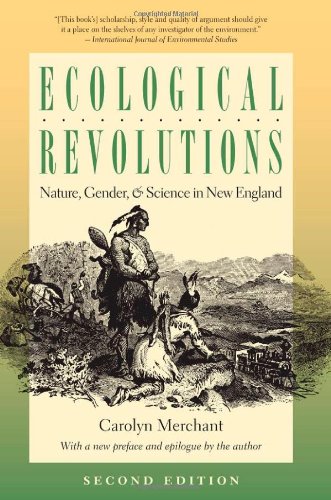
Ecological Revolutions: Nature, Gender, and Science in New England,...
Authors:
Carolyn Merchant
Publisher:
The University of North Carolina Press
Publication Date:
Not available
ISBN:
080787180X
With the arrival of European explorers and settlers during the seventeenth century, Native American ways of life and the environment itself underwent... radical alterations as human relationships to the land and ways of thinking about nature all changed. This colonial ecological revolution held sway until the nineteenth century, when New England's industrial production brought on a capitalist revolution that again remade the ecology, economy, and conceptions of nature in the region. In Ecological Revolutions, Carolyn Merchant analyzes these two major transformations in the New England environment between 1600 and 1860. In a preface to the second edition, Merchant introduces new ideas about narrating environmental change based on gender and the dialectics of transformation, while the revised epilogue situates New England in the context of twenty-first-century globalization and climate change. Merchant argues that past ways of relating to the land could become an inspiration for renewing resources and achieving sustainability in the future.

Ecological Security: An Evolutionary Perspective on Globalization
Authors:
Theresa Manley Degeest
Publisher:
Rowman & Littlefield Publishers
Publication Date:
Not available
ISBN:
0847695018
Global environmental politics has emerged from its initial incarnation in the arena of 'low politics' and is rapidly becoming a 'high politics' concern.... Concern over water pollution, air pollution, deforestation, and related basic environmental issues is giving way to a broader ecological security agenda. In this pathbreaking book, Dennis Clark Pirages and Theresa Manley DeGeest argue for dramatically broadening the context in which security priorities are established in an age of increasing globalization. Addressing the very fundamental question of the sources of premature human deaths and associated insecurity, both historically and in the contemporary world, the authors observe that in the twentieth century starvation killed nearly as many people as did military conflict. But disease was responsible for killing nearly fourteen times as many people as was warfare. And in the contemporary world of the twenty-first century, environmental terrorism and biological warfare are blurring the traditional distinctions between natural disasters, accidental deaths, and military casualties. Ecological Security moves the analysis of global environmental and resource issues to the next level by developing an 'eco-evolutionary' perspective for analyzing emerging problems associated with rapid globalization. Preserving future ecological security will depend upon maintaining dynamic equilibriums among human populations, and between them and pathogenic microorganisms, other species, and the sustaining capabilities of nature. This eco-evolutionary framework is used to anticipate and analyze emerging demographic, ecological, and technological discontinuities and dilemmas associated with rapid globalization. The authors conclude by stressing the need for new kinds of global public goods to mitigate the harshest impacts of these rapid and interrelated changes.
Ecological Urbanism
Authors:
Not Available
Publisher:
Lars Müller Publishers
Publication Date:
Not available
ISBN:
3037781890
With the aim of projecting alternative and sustainable forms of urbanism, the book asks: What are the key principles of an ecological urbanism? How... might they be organized? And what role might design and planning play in the process? While climate change, sustainable architecture, and green technologies have become increasingly topical, issues surrounding the sustainability of the city are much less developed. The premise of the book is that an ecological approach is urgently needed both as a remedial device for the contemporary city and an organizing principle for new cities. Ecological urbanism approaches the city without any one set of instruments and with a worldview that is fluid in scale and disciplinary approach. Design provides the synthetic key to connect ecology with an urbanism that is not in contradiction with its environment. The book brings together design practitioners and theorists, economists, engineers, artists, policy makers, environmental scientists, and public health specialists, with the goal of reaching a more robust understanding of ecological urbanism and what it might be in the future. Contributors include: Homi Bhabha, Stefano Boeri, Chuck Hoberman, Rem Koolhaas, Sanford Kwinter, Bruno Latour, Nina-Marie Lister, Moshen Mostafavi, Matthias Schuler, Sissel Tolaas, Charles Waldheim
 '





