production
/viewbook/list/all/?page=379
/
/static/
None
A First Course in Stochastic Processes, Second Edition
Authors:
Samuel Karlin
Publisher:
Academic Press
Publication Date:
Not available
ISBN:
0123985528
The purpose, level, and style of this new edition conform to the tenets set forth in the original preface. The authors continue with their tack of... developing simultaneously theory and applications, intertwined so that they refurbish and elucidate each other.The authors have made three main kinds of changes. First, they have enlarged on the topics treated in the first edition. Second, they have added many exercises and problems at the end of each chapter. Third, and most important, they have supplied, in new chapters, broad introductory discussions of several classes of stochastic processes not dealt with in the first edition, notably martingales, renewal and fluctuation phenomena associated with random sums, stationary stochastic processes, and diffusion theory.
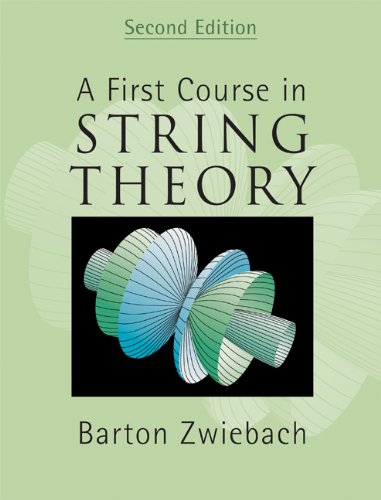
A First Course in String Theory
Authors:
Barton Zwiebach
Publisher:
Cambridge University Press
Publication Date:
Not available
ISBN:
0521880327
Barton Zwiebach is once again faithful to his goal of making string theory accessible to undergraduates. Complete and thorough in its coverage, the... author presents the main concepts of string theory in a concrete and physical way in order to develop intuition before formalism, often through simplified and illustrative examples. This new edition now includes AdS/CFT correspondence, which is the hottest area of string theory right now as well as introducing superstrings. The text is perfectly suited to introductory courses in string theory for students with a background in mathematics and physics. New sections cover strings on orbifolds, cosmic strings, moduli stabilization, and the string theory landscape.
A First Course in Structural Equation Modeling
Authors:
Tenko Raykov
Publisher:
Lawrence Erlbaum Associates
Publication Date:
Not available
ISBN:
0805855882
In this book, authors Tenko Raykov and George A. Marcoulides introduce students to the basics of structural equation modeling (SEM) through a... conceptual, nonmathematical approach. For ease of understanding, the few mathematical formulas presented are used in a conceptual or illustrative nature, rather than a computational one. Featuring examples from EQS, LISREL, and Mplus, A First Course in Structural Equation Modeling is an excellent beginner’s guide to learning how to set up input files to fit the most commonly used types of structural equation models with these programs. The basic ideas and methods for conducting SEM are independent of any particular software. Highlights of the Second Edition include: • Review of latent change (growth) analysis models at an introductory level • Coverage of the popular Mplus program • Updated examples of LISREL and EQS • A CD that contains all of the text’s LISREL, EQS, and Mplus examples. A First Course in Structural Equation Modeling is intended as an introductory book for students and researchers in psychology, education, business, medicine, and other applied social, behavioral, and health sciences with limited or no previous exposure to SEM. A prerequisite of basic statistics through regression analysis is recommended. The book frequently draws parallels between SEM and regression, making this prior knowledge helpful.
A First Course in Systems Biology
Authors:
Eberhard Voit
Publisher:
Garland Science
Publication Date:
Not available
ISBN:
0815344678
A First Course in Systems Biology is a textbook designed for advanced undergraduate and graduate students. Its main focus is the development of... computational models and their applications to diverse biological systems. Because the biological sciences have become so complex that no individual can acquire complete knowledge in any given area of specialization, the education of future systems biologists must instead develop a student's ability to retrieve, reformat, merge, and interpret complex biological information. This book provides the reader with the background and mastery of methods to execute standard systems biology tasks, understand the modern literature, and launch into specialized courses or projects that address biological questions using theoretical and computational means. The format is a combination of instructional text and references to primary literature, complemented by sets of small-scale exercises that enable hands-on experience, and larger-scale, often open-ended questions for further reflection.

A First Course in the Finite Element Method
Authors:
Daryl L. Logan
Publisher:
CL-Engineering
Publication Date:
Not available
ISBN:
0534552986
A First Course in the Finite Element Analysis provides a simple, basic approach to the finite element method that can be understood by both... undergraduate and graduate students. It does not have the usual prerequisites (such as structural analysis) required by most available texts in this area. The book is written primarily as a basic learning tool for the undergraduate student in civil and mechanical engineering whose main interest is in stress analysis and heat transfer. The text is geared toward those who want to apply the finite element method as a tool to solve practical physical problems. This revised fourth edition includes the addition of a large number of new problems (including SI problems), an appendix for mechanical and thermal properties, and more civil applications.
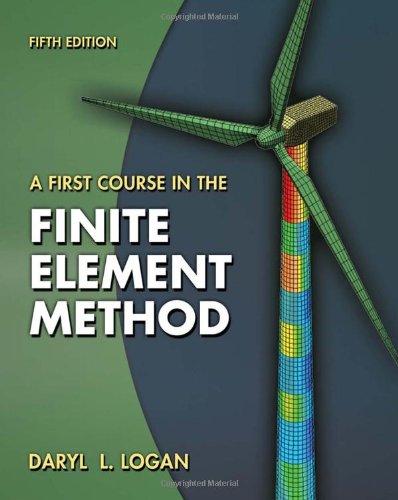
A First Course in the Finite Element Method
Authors:
Daryl L. Logan
Publisher:
CL Engineering
Publication Date:
Not available
ISBN:
0495668257
A FIRST COURSE IN THE FINITE ELEMENT METHOD provides a simple, basic approach to the course material that can be understood by both undergraduate and... graduate students without the usual prerequisites (i.e. structural analysis). The book is written primarily as a basic learning tool for the undergraduate student in civil and mechanical engineering whose main interest is in stress analysis and heat transfer. The text is geared toward those who want to apply the finite element method as a tool to solve practical physical problems.

A First Course in the Numerical Analysis of Differential Equations...
Authors:
Arieh Iserles
Publisher:
Cambridge University Press
Publication Date:
Not available
ISBN:
0521734908
Numerical analysis presents different faces to the world. For mathematicians it is a bona fide mathematical theory with an applicable flavour. For... scientists and engineers it is a practical, applied subject, part of the standard repertoire of modelling techniques. For computer scientists it is a theory on the interplay of computer architecture and algorithms for real-number calculations. The tension between these standpoints is the driving force of this book, which presents a rigorous account of the fundamentals of numerical analysis of both ordinary and partial differential equations. The exposition maintains a balance between theoretical, algorithmic and applied aspects. This new edition has been extensively updated, and includes new chapters on emerging subject areas: geometric numerical integration, spectral methods and conjugate gradients. Other topics covered include multistep and Runge-Kutta methods; finite difference and finite elements techniques for the Poisson equation; and a variety of algorithms to solve large, sparse algebraic systems.
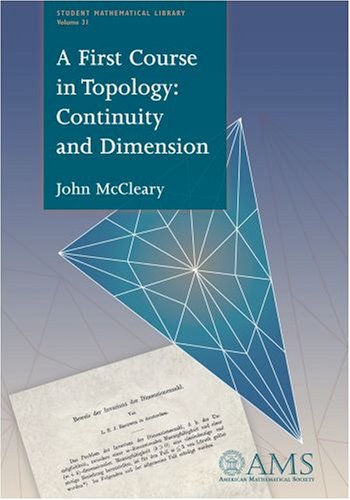
A First Course in Topology: Continuity and Dimension (Student...
Authors:
John McCleary
Publisher:
American Mathematical Society
Publication Date:
Not available
ISBN:
0821838849
How many dimensions does our universe require for a comprehensive physical description? In 1905, Poincaré argued philosophically about the necessity of... the three familiar dimensions, while recent research is based on 11 dimensions or even 23 dimensions. The notion of dimension itself presented a basic problem to the pioneers of topology. Cantor asked if dimension was a topological feature of Euclidean space. To answer this question, some important topological ideas were introduced by Brouwer, giving shape to a subject whose development dominated the twentieth century. The basic notions in topology are varied and a comprehensive grounding in point-set topology, the definition and use of the fundamental group, and the beginnings of homology theory requires considerable time. The goal of this book is a focused introduction through these classical topics, aiming throughout at the classical result of the Invariance of Dimension. This text is based on the author's course given at Vassar College and is intended for advanced undergraduate students. It is suitable for a semester-long course on topology for students who have studied real analysis and linear algebra. It is also a good choice for a capstone course, senior seminar, or independent study.
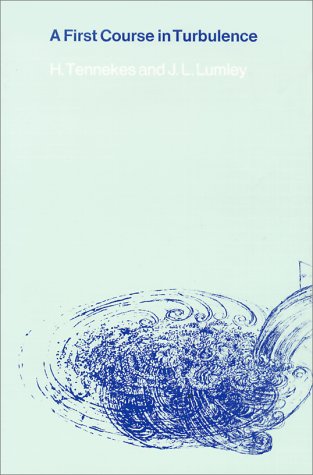
A First Course in Turbulence
Authors:
Henk Tennekes
Publisher:
The MIT Press
Publication Date:
Not available
ISBN:
0262200198
The subject of turbulence, the most forbidding in fluid dynamics, has usually proved treacherous to the beginner, caught in the whirls and eddies of its... nonlinearities and statistical imponderables. This is the first book specifically designed to offer the student a smooth transitionary course between elementary fluid dynamics (which gives only last-minute attention to turbulence) and the professional literature on turbulent flow, where an advanced viewpoint is assumed.Moreover, the text has been developed for students, engineers, and scientists with different technical backgrounds and interests. Almost all flows, natural and man-made, are turbulent. Thus the subject is the concern of geophysical and environmental scientists (in dealing with atmospheric jet streams, ocean currents, and the flow of rivers, for example), of astrophysicists (in studying the photospheres of the sun and stars or mapping gaseous nebulae), and of engineers (in calculating pipe flows, jets, or wakes). Many such examples are discussed in the book.The approach taken avoids the difficulties of advanced mathematical development on the one side and the morass of experimental detail and empirical data on the other. As a result of following its midstream course, the text gives the student a physical understanding of the subject and deepens his intuitive insight into those problems that cannot now be rigorously solved.In particular, dimensional analysis is used extensively in dealing with those problems whose exact solution is mathematically elusive. Dimensional reasoning, scale arguments, and similarity rules are introduced at the beginning and are applied throughout.A discussion of Reynolds stress and the kinetic theory of gases provides the contrast needed to put mixing-length theory into proper perspective: the authors present a thorough comparison between the mixing-length models and dimensional analysis of shear flows. This is followed by an extensive treatment of vorticity dynamics, including vortex stretching and vorticity budgets.Two chapters are devoted to boundary-free shear flows and well-bounded turbulent shear flows. The examples presented include wakes, jets, shear layers, thermal plumes, atmospheric boundary layers, pipe and channel flow, and boundary layers in pressure gradients.The spatial structure of turbulent flow has been the subject of analysis in the book up to this point, at which a compact but thorough introduction to statistical methods is given. This prepares the reader to understand the stochastic and spectral structure of turbulence. The remainder of the book consists of applications of the statistical approach to the study of turbulent transport (including diffusion and mixing) and turbulent spectra.

A First Course in Wavelets with Fourier Analysis
Authors:
Albert Boggess
Publisher:
Wiley
Publication Date:
Not available
ISBN:
0470431172
A comprehensive, self-contained treatment of Fourier analysis and wavelets—now in a new editionThrough expansive coverage and easy-to-follow... explanations, A First Course in Wavelets with Fourier Analysis, Second Edition provides a self-contained mathematical treatment of Fourier analysis and wavelets, while uniquely presenting signal analysis applications and problems. Essential and fundamental ideas are presented in an effort to make the book accessible to a broad audience, and, in addition, their applications to signal processing are kept at an elementary level.The book begins with an introduction to vector spaces, inner product spaces, and other preliminary topics in analysis. Subsequent chapters feature:The development of a Fourier series, Fourier transform, and discrete Fourier analysisImproved sections devoted to continuous wavelets and two-dimensional waveletsThe analysis of Haar, Shannon, and linear spline waveletsThe general theory of multi-resolution analysisUpdated MATLAB code and expanded applications to signal processingThe construction, smoothness, and computation of Daubechies' waveletsAdvanced topics such as wavelets in higher dimensions, decomposition and reconstruction, and wavelet transformApplications to signal processing are provided throughout the book, most involving the filtering and compression of signals from audio or video. Some of these applications are presented first in the context of Fourier analysis and are later explored in the chapters on wavelets. New exercises introduce additional applications, and complete proofs accompany the discussion of each presented theory. Extensive appendices outline more advanced proofs and partial solutions to exercises as well as updated MATLAB routines that supplement the presented examples.A First Course in Wavelets with Fourier Analysis, Second Edition is an excellent book for courses in mathematics and engineering at the upper-undergraduate and graduate levels. It is also a valuable resource for mathematicians, signal processing engineers, and scientists who wish to learn about wavelet theory and Fourier analysis on an elementary level.
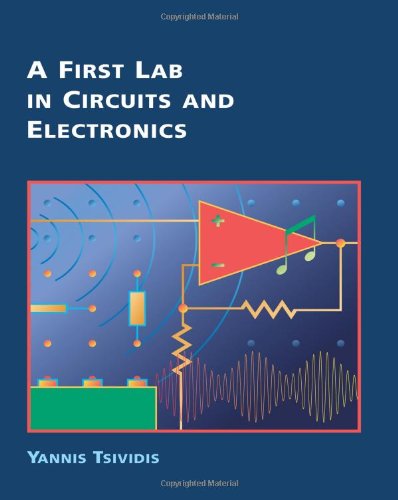
A First Lab in Circuits and Electronics
Authors:
Yannis Tsividis
Publisher:
Wiley
Publication Date:
Not available
ISBN:
0471386952
* Experiments are linked to real applications. Students are likely to be interested and excited to learn more and explore. Example of experiments linked... to real applications can be seen in Experiment 2, steps 6, 7, 15, and 16; Experiment 5, steps 6 to 10 and Experiment 7, steps 12 to 20.* Self-contained background to all electronics experiments. Students will be able to follow without having taken an electronics course. Includes a self-contained introduction based on circuits only. For the instructor this provides flexibility as to when to run the lab. It can run concurrently with the first circuits analysis course.* Review background sections are provided. This convenient text feature provides an alternative point of view; helps provide a uniform background for students of different theoretical backgrounds.* A "touch-and-feel" approach helps to provide intuition and to make things "click". Rather than thinking of the lab as a set of boring procedures, students get the idea that what they are learning is real.* Encourages students to explore and to ask "what if" questions. Helps students become active learners.* Introduces students to simple design at a very early stage. Helps students see the relevance of what they are learning, and to become active learners.* Helps students become tinkerers and to experiment on their own. Students are encouraged to become creative, and their mind is opened to new possibilities. This also benefits their subsequent professional work and/or graduate study.
A First Look at Communication Theory
Authors:
Em Griffin
Publisher:
McGraw-Hill Humanities/Social Sciences/Languages
Publication Date:
Not available
ISBN:
0073385026
The most widely-used textbook for the communication theory course, A First Look at Communication Theory analyzes the major communication theories at a... level that is appropriate for both lower- and upper-level courses. The 32 theories represented in the text reflect a mix of foundational and recent scholarship and strike a balance of scientific and interpretive approaches.
A First Look at Communication Theory
Authors:
Emory A. Griffin
Publisher:
Mcgraw-Hill College
Publication Date:
Not available
ISBN:
0073010189
This best selling text analyzes the major communication theories at a level appropriate for both lower and upper level courses. The material is... presented in a coherent manner and strikes a balance between humanistic, scientific, classical, and contemporary theories. (In contrast to previous editions--no theories have been dropped.) Ethics are covered throughout the text. A First Look at Communication Theory is the most widely used textbook for the communication theory course.
A First Look at Communication Theory (8th Revised Edition)
Authors:
Em Griffin
Publisher:
McGraw-Hill Humanities/Social Sciences/Languages
Publication Date:
Not available
ISBN:
0073534307
The most widely-used textbook for the communication theory course, A First Look at Communication Theory analyzes the major communication theories at a... level that is appropriate for both lower- and upper-level courses. The theories represented in the text reflect a mix of foundational and recent scholarship and strike a balance of scientific and interpretive approaches.

A Fish Caught in Time: The Search for the Coelacanth
Authors:
Samantha Weinberg
Publisher:
Harper Perennial
Publication Date:
Not available
ISBN:
0060932856
The coelacanth (see-lo-canth) is no ordinary fish. Five feet long, with luminescent eyes and limb like fins, this bizarre creature, presumed to be... extinct, was discovered in 1938 by an amateur icthyologist who recognized it from fossils dating back 400 million years. The discovery was immediately dubbed the "greatest scientific find of the century," but the excitement that ensued was even more incredible. This is the entrancing story of that most rare and precious fish -- our own great-uncle forty million times removed.
 '
'