production
/viewbook/list/all/?page=391
/
/static/
None

African Americans and the American Political System (4th Edition)
Authors:
Lucius J. Barker
Publisher:
Pearson
Publication Date:
Not available
ISBN:
0137795629
Offers a systematic, theoretical, and structural framework for more accurate appraisal of the relative nature and influence of governing institutions... and of past, present, and recurring developments on African-American and American Politics generally. It's a dynamic systematic appraisal of how African Americans fare within the prevailing theoretical, structural, and functioning patterns of the American political and governmental system. Offers new materials on Black Political participation and voting behavior, e.g., who votes in the Black community; the role of race, class, and gender in Black politics; the role of the economy in shaping the Black vote; the Black evaluations of their representatives in Congress. Comments on the changing nature and structure of African-American participation and influence in Congress and the Presidency: e.g., the Congressional Black Caucus and the overall relative role and participation of Blacks in congress and in the Clinton Presidency and Administration.
African Americans and the Haitian Revolution: Selected Essays and...
Authors:
Not Available
Publisher:
Routledge
Publication Date:
Not available
ISBN:
0415803764
Bringing together scholarly essays and helpfully annotated primary documents, African Americans and the Haitian Revolution collects not only the best... recent scholarship on the subject, but also showcases the primary texts written by African Americans about the Haitian Revolution. Rather than being about the revolution itself, this collection attempts to show how the events in Haiti served to galvanize African Americans to think about themselves and to act in accordance with their beliefs, and contributes to the study of African Americans in the wider Atlantic World.
African Americans and the Media (MM - Media and Minorities)
Authors:
Catherine Squires
Publisher:
Polity
Publication Date:
Not available
ISBN:
0745640346
From pamphlets denouncing slavery to boycotts of Hollywood, African Americans have fought for adequate representations of themselves in the mass media... industries of the United States. This book provides readers with an interdisciplinary overview of the past, present, and future of African Americans in U.S. media and the ongoing project of gaining racial equality in media: a process which spans generations. Catherine Squires introduces the reader to the varied ways in which Black Americans have navigated cultural, political, and economic obstacles both to make their own media and to critique mainstream media. Synthesizing the work of social scientists, historians, cultural critics, as well as comments from audience members and media producers, African Americans and the Media gives readers a lively entry point to classic and contemporary studies of Black Americans and mass media. Across the chapters, readers follow African Americans’ struggles to harness the power of print, broadcasting, film, and digital media, through five main themes which are woven through the book: representation, circulation, innovation, audience and responsibility. Taking in examples as diverse as Blaxploitation films, the work of 20th Century black activist journalists such as Ida B. Wells and A. Philip Randolph, and popular television such as The Cosby Show, this book will be essential reading for all students and scholars of media and communications and African American studies.
African Americans and the Media (MM - Media and Minorities)
Authors:
Catherine Squires
Publisher:
Polity
Publication Date:
Not available
ISBN:
0745640362
From pamphlets denouncing slavery to boycotts of Hollywood, African Americans have fought for adequate representations of themselves in the mass media... industries of the United States. This book provides readers with an interdisciplinary overview of the past, present, and future of African Americans in U.S. media and the ongoing project of gaining racial equality in media: a process which spans generations. Catherine Squires introduces the reader to the varied ways in which Black Americans have navigated cultural, political, and economic obstacles both to make their own media and to critique mainstream media. Synthesizing the work of social scientists, historians, cultural critics, as well as comments from audience members and media producers, African Americans and the Media gives readers a lively entry point to classic and contemporary studies of Black Americans and mass media. Across the chapters, readers follow African Americans’ struggles to harness the power of print, broadcasting, film, and digital media, through five main themes which are woven through the book: representation, circulation, innovation, audience and responsibility. Taking in examples as diverse as Blaxploitation films, the work of 20th Century black activist journalists such as Ida B. Wells and A. Philip Randolph, and popular television such as The Cosby Show, this book will be essential reading for all students and scholars of media and communications and African American studies.

African Americans and the Presidency: The Road to the White House
Authors:
Not Available
Publisher:
Routledge
Publication Date:
Not available
ISBN:
0415803926
African Americans and the Presidency explores the long history of African American candidates for President and Vice President, examining the impact of... each candidate on the American public, as well as the contribution they all made toward advancing racial equality in America. Each chapter takes the story one step further in time, through original essays written by top experts, giving depth to these inspiring candidates, some of whom are familiar to everyone, and some whose stories may be new. Presented with illustrations and a detailed timeline, African Americans and the Presidency provides anyone interested in African American history and politics with a unique perspective on the path carved by the predecessors of Barack Obama, and the meaning their efforts had for the United States.
African Americans and US Popular Culture (Introductions to History)
Authors:
Kevern Verney
Publisher:
Routledge
Publication Date:
Not available
ISBN:
0415275288
This volume is an authoritative introduction to the history of African Americans in US popular culture, examining its development from the early... nineteenth century to the present. Kevern Verney examines: * the role and significance of race in all major forms of popular culture, including sport, film, television, radio and music* how the entertainment industry has encouraged racism through misrepresentations and caricatured images of African Americans. African Americans have made a unique contribution to the richness and diversity of US popular culture. Rooted in African society and traditions, black slaves in America created a dynamic culture which continues to evolve. Present day hip-hop and rap music are still shaped by the historical experience of slavery and the ongoing will to oppose oppression and racism. Any student of African-American history or cultural studies will find this a fascinating and highly useful book.

AFRICAN AMERICANS: CONCISE HIST (COMBINED) DIGITAL BOOK
Authors:
Not Available
Publisher:
Not available
Publication Date:
Not available
ISBN:
Not available
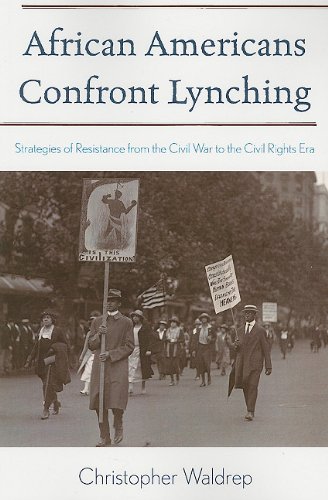
African Americans Confront Lynching: Strategies of Resistance from...
Authors:
Christopher Waldrep
Publisher:
Rowman & Littlefield Publishers
Publication Date:
Not available
ISBN:
074255273X
This book examines African Americans' strategies for resisting white racial violence from the Civil War until the assassination of Martin Luther King,... Jr., in 1968 and up to the Clinton era. Christopher Waldrep's semi-biographical approach to the pioneers in the antilynching campaign portrays African Americans as active participants in the effort to end racial violence rather than as passive victims. In telling this more-than 100-year-old story of violence and resistance, Waldrep describes how white Americans legitimized racial violence after the Civil War, and how black journalists campaigned against the violence by invoking the Constitution and the law as a source of rights. He shows how, toward the end of the 19th century and into the 20th, anti-lynching crusaders Ida B. Wells and Monroe Work adopted a more sociological approach, offering statistics and case studies to thwart white claims that a black propensity for crime justified racial violence. Waldrep describes how the NAACP, founded in 1909, represented an organized, even bureaucratic approach to the fight against lynching. Despite these efforts, racial violence continued after World War II, as racists changed tactics, using dynamite more than the rope or the gun. Waldrep concludes by showing how modern day hate crimes continue the lynching tradition, and how the courts and grass-roots groups have continued the tradition of resistance to racial violence. A rich selection of documents helps give the story a sense of immediacy. Sources include nineteenth-century eyewitness accounts of lynching, courtroom testimony of Ku Klux Klan victims, South Carolina senator Ben Tillman's 1907 defense of lynching, and the text of the first federal hate crimes law.
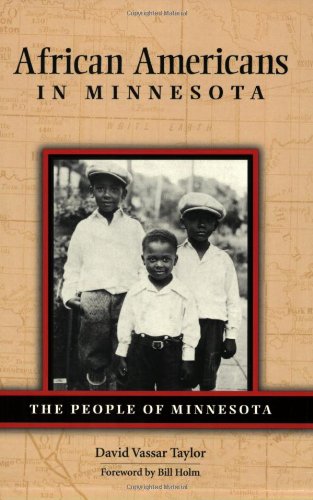
African Americans in Minnesota (People Of Minnesota)
Authors:
David Taylor
Publisher:
Minnesota Historical Society Press
Publication Date:
Not available
ISBN:
0873514203
While making up a smaller percentage of Minnesota's population compared to national averages, African Americans have had a profound influence on the... history and culture of the state from its earliest days to the present. In African Americans in Minnesota, author David Vassar Taylor chronicles the rich history of Blacks in the state through careful analysis of census and housing records, newspaper records, and first-person accounts. He recounts their triumphs and struggles over the past 200 years in a clear and concise narrative. Major themes covered include settlement by Blacks during the territorial and early statehood periods; the development of urban Black communities in St. Paul, Minneapolis, and Duluth; Blacks in rural areas; the emergence of Black community organizations and leaders in the late-nineteenth and early-twentieth centuries; and Black communities in transition during the turbulent last half of the twentieth century.Taylor also introduces influential and notable African Americans: George Bonga, the first African American born in the region during the fur trade era; Harriet and Dred Scott, whose two-year residence at Fort Snelling in the 1830s later led to a famous, though unsuccessful, legal challenge to the institution of slavery; John Quincy Adams, publisher of the state's first Black newspaper; Fredrick L. McGhee, the state's first Black lawyer; community leaders, politicians, and civil servants including James Griffin, Sharon Sayles Belton, Alan Page, Jean Harris, and Dr. Richard Green; and nationally influential artists including August Wilson, Lou Bellamy, Prince, Jimmy Jam, and Terry Lewis.
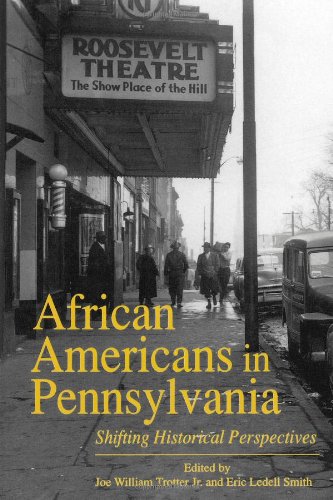
African Americans in Pennsylvania: Shifting Historical Perspectives
Authors:
Not Available
Publisher:
Pennsylvania State Univ Pr
Publication Date:
Not available
ISBN:
0271016876
From the onset of the modern civil rights and black power movements of the late 1960s and early 1970s through recent times, scholarship on... Pennsylvania's African American experience proliferated. Unfortunately, much of it is scattered in books and journals that are not easily accessible. Under the editorship of Joe W. Trotter and Eric Ledell Smith, African Americans in Pennsylvania brings together an outstanding array of this scholarship and makes it accessible to a wider audience, including general as well as professional students of the black experience.This volume, co-published with the Pennsylvania Historical and Museum Commission, offers the most comprehensive history of the state's black history to date. Chapters emphasize the interplay of class and race from the origins of the Commonwealth during the seventeenth century, through the era of deindustrialization in the late twentieth century. We see not only poor and working-class people but also educated business and professional people. And although scholarship has traditionally focused on the experiences of black men, this volume includes significant research on black women. Most important, this volume suggests a conceptual framework for a historical synthesis of the state's African American experience. In his introduction, Trotter assesses the strengths and limitations of existing scholarship, showing how it is built on the contributions of nineteenth-century pioneers as well as those of the first generation of professional historians, including W. E. B. Du Bois, Richard R. Wright, and Edward Raymond Turner. Chapters are grouped into four interlocking parts that correspond to important changes in Pennsylvania's political economy. Each part includes a brief substantive introduction that ties together the themes of the ensuing chapters.This format enables readers to develop their own synthesis of key socioeconomic and political changes in the state's African American experience over more than three centuries of time. African Americans in Pennsylvania shows how ordinary people have influenced the culture, institutions, and politics of African American communities in Pennsylvania. In the process, it documents the ways that black people have influenced, and continue to influence, the state as a whole.This collection serves as the single most comprehensive treatment of Pennsylvania's black history yet to appear in print. --ChoiceContributors are Elijah Anderson, John F. Bauman, R. J. M. Blackett, John E. Bodnar, Carolyn Leonard Carson, Dennis C. Dickerson, Gerald G. Eggert, V. P. Franklin, Laurence Glasco, Peter Gottlieb, Theodore Hershberg, Leroy T. Hopkins, Norman P. Hummon, Emma Jones Lapsansky, Janice Sumler Lewis, Frederic Miller, Edward K. Muller, Gary B. Nash, Merl E. Reed, Harry C. Silcox, Jean R. Soderlund, and Joe W. Trotter, Jr.

African Americans in the Colonial Era (The American History Series)
Authors:
Donald R. Wright
Publisher:
Harlan Davidson
Publication Date:
Not available
ISBN:
0882952749
Over recent decades few topics of American history have been subject to greater attention and more thorough revision than African Americans in colonial... times. Acclaimed works by leading scholars, relying on new bodies of evidence and writing from a fresh, Atlantic perspective, have provided a broadened, more nuanced view of the topic. In this third edition of one of the most popular books in our American History Series, Donald Wright works new interpretations into a narrative that provides a clear understanding of the scope and nature of the early African-American experience. Included are discussions of African Americans African origins; the Atlantic slave trade, based on the latest data from an on-line Trans-Atlantic Slave Trade Database; the origins of slavery and race-based prejudice in the mainland colonies; the evolutionary formation of African-American culture; and the effects of the American Revolution on men and women of African descent, at the time and long thereafter.This third edition views African Americans in the British North-American mainland colonies more as their contemporaries did: as persons from one of the four continents who interacted economically, socially, and politically over a period of 180 years in a vast, vibrant, complex Atlantic world. It shows how the mainland North-American society that resulted from these interactions reflected the mix of Atlantic cultures and how the republic that a group of these people eventually constructed used European ideas to support creation of a favorable situation for those in control, persons largely of European descent. The African and African-American men and women, whose forebears had added greatly to the region s economic and cultural viability, found themselves in 1789 with the least benefit from the nation they helped bring into existence.Of special value is the book s bibliographical essay, an expansion and updating of earlier versions that led the historian Ira Berlin to label Wright the historiographer of slavery in the early period.
African Americans in the Early Republic, 1789-1831 (American...
Authors:
Donald R. Wright
Publisher:
Harlan Davidson
Publication Date:
Not available
ISBN:
0882958976
Chapter One - A Second Forced Migration Chapter Two - The Varying Natureof Life in Slavery Chapter Three - An Age of Slave Unrest Chapter Four -... Free African Americansin a Slave Society Chapter Five - New Directions

African Americans in the Furniture City: The Struggle for Civil...
Authors:
Randal Maurice Jelks
Publisher:
University of Illinois Press
Publication Date:
Not available
ISBN:
0252073479
"African Americans in the Furniture City" is unique not only in terms of its subject, but also for its framing of the African American struggle for... survival, civil rights, and community inside a discussion of the larger white community. Examining the African-American community of Grand Rapids, Michigan between 1850 and 1954, Randal Maurice Jelks uncovers the ways in which its members faced urbanization, responded to structural racism, developed in terms of occupations, and shaped their communal identities. Focusing on the intersection of African Americans' nineteenth-century cultural values and the changing social and political conditions in the first half of the twentieth century, Jelks pays particularly close attention to the religious community's influence during their struggle toward a respectable social identity and fair treatment under the law. He explores how these competing values defined the community's politics as it struggled to expand its freedoms and change its status as a subjugated racial minority.
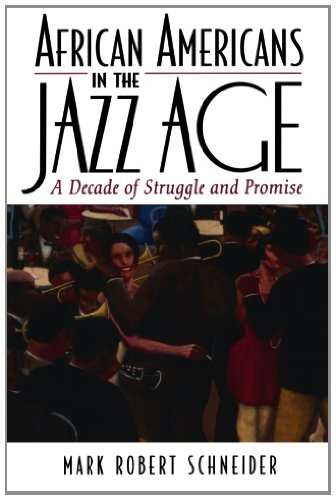
African Americans in the Jazz Age: A Decade of Struggle and Promise...
Authors:
Mark R. Schneider
Publisher:
Rowman & Littlefield Publishers
Publication Date:
Not available
ISBN:
0742544176
The victorious end to the first World War offered hope to African Americans who had fought for freedom abroad and hoped to find it at home. In this new... work, historian Mark Schneider analyzes the dynamic 1920s that saw the enormous migration of African Americans to Northern urban centers and the formation of important African American religious, social and economic institutions. Yet, even with considerable efforts to promote civil rights and advancements in the arts, many African Americans in the rural south continued to live under conditions unchanged from a century before. African Americans in the Jazz Age recounts the history of this turbulent era, paying particular attention to the ways in which African Americans actively challenged Jim Crow and firmly expressed pride in their heritage. Supplemented by primary sources, this work serves as an ideal introduction to this critical period in U.S. history and allows students to examine the issues first-hand and draw their own conclusions.

African Americans in the U.S. Economy
Authors:
John Whitehead
Publisher:
Rowman & Littlefield Publishers
Publication Date:
Not available
ISBN:
0742543781
Over the last several decades, academic discourse on racial inequality has focused primarily on political and social issues with significantly less... attention on the complex interplay between race and economics. African Americans in the U.S. Economy represents a contribution to recent scholarship that seeks to lessen this imbalance. This book builds upon, and significantly extends, the principles, terminology, and methods of standard economics and black political economy. Influenced by path-breaking studies presented in several scholarly economic journals, this volume is designed to provide a political-economic analysis of the past and present economic status of African Americans. The chapters in this volume represent the work of some of the nation's most distinguished scholars on the various topics presented. The individual chapters cover several well-defined areas, including black employment and unemployment, labor market discrimination, black entrepreneurship, racial economic inequality, urban revitalization, and black economic development. The book is written in a style free of the technical jargon that characterizes most economics textbooks. While the book is methodologically sophisticated, it is accessible to a wide range of students and the general public and will appeal to academicians and practitioners alike.
 '
'