production
/viewbook/list/all/?page=3930
/
/static/
None

El romancero viejo (COLECCION LETRAS HISPANICAS) (Spanish Edition)
Authors:
Varios
Publisher:
Catedra
Publication Date:
Not available
ISBN:
8437600804
This new, third edition of Practising Spanish Grammar offers a varied set of exercises which puts Spanish grammatical theory into practice. It can be... used alone or with A New Reference Grammar of Modern Spanish. The new edition now features a glossary of grammatical terms, a variety of new and updated exercises, and up-to-date topical and technological vocabulary. The book also provides level indicators with all the exercises so you can select the ones that match your ability. The book also contains the answers to the exercises so you can use this book in class or alone at home.

El ruido de las cosas al caer (Premio Alfaguara 2011) / The sound...
Authors:
Juan Gabriel Vásquez
Publisher:
Alfaguara
Publication Date:
Not available
ISBN:
1616056118
The exotic escape and subsequent capture of a hippopotamus the final remnant of the incongruous zoo Pablo Escobar used to flaunt his power is the spark... that activates the mechanisms of Antonio Yammara s memory, protagonist and narrator of El ruido de las cosas al caer a dark balance from a time of terror and violence, set in a Bogota painted as a region full of literary significance. In 1995, Antonio meets the intriguing Ricardo Laverde, a man who has served a 20-year sentence. Laverde, an acknowledged pilot, is part of the group that gathers at the pool hall where Yammara, a young university Law professor, burns what is left of his youth. The two men become fast friends, to the point where Antonio, whose life has always been full of doubts, affirms that a warning hides within his friend s tortuous experience. Antonio will try to understand Laverde s generation (which is also his parents, with all its love stories), to evaluate their share of innocence and complicity in the creation of a society dominated by corruption, chaos and violence. Yammara's memory takes us on a vibrant journey through Colombia s recent history, bringing back attractive and complex characters. Such is the case of Ricardo Laverde, a character drawn with the mastery of Juan Marse, Mario Vargas Llosa and, in the central image of the pilot, particularly in the idea of a lost or injured one, the hand of Juan Carlos Onetti, whose favorite story by Faulkner, All the dead pilots, he translated. Spanish Description: La exotica fuga y posterior caza de un hipopotamo, ultimo vestigio del imposible zoologico con el que Pablo Escobar exhibia su poder, es la chispa que arranca los mecanismos de la memoria de Antonio Yammara, protagonista y narrador de El ruido de las cosas al caer, un negro balance de una epoca de terror y violencia, en una Bogota descrita como un territorio literario lleno de significaciones. En 1995, Antonio conoce al intrigante Ricardo Laverde, quien ha pasado veinte anos en la carcel. Laverde, de quien se sabe que fue piloto, forma parte de la parroquia de unos billares donde Yammara, joven profesor universitario de Derecho, consume el ocio de su ultima juventud. Entre los dos se fraguara una estrecha amistad, y Antonio, que pasa por la vida desdibujado por la duda, creera ver en la experiencia torturada de su amigo un aviso. Antonio intentara comprender a la generacion de Laverde (la de sus padres, en definitiva, con sus historias de amor), para valorar el grado de inocencia y de complicidad que les corresponde en la creacion de un clima social dominado por la corrupcion, el caos y la violencia. El filtro de la memoria permite realizar un recorrido palpitante por la historia reciente de Colombia, recuperando a personajes atractivos y complejos. Es el caso de Ricardo Laverde, un perdedor en el que se advierte el magisterio de Juan Marse, de Mario Vargas Llosa y, sobre todo, en la imagen central del aviador, concretamente del aviador perdido o accidentado, de Juan Carlos Onetti: All the dead pilots es el titulo del cuento de Faulkner favorito del escritor uruguayo, quien ademas lo tradujo.

ELS 0103-01 CPACK F12 (WILMOT) ]CUSTOM[
Authors:
Not Available
Publisher:
Not available
Publication Date:
Not available
ISBN:
Not available
ELS 0105-01 CPACK F12 (DERBY) ]CUSTOM[
Authors:
Not Available
Publisher:
Not available
Publication Date:
Not available
ISBN:
Not available
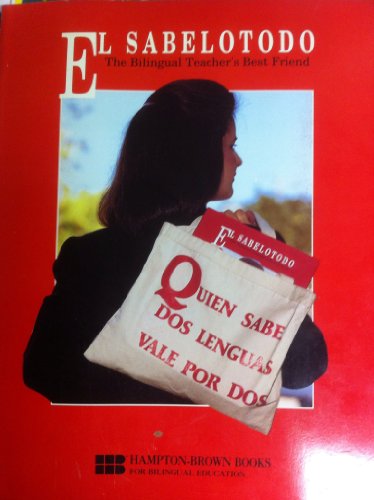
El Sabelotodo The Bilingual Teacher's Best Friend
Authors:
Shirley Costigan
Publisher:
Hampton-Brown Books
Publication Date:
Not available
ISBN:
0917837010
Faced with the limitations of traditional testing, teachers across the country are searching for new ways to make students' achievement in the classroom... count for more - a system of measurement that recognizes difference and reflects the full range of linguistic and cultural experiences. Assessing Literacy with the Learning Record is that tool, presenting a framework that translates teachers' observations into a disciplined, systematic, standards-based reporting process. Mary Barr and Margaret Syverson have taken the best of the British Primary Language Record and adapted it for use in American middle and high schools. The Learning Record assessment system recognizes contributions from all stakeholders in the process. Teacher narratives, samples of student work, and interviews with parents combine to provide comprehensive evidence of students' progress toward agreed-upon goals and standards. Teachers summarize and record this information, using it both to inform their own teaching and to provide a more uniform and quantifiable record of literacy achievement. Assessing Literacy with the Learning Record includes all of the materials needed to begin using the Learning Record. It offers clear explanations of each part of the Learning Record; guidelines for observing and recording student activity; and examples from actual learning records kept by classroom teachers. There is also a complete set of reproducible forms for compiling and organizing evidence of progress in talking, listening, reading, and writing, as well as reading and writing developmental scales to guide teaching and learning during the year and provide a summary evaluation at year's end.

El Salvador in the Aftermath of Peace: Crime, Uncertainty, and the...
Authors:
Ellen Moodie
Publisher:
University of Pennsylvania Press
Publication Date:
Not available
ISBN:
0812242289
El Salvador's civil war, which left at least 75,000 people dead and displaced more than a million, ended in 1992. The accord between the government and... the Farabundo Martí National Liberation Front (FMLN) has been lauded as a model post-Cold War peace agreement. But after the conflict stopped, crime rates shot up. The number of murder victims surpassed wartime death tolls. Those who once feared the police and the state became frustrated by their lack of action. Peace was not what Salvadorans had hoped it would be. Citizens began saying to each other, "It's worse than the war."El Salvador in the Aftermath of Peace: Crime, Uncertainty, and the Transition to Democracy challenges the pronouncements of policy analysts and politicians by examining Salvadoran daily life as told by ordinary people who have limited influence or affluence. Anthropologist Ellen Moodie spent much of the decade after the war gathering crime stories from various neighborhoods in the capital city of San Salvador. True accounts of theft, assaults, and murders were shared across kitchen tables, on street corners, and in the news media. This postconflict storytelling reframed violent acts, rendering them as driven by common criminality rather than political ideology. Moodie shows how public dangers narrated in terms of private experience shaped a new interpretation of individual risk. These narratives of postwar violence—occurring at the intersection of self and other, citizen and state, the powerful and the powerless—offered ways of coping with uncertainty during a stunted transition to democracy.
EL SANTO DE LA ISIDRA
Authors:
Not Available
Publisher:
Not available
Publication Date:
Not available
ISBN:
Not available

El secreto de sus ojos (The Secret in Their Eyes) (Spanish Edition)...
Authors:
Eduardo Sacheri
Publisher:
Punto de Lectura
Publication Date:
Not available
ISBN:
8466322698
This story inspired Juan Jose Campanellas movie, 2010 Oscar winner in the foreign film category. Set in the Argentina of the 1960s and 70s, the... detective story takes place at a time where the country begins a gradual descent into political violence and unrest, and its characters fight against impunity, the bureaucracy of the judicial system, and personal and shared miseries. Thirty years before, a homicide case crossed Benjamin Chaparros desk, one he was unable to forget. Now retired, he reviews a large portion of his life, the instances of the case and the unsuspected consequences, and the story of a forbidden love that keeps him trapped between passion and silence. Spanish Description: Treinta anos atras, cuando Benjamin Chaparro era prosecretario en un juzgado de instruccion, llego a su oficina la causa de un homicidio que no pudo olvidar. Ahora, ya jubilado, repasa buena parte de su vida, las instancias de ese caso y sus insospechadas derivaciones, y la historia de un amor secreto que lo mantiene acorralado entre la pasion y el silencio. Una trama policial ambientada en los anos sesenta y setenta, en una Argentina que paulatinamente se sumerge en la violencia politica y cuyos personajes luchan contra la impunidad, la burocracia del sistema judicial y las miserias propias y ajenas. Una historia protagonizada por hombres que hicieron de la busqueda de la verdad un destino; de la memoria, un camino imprescindible, y de la lealtad, un culto que trasciende el tiempo, las distancias y la muerte.
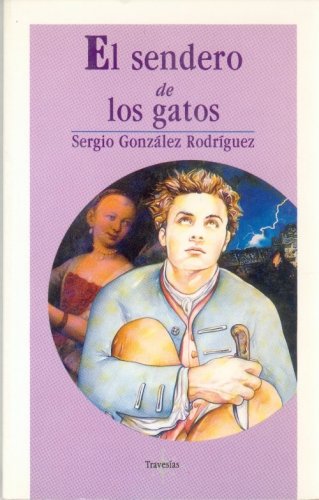
El sendero de los gatos : el joven Esteban de Ordaz en la Ciudad de...
Authors:
González Rodríguez Sergio
Publisher:
Fondo de Cultura Económica
Publication Date:
Not available
ISBN:
9681642287
Durante la noche, había soñado que un hechicero indio me transmitía poderes mágicos: podía volar alrededor de las cimas de los volcanes ... Popocatépetl e Iztaccíhuatl... Las cosas me obedecerían de ahora en adelante. O por lo menos una buena parte de ellas: ese día cumplía doce años de edad, un primero de octubre de 1691.
El Senor Presidente
Authors:
Miguel Angel Asturias
Publisher:
Catedra
Publication Date:
Not available
ISBN:
8437615178
Written in clear and simple Spanish, this book introduces the grammatical and phonetical systems of Spanish by means of a contrastive analysis of... Spanish and English. Presents a systems analysis to be used as a basis for error analysis in the classroom. Briefly outlines a model of language acquisition and discusses the relationship between linguistic theory and teaching methodology. Gives overview of articulatory phonetics and contrasts Spanish phonetics with English; develops the system of phonological rules of Spanish; and treats the formation of the verb tense-mood system. Considers morphology of nouns and adjectives, some illustrative derivational processes and morphophonemic processes, form and syntax of pronouns, semantics and the function of the lexicon in language teaching, verb tenses and their semantic functions, and subjunctive and indicative moods. Also offers suggestions for the study of language and culture. Specific theoretical models are avoided. Includes both mechanical exercises and topics for discussion.
**ELSEVIER EBOOK NURSING BUNDLE
Authors:
Not Available
Publisher:
Not available
Publication Date:
Not available
ISBN:
Not available
ELSEVIER FALL 2012 INCOMING JUNIOR ELIBRARY PACKAGE
Authors:
Not Available
Publisher:
Not available
Publication Date:
Not available
ISBN:
Not available
ELSEVIER FALL 2012 INCOMING SENIOR ELIBRARY PACKAGE
Authors:
Not Available
Publisher:
Not available
Publication Date:
Not available
ISBN:
Not available
ELSEVIER PKG. NURS 1A,1B, 2 (FALL 2011
Authors:
Not Available
Publisher:
Not available
Publication Date:
Not available
ISBN:
Not available
ELSEVIER REFERENCE BUNDLE 2012, NURS 2020
Authors:
Not Available
Publisher:
Not available
Publication Date:
Not available
ISBN:
Not available
 '





