production
/viewbook/list/all/?page=3960
/
/static/
None
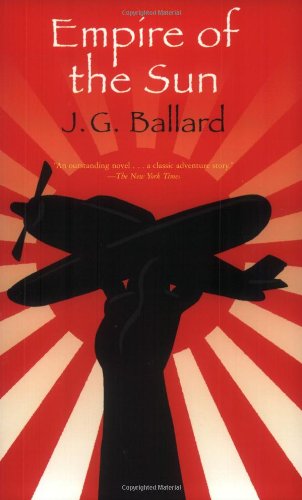
Empire of the Sun
Authors:
J. G. Ballard
Publisher:
Simon & Schuster
Publication Date:
Not available
ISBN:
0743265238
The classic, award-winning novel, made famous by Steven Spielberg's film, tells of a young boy's struggle to survive World War II in China. Jim is... separated from his parents in a world at war. To survive, he must find a strength greater than all the events that surround him. Shanghai, 1941 -- a city aflame from the fateful torch of Pearl Harbor. In streets full of chaos and corpses, a young British boy searches in vain for his parents. Imprisoned in a Japanese concentration camp, he is witness to the fierce white flash of Nagasaki, as the bomb bellows the end of the war...and the dawn of a blighted world. Ballard's enduring novel of war and deprivation, internment camps and death marches, and starvation and survival is an honest coming-of-age tale set in a world thrown utterly out of joint.
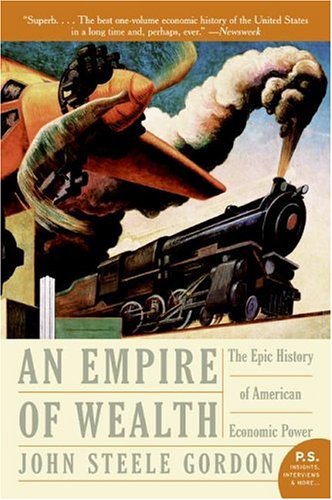
Empire of Wealth: The Epic History of American Economic Power (P.S.)
Authors:
John Steele Gordon
Publisher:
Harper Perennial
Publication Date:
Not available
ISBN:
0060505125
Throughout time, from ancient Rome to modern Britain, the great empires built and maintained their domination through force of arms and political power.... But not the United States. America has dominated the world in a new, peaceful, and pervasive way -- through the continued creation of staggering wealth. In this authoritative, engrossing history, John Steele Gordon captures as never before the true source of our nation's global influence: wealth and the capacity to create more of it.This P.S. edition features an extra 16 pages of insights into the book, including author interviews, recommended reading, and more.
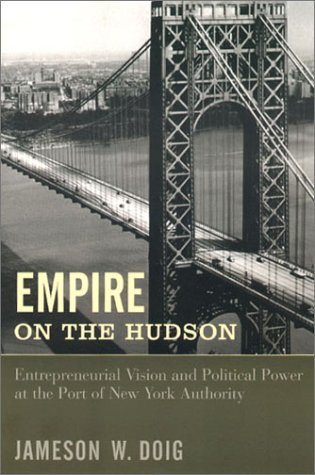
Empire on the Hudson
Authors:
Jameson W. Doig
Publisher:
Columbia University Press
Publication Date:
Not available
ISBN:
0231076770
Revered and reviled in almost equal amounts since its inception, the Port Authority of New York and New Jersey has been responsible for creating and... maintaining much of New York and New Jersey's transportation infrastructure -- the things that make the region work. Doig traces the evolution of the Port Authority from the battles leading to its creation in 1921 through its conflicts with the railroads and its expansion to build bridges and tunnels for motor vehicles. Chronicling the adroit maneuvers that led the Port Authority to take control of the region's airports and seaport operations, build the largest bus terminal in the nation, and construct the World Trade Center, Doig reveals the rise to power of one of the world's largest specialized regional governments. This definitive history of the Port Authority underscores the role of several key players -- Austin Tobin, the obscure lawyer who became Executive Director and a true "power broker" in the bi-state region, Julius Henry Cohen, general counsel of the Port Authority for its first twenty years, and Othmar H. Ammann, the Swiss engineer responsible for the George Washington Bridge, the Bayonne and Goethels bridges, the Outerbridge Crossing, and the Lincoln Tunnel.Today, with public works projects stalled by community opposition in almost every village and city, the story of how the Port Authority managed to create an empire on the Hudson offers lessons for citizens and politicians everywhere.
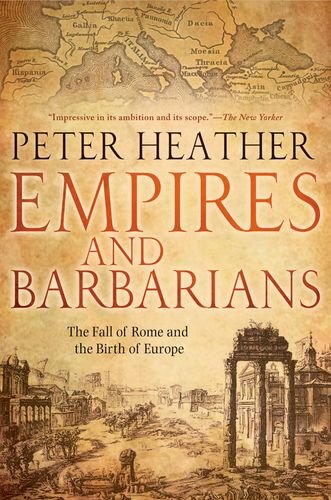
Empires and Barbarians: The Fall of Rome and the Birth of Europe
Authors:
Peter Heather
Publisher:
Oxford University Press, USA
Publication Date:
Not available
ISBN:
0199892261
Empires and Barbarians presents a fresh, provocative look at how a recognizable Europe came into being in the first millennium AD. With sharp analytic... insight, Peter Heather explores the dynamics of migration and social and economic interaction that changed two vastly different worlds--the undeveloped barbarian world and the sophisticated Roman Empire--into remarkably similar societies and states. The book's vivid narrative begins at the time of Christ, when the Mediterranean circle, newly united under the Romans, hosted a politically sophisticated, economically advanced, and culturally developed civilization--one with philosophy, banking, professional armies, literature, stunning architecture, even garbage collection. The rest of Europe, meanwhile, was home to subsistence farmers living in small groups, dominated largely by Germanic speakers. Although having some iron tools and weapons, these mostly illiterate peoples worked mainly in wood and never built in stone. The farther east one went, the simpler it became: fewer iron tools and ever less productive economies. And yet ten centuries later, from the Atlantic to the Urals, the European world had turned. Slavic speakers had largely superseded Germanic speakers in central and Eastern Europe, literacy was growing, Christianity had spread, and most fundamentally, Mediterranean supremacy was broken.Bringing the whole of first millennium European history together, and challenging current arguments that migration played but a tiny role in this unfolding narrative, Empires and Barbarians views the destruction of the ancient world order in light of modern migration and globalization patterns.
Empires and Barbarians: The Fall of Rome and the Birth of Europe
Authors:
Peter Heather
Publisher:
Oxford University Press, USA
Publication Date:
Not available
ISBN:
0199735603
Empires and Barbarians presents a fresh, provocative look at how a recognizable Europe came into being in the first millennium AD. With sharp analytic... insight, Peter Heather explores the dynamics of migration and social and economic interaction that changed two vastly different worlds--the undeveloped barbarian world and the sophisticated Roman Empire--into remarkably similar societies and states. The book's vivid narrative begins at the time of Christ, when the Mediterranean circle, newly united under the Romans, hosted a politically sophisticated, economically advanced, and culturally developed civilization--one with philosophy, banking, professional armies, literature, stunning architecture, even garbage collection. The rest of Europe, meanwhile, was home to subsistence farmers living in small groups, dominated largely by Germanic speakers. Although having some iron tools and weapons, these mostly illiterate peoples worked mainly in wood and never built in stone. The farther east one went, the simpler it became: fewer iron tools and ever less productive economies. And yet ten centuries later, from the Atlantic to the Urals, the European world had turned. Slavic speakers had largely superseded Germanic speakers in central and Eastern Europe, literacy was growing, Christianity had spread, and most fundamentally, Mediterranean supremacy was broken.Bringing the whole of first millennium European history together, and challenging current arguments that migration played but a tiny role in this unfolding narrative, Empires and Barbarians views the destruction of the ancient world order in light of modern migration and globalization patterns.
Empires at War: The French and Indian War and the Struggle for...
Authors:
William M. Fowler
Publisher:
Walker & Company
Publication Date:
Not available
ISBN:
0802777376
On May 28, 1754, a group of militia and Indians led by twenty-two-year-old major George Washington surprised a camp of sleeping French soldiers near... present-day Pittsburgh. Washington could not have known it, but the brief and deadly exchange of fire that ensued lit the match that, in Horace Walpole's memorable phrase, would "set the world on fire." The resultung French and Indian War in North America became part of the global conflict known as the Seven Years War, fought across Europe, India, and the East and West Indies. Before it ended, nearly one million men had died. Empires at War captures the sweeping panorama of this first world war, especially in its descriptions of the strategy and intensity of the engagements in North America, many of them epic struggles between armies in the wilderness. William M. Fowler Jr. views the conflict both from British prime minister William Pitt's perspective-- as a vast chessboard, on which William Shirley's campaign in North America and the fortunes of Frederick the Great of Prussia were connected-- and from that of field commanders on the ground in America and Canada, who contended with disease, brutal weather, and scant supplies, frequently having to build the very roads they marched on. As in any conflict, individuals and events stand out: Sir William Johnson, a baronet and a major general of the British forces, who sometimes painted his face and dressed like a warrior when he fought beside his Indian allies; Edward Braddock's doomed march across Pennsylvania; the valiant French defense of Fort Ticonderoga; and the legendary battle for Quebec between armies led by the arisocratic French tactical genius, the marquis de Montcalm, and the gallant, if erratic, young Englishman James Wolfe-- both of whom died on the Plains of Abraham on September 13, 1759. For many, the French and Indian War has been merely the backdrop for James Fenimore Cooper's famous novel, The Last of the Mohicans. William M. Fowler Jr.'s engrossing narrative reveals it to have been a turning point of modern history, without which the American Revolution as we know it might well not have occurred.
Empires (Cornell Studies in Comparative History)
Authors:
Michael W. Doyle
Publisher:
Cornell University Press
Publication Date:
Not available
ISBN:
080149334X
Empire Settings: A Novel of South Africa
Authors:
David Schmahmann
Publisher:
Academy Chicago Publishers
Publication Date:
Not available
ISBN:
0897336054
David Schmahmann's stunning debut novel is an accomplished, arresting tale of forbidden love during apartheid in South Africa. At once a compelling love... story and a powerful commentary on life amidst political and social turmoil, Empire Settings announces the arrival of a significant new literary talent. Danny Devin is a young white man in South Africa who enters into an illicit romance with a young, mixed race schoolgirl, the daughter of black domestic servant. When social constraints force Danny to end the romance, he travels to America with the hopes of starting a new life. There he meets Tesseba, a curious and trusting artist who takes him in and marries him to save him from deportation. The two build a life together, but Danny continues to be plagued by a growing sense of loss. Twenty years later, Danny returns to a "new" South Africa in the hopes of saving a family fortune and finding the girl he has never forgotten. In precise yet lyrical prose, David Schmahmann spins a heart-wrenching tale that reveals the subtle, yet powerful intersection of politics and individual choice, and proves that nothing is ever only black and white. "Artful, moving...[Schmahmann] displays a sure touch with character, plot, and atmosphere alike." (San Francisco Chronicle)
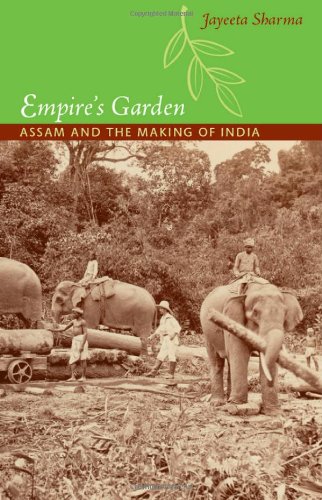
Empire's Garden: Assam and the Making of India (Radical Perspectives)
Authors:
Jayeeta Sharma
Publisher:
Duke University Press Books
Publication Date:
Not available
ISBN:
0822350491
In the mid-nineteenth century the British created a landscape of tea plantations in the northeastern Indian region of Assam. The tea industry filled... imperial coffers and gave the colonial state a chance to transform a jungle-laden frontier into a cultivated system of plantations. Claiming that local peasants were indolent, the British soon began importing indentured labor from central India. In the twentieth century these migrants were joined by others who came voluntarily to seek their livelihoods. In Empire’s Garden, Jayeeta Sharma explains how the settlement of more than one million migrants in Assam irrevocably changed the region’s social landscape. She argues that the racialized construction of the tea laborer catalyzed a process by which Assam’s gentry sought to insert their homeland into an imagined Indo-Aryan community and a modern Indian political space. Various linguistic and racial claims allowed these elites to defend their own modernity while pushing the burden of primitiveness onto “non-Aryan” indigenous tribals and migrant laborers. As vernacular print arenas emerged in Assam, so did competing claims to history, nationalism, and progress that continue to reverberate in the present.
Empires in World History: Power and the Politics of Difference
Authors:
Jane Burbank
Publisher:
Princeton University Press
Publication Date:
Not available
ISBN:
0691127085
Empires--vast states of territories and peoples united by force and ambition--have dominated the political landscape for more than two millennia.... Empires in World History departs from conventional European and nation-centered perspectives to take a remarkable look at how empires relied on diversity to shape the global order. Beginning with ancient Rome and China and continuing across Asia, Europe, the Americas, and Africa, Jane Burbank and Frederick Cooper examine empires' conquests, rivalries, and strategies of domination--with an emphasis on how empires accommodated, created, and manipulated differences among populations. Burbank and Cooper examine Rome and China from the third century BCE, empires that sustained state power for centuries. They delve into the militant monotheism of Byzantium, the Islamic Caliphates, and the short-lived Carolingians, as well as the pragmatically tolerant rule of the Mongols and Ottomans, who combined religious protection with the politics of loyalty. Burbank and Cooper discuss the influence of empire on capitalism and popular sovereignty, the limitations and instability of Europe's colonial projects, Russia's repertoire of exploitation and differentiation, as well as the "empire of liberty"--devised by American revolutionaries and later extended across a continent and beyond. With its investigation into the relationship between diversity and imperial states, Empires in World History offers a fresh approach to understanding the impact of empires on the past and present.
Empires In World History - Power And The Politics Of Difference
Authors:
Jane; Cooper, Frederick Burbank
Publisher:
Princeton University Press
Publication Date:
Not available
ISBN:
0691152365
Empires--vast states of territories and peoples united by force and ambition--have dominated the political landscape for more than two millennia.... Empires in World History departs from conventional European and nation-centered perspectives to take a remarkable look at how empires relied on diversity to shape the global order. Beginning with ancient Rome and China and continuing across Asia, Europe, the Americas, and Africa, Jane Burbank and Frederick Cooper examine empires' conquests, rivalries, and strategies of domination--with an emphasis on how empires accommodated, created, and manipulated differences among populations. Burbank and Cooper examine Rome and China from the third century BCE, empires that sustained state power for centuries. They delve into the militant monotheism of Byzantium, the Islamic Caliphates, and the short-lived Carolingians, as well as the pragmatically tolerant rule of the Mongols and Ottomans, who combined religious protection with the politics of loyalty. Burbank and Cooper discuss the influence of empire on capitalism and popular sovereignty, the limitations and instability of Europe's colonial projects, Russia's repertoire of exploitation and differentiation, as well as the "empire of liberty"--devised by American revolutionaries and later extended across a continent and beyond. With its investigation into the relationship between diversity and imperial states, Empires in World History offers a fresh approach to understanding the impact of empires on the past and present.
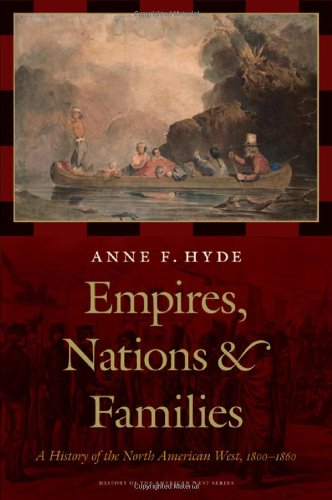
Empires, Nations, and Families: A History of the North American...
Authors:
Anne F. Hyde
Publisher:
University of Nebraska Press
Publication Date:
Not available
ISBN:
0803224052
To most people living in the West, the Louisiana Purchase made little difference: the United States was just another imperial overlord to be assessed... and manipulated. This was not, as Empires, Nations, and Families makes clear, virgin wilderness discovered by virtuous Anglo entrepreneurs. Rather, the United States was a newcomer in a place already complicated by vying empires. This book documents the broad family associations that crossed national and ethnic lines and that, along with the river systems of the trans-Mississippi West, formed the basis for a global trade in furs that had operated for hundreds of years before the land became part of the United States. Empires, Nations, and Families shows how the world of river and maritime trade effectively shifted political power away from military and diplomatic circles into the hands of local people. Tracing family stories from the Canadian North to the Spanish and Mexican borderlands and from the Pacific Coast to the Missouri and Mississippi rivers, Anne F. Hyde’s narrative moves from the earliest years of the Indian trade to the Mexican War and the gold rush era. Her work reveals how, in the 1850s, immigrants to these newest regions of the United States violently wrested control from Native and other powers, and how conquest and competing demands for land and resources brought about a volatile frontier culture—not at all the peace and prosperity that the new power had promised.
Empires of Food: Feast, Famine, and the Rise and Fall of Civilizations
Authors:
Evan D.G. Fraser
Publisher:
Free Press
Publication Date:
Not available
ISBN:
1439101892
We are what we eat: this aphorism contains a profound truth about civilization, one that has played out on the world historical stage over many... millennia of human endeavor. Using the colorful diaries of a sixteenth-century merchant as a narrative guide, Empires of Food vividly chronicles the fate of people and societies for the past twelve thousand years through the foods they grew, hunted, traded, and ate—and gives us fascinating, and devastating, insights into what to expect in years to come. In energetic prose, agricultural expert Evan D. G. Fraser and journalist Andrew Rimas tell gripping stories that capture the flavor of places as disparate as ancient Mesopotamia and imperial Britain, taking us from the first city in the once-thriving Fertile Crescent to today’s overworked breadbaskets and rice bowls in the United States and China, showing just what food has meant to humanity. Cities, culture, art, government, and religion are founded on the creation and exchange of food surpluses, complex societies built by shipping corn and wheat and rice up rivers and into the stewpots of history’s generations. But eventually, inevitably, the crops fail, the fields erode, or the temperature drops, and the center of power shifts. Cultures descend into dark ages of poverty, famine, and war. It happened at the end of the Roman Empire, when slave plantations overworked Europe’s and Egypt’s soil and drained its vigor. It happened to the Mayans, who abandoned their great cities during centuries of drought. It happened in the fourteenth century, when medieval societies crashed in famine and plague, and again in the nineteenth century, when catastrophic colonial schemes plunged half the world into a poverty from which it has never recovered. And today, even though we live in an age of astounding agricultural productivity and genetically modified crops, our food supplies are once again in peril. Empires of Food brilliantly recounts the history of cyclic consumption, but it is also the story of the future; of, for example, how a shrimp boat hauling up an empty net in the Mekong Delta could spark a riot in the Caribbean. It tells what happens when a culture or nation runs out of food—and shows us the face of the world turned hungry. The authors argue that neither local food movements nor free market economists will stave off the next crash, and they propose their own solutions. A fascinating, fresh history told through the prism of the dining table, Empires of Food offers a grand scope and a provocative analysis of the world today, indispensable in this time of global warming and food crises.
Empires of Islam in Renaissance Historical Thought (Harvard...
Authors:
Margaret Meserve
Publisher:
Harvard University Press
Publication Date:
Not available
ISBN:
067402656X
Renaissance humanists believed that the origins of peoples could reveal crucial facts about their modern political character. Margaret Meserve explores... what happened when European historians turned to study the political history of a faith other than their own. Meserve investigates the methods and illuminates the motives of scholars negotiating shifting boundaries—between scholarly research and political propaganda, between a commitment to critical historical inquiry and the pressure of centuries of classical and Christian prejudice, between the academic ideals of humanism and the everyday demands of political patronage. Drawing on political oratory, diplomatic correspondence, crusade propaganda, and historical treatises, Meserve shows how research into the origins of Islamic empires sprang from—and contributed to—contemporary debates over the threat of Islamic expansion in the Mediterranean. Humanist histories of the Turks were sharply polemical, portraying the Ottomans as a rogue power. But writings on other Muslim polities include some of the first positive appraisals of Muslim statecraft in the European tradition. This groundbreaking book offers new insights into Renaissance humanist scholarship and the longstanding European debates over the relationship between Christianity and Islam.
Empires of Light: Edison, Tesla, Westinghouse, and the Race to...
Authors:
Jill Jonnes
Publisher:
Random House Trade Paperbacks
Publication Date:
Not available
ISBN:
0375758844
In the final decades of the nineteenth century, three brilliant and visionary titans of America’s Gilded Age—Thomas Edison, Nikola Tesla, and George... Westinghouse—battled bitterly as each vied to create a vast and powerful electrical empire. In Empires of Light, historian Jill Jonnes portrays this extraordinary trio and their riveting and ruthless world of cutting-edge science, invention, intrigue, money, death, and hard-eyed Wall Street millionaires. At the heart of the story are Thomas Alva Edison, the nation’s most famous and folksy inventor, creator of the incandescent light bulb and mastermind of the world’s first direct current electrical light networks; the Serbian wizard of invention Nikola Tesla, elegant, highly eccentric, a dreamer who revolutionized the generation and delivery of electricity; and the charismatic George Westinghouse, Pittsburgh inventor and tough corporate entrepreneur, an industrial idealist who in the era of gaslight imagined a world powered by cheap and plentiful electricity and worked heart and soul to create it. Edison struggled to introduce his radical new direct current (DC) technology into the hurly-burly of New York City as Tesla and Westinghouse challenged his dominance with their alternating current (AC), thus setting the stage for one of the eeriest feuds in American corporate history, the War of the Electric Currents. The battlegrounds: Wall Street, the 1893 Chicago World’s Fair, Niagara Falls, and, finally, the death chamber—Jonnes takes us on the tense walk down a prison hallway and into the sunlit room where William Kemmler, convicted ax murderer, became the first man to die in the electric chair. Empires of Light is the gripping history of electricity, the “mysterious fluid,” and how the fateful collision of Edison, Tesla, and Westinghouse left the world utterly transformed.From the Hardcover edition.
 '





