production
/viewbook/list/all/?page=3989
/
/static/
None
Energy, Physics and the Environment
Authors:
E. L. McFarland
Publisher:
Custom Publishing
Publication Date:
Not available
ISBN:
1426624336
Energy, Physics and the Environment provides a foundational quantitative account of energy and related environmental issues for university students in... science who have a first-year preparation in Physics. The text discusses the numbers involved in the various dimensions of the overall energy issue in order to help the reader develop a quantitative grasp on them. This third edition book features an expanded section on uranium resources and the most updated data available. Energy, Physics and the Environment gives students the opportunity to study current energy supply concerns and the impact that energy supply shortage has on the environment.
Energy Policy in the U.S.: Politics, Challenges, and Prospects for...
Authors:
Laurance R. Geri
Publisher:
CRC Press
Publication Date:
Not available
ISBN:
1439841896
In an effort to provide greater awareness of the necessary policy decisions facing our elected and appointed officials, Energy Policy in the U.S.:... Politics, Challenges, and Prospects for Change presents an overview of important energy policies and the policy process in the United States, including their history, goals, methods of action, and consequences. In the first half of the book, the authors frame the energy policy issue by reviewing U.S. energy policy history, identifying the policy-making players, and illuminating the costs, benefits, and economic and political realities of currently competing policy alternatives. The book examines the stakeholders and their attempts to influence energy policy and addresses the role of supply and demand on the national commitment to energy conservation and the development of alternative energy sources. The latter half of the book delves into specific energy policy strategies, including economic and regulatory options, and factors that influence energy policies, such as the importance of international cooperation. Renewed interest in various renewable and nontraditional energy resources—for example, hydrogen, nuclear fusion, biomass, and tide motion—is examined, and policy agendas are explored in view of scientific, economic, regulatory, production, and environmental constraints. This book provides excellent insight into the complex task of creating a comprehensive energy policy and its importance in the continued availability of energy to power our way of life and economy while protecting our environment and national security.
Energy Politics
Authors:
Brenda Shaffer
Publisher:
University of Pennsylvania Press
Publication Date:
Not available
ISBN:
0812221664
It is not uncommon to hear states and their leaders criticized for "mixing oil and politics." The U.S.-led Iraq War was criticized as a "war for oil."... When energy exporters overtly use energy as a tool to promote their foreign policy goals, Europe and the United States regularly decry the use of energy as a "weapon" rather than accept it as a standard and legitimate tool of diplomacy.In Energy Politics, Brenda Shaffer argues that energy and politics are intrinsically linked. Modern life—from production of goods, to means of travel and entertainment, to methods of waging war—is heavily dependent on access to energy. A country's ability to acquire and use energy supplies crucially determines the state of its economy, its national security, and the quality and sustainability of its environment. Energy supply can serve as a basis for regional cooperation, but at the same time can serve as a source of conflict among energy seekers and between producers and consumers.Shaffer provides a broad introduction to the ways in which energy affects domestic and regional political developments and foreign policy. While previous scholarship has focused primarily on the politics surrounding oil, Shaffer broadens her scope to include the increasingly important role of natural gas and alternative energy sources as well as emerging concerns such as climate change, the global energy divide, and the coordinated international policy-making required to combat them. Energy Politics concludes with examinations of how politics and energy interact in six of the world's largest producers and consumers of energy: Russia, Europe, the United States, China, Iran, and Saudi Arabia.
Energy Politics
Authors:
Brenda Shaffer
Publisher:
University of Pennsylvania Press
Publication Date:
Not available
ISBN:
0812242009
It is not uncommon to hear states and their leaders criticized for "mixing oil and politics." The U.S.-led Iraq War was criticized as a "war for oil."... When energy exporters overtly use energy as a tool to promote their foreign policy goals, Europe and the United States regularly decry the use of energy as a "weapon" rather than accept it as a standard and legitimate tool of diplomacy.In Energy Politics, Brenda Shaffer argues that energy and politics are intrinsically linked. Modern life—from production of goods, to means of travel and entertainment, to methods of waging war—is heavily dependent on access to energy. A country's ability to acquire and use energy supplies crucially determines the state of its economy, its national security, and the quality and sustainability of its environment. Energy supply can serve as a basis for regional cooperation, but at the same time can serve as a source of conflict among energy seekers and between producers and consumers.Shaffer provides a broad introduction to the ways in which energy affects domestic and regional political developments and foreign policy. While previous scholarship has focused primarily on the politics surrounding oil, Shaffer broadens her scope to include the increasingly important role of natural gas and alternative energy sources as well as emerging concerns such as climate change, the global energy divide, and the coordinated international policy-making required to combat them. Energy Politics concludes with examinations of how politics and energy interact in six of the world's largest producers and consumers of energy: Russia, Europe, the United States, China, Iran, and Saudi Arabia.
Energy, Power, and Transportation Technology
Authors:
Len S. Litowitz
Publisher:
Goodheart-Willcox (duplicate of GOODW)
Publication Date:
Not available
ISBN:
1605255564

Energy, Power, and Transportation Technology
Authors:
Len S. Litowitz
Publisher:
Goodheart-Willcox Co
Publication Date:
Not available
ISBN:
1590702212
Energy, Power, and Transportation Technology provides a comprehensive study of the basic elements of energy, power, and transportation and how they... affect the world we live in. This textbook covers the resources, processes, and systems used in these industries. For maximum teaching and learning flexibility, chapter objectives are divided into Basic Concepts, Intermediate Concepts, and Advanced Concepts. Activities are provided at the end of each chapter to help the student apply the concepts covered in that chapter. Technology Links and Curricular Connections in each chapter help broaden student knowledge of technology and connect chapter content with concepts in math, science, and social studies.
Energy, Power, and Transportation Technology
Authors:
Len S. Litowitz
Publisher:
Goodheart-Willcox
Publication Date:
Not available
ISBN:
1605255556
Energy, Power, and Transportation Technology provides a comprehensive study of the basic elements of energy, power, and transportation and how they... affect the world in which we live. This textbook covers the resources, processes, and systems used in these industries. It discusses the progression of these technologies from their first use to current use, and it also includes information on potential future technologies.· For maximum teaching and learning flexibility, chapter objectives are divided into Basic Concepts, Intermediate Concepts, and Advanced Concepts.· STEM Activities are provided at the end of each chapter to help students apply the concepts covered in that chapter.· Technology Links, STEM Connections, and Curricular Connections help broaden student knowledge of technology and connect chapter content with concepts in match, science, social studies, and language arts.· Career Connection features show related careers and include educational and salary information.· Workplace Skills features include information on finding a job and succeeding in a career.· Green Tech margin notes relate chapter content to environmental issues.

Energy, Power, and Transportation Technology, Student Activity Manual
Authors:
Len S. Litowitz
Publisher:
Goodheart-Willcox Co
Publication Date:
Not available
ISBN:
1590702220
Energy, Power, and Transportation Technology provides a comprehensive study of the basic elements of energy, power, and transportation and how they... affect the world we live in. This textbook covers the resources, processes, and systems used in these industries. For maximum teaching and learning flexibility, chapter objectives are divided into Basic Concepts, Intermediate Concepts, and Advanced Concepts. Activities are provided at the end of each chapter to help the student apply the concepts covered in that chapter. Technology Links and Curricular Connections in each chapter help broaden student knowledge of technology and connect chapter content with concepts in math, science, and social studies. The Student Activity Manual combines the elements of a workbook and a laboratory manual. Activities may be pencil-and-paper, hands-on, or a combination of the two.

ENERGY: PRINCIPLES, PROBLEMS, ALTERNATIVES
Authors:
PRIEST JOSEPH
Publisher:
Kendall Hunt Publishing
Publication Date:
Not available
ISBN:
0757520715
The fourth edition of Joseph Priest's Energy draws heavily on the experience of instructors who used earlier editions. It is designed for environmental... science courses for non-science majors and is suitable for fulfilling their science requirement. The amount of quantitative material exposes students to the importance of quantitative reasoning without causing math anxiety. Priest has refined the physics and integrated it with energy issues, added new topics, updated the energy data, and included new exercises and problems. The fourth edition includes coverage of acid precipitation, the greenhouse effect, depletion of the ozone layer, and radon radioactivity in houses. The text furthers students' understanding with references that provide up-to-date sources of information and a guide to the types of publications and books students should examine; review sections with questions highlighting the main topics and ideas in the chapters as well as 25 multiple-choice questions and answers; and questions and problems sections that emphasize written answers and practical numerical calculations.

ENERGY PROBLEM
Authors:
Not Available
Publisher:
Not available
Publication Date:
Not available
ISBN:
0945639376
Energy: Science, Policy, and the Pursuit of Sustainability
Authors:
Not Available
Publisher:
Island Press
Publication Date:
Not available
ISBN:
1559639113
During the past year, energy prices have fluctuated wildly, from historic highs in the winter and spring to the lowest wholesale prices in decades a few... short months later. As the largest user of fossil-fuel energy, the United States is the key player in the world's energy markets, and our nation's energy policy (or lack thereof) has become a subject of increasing concern. Energy: Science, Policy, and the Pursuit of Sustainability is an essential primer on energy, society, and the environment. It offers an accessible introduction to the "energy problem" - its definition, analysis, and policy implications. Current patterns of energy use are without question unsustainable over the long term, and our dependence on fossil fuels raises crucial questions of security and self-sufficiency. This volume addresses those questions by examining the three broad dimensions of the issue: physical, human, and political-economic. Chapters consider: - the laws of nature and the impacts of energy use on our physical and ecological life-support systems - the psychological, social, and cultural factors that determine how we use energy - the role of government actions in adjusting costs, influencing resource consumption, and protecting the environment - how markets work, and the reasons and cures for market failures in responding to long-term environmental and energy problems Energy links energy use with key environmental issues of population, consumption, and pollution and offers readers a range of material needed for an informed policy perspective.

Energy Science: Principles, Technologies, and Impacts
Authors:
John Andrews
Publisher:
Oxford University Press, USA
Publication Date:
Not available
ISBN:
0199281122
Do renewable energy sources really provide a realistic alternative to fossil fuels? How does wind power compare to nuclear power, in terms of the energy... it can generate? How do we get energy from the tides, and is it really a useful source of power?Energy Science: Principles, Technologies, and Impacts integrates the science behind the key energy sources that are at our disposal today with the socioeconomic issues surrounding their use to give a balanced, objective overview of the range of energy sources available to us today. Covering both traditional and renewable energy sources, the book encourages the reader to evaluate different energy sources on the basis of sound quantitative understanding. It also explores the fundamental processes of energy generation, storage, and transmission, building a complete picture of energy supply and use--from wind turbines, nuclear reactors, and hydroelectric dams--to our homes.Different energy sources have different social and economic impacts; the book uses examples and case studies throughout to help the reader critically assess the information to hand surrreach a well-rounded, informed view of the relative merits and drawbacks of the utilization of various energy sources.Problems with current and future energy use and supply extend globally; Energy Science: Principles, Technologies, and Impacts introduces the potential solutions that science can offer, within a framework that encourages the critical assessment of the pros and cons of each.Online resource centre:The Online Resource Centre features:For lecturers:Figures from the book available to download, to facilitate lecture preparationSolutions to end of chapter questionsFor students:Library of web links, giving students quick access to an extensive range of additional resourcesHyperlinks to primary literature articles cited in the text, to encourage students to explore topics in more detail
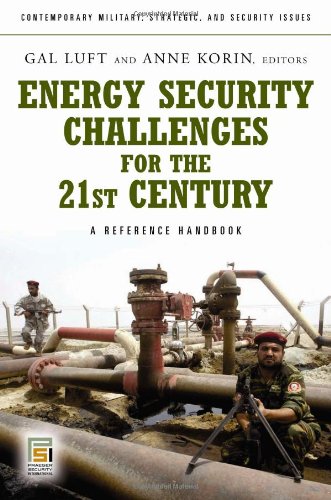
Energy Security Challenges for the 21st Century: A Reference...
Authors:
Not Available
Publisher:
Praeger
Publication Date:
Not available
ISBN:
0275999971
The impact of energy on global security and economy is clear and profound, and this is why in recent years energy security has become a source of... concern to most countries. However, energy security means different things to different countries based on their geographic location, their endowment of resources their strategic and economic conditions. In this book, Gal Luft and Anne Korin with the help of twenty leading experts provide an overview of the world's energy system and its vulnerabilities that underlay growing concern over energy security. It hosts a debate about the feasibility of resource conflicts and covers issues such as the threat of terrorism to the global energy system, maritime security, the role of multinationals and non-state actors in energy security, the pathways to energy security through diversification of sources and the development of alternative energy sources. It delves into the various approaches selected producers, consumers and transit states have toward energy security and examines the domestic and foreign policy tradeoffs required to ensure safe and affordable energy supply. The explains the various pathways to energy security and the tradeoffs among them and demonstrates how all these factors can be integrated in a larger foreign and domestic policy framework. It also explores the future of nuclear power, the complex relations between energy security and environmental concerns and the role for decentralized energy as a way to enhance energy security.
Energy Security Challenges for the 21st Century: A Reference Handbook
Authors:
Not Available
Publisher:
Praeger Security International
Publication Date:
Not available
ISBN:
027599998X
Energy Security: Economics, Politics, Strategies, and Implications
Authors:
Not Available
Publisher:
Brookings Institution Press
Publication Date:
Not available
ISBN:
0815769199
Energy security has become a rallying cry in recent years, especially in the wake of increased terrorist threats in the Middle East and elsewhere. But... what does the term energy security really mean? For many it is ensuring the safe supply and transport of energy as a matter of national security. For others, it is developing and moving toward sustainable, low-carbon energy sources to avoid environmental catastrophe. Still others view it as increasing oil drilling to achieve independence from foreign markets and ensure affordability. Yet the fact remains that the vast majority of global energy production still comes from fossil fuels, and it will take a thorough understanding of the interrelationships of complex challenges&#151finite supply, environmental concerns, political conflict, and economic volatility&#151to develop policies that will lead to true energy security. This volume presents a realistic, cross-disciplinary look by recognized authorities at the global quest for energy security. While each nation faces different geopolitical, economic, and environmental challenges, the prescriptions offered here could well lead us in the right direction. Contributors include William Antholis (Brookings), Jason Bordoff (White House Council on Environmental Quality), Marilyn A. Brown (Georgia Institute of Technology), Erin E. R. Carter (Brookings), Manasi Desphande (National Economic Council), Erica Downs (Brookings), Ann Florini (Brookings), Suzanne Maloney (Brookings), Pascal Noel (National Economic Council), Pietro Nivola (Brookings), Michael O Hanlon (Brookings), Andrea Sarzynski (George Washington University), Frank Southworth (Georgia Institute of Technology), Evie Zambetakis (Brookings)
 '





