production
/viewbook/list/all/?page=399
/
/static/
None
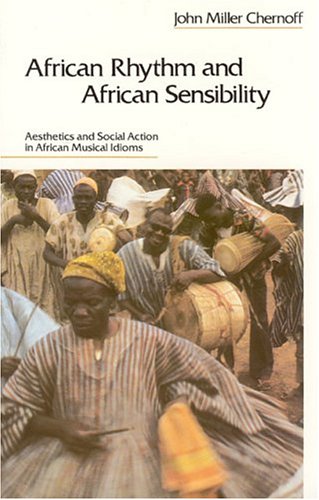
African Rhythm and African Sensibility: Aesthetics and Social...
Authors:
John Miller Chernoff
Publisher:
University Of Chicago Press
Publication Date:
Not available
ISBN:
0226103455
"We have in this book a Rosetta stone for mediating, or translating, African musical behavior and aesthetics."—Andrew Tracey, African Music"John... Miller Chernoff, who spent 10 years studying African drumming, has a flair for descriptive writing, and his first-person narratives should be easily understood by any reader, while ringing unmistakably true for the reader who has also been to West Africa."—Roderick Knight, Washington Post Book World"Ethnomusicologists must be proud that their discipline has produced a book that will, beyond doubt, rank as a classic of African studies."—Peter Fryer, Research in Literatures"A marvelous book. . . . Not many scholars will ever be able to achieve the kind of synthesis of 'doing' and 'writing about' their subject matter that Chernoff has achieved, but he has given us an excellent illustration of what is possible."—Chet Creider, Culture"Chernoff develops a brilliant and penetrating musicological essay that is, at the same time, an intensely personal and even touching account of musical and cultural discovery that anyone with an interest in Africa can and should read. . . . No other writing comes close to approaching Chernoff's ability to convey a feeling of how African music 'works'"—James Koetting, Africana Journal"Four stars. One of the few books I know of that talks of the political, social, and spiritual meanings of music. I was moved. It was so nice I read it twice."—David Byrne of "Talking Heads"The companion cassette tape has 44 examples of the music discussed in the book. It consists of field recordings illustrating cross-rhythms, multiple meters, call and response forms, etc.
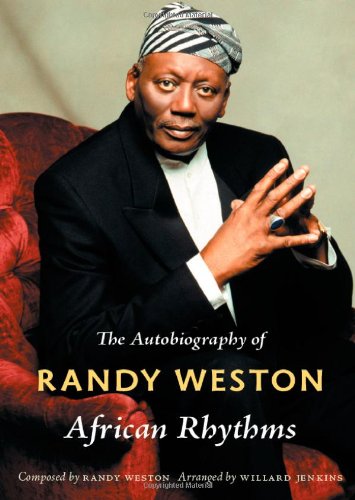
African Rhythms: The Autobiography of Randy Weston (a John Hope...
Authors:
Randy Weston
Publisher:
Duke University Press Books
Publication Date:
Not available
ISBN:
0822347849
The pianist, composer, and bandleader Randy Weston is one of the world’s most influential jazz musicians and a remarkable storyteller whose career has... spanned five continents and more than six decades. Packed with fascinating anecdotes, African Rhythms is Weston’s life story, as told by him to the music journalist Willard Jenkins. It encompasses Weston’s childhood in Brooklyn’s Bedford-Stuyvesant neighborhood—where his parents and other members of their generation imbued him with pride in his African heritage—and his introduction to jazz and early years as a musician in the artistic ferment of mid-twentieth-century New York. His music has taken him around the world: he has performed in eighteen African countries, in Buddhist temples and Shinto shrines, in the Canterbury Cathedral, and at the grand opening of the Bibliotheca Alexandrina: The New Library of Alexandria. Africa is at the core of Weston’s music and spirituality. He has traversed the continent on a continuous quest to learn about its musical traditions, produced its first major jazz festival, and lived for years in Morocco, where he opened a popular jazz club, the African Rhythms Club, in Tangier.Weston’s narrative is replete with tales of the people he has met and befriended, and with whom he has worked. He describes his unique partnerships with Langston Hughes, the musician and arranger Melba Liston, and the jazz scholar Marshall Stearns, as well as his friendships and collaborations with Duke Ellington, Dizzy Gillespie, Coleman Hawkins, Thelonious Monk, Billy Strayhorn, Max Roach, Charlie Parker, Miles Davis, the novelist Paul Bowles, the Cuban percussionist Candido Camero, the Ghanaian jazz artist Kofi Ghanaba, the Gnawa musicians of Morocco, and many others. With African Rhythms, an international jazz virtuoso continues to create cultural history.
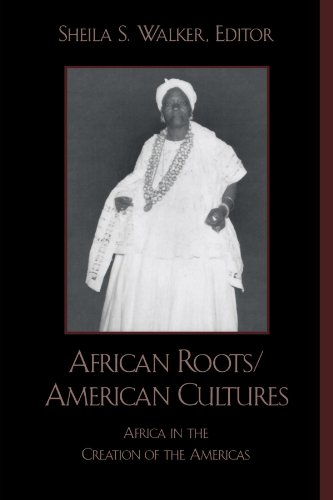
African Roots/American Cultures: Africa in the Creation of the...
Authors:
Sheila S. Walker
Publisher:
Rowman & Littlefield Publishers
Publication Date:
Not available
ISBN:
0742501655
Africans and their descendants constituted the majority of the population of the Americas for most of the first three hundred years. Yet their... fundamental roles in the creation and definition of the new societies of the Onew world,O and their significance in the development of the Atlantic world, have not been acknowledged. This multidisciplinary volume highlights the African presence throughout the Americas, and African and African Diasporan contributions to the material and cultural life of all of the Americas, and of all Americans. It includes articles from leading scholars, and from cultural leaders from both well-known and little-known African Diasporan communities. Privileging African Diasporan voices, it offers new perspectives, data, and interpretations that challenge prevailing understandings of the Americas. Its fundamental premise is that the story of the Americas can only be accurately told by including the story of the foundational roles played by Africans and their descendants in the Americas.
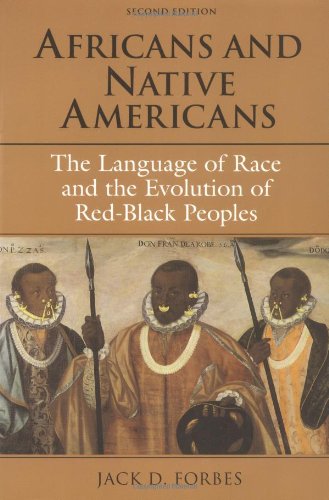
Africans and Native Americans: The Language of Race and the...
Authors:
Jack D. Forbes
Publisher:
University of Illinois Press
Publication Date:
Not available
ISBN:
025206321X
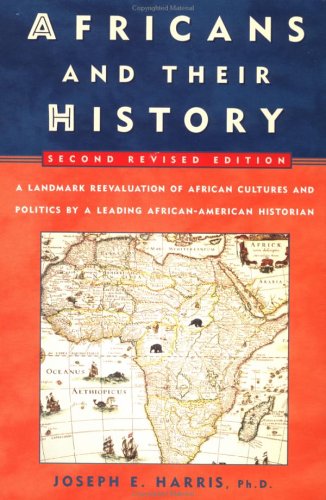
Africans and Their History: Second Revised Edition
Authors:
Joseph E. Harris
Publisher:
Plume
Publication Date:
Not available
ISBN:
0452011817
Africa has witnessed the birth of many important developments in history. Human evolution, including the use of fire, food production via plant... cultivation and animal domestication, as well as the creation of sophisticated tools and hunting weapons from iron took place in Africa. Other historical events such as the slave trade, which played a critical role in Western economic power, the rise of Islam as one of the world?s dominant religions, and colonization and struggles for independence occurred on African soil. Africans and Their History chronicles in fascinating detail African history from prehistoric times through the present. This concise and authoritative overview of the diverse peoples and societies of Africa now covers recent events, including the emergence of a free South Africa and its landmark enactment of a constitution that recognizes even more rights than the American constitution. The dynamic history and the relationship Africans have with the rest of the world is revealed in Africans and Their History, exposing and shattering ugly stereotypes that for too long have dominated Western thought. Africans and Their History has been updated to reflect the past decade of African events. Ever growing number of African Studies departments on college campuses insures a constant audience for this book. Africans and Their History has a long and steady backlist life--first published in 1972.

African Security and the African Command: Viewpoints on the US Role...
Authors:
Not Available
Publisher:
Kumarian Press
Publication Date:
Not available
ISBN:
1565494121
After the end of the Cold War and a failed mission in Somalia, the US decided to wash its hands of major military operations in Africa. Within the past... few years, however, strategic interests in the region have grown, based largely on the threat of international terrorist group activities there. In 2007, the Bush Administration created a new military presence in Africa, AFRICOM (United States Africa Command), professed to be based not on occupying military or fixed bases, but rather on capacity building for and collaboration with African security forces.Some see AFRICOM as the answer to an African security system crippled by a lack of resources, widespread politicization and institutional weakness. Others claim the program is nothing more than a characteristic attempt by the US to secure its own interests in the region without regard to the actual needs of Africans. A variety of viewpoints on the debate, both from the US and Africa, come together in this collection to examine the objectives and activities of AFRICOM. The result provides the reader with a well-rounded picture of longstanding security challenges in Africa and what might be done to address them.
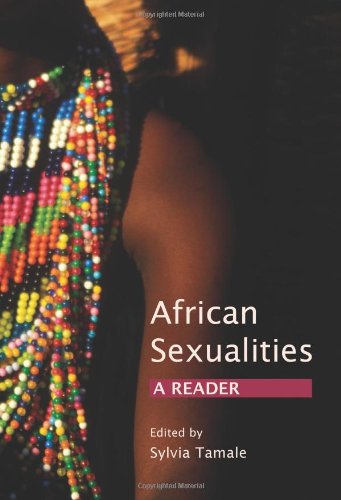
African Sexualities: A Reader
Authors:
Not Available
Publisher:
Pambazuka Press
Publication Date:
Not available
ISBN:
0857490168
A groundbreaking book, accessible but scholarly, by African activists. It uses research, life stories, and artistic expression—including essays, case... studies, poetry, news clips, songs, fiction, memoirs, letters, interviews, short film scripts, and photographs—to examine dominant and deviant sexualities and investigate the intersections between sex, power, masculinities, and femininities. It also opens a space, particularly for young people, to think about African sexualities in different ways.

African Short Stories
Authors:
Chinua Achebe
Publisher:
Longman
Publication Date:
Not available
ISBN:
0435905368
Chinua Achebe has joined with C.L. Innes, co-editor of "Okike," to select stories of excellence from the writings of the last twenty-five years. While... many of the established names such as Sembene Ousmane, Ngugi, and Bessie Head are to be found, the collection is refreshing for the inclusion of work by the wide range of writers who have made the emerging field of African fiction something to follow.
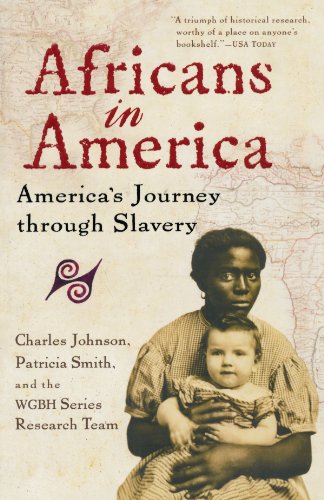
Africans in America: America's Journey through Slavery
Authors:
Charles Johnson
Publisher:
Mariner Books
Publication Date:
Not available
ISBN:
0156008548
A riveting narrative history of America, from the 1607 landing in Jamestown to the brink of the Civil War, Africans in America tells the shared history... of Africans and Europeans as seen through the lens of slavery. It is told from the point of view of the Africans who arrived in shackles and endured the terrible dichotomy of this new land founded on the ideal of liberty but dedicated to the perpetuation of slavery. Meticulously researched, this book weaves together the experiences of the colonists, slaves, free and fugitive blacks, and abolitionists to present an utterly original document, a startling and moving drama of the effects of slavery and racism on our conflicted national identity. The result transcends history as we were taught it and transforms the way we see our past.

Africans in Brazil: A Pan-African Perspective
Authors:
Abdias Do Nascimento
Publisher:
Africa World Press
Publication Date:
Not available
ISBN:
0865432392
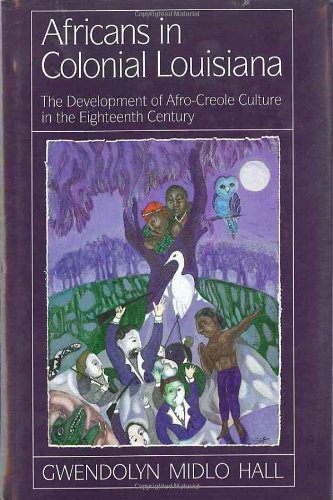
Africans in Colonial Louisiana: The Development of Afro-Creole...
Authors:
Gwendolyn Midlo Hall
Publisher:
Louisiana State University Press
Publication Date:
Not available
ISBN:
0807119997
Africans in Colonial Mexico: Absolutism, Christianity, and...
Authors:
Bennett
Publisher:
Indiana University Press
Publication Date:
Not available
ISBN:
025321775X
"This book charts new directions in thinking about the construction of new world identities.... Bennett does a masterful job." —Judith A. Byfield,... DartmouthIn this study of the largest population of free and slave Africans in the New World, Herman L. Bennett has uncovered much new information about the lives of slave and free blacks, the ways that their lives were regulated by the government and the Church, the impact upon them of the Inquisition, their legal status in marriage, and their rights and obligations as Christian subjects.
Africans in the Americas: A History of the Black Diaspora
Authors:
Michael L. Conniff
Publisher:
The Blackburn Press
Publication Date:
Not available
ISBN:
1930665687
This book seeks to explore, in a single, short convenient text, the complex relationship between Africa and the Americas from the early sixteenth... century through the end of the twentieth century. Beginning with a preview of the relations between Africa and Europe prior to 1500, the work covers chronologically the transatlantic slave trade, domestic slave trading, slave systems, the abolition movements, and the aftermath of emancipation throughout the Americas. Several chapters provide sweeping surveys of broad regions such as British North America, the Caribbean, Mesoamerica, the Andean countries and Latin America. Others deal with specific territories such as the United States, Venezuela, Cuba or Brazil. The book begins with a chapter on African antiquity and early contacts with Europe. It continues with a comparative history of the slave trade and emancipation. Other topics include the role of free blacks throughout the Americas, women and gender relations, and African-American relations with Europeans and Native American populations. Finally, the book concludes with chapters on modern race and economic relations in the Americas and a chapter on the continuing ties between African Americans and Africa. "On the whole Africans in the Americas accomplishes its purpose well, there is a great deal of fascinating information here. A very useful text." The International Journal of African Historical Studies 28, 633-65 (1995) Michael L. Conniff earned degrees at UC-Berkeley and Stanford (Ph.D. 1976) and has published a number of books on modern Latin American history, most recently A History of Modern Latin America (with Lawrence Clayton) and Populism in Latin America. Thomas J. Davis, Ph.D., J.D., teaches history and law at Arizona State University in Tempe, focusing on race and the law, civil rights, and U.S. constitutional and legal history. His most recent publications include "Race, Identity, and the Law: Underlying Questions in Plessy v. Ferguson," in Race on Trial: Law and Justice in American History (2002); "The Community of Africans in the Americas: Colonialism to CARICOM and TransAfrica" Research and Diversity Journal (2002) and "Conspiracy and Credibility," William and Mary Quarterly (2002). CONTRIBUTING AUTHORS Patrick Carroll ▪ David Eltis ▪ Patience Essah ▪ Alfred Frederick ▪ Dale Graden ▪ Linda Heywood ▪ Richard Lobban ▪ Colin Palmer ▪ Joseph Reidy ▪ John Thornton ▪ Ronald Walters ▪ Ashton Welch ▪ Winthrop Wright TABLE OF CONTENTS Preface PART I - Africa, Europe, and the Americas 1. Africa to 1500 2. Africa and Europe before 1700 3. Early African Experiences in the Americas PART II - The Slave Trade and Slavery in the Americas 4. Africans in the Caribbean 5. Africans in Brazil 6. Africans in Mainland Spanish America 7. Africans in the Thirteen British Colonies PART III - Ending the Slave Trade and Slavery 8. Abolition of the Atlantic Slave Trade 9. Emancipation in the Caribbean and Spanish America 10. Emancipation in the United States 11. Emancipation in Brazil PART IV - Africans in the Americas since Abolition 12. African Americans in Postemancipation Economies 13. Race and Politics in the United States 14. Race and Politics in Latin America 15. The Americas' Continuing Ties with Africa AFTERWORD GLOSSARY BIBLIOGRAPHIC ESSAY INDEX ABOUT THE AUTHORS
African Slavery in Latin America and the Caribbean
Authors:
Herbert S. Klein
Publisher:
Oxford University Press, USA
Publication Date:
Not available
ISBN:
0195189426
This is an original survey of the economic and social history of slavery of the Afro-American experience in Latin America and the Caribbean. The focus... of the book is on the Portuguese, Spanish, and French-speaking regions of continental America and the Caribbean. It analyzes the latest research on urban and rural slavery and on the African and Afro-American experience under these regimes. It approaches these themes both historically and structurally. The historical section provides a detailed analysis of the evolution of slavery and forced labor systems in Europe, Africa, and America. The second half of the book looks at the type of life and culture which the salves experienced in these American regimes.The first part of the book describes the growth of the plantation and mining economies that absorbed African slave labor, how that labor was used, and how the changing international economic conditions affected the local use and distribution of the slave labor force. Particular emphasis is given to the evolution of the sugar plantation economy, which was the single largest user of African slave labor and which was established in almost all of the Latin American colonies.Once establishing the economic context in which slave labor was applied, the book shifts focus to the Africans and Afro-Americans themselves as they passed through this slave regime. The first part deals with the demographic history of the slaves, including their experience in the Atlantic slave trade and their expectations of life in the New World. The next part deals with the attempts of the African and American born slaves to create a viable and autonomous culture. This includes their adaptation of European languages, religions, and even kinship systems to their own needs. It also examines systems of cooptation and accommodation to the slave regime, as well as the type and intensity of slave resistances and rebellions.A separate chapter is devoted to the important and different role of the free colored under slavery in the various colonies. The unique importance of the Brazilian free labor class is stressed, just as is the very unusual mobility experienced by the free colored in the French West Indies.The final chapter deals with the differing history of total emancipation and how ex-slaves adjusted to free conditions in the post-abolition periods of their respective societies. The patterns of post-emancipation integration are studied along with the questions of the relative success of the ex-slaves in obtaining control over land and escape from the old plantation regimes.

African Soccerscapes: How a Continent Changed the World's Game...
Authors:
Peter Alegi
Publisher:
Ohio University Press
Publication Date:
Not available
ISBN:
0896802787
From Accra and Algiers to Zanzibar and Zululand, African football today reflects the history and culture of those who play the game and how they have... shaped it in a distinctively African manner. Football may obey global rules, but the influence of magicians and healers, the nurturing of different tactics and styles of play, and local forms of spectatorship give football in the continent a cultural and sporting imprint all of its own . In African Soccerscapes Peter Alegi explores how football was influenced by colonialism, the growth of cities, independence, and global capitalism. Regional differences and the links between sport, culture and politics feature prominently in his book. In the independent era football offered a rare form of 'national culture' in ethnically diverse nations and symbolized pan-African unity and solidarity through the anti-apartheid struggle and the campaign for more guaranteed places for African teams in the World Cup finals. Huge numbers of Africans play overseas, disproportionately rewarding European leagues at Africa's expense, and this phenomenon is discussed, as are the recent privatization of the African game, football development programs and the growth of women's football.
 '
'