production
/viewbook/list/all/?page=4052
/
/static/
None

En la ardiente oscuridad (Spanish Edition)
Authors:
Antonio Buero Vallejo
Publisher:
Espasa Calpe
Publication Date:
Not available
ISBN:
8467033495
La obra de Antonio Buero Vallejo ha sido justamente calificada como el mas alto empeno intelectual de nuestro teatro en el siglo XX y uno de sus mas... altos logros escenicos. En la ardiente oscuridad es su primera pieza y en ella, puede decirse, estan ya todos los elementos que componen su mundo dramatico. Centrada en el ambito de los invidentes, la ceguera es aqui mucho mas que una anecdota; constituye, en realidad, un simbolo de la condicion humana: no es a ellos a quienes intento retratar dice Buero, sino a todos nosotros. A todos, en efecto, se dirige la invitacion a asumir la tragica condicion del hombre y su verdad, porque solo asumiendola podremos ser libres y construir un futuro. Mariano de Paco, profesor titular de la Universidad de Murcia, es autor de numerosos estudios sobre Buero Vallejo y resume en esta edicion todas las lineas de su dramaturgia en el plano ideologico y en sus dimensiones artisticas.

En la oscuridad (Libros Para Nios) (Spanish Edition)
Authors:
Braz Júlio Emílio
Publisher:
Fondo de Cultura Económica
Publication Date:
Not available
ISBN:
9681642678
Mamá dijo :-Quédate ahí que no me tardo- ¿Me lo prometes, mamá? -¡Claro que sí! Sólo voy a comprar un kilo de arroz para la cena. Ella mintió.... No regresó. Me quedé sola.

Enlarging the Story: Perspectives on Writing World Christian History
Authors:
Wilbert R. Shenk
Publisher:
Orbis Books
Publication Date:
Not available
ISBN:
1570754535
Francis Xavier's arrival in Japan in 1549 initiated a radically different approach to the spread of Christianity which was to distinguish the Jesuits... from all other Europeans for the next 200 years - he insisted that his missionaries should respect and understand Japanese culture. His work was continued by Alessandro Valignano, both in Japan and China, where Jesuits gained Confucian scholar status as an introduction to their missionary life, and even became key figures in the Chinese civil service. This book recounts the story of the Jesuit missions in both civilizations. It shows how the Jesuits' sensitivity to Japanese and Chinese culture directly and consciously contradicted the imperialism of the Spanish and the Portuguese, and allowed the possibility of dialogue between East and West which other European stances denied.

En la sangre (Spanish Edition)
Authors:
Eugenio Cambaceres
Publisher:
Stockcero
Publication Date:
Not available
ISBN:
9871136498
By the end of the 19th century, successive waves of immigration had modified the booming Argentine society at a vertiginous pace, violently shaking its... structures. The undesired side effects of the massive immigrant flow forced readjustments in the free-thinking, free-enterprise, liberal line of thought, pursued until then by the aristocratic but progessive ruling classes. The contradictions in their ideology surfaced, steering official discourse towards an often xenophobic, racist, conservative and defensive stance. Within this context of socio-political skepticism boiling underneath the euphoria of material progress, a small group of gentlemen-writers of the 1980s started to question the decadence caused by the lust for luxury mixed with hypocrisy and speculation, which they viewed as foreshadowing disaster. Eugenio Cambaceres belonged to this first generation of the liberal ruling class gifted with a clear awareness of the predicament that threatened them, and, in 1887, in the midst of the liberal apotheosis brought by the Juarez Celman administration, his finely honed class-conservation instincts led him to write En la sangre, a novel that clearly describes patrician distrust towards immigration, portraying the "criollo"oligarchy-controlled spaces as stolen or lost. Genaro Piazza, the "son of a Neapolitan tinker", is the novel's main character, but stigmatized right from the beginning he becomes a source of infectious disease within the plot. Cambaceres makes no attempt to conceal his hatred of his own character, and adorns him with all the stereotypes of the social climbing immigrant, so often depicted in 80s argentine elite paranoia, and which continued to figure in the country's nationalistic thought in the 20th century. En la sangre is a loud and sustained cry, an active attempt to rouse and activate the elite class, pampered and put to sleep by the achievements of General Julio A. Roca and his successors. Using techniques of naturalism, Cambaceres reveals his central character as fraudulent, an illegitimate being that an ill chain of events made heir to the Argentine oligarchy. The anticlimatic effect is intended to convey a double lesson. It forces reexamination of the liberal principles whose excess condemns the dominant class to its own destruction; and at the same time lays the foundations of a substitute myth, aristocratic and defensive, built upon a common base of exclusion, homogeneity and self righteousness as a privileged racial and social group. As in many other 19th century novels this self centered point of view should hardly surprise us. On the contrary, at almost the same time and as a gesture copied from literature, Latin American politic liberal discourse showed the same inclination as Cambaceres to recycle the old liberal principles into new positivist molds, and to point out in the "others" the same transvestism embodied by Genaro Piazza in En la sangre. This edition of the disturbing novel En la sangre, with an introductory essay and notes by María Eugenia Mudrovcic, would be very interesting and provocative reading for both Latin American Literature and Social Studies courses.

ENLGISH B1A PACKET [CUSTOM]
Authors:
Not Available
Publisher:
Not available
Publication Date:
Not available
ISBN:
Not available

Enlightened Monks: The German Benedictines, 1740-1803
Authors:
Ulrich L. Lehner
Publisher:
Oxford University Press, USA
Publication Date:
Not available
ISBN:
0199595127
Enlightened Monks investigates the social, cultural, philosophical, and theological challenges the German Benedictines had to face between 1740 and... 1803, and how the Enlightenment process influenced the self-understanding and lifestyle of these religious communities. It had an impact on their forms of communication, their transfer of knowledge, their relationships to worldly authorities and to the academic world, and also their theology and philosophy. The multifaceted achievements of enlightened monks, which included a strong belief in individual freedom, tolerance, human rights, and non-violence, show that monasticism was on the way to becoming fully integrated into the Enlightenment. Ulrich L. Lehner refutes the widespread assumption that monks were reactionary enemies of Enlightenment ideas. On the contrary, he demonstrates that many Benedictines implemented the new ideas of the time into their own systems of thought. This revisionist account contributes to a better understanding not only of monastic culture in Central Europe, but also of Catholic religious culture in general.

Enlightened Sexism: The Seductive Message that Feminism's Work Is Done
Authors:
Susan J. Douglas
Publisher:
Times Books
Publication Date:
Not available
ISBN:
080508326X
From the author of Where the Girls Are, a sharp and irreverent critique of how women are portrayed in today’s popular cultureWomen today are inundated... with conflicting messages from the mass media: they must either be strong leaders in complete command or sex kittens obsessed with finding and pleasing a man. In Enlightened Sexism, Susan J. Douglas, one of America’s most entertaining and insightful cultural critics, takes readers on a spirited journey through the television programs, popular songs, movies, and news coverage of recent years, telling a story that is nothing less than the cultural biography of a new generation of American women.Revisiting cultural touchstones from Buffy the Vampire Slayer to Survivor to Desperate Housewives, Douglas uses wit and wisdom to expose these images of women as mere fantasies of female power, assuring women and girls that the battle for equality has been won, so there’s nothing wrong with resurrecting sexist stereotypes—all in good fun, of course. She shows that these portrayals not only distract us from the real-world challenges facing women today but also drive a wedge between baby-boom women and their “millennial” daughters.In seeking to bridge this generation gap, Douglas makes the case for casting aside these retrograde messages, showing us how to decode the mixed messages that restrict the ambitions of women of all ages. And what makes Enlightened Sexism such a pleasure to read is Douglas’s unique voice, as she blends humor with insight and offers an empathetic and sisterly guide to the images so many women love and hate with equal measure.

Enlightenment, Governance, and Reform in Spain and its Empire...
Authors:
Gabriel B. Paquette
Publisher:
Palgrave Macmillan
Publication Date:
Not available
ISBN:
0230300529
This book offers a new interpretation of political reform in Spain and its American empire in the second half of the Eighteenth century. It examines the... intellectual foundation of commercial, administrative and colonial policy during the tumultuous reigns of Charles III and Charles IV.

Enlightenment in the Colony: The Jewish Question and the Crisis of...
Authors:
Aamir R. Mufti
Publisher:
Princeton University Press
Publication Date:
Not available
ISBN:
069105732X
Enlightenment in the Colony opens up the history of the "Jewish question" for the first time to a broader discussion--one of the social exclusion of... religious and cultural minorities in modern times, and in particular the crisis of Muslim identity in modern India. Aamir Mufti identifies the Hindu-Muslim conflict in India as a colonial variation of what he calls "the exemplary crisis of minority"--Jewishness in Europe. He shows how the emergence of this conflict in the late nineteenth century represented an early instance of the reinscription of the "Jewish question" in a non-Western society undergoing modernization under colonial rule. In so doing, he charts one particular route by which this European phenomenon linked to nation-states takes on a global significance. Mufti examines the literary dimensions of this crisis of identity through close readings of canonical texts of modern Western--mostly British-literature, as well as major works of modern Indian literature in Urdu and English. He argues that the one characteristic shared by all emerging national cultures since the nineteenth century is the minoritization of some social and cultural fragment of the population, and that national belonging and minority separatism go hand in hand with modernization. Enlightenment in the Colony calls for the adoption of secular, minority, and exilic perspectives in criticism and intellectual life as a means to critique the very forms of marginalization that give rise to the uniquely powerful minority voice in world literatures.
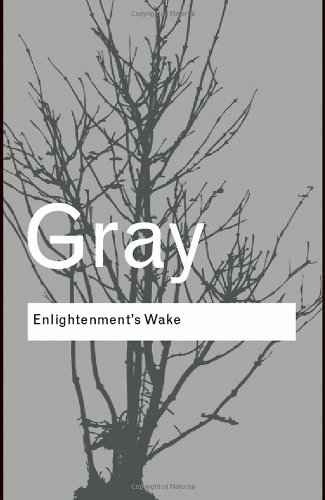
Enlightenment's Wake: Politics and Culture at the Close of the...
Authors:
John Gray
Publisher:
Routledge
Publication Date:
Not available
ISBN:
0415424046
John Gray is the bestselling author of such books as Straw Dogs and Al Qaeda and What it Means to be Modern which brought a mainstream readership to a... man who was already one of the UK's most well respected thinkers and political theorists. Gray wrote Enlightenment’s Wake in 1995 – six years after the fall of the Berlin Wall and six years before the terrorist attacks on the World Trade Center. Turning his back on neoliberalism at exactly the moment that its advocates were in their pomp, trumpeting 'the end of history' and the supposedly unstoppable spread of liberal values across the globe, Gray’s was a lone voice of scepticism. The thinking he criticised here would lead ultimately to the invasion of Iraq. Today, its folly might seem obvious to all, but as this edition of Enlightenment’s Wake shows, John Gray has been trying to warn us for some fifteen years – the rest of us are only now catching up with him.
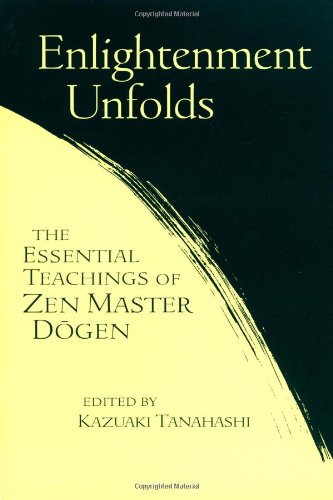
Enlightenment Unfolds
Authors:
Kazuaki Tanahashi
Publisher:
Shambhala
Publication Date:
Not available
ISBN:
1570625700
Enlightenment Unfolds is a sequel to Kaz Tanahashi's previous collection, Moon in a Dewdrop, which has become a primary source on Dogen for... Western Zen students. Dogen Zenji (1200-1253) is unquestionably the most significant religious figure in Japanese history. Founder of the Soto school of Zen (which emphasizes the practice of zazen or sitting meditation), he was a prolific writer whose works have remained popular for six hundred years. Enlightenment Unfolds presents even more of the incisive and inspiring writings of this seminal figure, focusing on essays from his great life work, Treasury of the True Dharma Eye , as well as poems, talks, and correspondence, much of which appears here in English for the first time. Tanahashi has brought together his own translations of Dogen with those of some of the most respected Zen teachers and writers of our own day, including Reb Anderson, Edward Espe Brown, Norman Fisher, Gil Fronsdal, Blanche Hartman, Jane Hirschfield, Daniel Leighton, Alan Senauke, Katherine Thanas, Mel Weitzman, and Michael Wenger.
EN LINEA 3.0 + COMPANION TEXT VOLUME 1 (V1)
Authors:
Not Available
Publisher:
Not available
Publication Date:
Not available
ISBN:
Not available
EN LINEA 3.0 ECOURSE
Authors:
Not Available
Publisher:
Not available
Publication Date:
Not available
ISBN:
Not available

En llamas (Juegos del Hambre) (Spanish Edition)
Authors:
Suzanne Collins
Publisher:
Molino
Publication Date:
Not available
ISBN:
8427200005
FOR USE IN SCHOOLS AND LIBRARIES ONLY. By winning the Hunger Games, Katniss and Peeta have secured a life of safety and plenty for themselves and their... families, but because they won by defying the rules, they unwittingly become the faces of an impending rebellion.
ENLS 2020-01 BUNDLE ]CUSTOM[
Authors:
Not Available
Publisher:
Not available
Publication Date:
Not available
ISBN:
Not available
 '





