production
/viewbook/list/all/?page=407
/
/static/
None

After Gorbachev (Cambridge Russian Paperbacks)
Authors:
Stephen White
Publisher:
Cambridge University Press
Publication Date:
Not available
ISBN:
052145896X
Dramatic and confusing changes in what used to be the Soviet Union have transformed the world in which we live. This fourth edition of Stephen White's... best-selling introductory text has been revised throughout and examines the full cycle of this period of revolutionary change from its Brezhnevite origins to the first turbulent years of Yeltsin's troubled presidency. After Gorbachev will continue to provide an unrivaled guide to the processes of transition, upheaval and collapse that now characterize Russia and the post-Soviet republics.

After Greece: Poems (New Odyssey Series)
Authors:
Christopher Bakken
Publisher:
Truman State Univ Pr
Publication Date:
Not available
ISBN:
1931112010
This collection is winner of the 2001 T S Eliot prize. An account of travel and a collection of ecstatic lyrics, these poems excavate an idea of place,... one layered deep for the poet and archaeologist to discover. We encounter the obsessions of a hellenic barbarian - of an American poet residing in, not touring, an environment haunted by profane revelations and sacred commonplaces. We move beyond the crowded sites and restored monuments, to places where the presence of the ancient world is still palpable in the violent realities of the modern Balkans. Looking through these poems into artefacts and ruined places, we hear 'spirits of that barren landscape call out still', and we feel, again and again, what connects us to the past is stronger than what separates us from it.
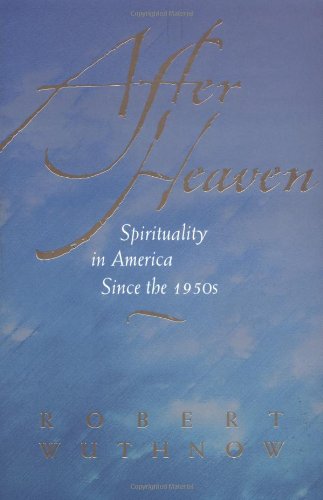
After Heaven: Spirituality in America Since the 1950s
Authors:
Robert Wuthnow
Publisher:
University of California Press
Publication Date:
Not available
ISBN:
0520222288
The evolution of American spirituality over the past fifty years is the subject of Robert Wuthnow's engrossing new book. Wuthnow uses in-depth... interviews and a broad range of resource materials to show how Americans, from teenagers to senior citizens, define their spiritual journeys. His findings are a telling reflection of the changes in beliefs and lifestyles that have occurred throughout the United States in recent decades.Wuthnow reconstructs the social and cultural reasons for an emphasis on a spirituality of dwelling (houses of worship, denominations, neighborhoods) during the 1950s. Then in the 1960s a spirituality of seeking began to emerge, leading individuals to go beyond established religious institutions. In subsequent chapters Wuthnow examines attempts to reassert spiritual discipline, encounters with the sacred (such as angels and near-death experiences), and the development of the "inner self." His final chapter discusses a spirituality of practice, an alternative for people who are uncomfortable within a single religious community and who want more than a spirituality of endless seeking.The diversity of contemporary American spirituality comes through in the voices of the interviewees. Christians, Jews, Buddhists, Muslims, Hindus, and Native Americans are included, as are followers of occult practices, New Age religions, and other eclectic groups. Wuthnow also notes how politicized spirituality, evangelical movements, and resources such as Twelve-Step programs and mental health therapy influence definitions of religious life today.Wuthnow's landmark book, The Restructuring of American Religion (1988), documented the changes in institutional religion in the United States; now After Heaven explains the changes in personal spirituality that have come to shape our religious life. Moreover, it is a compelling and insightful guide to understanding American culture at century's end.

After Hegemony: Cooperation and Discord in the World Political Economy
Authors:
Robert O. Keohane
Publisher:
Princeton University Press
Publication Date:
Not available
ISBN:
0691122482
This book is a comprehensive study of cooperation among the advanced capitalist countries. Can cooperation persist without the dominance of a single... power, such as the United States after World War II? To answer this pressing question, Robert Keohane analyzes the institutions, or "international regimes," through which cooperation has taken place in the world political economy and describes the evolution of these regimes as American hegemony has eroded. Refuting the idea that the decline of hegemony makes cooperation impossible, he views international regimes not as weak substitutes for world government but as devices for facilitating decentralized cooperation among egoistic actors. In the preface the author addresses the issue of cooperation after the end of the Soviet empire and with the renewed dominance of the United States, in security matters, as well as recent scholarship on cooperation.

After Hegemony: Cooperation and Discord in the World Political Economy
Authors:
Robert O. Keohane
Publisher:
Princeton University Press
Publication Date:
Not available
ISBN:
0691022283
This book is a comprehensive study of cooperation among the advanced capitalist countries. Can cooperation persist without the dominance of a single... power, such as the United States after World War II? To answer this pressing question, Robert Keohane analyzes the institutions, or "international regimes," through which cooperation has taken place in the world political economy and describes the evolution of these regimes as American hegemony has eroded. Refuting the idea that the decline of hegemony makes cooperation impossible, he views international regimes not as weak substitutes for world government but as devices for facilitating decentralized cooperation among egoistic actors. In the preface the author addresses the issue of cooperation after the end of the Soviet empire and with the renewed dominance of the United States, in security matters, as well as recent scholarship on cooperation.

After Henry
Authors:
Joan Didion
Publisher:
Vintage
Publication Date:
Not available
ISBN:
0679745394
In her latest forays into the American scene, Joan Didion covers ground from Washington to Los Angeles, from a TV producer's gargantuan "manor" to the... racial battlefields of New York's criminal courts. At each stop she uncovers the mythic narratives that elude other observers: Didion tells us about the fantasies the media construct around crime victims and presidential candidates; she gives us new interpretations of the stories of Nancy Reagan and Patty Hearst; she charts America's rollercoaster ride through evanescent booms and hard times that won't go away. A bracing amalgam of skepticism and sympathy, After Henry is further proof of Joan Didion's infallible radar for the true spirit of our age.

After Hitler: Recivilizing Germans, 1945-1995
Authors:
Konrad H. Jarausch
Publisher:
Oxford University Press, USA
Publication Date:
Not available
ISBN:
0195374002
In the spring of 1945, as the German army fell in defeat and the world first learned of the unspeakable crimes of the Holocaust, few would have expected... that, only half a century later, the Germans would emerge as a prosperous people at the forefront of peaceful European integration. How did the Germans manage to recover from the shattering experience of defeat in World War II and rehabilitate themselves from the shame and horror of the Holocaust? In After Hitler, Konrad H. Jarausch shows how Germany's determination to emphasize civility and civil society, destroyed by the Nazi regime, helped restore the demoralized nation during the post-war period. Unlike other intellectual inquiries into German efforts to deal with the Nazi past, After Hitler primarily focuses on the practical lessons a disoriented people drew from their past misdeeds, and their struggle to create a new society with a sincere and deep commitment to human rights. After Hitler offers a comprehensive view of the breathtaking transformation of the Germans from the defeated Nazi accomplices and Holocaust perpetrators of 1945 to the civilized, democratic people of today's Germany.

After Ikkyu and Other Poems
Authors:
Jim Harrison
Publisher:
Shambhala
Publication Date:
Not available
ISBN:
1570622183
Jim Harrison's popular novels represent only part of his literary output—he has also been widely acclaimed for the "renegade genius" of his powerful,... expressive verse, collected in several books such as The Theory and Practice of Rivers and Other Poems (Clark City Press, 1989). After Ikkyu is the first collection of Harrison's poems that are directly inspired by his many years of Zen practice.

Afterimage of Empire: Photography in Nineteenth-Century India
Authors:
Zahid R. Chaudhary
Publisher:
Univ Of Minnesota Press
Publication Date:
Not available
ISBN:
0816677492
Afterimage of Empire provides a philosophical and historical account of early photography in India that focuses on how aesthetic experiments in... colonial photography changed the nature of perception. Considering photographs from the Sepoy Revolt of 1857 along with landscape, portraiture, and famine photography, Zahid R. Chaudhary explores larger issues of truth, memory, and embodiment.Chaudhary scrutinizes the colonial context to understand the production of sense itself, proposing a new theory of interpreting the historical difference of aesthetic forms. In rereading colonial photographic images, he shows how the histories of colonialism became aesthetically, mimetically, and perceptually generative. He suggests that photography arrived in India not only as a technology of the colonial state but also as an instrument that eventually extended and transformed sight for photographers and the body politic, both British and Indian.Ultimately, Afterimage of Empire uncovers what the colonial history of the medium of photography can teach us about the making of the modern perceptual apparatus, the transformation of aesthetic experience, and the linkages between perception and meaning.

After Imperialism: The Search for a New Order in the Far East,...
Authors:
Akira Iriye
Publisher:
Imprint Pubns
Publication Date:
Not available
ISBN:
1879176009
Since it was first published more than forty years ago, Sources of Japanese Tradition, Volume 2, has been considered the authoritative sourcebook for... readers and scholars interested in Japan from the eighteenth century to the post-World War II period. Now greatly expanded to include the entire twentieth century, and beginning in 1600, Sources of Japanese Tradition presents writings by modern Japan's most important philosophers, religious figures, writers and political leaders. The volume also offers extensive introductory essays and commentary to assist in understanding the documents' historical settings and significance. Wonderfully varied in its selections, this eagerly anticipated expanded edition has revised many of the texts from the original edition and added a great many not included or translated before. New additions include documents on the postwar era, the importance of education in the process of modernization, and women's issues.Beginning with documents from the founding of the Tokugawa shogunate, the collection's essays, manifestos, religious tracts, political documents, and memoirs reflect major Japanese religious, philosophical, social and political movements. Subjects covered include the spread of neo-Confucian and Buddhist teachings, Japanese poetry and aesthetics, and the Meiji Restoration. Other documents reflect the major political trends and events of the period: the abolition of feudalism, agrarian reform, the emergence of poltical parties and liberalism, and the Sino-Japanese and Russo-Japanese Wars. The collection also includes Western and Japanese impressions of each other through Western religious missions and commercial and cultural exchanges. These selections underscore Japanese and Western apprehension of and fascination with each other.As Japan entered the twentieth century, new political and social movements -- Marxism, anarchism, socialism, nationalism, and feminism -- entered the national consciousness. Later readings in the collection look at the buildup to war with the United States, military defeat and American occupation. Documents from the postwar period echo Japan's struggle with its own history and its development as a capitalist democracy. (10/1/05)

After Iraq: The Imperiled American Imperium
Authors:
Charles W. Kegley Jr.
Publisher:
Oxford University Press, USA
Publication Date:
Not available
ISBN:
0195177029
As the year 2001 unfolded, the United States stood at the apex of global power, possessing unrivalled military capabilities, a vibrant economy,... and--most of all--great self-confidence about its security. The terrorist attacks of 9/11 shattered America's prevailing illusions of invulnerability, prompting the world's sole superpower to embark on a revolutionary national strategy that led to a preventive war against Iraq. Will the United States be safer and more secure as a result? This book shows why America's new assertively unilateral foreign policy will actually create perils for the next generation of Americans. Written by two seasoned scholars, After Iraq conducts a sweeping survey of America's present position in the global arena and identifies the opportunities and risks that the United States will likely face once the war in Iraq draws to a close. Kegley and Raymond provide an insightful overview of the U.S. response to the unconventional threats posed by global terrorism as well as a searching assessment of the challenges created by the rise of China and other emerging competitors. They argue that the current course of American foreign policy will harm the country by setting dangerous precedents that undermine the moral and legal restraints--which were built painstakingly over the past century--on when and how states may use force. Drawing upon a rich array of historical parallels and empirical evidence, the book illuminates instances in which previous great powers embarked on similar self-defeating strategies. Like the U.S. today, these states once stood at the pinnacle of world power. But due to misperceptions about what they could accomplish with unilateral, preventive uses of military force, they made short-run decisions that undermined their long-term strategic interests. With Americans facing questions about how to combat global terrorism, how to diffuse the nuclear threats of Iran and North Korea, how to adjust to the growing power of China and India, and how to repair relations with traditional allies, After Iraq charts a path for restoring America's reputation and leadership in the world to strengthen both U.S. and international security in the turbulent decades ahead.
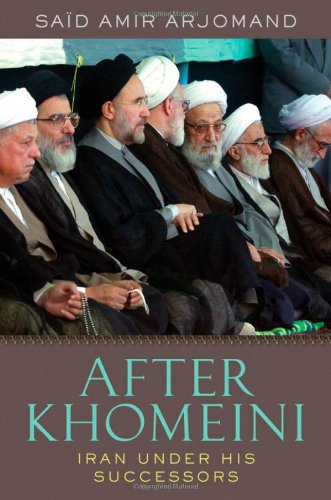
After Khomeini: Iran Under His Successors
Authors:
Said Amir Arjomand
Publisher:
Oxford University Press, USA
Publication Date:
Not available
ISBN:
0195391799
For many Americans, Iran is our most dangerous enemy--part of George W. Bush's "axis of evil" even before the appearance of Ahmadinejad. But what is... the reality? How did Ahmadinejad rise to power, and how much power does he really have? What are the chances of normalizing relations with Iran? In After Khomeini, Saïd Amir Arjomand paints a subtle and perceptive portrait of contemporary Iran. This work, a sequel to Arjomand's acclaimed The Turban for the Crown, examines Iran under the successors of Ayatollah Khomeini up to the present day. He begins, as the Islamic Republic did, with Khomeini, offering a brilliant capsule biography of the man who masterminded the revolution that overthrew the Shah. Arjomand draws clear distinctions between the moderates of the initial phrase of the revolution, radicals, pragmatists, and hardliners, the latter best exemplified by Mahmud Ahmadinejad. Taking a chronological and thematic approach, he traces the emergence and consolidation of the present system of collective rule by clerical councils and the peaceful transition to dual leadership by the ayatollah as the supreme guide and the subordinate president of the Islamic Republic of Iran. He explains the internal political quarrels among Khomeini's heirs as a struggle over his revolutionary legacy. And he outlines how the ruling clerical elite and the nation's security forces are interdependent politically and economically, speculating on the potential future role of the Revolutionary Guards. Bringing the work up to current political events, Arjomand analyzes Iran's foreign policy as well, including the impact of the fall of Communism on Iran and Ahmadinejad's nuclear policy. Few countries loom larger in American foreign relations than Iran. In this rich and insightful account, an expert on Iranian society and politics untangles the complexities of a nation still riding the turbulent wake of one of history's great revolutions.

After Khomeini: Iran Under His Successors
Authors:
Said Amir Arjomand
Publisher:
Oxford University Press, USA
Publication Date:
Not available
ISBN:
019989194X
For many Americans, Iran is our most dangerous enemy--part of George W. Bush's "axis of evil" even before the appearance of Ahmadinejad. But what is... the reality? How did Ahmadinejad rise to power, and how much power does he really have? What are the chances of normalizing relations with Iran? In After Khomeini, Saïd Amir Arjomand paints a subtle and perceptive portrait of contemporary Iran. This work, a sequel to Arjomand's acclaimed The Turban for the Crown, examines Iran under the successors of Ayatollah Khomeini up to the present day. He begins, as the Islamic Republic did, with Khomeini, offering a brilliant capsule biography of the man who masterminded the revolution that overthrew the Shah. Arjomand draws clear distinctions between the moderates of the initial phrase of the revolution, radicals, pragmatists, and hardliners, the latter best exemplified by Mahmud Ahmadinejad. Taking a chronological and thematic approach, he traces the emergence and consolidation of the present system of collective rule by clerical councils and the peaceful transition to dual leadership by the ayatollah as the supreme guide and the subordinate president of the Islamic Republic of Iran. He explains the internal political quarrels among Khomeini's heirs as a struggle over his revolutionary legacy. And he outlines how the ruling clerical elite and the nation's security forces are interdependent politically and economically, speculating on the potential future role of the Revolutionary Guards. Bringing the work up to current political events, Arjomand analyzes Iran's foreign policy as well, including the impact of the fall of Communism on Iran and Ahmadinejad's nuclear policy. Few countries loom larger in American foreign relations than Iran. In this rich and insightful account, an expert on Iranian society and politics untangles the complexities of a nation still riding the turbulent wake of one of history's great revolutions.

After Kinship (New Departures in Anthropology)
Authors:
Janet Carsten
Publisher:
Cambridge University Press
Publication Date:
Not available
ISBN:
0521665701
What is the impact on anthropology of recent studies of reproductive technologies, gender, and the social construction of science in the West? What is... the significance of public anxiety about the family to anthropology's analytic approach? Janet Carsten presents an original view of the past, present, and future of kinship in anthropology which will be of interest to anthropologists as well as to other social scientists.

After Lacan (Suny Series in Psychoanalysis and Culture) (Suny...
Authors:
Willy Apollon
Publisher:
State University of New York Press
Publication Date:
Not available
ISBN:
0791454800
 '
'