production
/viewbook/list/all/?page=4080
/
/static/
None
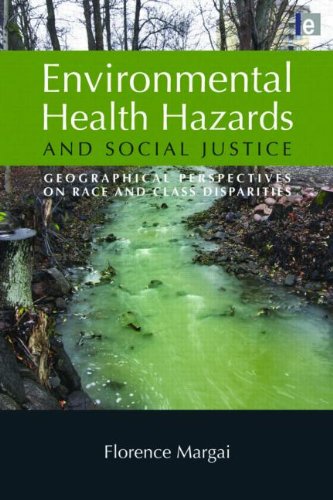
Environmental Health Hazards and Social Justice: Geographical...
Authors:
Florence Margai
Publisher:
Routledge
Publication Date:
Not available
ISBN:
1844078256
This book provides geographic perspectives and approaches for use in assessing the distribution of environmental health hazards and disease outcomes... among disadvantaged population groups. Estimates suggest that about forty per cent of the global burden of disease is attributable to exposures to biological and chemical pathogens in the physical environment. And with today's rapid rate of globalization, and these hazardous health effects are likely to increase, with low income and underrepresented communities facing even greater risks. In many places around the world, marginalized communities unwillingly serve as hosts of noxious facilities such as chemical industrial plants, extractive facilities (oil and mining) and other destructive land use activities. Others are being used as illegal dumping grounds for hazardous materials and electronic wastes resulting in air, soil and groundwater contamination. The book informs readers about the geography and emergent health risks that accompany the location of these hazards, with emphasis on vulnerable population groups. The approach is applications-oriented, illustrating the use of health data and geographic approaches to uncover the root causes, contextual factors and processes that produce contaminated environments. Case studies are drawn from the author's research in the United States and Africa, along with a literature review of related studies completed in Europe, Asia and South America. This comparative approach allows readers to better understand the manifestation of environmental hazards and inequities at different spatial scales with localized disparities evident in both developed and developing countries.

Environmental Health Science-Health Impacts
Authors:
JACOBS ALAN M
Publisher:
Kendall Hunt Publishing
Publication Date:
Not available
ISBN:
1465206493
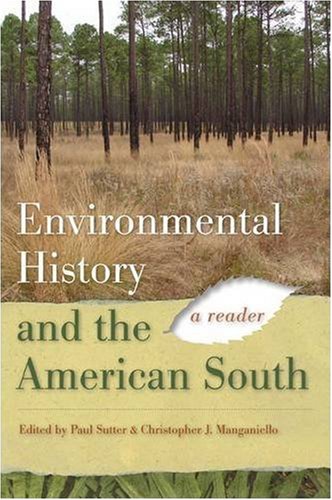
Environmental History and the American South: A Reader...
Authors:
Not Available
Publisher:
University of Georgia Press
Publication Date:
Not available
ISBN:
0820333220
This reader gathers fifteen of the most important essays written in the field of southern environmental history over the past decade. Ideal for course... use, the volume provides a convenient entree into the recent literature on the region as it indicates the variety of directions in which the field is growing. As coeditor Paul S. Sutter writes in his introduction, "recent trends in environmental historiography--a renewed emphasis on agricultural landscapes and their hybridity, attention to the social and racial histories of environmental thought and practice, and connections between health and the environment among them--have made the South newly attractive terrain. This volume suggests, then, that southern environmental history has not only arrived but also that it may prove an important space for the growth of the larger environmental history enterprise."The writings, which range in setting from the Texas plains to the Carolina Lowcountry, address a multiplicity of topics, such as husbandry practices in the Chesapeake colonies and the aftermath of Hurricane Andrew. The contributors' varied disciplinary perspectives--including agricultural history, geography, the history of science, the history of technology, military history, colonial American history, urban and regional planning history, and ethnohistory--also point to the field's vitality. Conveying the breadth, diversity, and liveliness of this maturing area of study, Environmental History and the American South affirms the critical importance of human-environmental interactions to the history and culture of the region.
Environmental History: As if Nature Existed (Ecological Economics...
Authors:
McNeill
Publisher:
Oxford University Press, USA
Publication Date:
Not available
ISBN:
0198064489
This volume brings to the reader the history of the alteration of environment by human action, and the reciprocal influence of the environment upon... human history. The collection traces the long history of geographical shifts in human occupation, the difficult path to industrialization, the forced displacements and destruction of forests and marshes, the state-led industrialization in response to poverty, and the destruction of forests due to European colonialism etc. A set of macro- and micro-regional studies of environmental history and economic development with respect to India, China, Bangladesh, and Brazil are discussed. As a whole, this collection offers some of the best recent works at the intersection of two new sub-disciplines taking history, economics, and nature into account. Contributed by experts in the fields of sociology, history, ecology, and economics, this pioneering work is an invaluable resource for academics of all social science disciplines, environmentalists, economists, anthropologists, urban policy planners, and researchers.
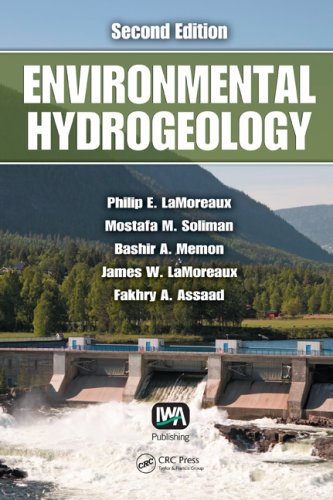
Environmental Hydrogeology, Second Edition
Authors:
Philip E. LaMoreaux
Publisher:
CRC Press
Publication Date:
Not available
ISBN:
1420054856
Headlines continue to blare news of climate change, tangential catastrophic events, and dwindling energy resources. Written by respected practitioners,... and geared to practitioners and students, Environmental Hydrogeology, Second Edition explores the role that hydrogeology can play in solving challenging environmental problems. New in the Second Edition: Coverage of groundwater recharging Exploration of geology of sink hole prone areas A case study of how salt-water springs were drawn down to manageable levels in the Red River Comprehensive Coverage from Trusted Experts The authors provide a complete introduction to the fast-growing and evolving field of environmental hydrogeology and its future. The second edition includes completely updated material and select new case studies. Matching the caliber of coverage found in the previous edition, the authors explore topics such as the geological aspects of disposal sites, surface water hydrogeology, groundwater hydrology and wells, environmental impacts and the hydrological system, and more. They also include types, sources, and properties of waste products, and propose waste management programs for groundwater protection. Explore Applications and Solutions Looming threats such as climate change, water pollution, acid rain, and air pollution extend beyond national boundaries and span the gaps between continents. An in-depth understanding of hydrogeology will be necessary to resolve these problems. Focusing on science rather than the regulations of any particular jurisdiction, the authors explore a variety of solutions and practical applications to issues such as groundwater recharging and protection.
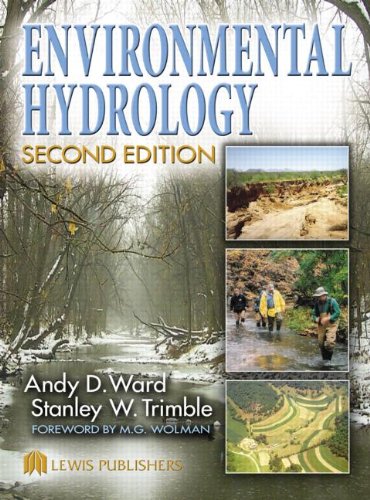
Environmental Hydrology, Second Edition
Authors:
Andy D. Ward
Publisher:
CRC Press
Publication Date:
Not available
ISBN:
1566706165
The technological advances of recent years include the emergence of new remote sensing and geographic information systems that are invaluable for the... study of wetlands, agricultural land, and land use change. Students, hydrologists, and environmental engineers are searching for a comprehensive hydrogeologic overview that supplements information on hydrologic processes with data on these new information technology tools.Environmental Hydrology, Second Edition builds upon the foundation of the bestselling first edition by providing a qualitative understanding of hydrologic processes while introducing new methods for quantifying hydrologic parameters and processes. Written by authors with extensive multidisciplinary experience, the text first discusses the components of the hydrologic cycle, then follows with chapters on precipitation, stream processes, human impacts, new information system applications, and numerous other methods and strategies.By updating this thorough text with the newest analytical tools and measurement methodologies in the field, the authors provide an ideal reference for students and professionals in environmental science, hydrology, soil science, geology, ecological engineering, and countless other environmental fields.
Environmental Impact Assessment
Authors:
Larry Canter
Publisher:
McGraw-Hill Science/Engineering/Math
Publication Date:
Not available
ISBN:
0070097674
The Canter text appeals mainly to Civil Engineering students taking course work in environmental assessment practice or impact assessment, usually... taught at the junior/senior level as a popular elective. Some chemical and environmental engineers take the course as well. The author has specifically beefed up and improved the chapters on biological, cultural, and socioeconomic environmental factors. The book continues to emphasize both production and assessment aspects of environmental factors, i.e., air, water, and noise, together with some interesting case studies. The latest governmental methodologies and Environmental Impact Studies have been included in this timely revision.
ENVIRONMENTAL IMPACT ASSESSMENT
Authors:
Not Available
Publisher:
Not available
Publication Date:
Not available
ISBN:
Not available
Environmental Impact Assessment: A Methodological Approach
Authors:
Richard K. Morgan
Publisher:
Springer
Publication Date:
Not available
ISBN:
0412730006
Environmental Impact Assessment (EIA) is one of the most important tools employed in contemporary environmental management. Presenting the component... activities of EIA within a coherent methodological framework, Environmental Impact Assessment: A Methodological Approach provides students and practitioners alike with a rigorous grounding in EIA theory, including biophysical, social, strategic and cumulative assessment activities, and examines the crucial role, and limitations, of the science of EIA. Deliberately designed to be relevant world-wide, the author focuses on the common skills and generic aspects of EIA that underpin all impact assessment work, independent of country or jurisdiction, such as screening and scoping, impact identification, public involvement, prediction and monitoring, evaluation, and quality control. The variety of approaches are identified along with their associated strengths and weaknesses, enabling potential, new and experienced practitioners to make informed choices and to improve their working practices through a better understanding of EIA activity. The ultimate aim of this book is to move from the notion of EIA as a technical procedure towards a concept of EIA as a particular form of problem-solving with varied methodological requirements.
Environmental Impact Assessment: A Practical Guide
Authors:
Betty Marriott
Publisher:
McGraw-Hill Professional
Publication Date:
Not available
ISBN:
0070404100
All the laws, terms, documents, and guidance on environmental impact assessment you need -- in one book! Anyone who has ever had to wade through... volumes of regulations and permit procedures. . .been besieged by confusing jargon and unknown acronyms. . .or otherwise wished there were a clear and reliable guide to the essentials of environmental impact assessment, will applaud this comprehensive and intelligently organized book. Here, for the first time in one convenient volume, are all the key legislation, terminology, and documents you need to know, as well as invaluable guidance through an array of potential environmental impact study areas. You'll find important information on data sources, agency contacts, laws and permits, methodologies, presentation of results, and other practical issues that will give you the tools to tackle questions such as: Whom do I need to contact? Where do I find information? What should be assessed? Is a permit required? Who issues it? Is there a special processing requirement? What's the best way to summarize my results for productive use? This book provides numerous examples and a host of useful suggestions throughout, while skillfully interweaving the basic requirements with an understanding of the principles underlying environmental impact assessment. There is also an extensive index for direct access to any topic.
Environmental Impact Statements, Second Edition
Authors:
Jacob I. Bregman
Publisher:
CRC Press
Publication Date:
Not available
ISBN:
1566703697
Environmental Impact Statements, Second Edition has been extensively revised and updated to cover all the requirements for a wide variety of EISs on... the federal, state and local levels, including a new chapter devoted to Environmental Justice.An Environmental Impact Statement (EIS) must be completed for any major action that requires a federal permit and may have an adverse effect on the environment. Each federal agency has its own requirements regarding what must appear in the statement. Furthermore, many state and local agencies have their own versions of EISs that must be done for any proposed construction. This book provides a thorough explanation of EISs so that the personnel responsible for preparing these documents will be able to understand the fundamentals of a wide range of environmental factors - ecological and socioeconomic - that comprise an Environmental Impact Statement. This may be the only place that an understandable explanation of the EIS process is located together with a detailed description of how to do an EIS.This is the only book to spell out the EIS process in a straightforward, easy -to-understand style. Written at a level that allows the reader to grasp the fundamentals of EISs, it avoids technical jargon and addresses the topic in layperson's terms. Environmental Impact Statements is an indispensable book for architectural and engineering firms, industrial firms and regulatory agencies on all levels.
Environmental Inequalities Beyond Borders: Local Perspectives on...
Authors:
Not Available
Publisher:
The MIT Press
Publication Date:
Not available
ISBN:
0262515873
Multinational corporations often exploit natural resources or locate factories in poor countries far from the demand for the products and profits that... result. Developed countries also routinely dump hazardous materials and produce greenhouse gas emissions that have a disproportionate impact on developing countries. This book investigates how these and other globalized practices exact high social and environmental costs as poor, local communities are forced to cope with depleted resources, pollution, health problems, and social and cultural disruption. Case studies drawn from Africa, Asia, the Pacific Rim, and Latin America critically assess how diverse types of global inequalities play out on local terrains. These range from an assessment of the pros and cons of foreign investment in Fiji to an account of the work of transnational activists combating toxic waste disposal in Mozambique. Taken together, the chapters demonstrate the spatial disconnect between global consumption and production on the one hand and local environmental quality and human rights on the other. The result is a rich perspective not only on the ways industries, governments, and consumption patterns may further entrench existing inequalities but also on how emerging networks and movements can foster institutional change and promote social equality and environmental justice.
Environmental Inequalities: Class, Race, and Industrial Pollution...
Authors:
Andrew Hurley
Publisher:
The University of North Carolina Press
Publication Date:
Not available
ISBN:
0807845183
By examining environmental change through the lens of conflicting social agendas, Andrew Hurley uncovers the historical roots of environmental... inequality in contemporary urban America. Hurley's study focuses on the steel mill community of Gary, Indiana, a city that was sacrificed, like a thousand other American places, to industrial priorities in the decades following World War II. Although this period witnessed the emergence of a powerful environmental crusade and a resilient quest for equality and social justice among blue-collar workers and African Americans, such efforts often conflicted with the needs of industry. To secure their own interests, manufacturers and affluent white suburbanites exploited divisions of race and class, and the poor frequently found themselves trapped in deteriorating neighborhoods and exposed to dangerous levels of industrial pollution.In telling the story of Gary, Hurley reveals liberal capitalism's difficulties in reconciling concerns about social justice and quality of life with the imperatives of economic growth. He also shows that the power to mold the urban landscape was intertwined with the ability to govern social relations.
Environmental Injustice In The U.S.: Myths And Realities
Authors:
James Lester
Publisher:
Westview Press
Publication Date:
Not available
ISBN:
0813338190
Environmental Injustice in the United States provides systematic insight into the social, economic, and political dynamics of environmental... decision-making, and the impacts of those decisions on minority communities. The first part of the book examines closely the history of the environmental justice movement and the scholarly literature to date, with a discussion about how the issue made the public agenda in the first place. The second part of the book is a unique quantitative analysis of the relationship among race, class, political mobilization, and environmental harm at three levels-- state, county, and city. Despite the initial skepticism of the authors, their study finds both race and class to be significant variables in explaining patterns of environmental harm. The third part of the book then offers policy recommendations to decisionmakers, based on the book's findings. It was named a Choice Outstanding Academic Book of 2001.
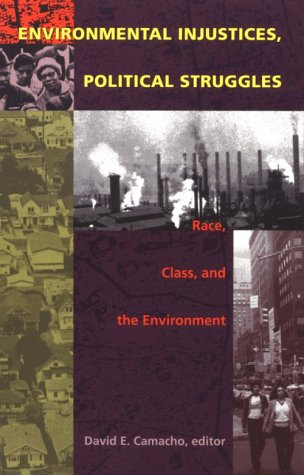
Environmental Injustices, Political Struggles: Race, Class and the...
Authors:
Not Available
Publisher:
Duke University Press Books
Publication Date:
Not available
ISBN:
0822322420
In the United States, few issues are more socially divisive than the location of hazardous waste facilities and other environmentally harmful... enterprises. Do the negative impacts of such polluters fall disproportionately on African Americans, Hispanics, Native Americans, and Asian Americans? Environmental Injustices, Political Struggles discusses how political, economic, social, and cultural factors contribute to local government officials’ consistent location of hazardous and toxic waste facilities in low-income neighborhoods and how, as a result, low-income groups suffer disproportionately from the regressive impacts of environmental policy. David E. Camacho’s collection of essays examines the value-laden choices behind the public policy that determines placement of commercial environmental hazards, points to the underrepresentation of people of color in the policymaking process, and discusses the lack of public advocates representing low-income neighborhoods and communities. This book combines empirical evidence and case studies—from the failure to provide basic services to the “colonias” in El Paso County, Texas, to the race for water in Nevada—and covers in great detail the environmental dangers posed to minority communities, including the largely unexamined communities of Native Americans. The contributors call for cooperation between national environmental interest groups and local grassroots activism, more effective incentives and disincentives for polluters, and the adoption by policymakers of an alternative, rather than privileged, perspective that is more sensitive to the causes and consequences of environmental inequities. Environmental Injustices, Political Struggles is a unique collection for those interested in the environment, public policy, and civil rights as well as for students and scholars of political science, race and ethnicity, and urban and regional planning.Contributors. C. Richard Bath, Kate A. Berry, John G. Bretting, David E. Camacho, Jeanne Nienaber Clarke, Andrea K. Gerlak, Peter I. Longo, Diane-Michele Prindeville, Linda Robyn, Stephen Sandweiss, Janet M. Tanski, Mary M. Timney, Roberto E. Villarreal, Harvey L. White
 '





