production
/viewbook/list/all/?page=409
/
/static/
None

After: Poems
Authors:
Jane Hirshfield
Publisher:
Harper Perennial
Publication Date:
Not available
ISBN:
0060779195
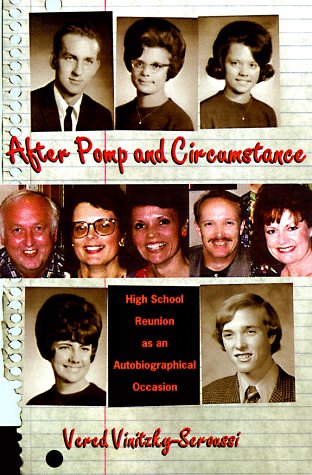
After Pomp and Circumstance: High School Reunion as an...
Authors:
Vered Vinitzky-Seroussi
Publisher:
University Of Chicago Press
Publication Date:
Not available
ISBN:
0226856690
Menacing, nerve-racking, uncomfortably intrusive, the high school reunion has become a dreaded encounter with past and present for many Americans. It is... a moment of both heightened self-awareness and public presentation, insisting that we account for ourselves, not merely to our own satisfaction, but to the satisfaction of others as well. For sociologist Vinitzky-Seroussi, the high school reunion presents an ideal forum in which to explore the ongoing construction of identity in American society, and, perhaps, to ascertain just how we have managed to make sense of our lives, from then to now.As autobiographical occasions, reunions prompt us to examine our own life narratives, the stories we tell ourselves about who we are and how we have come to be that person. But at the same time, they can threaten the integrity of those very stories, subjecting them to the scrutiny of others whose memories of the past and ourselves may be altogether different from our own. Reunions, then, engender a fragile community held together by the resources of a shared past, yet imperiled by the tensions of competing histories. Inevitably—for both those who attend and those who choose not to—the reunion forces a kind of biographical confrontation, an unavoidable and often pivotal engagement between a carefully constructed personal identity and the socially prevalent standards of success and accomplishment.Though many see in today's culture the gradual demise of personal identity, Vinitzky-Seroussi's carefully researched study reveals something quite different— After Pomp and Circumstance explores a struggle we all experience: the desire to resolve the tension between public conceptions and internal understandings, to maintain a sense of continuity between past and present lives, and to lay claim to both an integrated self and a unified life history.

After Putin's Russia: Past Imperfect, Future Uncertain
Authors:
Stephen Wegren
Publisher:
Rowman & Littlefield Publishers
Publication Date:
Not available
ISBN:
0742557855
Now in a thoroughly revised, expanded, and updated edition, this classic text provides the most authoritative and current analysis available of... contemporary Russia and the challenges facing Vladimir Putin and his successor, Dmitri Medvedev. Leading scholars offer a full-scale reassessment of Putin's leadership, exploring Russia's ongoing daunting domestic and international concerns. Evaluating the regime's continued efforts to rebuild a country once on the verge of collapse, they consider a comprehensive array of economic, political, and social issues, along with Putin himself, whose popularity has remained high despite his authoritarian approach. The contributors conclude that Putin's influence will continue to be felt for years to come, not only because he remains powerful in his new post as prime minister, but because he laid the groundwork for dealing with the many problems still confronting Russia. Only by understanding these challenges-and Putin's previous efforts to deal with them-will it be possible to understand the rhetoric and actions of his successor. Clearly written and organized, this text is an indispensable guide for anyone wanting to understand Russia today.
After Race: Racism After Multiculturalism
Authors:
Antonia Darder
Publisher:
NYU Press
Publication Date:
Not available
ISBN:
0814782698
After Race pushes us beyond the old "race vs. class" debates to delve deeper into the structural conditions that spawn racism. Darder and Torres place... the study of racism forthrightly within the context of contemporary capitalism. While agreeing with those who have argued that the concept of "race" does not have biological validity, they go further to insist that the concept also holds little political, symbolic, or descriptive value when employed in social science and policy research.Darder and Torres argue for the need to jettison the concept of "race," while calling adamantly for the critical study of racism. They maintain that an understanding of structural class inequality is fundamentally germane to comprehending the growing significance of racism in capitalist America.

After Redemption: Jim Crow and the Transformation of African...
Authors:
John M. Giggie
Publisher:
Oxford University Press, USA
Publication Date:
Not available
ISBN:
0195304047
After Redemption fills in a missing chapter in the history of African American life after freedom. It takes on the widely overlooked period between the... end of Reconstruction and World War I to examine the sacred world of ex-slaves and their descendants living in the region more densely settled than any other by blacks living in this era, the Mississippi and Arkansas Delta. Drawing on a rich range of local memoirs, newspaper accounts, photographs, early blues music, and recently unearthed Works Project Administration records, John Giggie challenges the conventional view that this era marked the low point in the modern evolution of African-American religion and culture. Set against a backdrop of escalating racial violence in a region more densely populated by African Americans than any other at the time, he illuminates how blacks adapted to the defining features of the post-Reconstruction South-- including the growth of segregation, train travel, consumer capitalism, and fraternal orders--and in the process dramatically altered their spiritual ideas and institutions. Masterfully analyzing these disparate elements, Giggie's study situates the African-American experience in the broadest context of southern, religious, and American history and sheds new light on the complexity of black religion and its role in confronting Jim Crow.
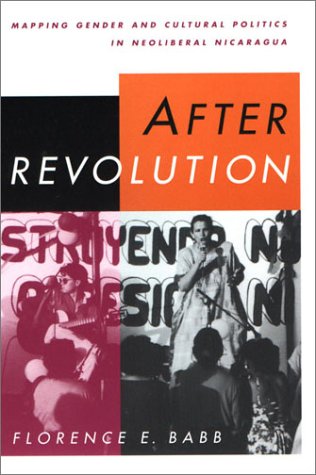
After Revolution: Mapping Gender and Cultural Politics in...
Authors:
Florence E. Babb
Publisher:
University of Texas Press
Publication Date:
Not available
ISBN:
0292709005
Nicaragua's Sandinista revolution (1979-1990) initiated a broad program of social transformation to improve the situation of the working class and poor,... women, and other non-elite groups through agrarian reform, restructured urban employment, and wide access to health care, education, and social services. This book explores how Nicaragua's least powerful citizens have fared in the years since the Sandinista revolution, as neoliberal governments have rolled back these state-supported reforms and introduced measures to promote the development of a market-driven economy. Drawing on ethnographic research conducted throughout the 1990s, Florence Babb describes the negative consequences that have followed the return to a capitalist path, especially for women and low-income citizens. In addition, she charts the growth of women's and other social movements (neighborhood, lesbian and gay, indigenous, youth, peace, and environmental) that have taken advantage of new openings for political mobilization. Her ethnographic portraits of a low-income barrio and of women's craft cooperatives powerfully link local, cultural responses to national and global processes.

After Rome (Short Oxford History of the British Isles)
Authors:
Not Available
Publisher:
Oxford University Press, USA
Publication Date:
Not available
ISBN:
0199249822
The chapters in this volume, each written by a leading scholar of the period, analyze in turn the different nationalities and kingdoms that existed in... the British Isles from the end of the Roman empire to the coming of the Vikings, the process of conversion to Christianity, the development of art and of a written culture, and the interaction between this written culture and the societies of the day.

After Secession: Jefferson Davis and the Failure of Confederate...
Authors:
Paul D. Escott
Publisher:
Louisiana State University Press
Publication Date:
Not available
ISBN:
0807118079
The secession of the southern states marked the beginning of the trial of Confederate nationalism. The slaveholding elite that had led the South out of... the Union now had to solidify its support among nonslaveholding small farmers, a class that constituted the bulk of the white population. Jefferson Davis and his new government were greatly hampered in their bid for widespread public support, partially because of the same force that had resulted in seccession--the strong states' rights predisposition of many southerners and their opposition to a strong central government--and partially because of the great social and economic gap that separated the governed from the governors. In After Secession, Paul D. Escott focuses on the challenges the South's political ideals presented to Davis in wartime and on the ways in which growing class resentments among citizens in the countryside affected the war effort. Escott examines Davis' policies, offering thought-provoking new interpretations of the Confederate government's means of decision making and its failure to respond to the needs of ordinary citizens. The result is both a fresh look at the pivotal role that strong leadership plays in the establishment of a new nation and a revealing study of how Jefferson Davis' frustrations increasingly affected the quality of his presidency.

After Sex?: On Writing since Queer Theory (Series Q)
Authors:
Jonathan Goldberg
Publisher:
Duke University Press Books
Publication Date:
Not available
ISBN:
0822349094
Since queer theory originated in the early 1990s, its insights and modes of analysis have been taken up by scholars across the humanities and social... sciences. In After Sex? prominent contributors to the development of queer studies offer personal reflections on the field’s history, accomplishments, potential, and limitations. They consider the purpose of queer theory and the extent to which it is or is not defined by its engagement with sex and sexuality. For many of the contributors, a broad notion of sexuality is essential to queer thought. At the same time, some of them caution against creating an all-embracing idea of queerness, because it empties the term “queer” of meaning and assumes the universality of ideas developed in the North American academy. Some essays recall the political urgency of the late 1980s and early 1990s, when gay and lesbian activist and queer theory projects converged in response to the AIDS crisis. Other pieces exemplify more recent trends in queer critique, including the turn to affect and the debates surrounding the “antisocial thesis,” which associates queerness with the repudiation of heteronormative forms of belonging. Contributors discuss queer theory’s engagement with questions of transnationality and globalization, temporality and historical periodization. Meditating on the past and present of queer studies, After Sex? illuminates its future.Contributors. Lauren Berlant, Leo Bersani, Michael Cobb, Ann Cvetkovich, Lee Edelman, Richard Thompson Ford, Carla Freccero, Elizabeth Freeman, Jonathan Goldberg, Janet Halley, Neville Hoad, Joseph Litvak, Heather Love, Michael Lucey, Michael Moon, José Esteban Muñoz, Jeff Nunokawa, Andrew Parker, Elizabeth A. Povinelli, Richard Rambuss, Erica Rand, Bethany Schneider, Eve Kosofsky Sedgwick, Kate Thomas

Aftershock: The Next Economy and America's Future
Authors:
Robert B. Reich
Publisher:
Knopf
Publication Date:
Not available
ISBN:
0307592812
A brilliant new reading of the economic crisis—and a plan for dealing with the challenge of its aftermath—by one of our most trenchant and informed... experts.When the nation’s economy foundered in 2008, blame was directed almost universally at Wall Street. But Robert B. Reich suggests a different reason for the meltdown, and for a perilous road ahead. He argues that the real problem is structural: it lies in the increasing concentration of income and wealth at the top, and in a middle class that has had to go deeply into debt to maintain a decent standard of living.Persuasively and straightforwardly, Reich reveals how precarious our situation still is. The last time in American history when wealth was so highly concentrated at the top—indeed, when the top 1 percent of the population was paid 23 percent of the nation’s income—was in 1928, just before the Great Depression. Such a disparity leads to ever greater booms followed by ever deeper busts. Reich’s thoughtful and detailed account of where we are headed over the next decades reveals the essential truth about our economy that is driving our politics and shaping our future. With keen insight, he shows us how the middle class lacks enough purchasing power to buy what the economy can produce and has adopted coping mechanisms that have a negative impact on their quality of life; how the rich use their increasing wealth to speculate; and how an angrier politics emerges as more Americans conclude that the game is rigged for the benefit of a few. Unless this trend is reversed, the Great Recession will only be repeated. Reich’s assessment of what must be done to reverse course and ensure that prosperity is widely shared represents the path to a necessary and long-overdue transformation. Aftershock is a practical, humane, and much-needed blueprint for both restoring America’s economy and rebuilding our society.

Aftershock: The Next Economy and America's Future
Authors:
Robert B. Reich
Publisher:
Vintage
Publication Date:
Not available
ISBN:
0307476332
Updated for paperback publication, Aftershock is a brilliant reading of the causes of our current economic crisis, with a plan for dealing with its... challenging aftermath. When the nation’s economy foundered in 2008, blame was directed almost universally at Wall Street bankers. But Robert B. Reich, one of our most experienced and trusted voices on public policy, suggests another reason for the meltdown. Our real problem, he argues, lies in the increasing concentration of wealth in the hands of the richest Americans, while stagnant wages and rising costs have forced the middle class to go deep into debt. Reich’s thoughtful and detailed account of where we are headed over the next decades—and how we can fix our economic system—is a practical, humane, and much-needed blueprint for restoring America’s economy and rebuilding our society.
After Silence: Rape & My Journey Back
Authors:
Nancy Venable Raine
Publisher:
Three Rivers Press
Publication Date:
Not available
ISBN:
0609804197
"Silence has the rusty taste of shame. The words shut up are the most terrible words I know. . . . The man who raped me spat these words out over and... over during the hours of my attack--when I screamed, when I tried to talk him out of what he was doing, when I protested. It seemed to me that for seven years--until at last I spoke--these words had sunk into my soul and become prophecy. And it seems to me now that these words, the brutish message of tyrants, preserve the darkness that still covers this pervasive crime. The real shame, as I have learned, is to consent to them."After Silence is Nancy Venable Raine's eloquent, profoundly moving response to her rapist's command to "shut up," a command that is so often echoed by society and internalized by rape victims. Beginning with her assault by a stranger in her home in 1985, Raine's riveting narrative of the ten-year aftermath of her rape brings to light the truth that survivors of traumatic experiences know--a trauma does not end when you find yourself alive. Just as devastating as the rape itself was the silence that shrouded it, a silence born of her own feelings of shame as well as the incomprehension of others. Raine gives shape, form, and voice to the "unspeakable" and exposes the misconceptions and cruelties that surround this prevalent though hidden crime. With formidable power and in intimate detail, she probes the long-term psychological and physiological aftereffects of rape, its tangled sexual confusions, the treatment of rape by the media and the legal and medical professions, and contemporary cultural views of victimhood. For anyone, female or male, who has suffered from or witnessed the shattering effects of rape, After Silence inspires and points the way to healing. This landmark book is a stunning literary achievement that is a testimony to the power of language to transform the worst sort of violation and suffering into meaning and into art.
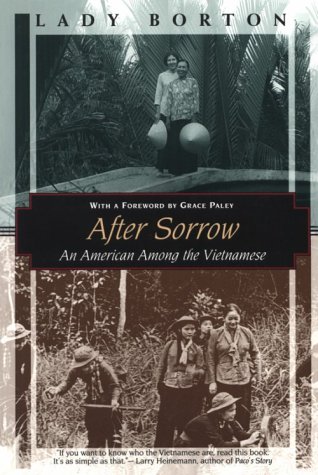
After Sorrow: An American Among the Vietnamese (Kodansha Globe)
Authors:
Lady Borton
Publisher:
Kodansha USA
Publication Date:
Not available
ISBN:
1568361610
A RARE CLOMPSE INTO THE SOUL OF VIT NAMIn her deeply moving memoir of Viet Nam, Lady Borton presents the "American war" from the view of the courageous... peasants on the ground, underneath the B-52's and Agent Orange-stripped trees. Their extraordinary stories are of a kind we have not heard before: stories of women who smuggled weapons under vats of fish sauce, concocted camouflage from banana leaves, dug tunnels, carried messages through enemy territory, gave away their children to keep them safe, all the while tending to the daily work of village life-providing food, burying and visiting the dead, and observing religious holidays. Drawing on twenty-five years of work in Viet Nam, Borton achieves an unprecedented intimacy with its people and lets their voices set the tone of conciliation and renewal. Without calling attention to herself, Borton-the first westerner allowed to live in a Vietnamese village since the war's end-suffuses her account with a deep respect for all those we left behind.
After Such Knowledge: Memory, History, and the Legacy of the Holocaust
Authors:
Eva Hoffman
Publisher:
PublicAffairs
Publication Date:
Not available
ISBN:
1586483048
As the Holocaust recedes in time, the guardianship of its legacy is being passed on from its survivors and witnesses to the next generation. How should... they, in turn, convey its knowledge to others? What are the effects of a traumatic past on its inheritors? And what are the second-generation's responsibilities to its received memories? In this meditation on the long aftermath of atrocity, Eva Hoffman--a child of Polish Jews who survived the Holocaust with the help of neighbors, but whose entire families perished--probes these questions through personal reflections, and through broader explorations of the historical, psychological, and moral implications of the second-generation experience. She examines the subterranean processes through which private memories of suffering are transmitted, and the more willful stratagems of collective memory. She traces the "second generation's" trajectory from childhood intimations of horror, through its struggles between allegiance and autonomy, and its complex transactions with children of perpetrators. As she guides us through the poignant juncture at which living memory must be relinquished, she asks what insights can be carried from the past to the newly problematic present, and urges us to transform potent family stories into a fully informed understanding of a forbidding history.
After Tamerlane: The Rise and Fall of Global Empires, 1400-2000
Authors:
John Darwin
Publisher:
Bloomsbury Press
Publication Date:
Not available
ISBN:
1596916028
Winner of the 2008 Wolfson History Prize for excellence in historical writing. Tamerlane, the Ottomans, the Mughals, the Manchus, the British, the... Japanese, the Nazis, and the Soviets: All built empires meant to last forever; all were to fail. But, as John Darwin shows in this magisterial book, their empire-building created the world we know today. From the death of Tamerlane in 1405, to America’s rise to world “hyperpower,” to the resurgence of China and India as global economic powers, After Tamerlane is a grand historical narrative that offers a new perspective on the past, present, and future of empires.
 '
'