production
/viewbook/list/all/?page=4108
/
/static/
None
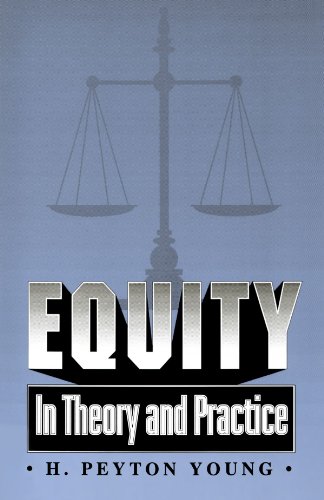
Equity
Authors:
H. Peyton Young
Publisher:
Princeton University Press
Publication Date:
Not available
ISBN:
0691044643
Governments and institutions, perhaps even more than markets, determine who gets what in our society. They make the crucial choices about who pays the... taxes, who gets into college, who gets medical care, who gets drafted, where the hazardous waste dump is sited, and how much we pay for public services. Debate about these issues inevitably centers on the question of whether the solution is "fair." In this book, H. Peyton Young offers a systematic explanation of what we mean by fairness in distributing public resources and burdens, and applies the theory to actual cases.
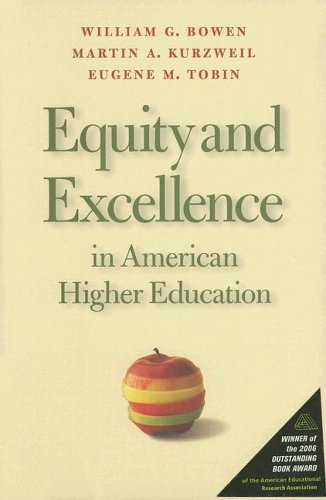
Equity and Excellence in American Higher Education (Thomas...
Authors:
William G. Bowen
Publisher:
University of Virginia Press
Publication Date:
Not available
ISBN:
0813925576
Thomas Jefferson once stated that the foremost goal of American education must be to nurture the "natural aristocracy of talent and virtue." Although in... many ways American higher education has fulfilled Jefferson’s vision by achieving a widespread level of excellence, it has not achieved the objective of equity implicit in Jefferson’s statement. In Equity and Excellence in American Higher Education, William G. Bowen, Martin A. Kurzweil, and Eugene M. Tobin explore the cause for this divide. Employing historical research, examination of the most recent social science and public policy scholarship, international comparisons, and detailed empirical analysis of rich new data, the authors study the intersection between "excellence" and "equity" objectives.Beginning with a time line tracing efforts to achieve equity and excellence in higher education from the American Revolution to the early Cold War years, this narrative reveals the halting, episodic progress in broadening access across the dividing lines of gender, race, religion, ethnicity, and socioeconomic status. The authors argue that despite our rhetoric of inclusiveness, a significant number of youth from poor families do not share equal access to America’s elite colleges and universities. While America has achieved the highest level of educational attainment of any country, it runs the risk of losing this position unless it can markedly improve the precollegiate preparation of students from racial minorities and lower-income families. After identifying the "equity" problem at the national level and studying nineteen selective colleges and universities, the authors propose a set of potential actions to be taken at federal, state, local, and institutional levels. With recommendations ranging from reform of the admissions process, to restructuring of federal financial aid and state support of public universities, to addressing the various precollegiate obstacles that disadvantaged students face at home and in school, the authors urge all selective colleges and universities to continue race-sensitive admissions policies, while urging the most selective (and privileged) institutions to enroll more well-qualified students from families with low socioeconomic status.

Equity Asset Valuation
Authors:
Jerald E. Pinto
Publisher:
Wiley
Publication Date:
Not available
ISBN:
0470571438
A comprehensive look at the equity valuation processWith the Second Edition of Equity Asset Valuation, the distinguished team of Jerald Pinto, Elaine... Henry, Thomas Robinson, and John Stowe, fully update information associated with this important discipline. Blending theory with practice, they detail the contemporary techniques used to determine the intrinsic value of an equity security, and show you how to successfully apply these techniques in both foreign and domestic markets.Unlike alternative works in this field, the Second Edition of Equity Asset Valuation clearly integrates finance and accounting concepts into the discussion-providing the evenness of subject matter treatment, consistency of notation, and continuity of topic coverage that is so critical to the learning process.Addresses essential issues in this arena, including the equity valuation process, discounted dividend valuation, free cash flow valuation, and residual income valuationEach author brings his own unique experiences and perspectives to the equity analysis processDistills the knowledge, skills, and abilities you need to succeed in today's fast-paced financial environmentCompanion Workbook also availableValuable for classroom study, self-study, and general reference, this book contains clear, example-driven coverage of many of today's most important valuation issues.

EQUITY ASSET VALUATION DIGITAL BOOK
Authors:
Not Available
Publisher:
Not available
Publication Date:
Not available
ISBN:
Not available

Equity Asset Valuation Workbook
Authors:
Jerald E. Pinto
Publisher:
Wiley
Publication Date:
Not available
ISBN:
0470395214
A companion workbook for the Second Edition of Equity Asset ValuationIn the Second Edition of Equity Asset Valuation, experts Jerald Pinto, Elaine... Henry, Thomas Robinson, and John Stowe, fully detail the contemporary techniques used to determine the intrinsic value of an equity security, and show you how to successfully apply these techniques in both foreign and domestic markets.In the Second Edition of the Equity Asset Valuation Workbook, they offer you a wealth of practical information and exercises that will further enhance your understanding of this discipline. This detailed study guide-which parallels the Second Edition of Equity Asset Valuation chapter by chapter-contains concise summary overviews of the chapters, challenging problems, and a complete set of solutions.An all-inclusive study companion to the Second Edition of Equity Asset ValuationTopics covered include the equity valuation process, discounted dividend valuation, free cash flow valuation, and residual income valuationChallenges readers with question/answer sections for each chapter in the main bookEngaging and accessible, the Second Edition of the Equity Asset Valuation Workbook reviews essential concepts you must be familiar with in order to excel at this endeavor.
Equity in Schools and Society
Authors:
Judy Iseke-Barnes
Publisher:
Canadian Scholars Press
Publication Date:
Not available
ISBN:
1551301679
This book examines equity issues in school and society, drawing on history, sociology, literature, cultural expressions, films, and theory. The main... objectives of the text are: To increase critical awareness of issues concerning equity in schools and society for students and teachers; to discuss the complexities of both school and society as institutions and search for paradigms which can highlight the dilemmas and lived experiences of teachers as they grapple with the interpretation and implementation of goals, policies, and work to address students' needs; to generate greater awareness of the political economy of schools and societies; to increase understanding of hidden biases such as racism, classism, and sexism in order to develop practical strategies of dealing with these forms of oppression; to enhance the acquisition of critical intellectual skills related to both comprehension and analysis of teaching and learning in a culturally diverse context; and to generate and reformulate teachers' roles in relation of the multiple demands of teaching and learning in complex environments.

An explosive play that took critics and audiences by storm, Equus is Peter Shaffer's exploration of the way modern society has destroyed our ability to... feel passion. Alan Strang is a disturbed youth whose dangerous obsession with horses leads him to commit an unspeakable act of violence. As psychiatrist Martin Dysart struggles to understand the motivation for Alan's brutality, he is increasingly drawn into Alan's web and eventually forced to question his own sanity. Equus is a timeless classic and a cornerstone of contemporary drama that delves into the darkest recesses of human existence.
Equus: A Play in Two Acts
Authors:
Peter Shaffer
Publisher:
Samuel French
Publication Date:
Not available
ISBN:
0573608725
Equus was first performed on Broadway at the Plymouth Theater in 1974. It was produced by Kermit Boomgarden and Doris Cole Abrams in association with... Frank Milton. It was directed by John Dexter. It stared Anthony Hopkins as Martin Dysart. The play's main action takes place in Rokeby Psychiatric Hospital in England.
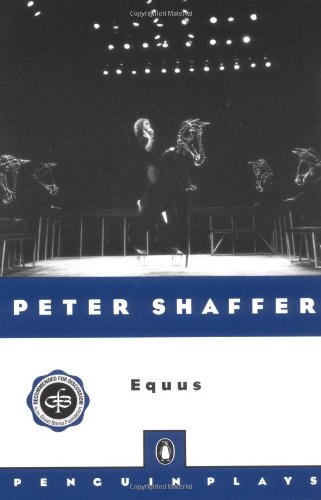
Equus (Penguin Plays)
Authors:
Peter Shaffer
Publisher:
Penguin Books
Publication Date:
Not available
ISBN:
0140260706
In "Equus," which took critics and public alike by storm and has gone on to become a modern classic, Peter Shaffer depicts the story of a deranged youth... who blinds six horses with a spike. Through a psychiatrist's analysis of the events, Shaffer creates a chilling portrait of how materialism and convenience have killed our capacity for worship and passion and, consequently, our capacity for pain. Rarely has a playwrite created an atmosphere and situation that so harshly pinpoint the spiritual and mental decay of modern man.

Eradication: Ridding the World of Diseases Forever?
Authors:
Nancy Leys Stepan
Publisher:
Cornell University Press
Publication Date:
Not available
ISBN:
0801450586
How shall we improve human health? One answer is: by eradication. The Gates Foundation announced in 2007 that their goal is malaria eradication; another... of their priorities is polio eradication. Eradication means the complete elimination of a disease through deliberate human intervention. It stands for an absolute in public health.This book by the award-winning historian of medicine Nancy Leys Stepan is an accessible, beautifully written, and deeply researched examination of one of the most controversial issues in public health today. The eradication of disease might seem like an absolute good. But critics of eradication argue that the huge resources needed to achieve eradication could be better allocated toward developing primary health services and general improvement in health.This book aims to look at the benefits and drawbacks of single-minded efforts to rid the world of particular diseases, one at a time. The sweep of the book is impressive, from the origins of the idea of complete eradication in the early twentieth century until the present-day campaigns against polio, Guinea worm disease, and now malaria. The author places eradication's story in its many contexts, from imperialism, changing notions of public health, the history of medicine and its technologies, the development of international health agencies such as the World Health Organization, and the impact of the Cold War on the shift of attention to disease in developing countries.At the center of this narrative is Dr. Fred Lowe Soper (1893-1977), a U.S.-trained doctor who became the arch-eradicationist of his time. His campaigns to eradicate hookworm disease, yaws, yellow fever, malaria, and smallpox are treated in compelling detail, as are the roles of international health agencies such as the Rockefeller Foundation and the World Health Organization.Throughout the book Stepan draws attention to the way that the ideal of eradication has repeatedly arisen, phoenix-like, from its setbacks. In a powerful conclusion, she uses the example of the current campaign to eradicate Guinea worm disease to argue that, today, under the right circumstances, eradication and primary health care need not be in conflict, as they were in the past, but can form mutually reinforcing policies to improve the health and well-being of populations, especially the poorest and most disease-burdened populations of the world.
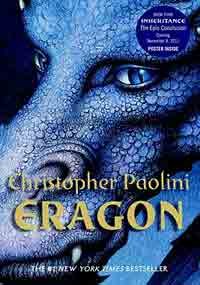
Eragon
Authors:
Christopher Paolini
Publisher:
Paolini International, Livingston, Montana
Publication Date:
Not available
ISBN:
0375826696
First book in the Inheritance Cycle; about a farm boy who finds a dazzling sapphire-blue stone which is an egg that hatches a blue-scaled dragon. The... dragon and the young man establish an unbreakable bond - he learns that he is the only dragon-rider to have come along in many years; with his home destroyed and his uncle murdered by evil dragon hunters Eragon sets out on a journey with his mentor to learn the dragon riding craft and enact his revenge on the Ra'zac.
Eragon (Inheritance, Book 1) (The Inheritance Cycle)
Authors:
Christopher Paolini
Publisher:
Alfred A. Knopf
Publication Date:
Not available
ISBN:
0375826688
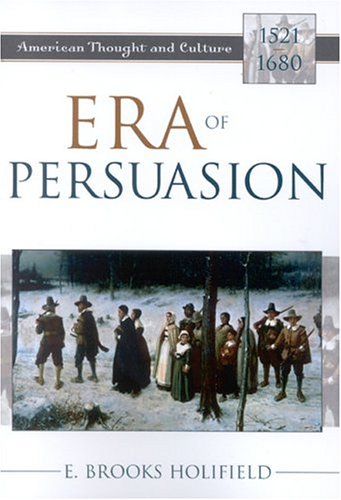
Era of Persuasion: American Thought and Culture, 1521D1680
Authors:
Brooks E. Holifield
Publisher:
Rowman & Littlefield Publishers
Publication Date:
Not available
ISBN:
0742533085
Pre-eighteenth century America was a uniquely pragmatic, utopian society-a new world in which the expectations of a new beginning brought by explorers,... traders, and settlers often conflicted violently the Native Americans they encountered. In The Era of Persuasion: American Thought and Culture 1521-1680, E. Brooks Holifield identifies the act of persuasion as the common ground on which these disparate groups stood. As he clearly documents and persuasively interprets an America that some readers may not recognize, Holifield includes compelling insights into the social expressions of Native Americans and Africans as well as Europeans. His view extends from the pueblos of New Mexico and the missions of France to the plantations of Virginia and the towns of New England. The Era of Persuasion portrays an early American society populated by passionate visionaries with urgently persuasive purposes who lived by applied philosophy and inspired action, and will be appreciated by the curious reader and avid historian alike.
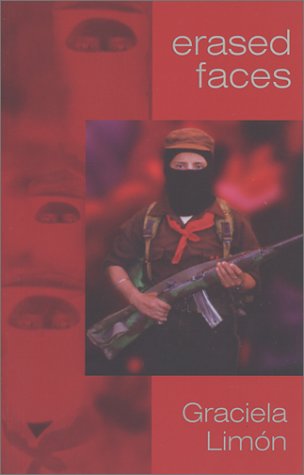
Erased Faces
Authors:
Graciela Limón
Publisher:
Arte Publico Press
Publication Date:
Not available
ISBN:
1558853421
Against the charred tapestry of the Zapatista guerilla uprising of January 1994, personal histories intersect in the newest novel by Graciela Limón.... Weaving the theads of Lacandón myth and history with the events culminating in the guerilla uprising, Limón creates a rich fabric that restores an identity of those rendered invisible, or whose faces were erased, by years of oppression. Adriana Mora, a Latina photojournalist born and raised in Los Angeles, haunted by childhood memories of her parents' death, abuse and displacement, journeys south to Chiapas, Mexico, in search of images to record on film. Mora's path crosses that of Chan K'in, the aged Lacandón shaman and interpreter of his people's mysticism. His stories recount the heroism of indigenous peoples of the past and offers possible keys to the resolution of the nightmares that plague her. In this village, Adriana meets Juana Galvez, a woman whose own heroism mirrors that of the women that Chan K'in describes. Adriana is immediately attracted to the small indigenous woman and her cause, so she follows Juana into the mountains where she is drawn into the tumultuous events of 1994 and the stories of the insurgents who fight for freedom. Erased Faces portrays forbidden love set against the backdrop of a complicated war. Limón expertly drafts images of the racism, exploitation, and class division that plague the region and the lenghts that the impoverished indigenous people take to break the yoke of universal opression that rests heavy on their shoulders.
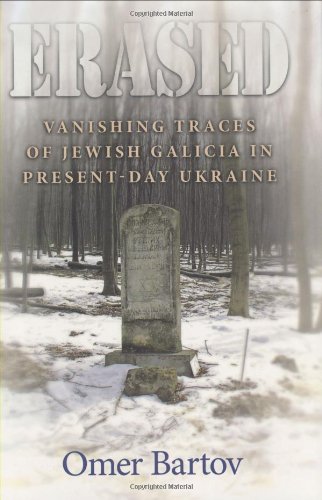
Erased: Vanishing Traces of Jewish Galicia in Present-Day Ukraine
Authors:
Omer Bartov
Publisher:
Princeton University Press
Publication Date:
Not available
ISBN:
069113121X
In Erased, Omer Bartov uncovers the rapidly disappearing vestiges of the Jews of western Ukraine, who were rounded up and murdered by the Nazis during... World War II with help from the local populace. What begins as a deeply personal chronicle of the Holocaust in his mother's hometown of Buchach--in former Eastern Galicia--carries him on a journey across the region and back through history. This poignant travelogue reveals the complete erasure of the Jews and their removal from public memory, a blatant act of forgetting done in the service of a fiercely aggressive Ukrainian nationalism. Bartov, a leading Holocaust scholar, discovers that to make sense of the heartbreaking events of the war, he must first grapple with the complex interethnic relationships and conflicts that have existed there for centuries. Visiting twenty Ukrainian towns, he recreates the histories of the vibrant Jewish and Polish communities who once lived there-and describes what is left today following their brutal and complete destruction. Bartov encounters Jewish cemeteries turned into marketplaces, synagogues made into garbage dumps, and unmarked burial pits from the mass killings. He bears witness to the hastily erected monuments following Ukraine's independence in 1991, memorials that glorify leaders who collaborated with the Nazis in the murder of Jews. He finds that the newly independent Ukraine-with its ethnically cleansed and deeply anti-Semitic population--has recreated its past by suppressing all memory of its victims. Illustrated with dozens of hauntingly beautiful photographs from Bartov's travels, Erased forces us to recognize the shocking intimacy of genocide.
 '





