production
/viewbook/list/all/?page=420
/
/static/
None

Agendas and Instability in American Politics, Second Edition...
Authors:
Frank R. Baumgartner
Publisher:
University Of Chicago Press
Publication Date:
Not available
ISBN:
0226039498
When Agendas and Instability in American Politics appeared fifteen years ago, offering a profoundly original account of how policy issues rise and fall... on the national agenda, the Journal of Politics predicted that it would “become a landmark study of public policy making and American politics.” That prediction proved true and, in this long-awaited second edition, Bryan Jones and Frank Baumgartner refine their influential argument and expand it to illuminate the workings of democracies beyond the United States.The authors retain all the substance of their contention that short-term, single-issue analyses cast public policy too narrowly as the result of cozy and dependable arrangements among politicians, interest groups, and the media. Jones and Baumgartner provide a different interpretation by taking the long view of several issues—including nuclear energy, urban affairs, smoking, and auto safety—to demonstrate that bursts of rapid, unpredictable policy change punctuate the patterns of stability more frequently associated with government. Featuring a new introduction and two additional chapters, this updated edition ensures that their findings will remain a touchstone of policy studies for many years to come.

Agenda Setting, the UN, and NGOs: Gender Violence and Reproductive...
Authors:
Jutta M. Joachim
Publisher:
Georgetown University Press
Publication Date:
Not available
ISBN:
1589011759
In the mid-1990s, when the United Nations adopted positions affirming a woman's right to be free from bodily harm and to control her own reproductive... health, it was both a coup for the international women's rights movement and an instructive moment for nongovernmental organizations (NGOs) seeking to influence UN decision making.Prior to the UN General Assembly's 1993 Declaration on the Elimination of All Forms of Violence against Women and the 1994 decision by the UN's Conference on Population and Development to vault women's reproductive rights and health to the forefront of its global population growth management program, there was little consensus among governments as to what constituted violence against women and how much control a woman should have over reproduction. Jutta Joachim tells the story of how, in the years leading up to these decisions, women's organizations got savvy -- framing the issues strategically, seizing political opportunities in the international environment, and taking advantage of mobilizing structures -- and overcame the cultural opposition of many UN-member states to broadly define the two issues and ultimately cement women's rights as an international cause. Joachim's deft examination of the documents, proceedings, and actions of the UN and women's advocacy NGOs -- supplemented by interviews with key players from concerned parties, and her own participant-observation -- reveals flaws in state-centered international relations theories as applied to UN policy, details the tactics and methods that NGOs can employ in order to push rights issues onto the UN agenda, and offers insights into the factors that affect NGO influence. In so doing, Agenda Setting, the UN, and NGOs departs from conventional international relations theory by drawing on social movement literature to illustrate how rights groups can motivate change at the international level.

A General Economy of Travel: Identity, Memory, and Death
Authors:
Afshin Hafizi
Publisher:
Not available
Publication Date:
Not available
ISBN:
0761856234
The central concern of this study is the basic question: what does it mean to travel? In order to understand this query, Hafizi places the discourse on... travel within an economical framework and distinguishes between two interdependent forms: a restricted economy of travel and a general economy of travel. The apparent closed structure of departure and arrival in a traditional definition of travel, which Hafizi refers to as a restricted economy of travel, is usually teleological in its movement from an origin towards a destination. More often than not, it is an incarnation of knowledge and light, an unveiling of the secrets of the others. Hafizi challenges this structure by arguing that behind this traditional notion of travel lies a different itinerary, which he refers to as a general economy of travel. This itinerary departs from a non-origin, whose trajectory is not continuous, ordered, or controlled, and whose destination is a being-destined-to-wander. The arrival at a destination is never guaranteed. In conclusion, Hafizi invites us to look at the phenomenon of travel with a Janus face: to see, in the experience of the foreign, not only that which is gathered but also that which is scattered.

A General History of the Pyrates (Dover Maritime)
Authors:
Daniel Defoe
Publisher:
Dover Publications
Publication Date:
Not available
ISBN:
0486404889
Immensely readable history by the author of Robinson Crusoe incorporates the author's celebrated flair for journalistic detail, and represents the major... source of information about piracy in the early 18th century. Defoe recounts the daring and bloody deeds of such outlaws as Edward Teach (alias Blackbeard), Captain Kidd, Mary Read, Anne Bonny, many others.
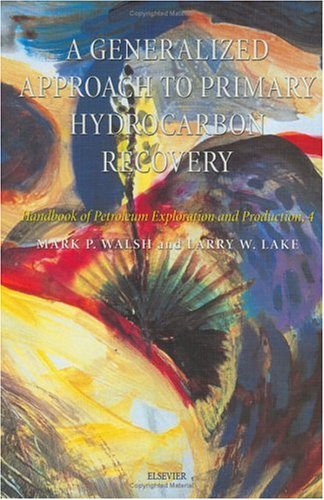
A Generalized Approach To Primary Hydrocarbon Recovery Of Petroleum...
Authors:
Not Available
Publisher:
Elsevier Science
Publication Date:
Not available
ISBN:
0444506837
This reservoir-engineering textbook is a contemporary analysis of primary recovery. It covers rock and fluid properties, reservoir energies, surface... separation, laboratory PVT methods, material balance, fluid flow, well deliverability, water influx, reservoir performance, and decline-curve analysis. Using an unified approach, the text includes the full range of reservoir fluids: black oils, volatile oils, gas condensates, wet gases, and dry gases. It also covers the entire range of producing mechanisms, including gas-cap, water-drive, and compaction-drive reservoirs.

A General Theory of Crime
Authors:
Michael Gottfredson
Publisher:
Stanford University Press
Publication Date:
Not available
ISBN:
0804717745
By articulating a general theory of crime and related behavior, the authors present a new and comprehensive statement of what the criminological... enterprise should be about. They argue that prevalent academic criminology—whether sociological, psychological, biological, or economic—has been unable to provide believable explanations of criminal behavior.The long-discarded classical tradition in criminology was based on choice and free will, and saw crime as the natural consequence of unrestrained human tendencies to seek pleasure and to avoid pain. It concerned itself with the nature of crime and paid little attention to the criminal. The scientific, or disciplinary, tradition is based on causation and determinism, and has dominated twentieth-century criminology. It concerns itself with the nature of the criminal and pays little attention to the crime itself. Though the two traditions are considered incompatible, this book brings classical and modern criminology together by requiring that their conceptions be consistent with each other and with the results of research.The authors explore the essential nature of crime, finding that scientific and popular conceptions of crime are misleading, and they assess the truth of disciplinary claims about crime, concluding that such claims are contrary to the nature of crime and, interestingly enough, to the data produced by the disciplines themselves. They then put forward their own theory of crime, which asserts that the essential element of criminality is the absence of self-control. Persons with high self-control consider the long-term consequences of their behavior; those with low self-control do not. Such control is learned, usually early in life, and once learned, is highly resistant to change.In the remainder of the book, the authors apply their theory to the persistent problems of criminology. Why are men, adolescents, and minorities more likely than their counterparts to commit criminal acts? What is the role of the school in the causation of delinquincy? To what extent could crime be reduced by providing meaningful work? Why do some societies have much lower crime rates than others? Does white-collar crime require its own theory? Is there such a thing as organized crime? In all cases, the theory forces fundamental reconsideration of the conventional wisdom of academians and crimina justic practitioners. The authors conclude by exploring the implications of the theory for the future study and control of crime.

A General Theory of Love
Authors:
Thomas;Amini, Fari;Lannon, Richard Lewis
Publisher:
Vintage Books
Publication Date:
Not available
ISBN:
0375709223
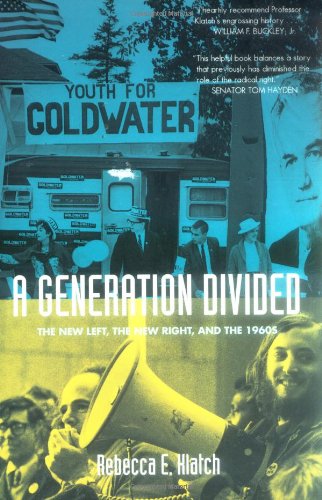
A Generation Divided: The New Left, the New Right, and the 1960s
Authors:
Rebecca E. Klatch
Publisher:
University of California Press
Publication Date:
Not available
ISBN:
0520217144
The 1960s was not just an era of civil rights, anti-war protest, women's liberation, hippies, marijuana, and rock festivals. The untold story of the... 1960s is in fact about the New Right. For young conservatives the decade was about Barry Goldwater, Ayn Rand, an important war in the fight against communism, and Young Americans for Freedom (YAF). In A Generation Divided, Rebecca Klatch examines the generation that came into political consciousness during the 1960s, telling the story of both the New Right and the New Left, and including the voices of women as well as men. The result is a riveting narrative of an extraordinary decade, of how politics became central to the identities of a generation of people, and how changes in the political landscape of the 1980s and 1990s affected this identity.

A Generative Theory of Tonal Music
Authors:
Fred Lerdahl
Publisher:
The MIT Press
Publication Date:
Not available
ISBN:
026262107X
This work, which has become a classic in music theory since its publication in 1983, models music understanding from the perspective of cognitive... science. The point of departure is a search for a grammar of music with the aid of generative linguistics. The theory, which is illustrated with numerous examples from Western classical music, relates the aural surface of a piece to the musical structure unconsciously inferred by the experienced listener. From the viewpoint of traditional music theory, it offers many innovations in notation as well as in the substance of rhythmic and reductional theory.
A Generous Orthodoxy
Authors:
Brian D. McLaren
Publisher:
Zondervan/Youth Specialties
Publication Date:
Not available
ISBN:
0310258030
Why I am a missional, evangelical, post/protestant, liberal/conservative, mystical/poetic, biblical, charismatic/contemplative,... fundamentalist/Calvinist, Anabaptist/Anglican, Methodist, catholic, green, incarnational, depressed- yet hopeful, emergent, unfinished Christian. A confession and manifesto from a senior leader in the emerging church movement. A Generous Orthodoxycalls for a radical, Christ-centered orthodoxy of faith and practice in a missional, generous spirit. Brian McLaren argues for a post-liberal, post-conservative, post-protestant convergence, which will stimulate lively interest and global conversation among thoughtful Christians from all traditions. In a sweeping exploration of belief, author Brian McLaren takes us across the landscape of faith, envisioning an orthodoxy that aims for Jesus, is driven by love, and is defined by missional intent. A Generous Orthodoxy rediscovers the mysterious and compelling ways that Jesus can be embraced across the entire Christian horizon. Rather than establishing what is and is not 'orthodox,' McLaren walks through the many traditions of faith, bringing to the center a way of life that draws us closer to Christ and to each other. Whether you find yourself inside, outside, or somewhere on the fringe of Christianity, A Generous Orthodoxy draws you toward a way of living that looks beyond the 'us/them' paradigm to the blessed and ancient paradox of 'we.' Also available on abridged audio CD, read by the author.

A Genetic Switch, Third Edition: Phage Lambda Revisited
Authors:
Mark Ptashne
Publisher:
Cold Spring Harbor Laboratory Press
Publication Date:
Not available
ISBN:
0879697164
The first edition of Mark Ptashne's 1986 book describing the principles of gene regulation in phage lambda became a classic in both content and form,... setting a standard of clarity and precise prose that has rarely been bettered. This edition is a reprint of the original text, together with a new chapter updating the story to 2004. Among the striking new developments are recent findings on long–range interactions between proteins bound to widely separated sites on the phage genome, and a detailed description of how gene activation works.
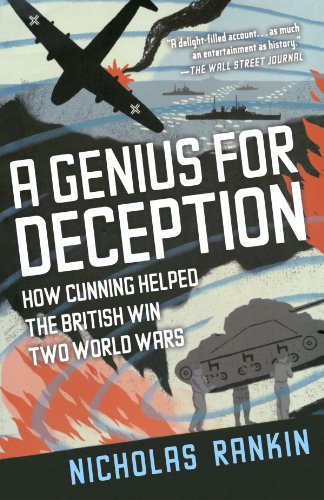
A Genius for Deception: How Cunning Helped the British Win Two...
Authors:
Nicholas Rankin
Publisher:
Oxford University Press, USA
Publication Date:
Not available
ISBN:
0199769176
In February 1942, intelligence officer Victor Jones erected 150 tents behind British lines in North Africa. "Hiding tanks in Bedouin tents was an old... British trick," writes Nicholas Rankin. German general Erwin Rommel not only knew of the ploy, but had copied it himself. Jones knew that Rommel knew. In fact, he counted on it--for these tents were empty. With the deception that he was carrying out a deception, Jones made a weak point look like a trap. In A Genius for Deception, Nicholas Rankin offers a lively and comprehensive history of how Britain bluffed, tricked, and spied its way to victory in two world wars. As Rankin shows, a coherent program of strategic deception emerged in World War I, resting on the pillars of camouflage, propaganda, secret intelligence, and special forces. All forms of deception found an avid sponsor in Winston Churchill, who carried his enthusiasm for deceiving the enemy into World War II. Rankin vividly recounts such little-known episodes as the invention of camouflage by two French artist-soldiers, the creation of dummy airfields for the Germans to bomb during the Blitz, and the fabrication of an army that would supposedly invade Greece. Strategic deception would be key to a number of WWII battles, culminating in the massive misdirection that proved critical to the success of the D-Day invasion in 1944. Deeply researched and written with an eye for telling detail, A Genius for Deception shows how the British used craft and cunning to help win the most devastating wars in human history.

A Genius for Place: American Landscapes of the Country Place Era
Authors:
Robin Karson
Publisher:
University of Massachusetts Press
Publication Date:
Not available
ISBN:
155849636X
The definitive work on a formative period in American landscape design In this lavishly illustrated volume, Robin Karson traces the development of a... distinctly American style of landscape design through an analysis of seven country places created by some of the nation's most talented landscape practitioners. In the mid-nineteenth century Frederick Law Olmsted, the designer of New York's Central Park, developed an approach to landscape design based on the principles of the English Picturesque which also emphasized a specifically American experience of nature and scenery. After Olmsted's retirement in 1897, these precepts continued to ground a new generation of American landscape architects through the next four decades, a period known as the country place era, a time of rapid economic, social, and cultural change. In the early twentieth century, new fortunes made it possible for wealthy Americans to commission country estates as a means of aggrandizing social status. These private havens also offered their owners respite from crowded cities and a way to preserve and celebrate places of distinctive landscape beauty. The commissions provided burgeoning numbers of landscape architects with opportunities to experiment with stylistic influences derived from Beaux-Arts, Arts and Crafts, and even Asian principles. The chapters in this book trace a progression in the period from the naturalistic wild gardens of Warren Manning to the mysterious Prairie style landscapes of Jens Jensen to the proto-modernist gardens of Fletcher Steele. Other practitioners cov ered are Charles Platt, Ellen Biddle Shipman, Beatrix Farrand, Marian Coffin, and Lockwood de Forest Jr. The projects profiled follow a broad geographic arc, from Stockbridge, Massachusetts, to Santa Barbara, California. All seven landscapes are now open to visitors. Analyzing these designs in context with one another and against the backdrop of the professional and cultural currents that shaped larger projects such as parks, campuses, and planned communities Karson creates a rich and comprehensive picture of the artistic achievements of the period. Striking black-and-white images by landscape photographer Carol Betsch illuminate the transporting spirit of these country places today, while hundreds of drawings, plans, and historical photographs bring the past to life.
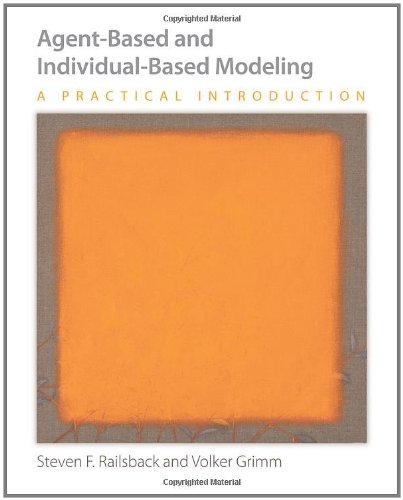
Agent-Based and Individual-Based Modeling: A Practical Introduction
Authors:
Steven F. Railsback
Publisher:
Princeton University Press
Publication Date:
Not available
ISBN:
0691136742
Agent-based modeling is a new technique for understanding how the dynamics of biological, social, and other complex systems arise from the... characteristics and behaviors of the agents making up these systems. This innovative textbook gives students and scientists the skills to design, implement, and analyze agent-based models. It starts with the fundamentals of modeling and provides an introduction to NetLogo, an easy-to-use, free, and powerful software platform. Nine chapters then each introduce an important modeling concept and show how to implement it using NetLogo. The book goes on to present strategies for finding the right level of model complexity and developing theory for agent behavior, and for analyzing and learning from models. Agent-Based and Individual-Based Modeling features concise and accessible text, numerous examples, and exercises using small but scientific models. The emphasis throughout is on analysis--such as software testing, theory development, robustness analysis, and understanding full models--and on design issues like optimizing model structure and finding good parameter values. The first hands-on introduction to agent-based modeling, from conceptual design to computer implementation to parameterization and analysis Filled with examples and exercises, with updates and supplementary materials at http://www.railsback-grimm-abm-book.com Designed for students and researchers across the biological and social sciences Written by leading practitioners Leading universities that have adopted this book include: Amherst College Brigham Young University Carnegie Mellon University Miami University Northwestern University Old Dominion University Portland State University Rhodes College Susquehanna University University College, Dublin University of Arizona University of South Florida University of Virginia
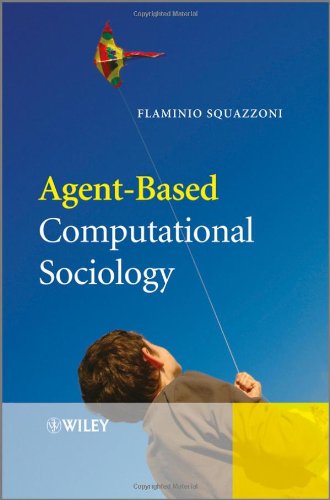
Agent-Based Computational Sociology
Authors:
Flaminio Squazzoni
Publisher:
Wiley
Publication Date:
Not available
ISBN:
0470711744
Most of the intriguing social phenomena of our time, such as international terrorism, social inequality, and urban ethnic segregation, are consequences... of complex forms of agent interaction that are difficult to observe methodically and experimentally. This book looks at a new research stream that makes use of advanced computer simulation modelling techniques to spotlight agent interaction that allows us to explain the emergence of social patterns. It presents a method to pursue analytical sociology investigations that look at relevant social mechanisms in various empirical situations, such as markets, urban cities, and organisations. This book:Provides a comprehensive introduction to epistemological, theoretical and methodological features of agent-based modelling in sociology through various discussions and examples.Presents the pros and cons of using agent-based models in sociology.Explores agent-based models in combining quantitative and qualitative aspects, and micro- and macro levels of analysis.Looks at how to pose an agent-based research question, identifying the model building blocks, and how to validate simulation results.Features examples of agent-based models that look at crucial sociology issues.Supported by an accompanying website featuring data sets and code for the models included in the book. Agent-Based Computational Sociology is written in a common sociological language and features examples of models that look at all the traditional explanatory challenges of sociology. Researchers and graduate students involved in the field of agent-based modelling and computer simulation in areas such as social sciences, cognitive sciences and computer sciences will benefit from this book.
 '
'