production
/viewbook/list/all/?page=425
/
/static/
None
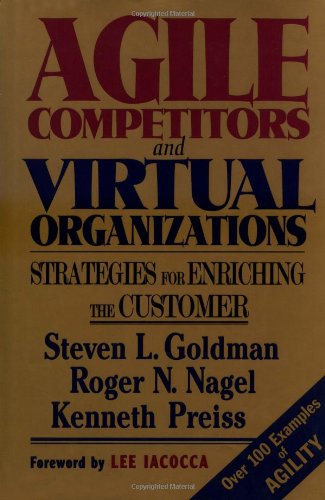
Agile Competitors and Virtual Organizations: Strategies for...
Authors:
Steven L. Goldman
Publisher:
Wiley
Publication Date:
Not available
ISBN:
0471286508
Praise from business leaders for Agile Competitors and Virtual Organizations "This book is right on target! It clearly and concisely depicts the... dramatic changes that are taking place in the marketplace. I recommend this book to every company that wants to remain competitive in an agile world." --Jerry Junkins Chairman, President and CEO, Texas Instruments "For managers plunging into the wilds of manufacturing to seek the source of future competitiveness, this is an indispensable handbook. Don't expect to find ordinance surveys that will take you straight to the Fountain of Agility, though. It's too soon for that kind of detail--but too late to wait around for it. What's here is a treasure map. All the main landmarks are pointed out, leaving plenty of elbow room for exercising your imagination and creativity." --Otis Port "This book provides insightful perspectives on the important elements of this emerging production paradigm. It's must read." --Donald L. Runkle Vice President and General Manager, Saginaw Division, General Motors "It is a critically important book for everyone who is concerned with how we succeed in the face of changes, challenges and opportunities presented by the global economy." --Lynn R. Williams Past President, Steel Workers Union "This magnificent work will inspire a new generation of business leaders to anticipate customer requirements, create new markets and balance the people, process, and technology resources of the enterprise to delight customers and enrich not only customers but also members of the agile virtual enterprise." --Aris Melissaratos Vice President, Science Technology and Quality, Westinghouse Electric Corporation "This book is an outstanding and important look at the most important requirements for directing a company toward the goal of maximizing opportunities with today's customers. Each element is covered in a direct and well-organized manner and can be used to help identify positive change. It will help you rethink the strategic direction of your company." --Marc I. Balmuth President, Caldor, Inc. "Agile Competitors is a very valuable tool for anyone involved in today's competitive race. It is essential reading for anyone involved i#
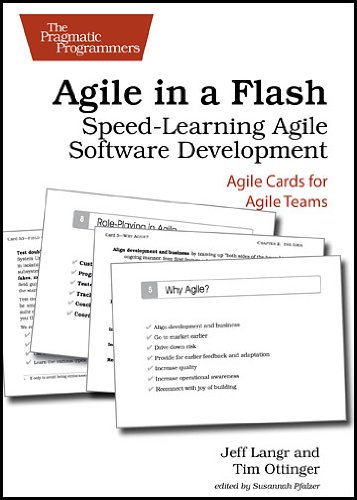
Agile in a Flash: Speed-Learning Agile Software Development...
Authors:
Jeff Langr
Publisher:
Pragmatic Bookshelf
Publication Date:
Not available
ISBN:
1934356719
Real agilists don't weigh themselves down with libraries of books, they keep their important information handy with them at all times. Jeff and Tim pack... over two decades of experience coaching and doing agile into Agile in a Flash, a unique deck of index cards that fit neatly in your pocket and tack easily onto the wall. Agile in a Flash cards run the gamut of agile, covering customer, planning, team, and developer concepts to help you succeed on agile projects. You can use cards from the deck in many ways: as references, reminders, teaching tools, and conversation pieces. Why not get sets for your entire team or organization? This comprehensive set of cards is an indispensable resource for agile teams. The deck of Agile in a Flash cards teaches leadership, teamwork, clean programming, agile approaches to problem solving, and tips for coaching agile teams. Team members can use the cards as reference material, ice breakers for conversations, reminders (taped to a wall or monitor), and sources of useful tips and hard-won wisdom. The cards are: Bite-sized! Read one practice or aspect at a time in a couple of minutes. Smart! Each card has years of practical experience behind it. Portable! Cards fit easily in your pocket or backpack. An indispensable tool for any agile team, and a must-have for every agile coach or Scrum Master. The Agile in a Flash deck is broken into four areas: planning, team, coding, and agile concepts. The front of each card is a quick list - a summary of the things you want to know and remember. The back provides further detail on each of the bullet points, and offers sage nuggets of knowledge based on extensive professional experience. Tape the cards to your wall, stick them on your monitor, and get agile fast.
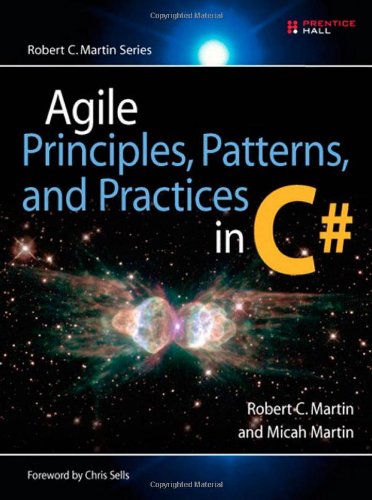
Agile Principles, Patterns, and Practices in C#
Authors:
Robert C. Martin
Publisher:
Prentice Hall
Publication Date:
Not available
ISBN:
0131857258
With the award-winning book Agile Software Development: Principles, Patterns, and Practices, Robert C. Martin helped bring Agile principles to tens of... thousands of Java and C++ programmers. Now .NET programmers have a definitive guide to agile methods with this completely updated volume from Robert C. Martin and Micah Martin, Agile Principles, Patterns, and Practices in C#. This book presents a series of case studies illustrating the fundamentals of Agile development and Agile design, and moves quickly from UML models to real C# code. The introductory chapters lay out the basics of the agile movement, while the later chapters show proven techniques in action. The book includes many source code examples that are also available for download from the authors’ Web site. Readers will come away from this book understanding Agile principles, and the fourteen practices of Extreme Programming Spiking, splitting, velocity, and planning iterations and releases Test-driven development, test-first design, and acceptance testing Refactoring with unit testing Pair programming Agile design and design smells The five types of UML diagrams and how to use them effectively Object-oriented package design and design patterns How to put all of it together for a real-world project Whether you are a C# programmer or a Visual Basic or Java programmer learning C#, a software development manager, or a business analyst, Agile Principles, Patterns, and Practices in C# is the first book you should read to understand agile software and how it applies to programming in the .NET Framework.
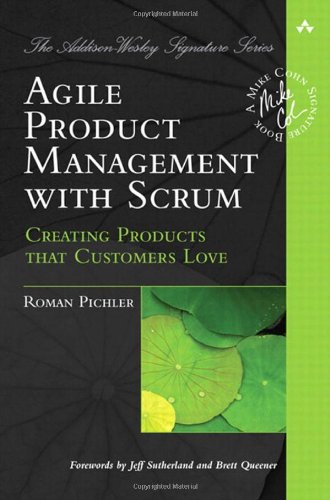
Agile Product Management with Scrum: Creating Products that...
Authors:
Roman Pichler
Publisher:
Addison-Wesley Professional
Publication Date:
Not available
ISBN:
0321605780
The First Guide to Scrum-Based Agile Product Management In Agile Product Management with Scrum, leading Scrum consultant Roman Pichler uses... real-world examples to demonstrate how product owners can create successful products with Scrum. He describes a broad range of agile product management practices, including making agile product discovery work, taking advantage of emergent requirements, creating the minimal marketable product, leveraging early customer feedback, and working closely with the development team. Benefitting from Pichler’s extensive experience, you’ll learn how Scrum product ownership differs from traditional product management and how to avoid and overcome the common challenges that Scrum product owners face. Coverage includes Understanding the product owner’s role: what product owners do, how they do it, and the surprising implications Envisioning the product: creating a compelling product vision to galvanize and guide the team and stakeholders Grooming the product backlog: managing the product backlog effectively even for the most complex products Planning the release: bringing clarity to scheduling, budgeting, and functionality decisions Collaborating in sprint meetings: understanding the product owner’s role in sprint meetings, including the dos and don’ts Transitioning into product ownership: succeeding as a product owner and establishing the role in the enterprise This book is an indispensable resource for anyone who works as a product owner, or expects to do so, as well as executives and coaches interested in establishing agile product management.
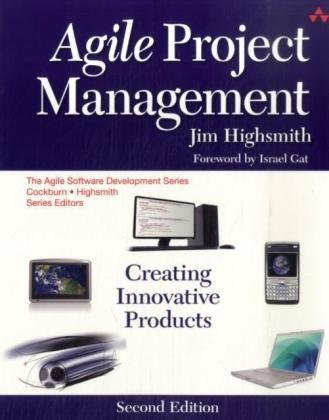
Agile Project Management: Creating Innovative Products
Authors:
Jim Highsmith
Publisher:
Addison-Wesley Professional
Publication Date:
Not available
ISBN:
0321658396
Best practices for managing projects in agile environments—now updated with new techniques for larger projects Today, the pace of project... management moves faster. Project management needs to become more flexible and far more responsive to customers. Using Agile Project Management (APM), project managers can achieve all these goals without compromising value, quality, or business discipline. In Agile Project Management, Second Edition, renowned agile pioneer Jim Highsmith thoroughly updates his classic guide to APM, extending and refining it to support even the largest projects and organizations. Writing for project leaders, managers, and executives at all levels, Highsmith integrates the best project management, product management, and software development practices into an overall framework designed to support unprecedented speed and mobility. The many topics added in this new edition include incorporating agile values, scaling agile projects, release planning, portfolio governance, and enhancing organizational agility. Project and business leaders will especially appreciate Highsmith’s new coverage of promoting agility through performance measurements based on value, quality, and constraints. This edition’s coverage includes: Understanding the agile revolution’s impact on product development Recognizing when agile methods will work in project management, and when they won’t Setting realistic business objectives for Agile Project Management Promoting agile values and principles across the organization Utilizing a proven Agile Enterprise Framework that encompasses governance, project and iteration management, and technical practices Optimizing all five stages of the agile project: Envision, Speculate, Explore, Adapt, and Close Organizational and product-related processes for scaling agile to the largest projects and teams Agile project governance solutions for executives and management The “Agile Triangle”: measuring performance in ways that encourage agility instead of discouraging it The changing role of the agile project leader
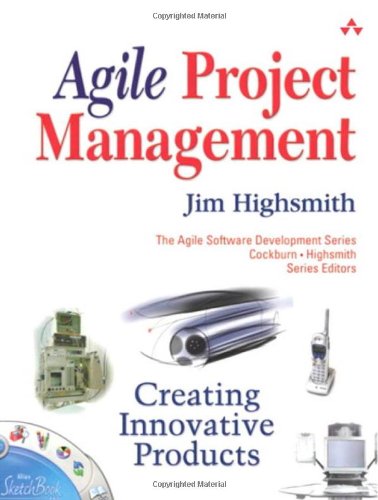
Agile Project Management: Creating Innovative Products
Authors:
Jim Highsmith
Publisher:
Addison-Wesley Professional
Publication Date:
Not available
ISBN:
0321219775
Best practices for managing projects in agile environments—now updated with new techniques for larger projects Today, the pace of project... management moves faster. Project management needs to become more flexible and far more responsive to customers. Using Agile Project Management (APM), project managers can achieve all these goals without compromising value, quality, or business discipline. In Agile Project Management, Second Edition, renowned agile pioneer Jim Highsmith thoroughly updates his classic guide to APM, extending and refining it to support even the largest projects and organizations. Writing for project leaders, managers, and executives at all levels, Highsmith integrates the best project management, product management, and software development practices into an overall framework designed to support unprecedented speed and mobility. The many topics added in this new edition include incorporating agile values, scaling agile projects, release planning, portfolio governance, and enhancing organizational agility. Project and business leaders will especially appreciate Highsmith’s new coverage of promoting agility through performance measurements based on value, quality, and constraints. This edition’s coverage includes: Understanding the agile revolution’s impact on product development Recognizing when agile methods will work in project management, and when they won’t Setting realistic business objectives for Agile Project Management Promoting agile values and principles across the organization Utilizing a proven Agile Enterprise Framework that encompasses governance, project and iteration management, and technical practices Optimizing all five stages of the agile project: Envision, Speculate, Explore, Adapt, and Close Organizational and product-related processes for scaling agile to the largest projects and teams Agile project governance solutions for executives and management The “Agile Triangle”: measuring performance in ways that encourage agility instead of discouraging it The changing role of the agile project leader
Agile Project Management with Scrum (Microsoft Professional)
Authors:
Ken Schwaber
Publisher:
Microsoft Press
Publication Date:
Not available
ISBN:
073561993X
The rules and practices for Scrum—a simple process for managing complex projects—are few, straightforward, and easy to learn. But Scrum’s... simplicity itself—its lack of prescription—can be disarming, and new practitioners often find themselves reverting to old project management habits and tools and yielding lesser results. In this illuminating series of case studies, Scrum co-creator and evangelist Ken Schwaber identifies the real-world lessons—the successes and failures—culled from his years of experience coaching companies in agile project management. Through them, you’ll understand how to use Scrum to solve complex problems and drive better results—delivering more valuable software faster.Gain the foundation in Scrum theory—and practice—you need to: Rein in even the most complex, unwieldy projects Effectively manage unknown or changing product requirements Simplify the chain of command with self-managing development teams Receive clearer specifications—and feedback—from customers Greatly reduce project planning time and required tools Build—and release—products in 30-day cycles so clients get deliverables earlier Avoid missteps by regularly inspecting, reporting on, and fine-tuning projects Support multiple teams working on a large-scale project from many geographic locations Maximize return on investment!
Agile Software Development, Principles, Patterns, and Practices
Authors:
Robert C. Martin
Publisher:
Prentice Hall
Publication Date:
Not available
ISBN:
0135974445
Written by a software developer for software developers, this book is a unique collection of the latest software development methods. The author... includes OOD, UML, Design Patterns, Agile and XP methods with a detailed description of a complete software design for reusable programs in C++ and Java. Using a practical, problem-solving approach, it shows how to develop an object-oriented application—from the early stages of analysis, through the low-level design and into the implementation. Walks readers through the designer's thoughts — showing the errors, blind alleys, and creative insights that occur throughout the software design process. The book covers: Statics and Dynamics; Principles of Class Design; Complexity Management; Principles of Package Design; Analysis and Design; Patterns and Paradigm Crossings. Explains the principles of OOD, one by one, and then demonstrates them with numerous examples, completely worked-through designs, and case studies. Covers traps, pitfalls, and work arounds in the application of C++ and OOD and then shows how Agile methods can be used. Discusses the methods for designing and developing big software in detail. Features a three-chapter, in-depth, single case study of a building security system. For Software Engineers, Programmers, and Analysts who want to understand how to design object oriented software with state of the art methods.
Agile Software Development: The Cooperative Game (2nd Edition)
Authors:
Alistair Cockburn
Publisher:
Addison-Wesley Professional
Publication Date:
Not available
ISBN:
0321482751
“Agile Software Development is a highly stimulating and rich book. The author has a deep background and gives us a tour de force of the emerging agile... methods.” –Tom Gilb The agile model of software development has taken the world by storm. Now, in Agile Software Development, Second Edition, one of agile’s leading pioneers updates his Jolt Productivity award-winning book to reflect all that’s been learned about agile development since its original introduction. Alistair Cockburn begins by updating his powerful model of software development as a “cooperative game of invention and communication.” Among the new ideas he introduces: harnessing competition without damaging collaboration; learning lessons from lean manufacturing; and balancing strategies for communication. Cockburn also explains how the cooperative game is played in business and on engineering projects, not just software development Next, he systematically illuminates the agile model, shows how it has evolved, and answers the questions developers and project managers ask most often, including · Where does agile development fit in our organization? · How do we blend agile ideas with other ideas? · How do we extend agile ideas more broadly? Cockburn takes on crucial misconceptions that cause agile projects to fail. For example, you’ll learn why encoding project management strategies into fixed processes can lead to ineffective strategy decisions and costly mistakes. You’ll also find a thoughtful discussion of the controversial relationship between agile methods and user experience design. Cockburn turns to the practical challenges of constructing agile methodologies for your own teams. You’ll learn how to tune and continuously reinvent your methodologies, and how to manage incomplete communication. This edition contains important new contributions on these and other topics: · Agile and CMMI · Introducing agile from the top down · Revisiting “custom contracts” · Creating change with “stickers” In addition, Cockburn updates his discussion of the Crystal methodologies, which utilize his “cooperative game” as their central metaphor. If you’re new to agile development, this book will help you succeed the first time out. If you’ve used agile methods before, Cockburn’s techniques will make you even more effective.
Agile Software Development with Scrum (Series in Agile Software...
Authors:
Ken Schwaber
Publisher:
Prentice Hall
Publication Date:
Not available
ISBN:
0130676349
eXtreme Programming is an ideal many software shops would love to reach, but with the constant pressures to produce software quickly, they cannot... actually implement it. The Agile software process allows a company to implement eXtreme Programming quickly and immediately-and to begin producing software incrementally in as little as 30 days! Implementing eXtreme Programming is easier said than done. The process can be time consuming and actually slow down current software projects that are in process. This book shows readers how to use SCRUM, an Agile software development process, to quickly and seamlessly implement XP in their shop-while still producing actual software. Using SCRUM and the Agile process can virtually eliminate all downtime during an XP implementation.
Agile Software Engineering (Undergraduate Topics in Computer Science)
Authors:
Orit Hazzan
Publisher:
Springer
Publication Date:
Not available
ISBN:
1848001983
This textbook presents the current issues in software development methods. Special emphasis is placed on agile software development, being one of the... mainstream paradigms for the management of software projects. Features and topics: (1) Examines the Agile manifesto and its implications. (2) Discusses the delivery of software projects on time and within budgets by using agile software development environment. (3) Considers the customer role in agile software development environments. (4) Looks at measures to control and monitor the software development process. (5) Offers Agile software development processes from a cognitive perspective. (6) Explores the concept of agility from the management perspective. (7) Investigates the impact of agility on the organization level. (8) The wider context of each topic to software engineering is emphasized. This comprehensive and concise introduction offers a reader-friendly approach to the topic. Written for advanced undergraduates, this clear foundation course will also be valuable for practitioners.
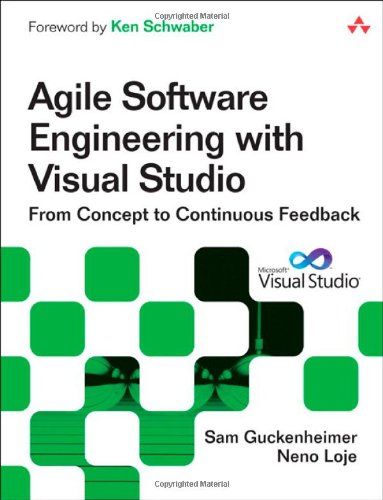
Agile Software Engineering with Visual Studio: From Concept to...
Authors:
Sam Guckenheimer
Publisher:
Addison-Wesley Professional
Publication Date:
Not available
ISBN:
0321685857
Using agile methods and the tools of Visual Studio 2010, development teams can deliver higher-value software faster, systematically eliminate waste, and... increase transparency throughout the entire development lifecycle. Now, Microsoft Visual Studio product owner Sam Guckenheimer and leading Visual Studio implementation consultant Neno Loje show how to make the most of Microsoft’s new Visual Studio 2010 Application Lifecycle Management (ALM) tools in your environment. This book is the definitive guide to the application of agile development with Scrum and modern software engineering practices using Visual Studio 2010. You’ll learn how to use Visual Studio 2010 to empower and engage multidisciplinary, self-managing teams and provide the transparency they need to maximize productivity. Along the way, Guckenheimer and Loje help you overcome every major impediment that leads to stakeholder dissatisfaction—from mismatched schedules to poor quality, blocked builds to irreproducible bugs, and technology “silos” to geographic “silos.” Coverage includes• Accelerating the “flow of value” to customers in any software project, no matter how large or complex• Empowering high-performance software teams and removing overhead in software delivery• Automating “burndowns” and using dashboards to gain a real-time, multidimensional view of quality and progress• Using Visual Studio 2010 to reduce or eliminate “no repro” bugs• Automating deployment and virtualizing test labs to make continuous builds deployable• Using Test Impact Analysis to quickly choose the right tests based on recent code changes• Working effectively with sources, branches, and backlogs across distributed teams• Sharing code, build automation, test, project and other data across .NET and Java teams• Uncovering hidden architectural patterns in legacy software, so you can refactor changes more confidently• Scaling Scrum to large, distributed organizations Whatever your discipline, this book will help you use Visual Studio 2010 to focus on what really matters: building software that delivers exceptional value sooner and keeps customers happy far into the future. Foreword by Ken Schwaber It is my honor to write a foreword for Sam’s book, Agile Software Delivery with Visual Studio. Sam is both a practitioner of software development, as well as a scholar. I have worked with Sam for the last two years to merge Scrum with modern engineering practices and an excellent toolset, Microsoft’s VS 2010. We are both indebted to Aaron Bjork of Microsoft, who developed the Scrum template that instantiates Scrum in VS 2010 through the Scrum Template. I do not want Scrum to be prescriptive. I left many holes, such as what as the syntax and organization of the Product Backlog, the engineering practices that turned Product Backlog items into a potentially shippable increment, and the magic that would create self-organizing teams. Sam has superbly described one way of filling in these holes in his book. He describes the techniques and tooling, as well as the rationale of the approach that he prescribes. He does this in detail, with scope and humor. Since I have worked with Microsoft since 2004 and Sam since 2009 on these practices and tooling, I am delighted. Our first launch was a course, the Professional Scrum Developer .NET course, that taught developers how to use solid increments using modern engineering practices on VS 2010 — working in self-organizing, cross-functional teams. Sam’s book is the bible to this course and more, laying it all out in detail and philosophy. If you are on a Scrum Team building software with .NET technologies, this is the book for you. If you are using Java, this book is compelling enough to read anyway, and maybe worth switching to .NET. When we devised and signed the Agile Manifesto in 2001, our first value was “Individuals and interactions over processes and tools.” Well, we have the processes and tools nailed for the Microsoft environment. In Sam’s book, we have something developers, who are also people, can use to understand the approach and value of the processes and tools. Now the really hard work, people. After twenty years of being treated as resources, becoming accountable, creative, responsible people is hard. Our first challenge will be the people who manage the developers. They could use the metrics from the VS 2010 tooling to micro-manage the processes and developers, squeezing the last bit of creativity out and leaving Agility flat. Or, they could use the metrics from the tools to understand the challenges facing the developers. They could then coach and lead them to a better, more creative and productive place. This is the challenge of any tool. It may be excellent, but how it is used will determine its success. Thanks for the book, Sam. Praise for Agile Software Engineering with Visual Studio “Agile dominates projects increasingly from IT to product and business development, and Sam Guckenheimer and Neno Loje provide pragmatic context for users seeking clarity and specifics with this book. Their knowledge of past history and current practice, combined with acuity and details about Visual Studio’s agile capabilities, enable a precise path to execution. Yet their voice and advice remain non-dogmatic and wise. Their examples are clear and relevant, enabling a valuable perspective to those seeking a broad and deep historical background along with a definitive understanding of the way in which Visual Studio can incorporate agile approaches.”—Melinda Ballou, Program Director, Application Lifecycle Management and Executive Strategies Service, International Data Corporation (IDC) “Sam Guckenheimer and Neno Loje have forgotten more about software development processes than most development ‘gurus’ ever knew, and that’s a good thing! In Agile Software Engineering with Visual Studio, Sam and Neno distill the essence of years of hard-won experience and hundreds of pages of process theory into what really matters—the techniques that high performance software teams use to get stuff done. By combining these critical techniques with examples of how they work in Visual Studio, they created a de-facto user guide that no Visual Studio developer should be without.”—Jeffrey Hammond, Principal Analyst, Forrester Research “If you employ Microsoft’s Team Foundation Server and are considering Agile projects, this text will give you a sound foundation of the principles behind its agile template and the choices you will need to make. The insights from Microsoft’s own experience in adopting agile help illustrate challenges with scale and the issues beyond pure functionality that a team needs to deal with. This book pulls together into one location a wide set of knowledge and practices to create a solid foundation to guide the decisions and effective transition, and will be a valuable addition to any team manager’s bookshelf.”—Thomas Murphy, Research Director, Gartner “This book presents software practices you should want to implement on your team and the tools available to do so. It paints a picture of how first class teams can work, and in my opinion, is a must read for anyone involved in software development. It will be mandatory reading for all our consultants.”—Claude Remillard, President, InCycle “This book is the perfect tool for teams and organizations implementing agile practices using Microsoft’s Application Lifecycle Management platform. It proves disciplined engineering and agility are not at odds; each needs the other to be truly effective.”—David Starr, Scrum.org “Sam Guckenheimer and Neno Loje have written a very practical book on how Agile teams can optimize their practices with Visual Studio. It describes not only how Agile and Visual Studio work, but also the motivation and context for many of the functions provided in the platform. If you are using Agile and Visual Studio, this book should be a required read for everyone on the team. If you are not using Agile or Visual Studio, then reading this book will describe a place that perhaps you want to get to with your process and tools.”—Dave West, Analyst, Forrester Research “Sam Guckenheimer and Neno Loje are leading authorities on agile methods and Visual Studio. The book you are holding in your hand is the authoritative way to bring these two technologies together. If you are a Visual Studio user doing agile, this book is a must read.”—Dr. James A. Whittaker, Software Engineering Director Google “Agile development practices are a core part of modern software development. Drawing from our own lessons in adopting agile practices at Microsoft, Sam Guckenheimer and Neno...
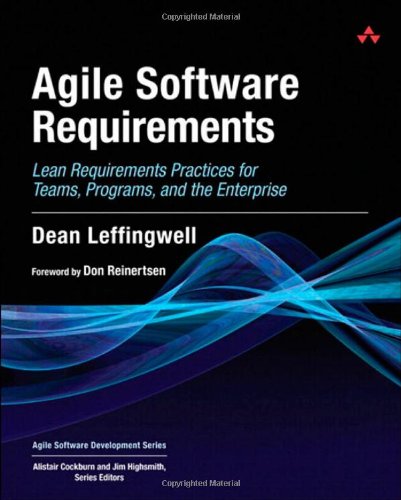
Agile Software Requirements: Lean Requirements Practices for Teams,...
Authors:
Dean Leffingwell
Publisher:
Addison-Wesley Professional
Publication Date:
Not available
ISBN:
0321635841
“We need better approaches to understanding and managing software requirements, and Dean provides them in this book. He draws ideas from three very... useful intellectual pools: classical management practices, Agile methods, and lean product development. By combining the strengths of these three approaches, he has produced something that works better than any one in isolation.” –From the Foreword by Don Reinertsen, President of Reinertsen & Associates; author of Managing the Design Factory; and leading expert on rapid product development Effective requirements discovery and analysis is a critical best practice for serious application development. Until now, however, requirements and Agile methods have rarely coexisted peacefully. For many enterprises considering Agile approaches, the absence of effective and scalable Agile requirements processes has been a showstopper for Agile adoption. In Agile Software Requirements, Dean Leffingwell shows exactly how to create effective requirements in Agile environments. Part I presents the “big picture” of Agile requirements in the enterprise, and describes an overall process model for Agile requirements at the project team, program, and portfolio levels Part II describes a simple and lightweight, yet comprehensive model that Agile project teams can use to manage requirements Part III shows how to develop Agile requirements for complex systems that require the cooperation of multiple teams Part IV guides enterprises in developing Agile requirements for ever-larger “systems of systems,” application suites, and product portfolios This book will help you leverage the benefits of Agile without sacrificing the value of effective requirements discovery and analysis. You’ll find proven solutions you can apply right now–whether you’re a software developer or tester, executive, project/program manager, architect, or team leader.
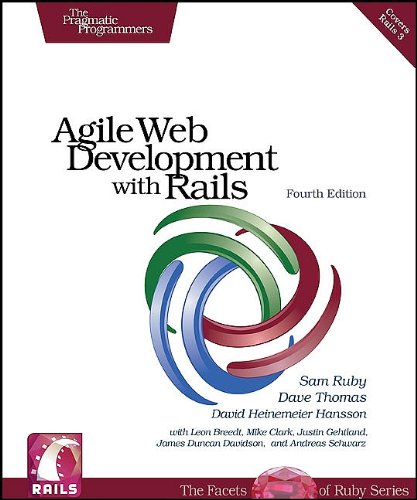
Agile Web Development with Rails (Pragmatic Programmers)
Authors:
Sam Ruby
Publisher:
Pragmatic Bookshelf
Publication Date:
Not available
ISBN:
1934356549
Rails just keeps on changing. Rails 3 and Ruby 1.9 bring hundreds of improvements, including new APIs and substantial performance enhancements. The... fourth edition of this award-winning classic has been reorganized and refocused so it's more useful than ever before for developers new to Ruby and Rails.Rails 3 is a major release--the changes aren't just incremental, but structural. So we decided to follow suit. This book isn't just a mild reworking of the previous edition to make it run with the new Rails. Instead, it's a complete refactoring. You'll still find the Depot example at the front, but you'll also find testing knitted right in. Gone are the long reference chapters--that's what the web does best. Instead you'll find more targeted information on all the aspects of Rails that you'll need to be a successful Web developer. Now Updated for Rails 3.2 Rails 3.1 and Rails 3.2 introduce many user-facing changes, and this release has been updated to match all the latest changes and new best practices in Rails 3.1 and Rails 3.2. This includes full support for Ruby 1.9.2 hash syntax; incorporation of the new Sprockets 2.0 Asset Pipeline, including SCSS and CoffeeScript; jQuery now being the default; reversible migrations; JSON response support; Rack::Cache, and much more. Ruby on Rails helps you produce high-quality, beautiful-looking web applications quickly. You concentrate on creating the application, and Rails takes care of the details. Tens of thousands of developers have used this award-winning book to learn Rails. It's a broad, far-reaching tutorial and reference that's recommended by the Rails core team. If you're new to Rails, you'll get step-by-step guidance. If you're an experienced developer, this book will give you the comprehensive, insider information you need. Rails has evolved over the years, and this book has evolved along with it. We still start with a step-by-step walkthrough of building a real application, and in-depth chapters look at the built-in Rails features. This edition now gives new Ruby and Rails users more information on the Ruby language and takes more time to explain key concepts throughout. Best practices on how to apply Rails continue to change, and this edition keeps up. Examples use cookie backed sessions, HTTP authentication, and Active Record-based forms, and the book focuses throughout on the right way to use Rails. Additionally, this edition now reflects Ruby 1.9, a new release of Ruby with substantial functional and performance improvements.
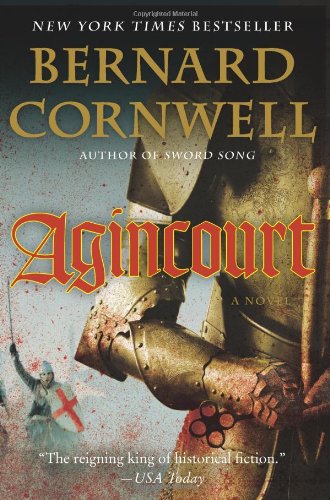
Agincourt: A Novel
Authors:
Bernard Cornwell
Publisher:
Harper Perennial
Publication Date:
Not available
ISBN:
0061578908
"The greatest writer of historical adventures today" (Washington Post) tackles his richest, most thrilling subject yet: the heroic tale of Agincourt. ... One of the most dramatic victories in British history, the battle of Agincourt—immortalized by Shakespeare in Henry V—pitted undermanned and overwhelmed English forces against a French army determined to keep their crown out of Henry's hands. Here Bernard Cornwell resurrects the legend of the battle and the "band of brothers" who fought on that fateful October day in 1415. An epic of redemption, Agincourt follows a commoner, a king, and a nation's entire army on an improbable mission to test the will of God and reclaim what is rightfully theirs—an exhilarating story of survival and slaughter that is, at once, a brilliant work of history and a triumph of imagination.
 '
'