production
/viewbook/list/all/?page=4250
/
/static/
None

Ethnic Americans: Immigration and American Society
Authors:
Leonard Dinnerstein
Publisher:
Columbia University Press
Publication Date:
Not available
ISBN:
0231143370
For more than three decades, Ethnic Americans has been hailed as a classic history of immigration to America. Leonard Dinnerstein and David M. Reimers... begin with a brief overview of immigration during the colonial and early national eras (1492 to the 1820s), focusing primarily on the arrival of English Protestants, while at the same time stressing the diversity brought by Dutch, French, Spanish, and other small groups, including "free people of color" from the Caribbean. Next they follow large-scale European immigration from 1830 to the 1880s. Catholicism became a major force in America during this period, with immigrants—five million in the 1880s alone—creating a new mosaic in every state of the Union. This section also touches on the arrival, beginning in 1848, of Chinese immigrants and other groups who hoped to find gold and get rich. Subsequent chapters address eastern and southern European immigration from 1890 to 1940; newcomers from the Western Hemisphere and Asia who arrived from 1840 to 1940; immigration restriction from 1875 to World War II; and the postwar arrival and experiences of Asian, Mexican, Hungarian, and Cuban refugees. Taking the past fifteen years into account, the fifth edition of Ethnic Americans considers recent influxes of Asians and Hispanics, especially the surge in the Mexican population, and includes expanded coverage of nativist sentiment in American politics and thought.
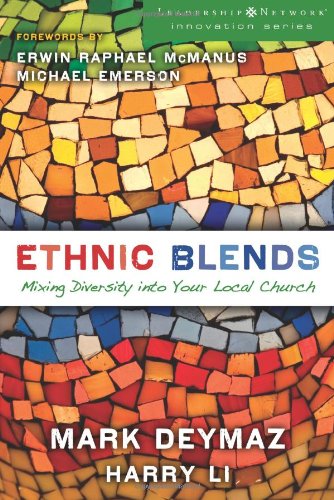
Ethnic Blends: Mixing Diversity into Your Local Church (Leadership...
Authors:
Mark DeYmaz
Publisher:
Zondervan
Publication Date:
Not available
ISBN:
0310321239
Increasingly, church leaders are recognizing the intrinsic power and beauty of the multi-ethnic church. Yet, more than a good idea, it's a biblical,... first-century standard with far-reaching evangelistic potential. How can your church overcome the obstacles in order to become a healthy, fruitful multi-ethnic church of faith? And why should you even try? In Ethnic Blends, multi-ethnic church pioneer Mark DeYmaz provides an up-close and personal look at seven common challenges to mixing diversity into your local church. Through real-life stories and practical illustrations, DeYmaz shows how to overcome the obstacles in order to build a healthy multi-ethnic church. He also includes the insights of other effective, multi-ethnic local church leaders from the United States and Australia. Ethnic Blends describes what effective local churches in the 21st century will look like and shows us how to create them, together as one, beyond race and class distinctions. --Miles McPherson, Senior Pastor, The Rock Church, San Diego, CA Mark DeYmaz, perhaps more than any pastor in America, has his pulse on what it will take for the Church to find real reconciliation in our generation. --Matt Carter, Lead Pastor, Austin Stone Community Church, Austin, TX
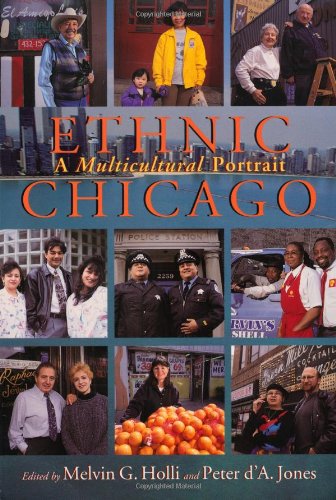
Ethnic Chicago: A Multicultural Portrait
Authors:
Peter d'A. Jones Jones
Publisher:
Wm. B. Eerdmans Publishing Co.
Publication Date:
Not available
ISBN:
0802870538
This award-winning study of ethnic life in Chicago richly details the various peoples and ethnic institutions in America's heartland city. This newly... revised and expanded edition also includes chapters on African-American migration, Chatham, Latino Chicago, the Chinese in Chicago, Asian Indians, Korean-Americans, the new entrepreneurial immigrants, and the Swedes. There is also a new six-chapter section that examines saloons, sports, crime, churches, neighborhoods, and cemeteries.
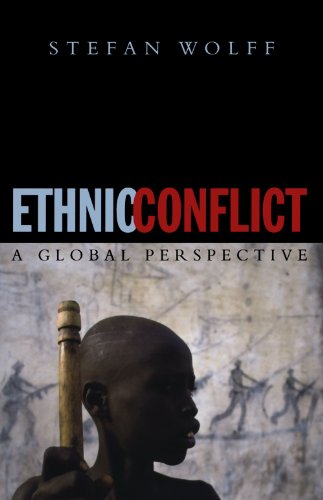
Ethnic Conflict: A Global Perspective
Authors:
Stefan Wolff
Publisher:
Oxford University Press, USA
Publication Date:
Not available
ISBN:
0192805886
Why is it that Catholics and Protestants in Northern Ireland have been in perpetual conflict for thirty years when they can live and prosper together... elsewhere? Why was there a bloody civil war in Bosnia and Herzegovina when Croats, Serbs, and Muslims had lived peacefully side-by-side for decades? Why did nobody see and act upon the early warning signs of genocide in Rwanda that eventually killed close to a million people in a matter of weeks? What is it that makes Kashmir potentially worth a nuclear war between India and Pakistan? In Ethnic Conflict, Stefan Wolff draws upon eye witness testimonies, reports by Human Rights organizations, theories of conflict and conflict management, and his own long experience in working to resolve ethnic conflict to offer compelling answers to these questions. In recent years hardly a day has gone by when ethnic conflict in some part of the world has not made headline news. The violence involved in these conflicts continues to destabilize entire regions, hamper social and economic development, and cause unimaginable human suffering. Wolff goes beyond superficial media coverage of these crises to illuminate the broad similarities between ethnic conflicts around the world and to engage the fundamental question underlying them all: why do nationalism and ethnicity still have such terrible power to turn neighbor against neighbor? Wolff also explores the crucial-and growing-links between ethnic conflict and other security challenges, such as terrorism and organized crime. No issue is more pressing in the world today than the ongoing and seemingly intractable tragedy of ethnic conflict. Stefan Wolff's new book sheds vitally important new light on both the causes and the potential solutions to one of humanity's darkest behaviors.
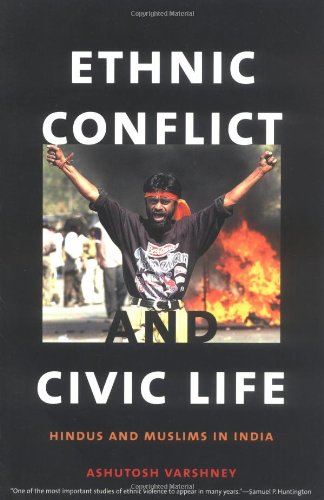
Ethnic Conflict and Civic Life: Hindus and Muslims in India
Authors:
Ashutosh Varshney
Publisher:
Yale University Press
Publication Date:
Not available
ISBN:
0300100132
This work, updated for the paperback edition, examines how civic ties between Hindus and Muslims in different Indian cities serve to contain, or even... prevent, ethnic violence. It should be of interest to South Asian scholars and policymakers as well as to those studying multiethnic societies in other areas of the world.
Ethnic Conflict and International Politics: Explaining Diffusion...
Authors:
Not Available
Publisher:
Palgrave Macmillan
Publication Date:
Not available
ISBN:
1403963568
Combining theoretical analyses with case studies, this book increases understanding of the internationalization, diffusion and escalation of ethnic... conflict. The essays stand at the nexus of comparative politics and international relations, examining the influence on ethnic conflict of the weakening of state institutional structures, the role of non-state regional and international actors, changes in the ethnic balance of power, and the degree of economic, social, and cultural integration within the regional or global system. The variety of approaches provides useful analytical tools for students, while the diversity of cases from different regions gives the reader a sense of the scope of such problems.

Ethnic Conflict: A Systematic Approach to Cases of Conflict
Authors:
Neal G Jesse
Publisher:
CQ Press
Publication Date:
Not available
ISBN:
0872894924
As ethnic groups clash, the international community faces the challenge of how to respond with solutions to bring about peace. In Ethnic Conflict, Jesse... and Williams bridge three sub-fields of political science: international relations, comparative politics, and political psychology, allowing for greater insight. They systematically apply a levels of analysisindividual, domestic, and international framework to ethnic conflict to better explore and understand its complexity. Five case study chapters apply the books framework to disputes around the world and include coverage of Bosnia, the Israeli- Palestinian conflict, Northern Ireland, Sri Lanka, and Sudan. Rich in detail, these robust case studies never lose sight of the books analytical framework, giving students a tool to understand systematically the unique set of contributing causes to each case of conflict. Students will appreciate the books logical presentation, and excellent pedagogical features including detailed maps that show political, demographic and cultural data.
Ethnic Conflict: Causes, Consequences, and Responses
Authors:
Karl Cordell
Publisher:
Polity
Publication Date:
Not available
ISBN:
0745639313
Why does ethnic conflict remain one of the major security challenges in today's world? Can we avoid another Rwanda in the future? How was it possible,... after almost four decades, to achieve a lasting settlement to the conflict in Northern Ireland, while that in Kashmir remains unresolved after more than sixty years??These and other questions are the focus of this book. Investigating the causes and consequences of ethnic conflict, the authors argue that the most effective responses are those that take into account factors at the local, state, regional and global level and which avoid seeking simplistic explanations and solutions to what is a truly complex phenomenon. What matters most for understanding ethnic conflicts are the choices that people make ? leaders and followers alike ? and not a set of mysterious unknowable forces.?Once we know that ethnic conflicts are not difficult to understand, but that there is a lot to understand about them, we can also appreciate that they are not impossible to resolve. However, it takes skilful, committed and principled leaders to achieve just solutions that are supported by their followers, and it takes the long-term commitment of the international community to enable and sustain these solutions.
Ethnic Conflict in World Politics
Authors:
Barbara Harff
Publisher:
Westview Press
Publication Date:
Not available
ISBN:
0813398401
This second edition of Ethnic Conflict in World Politics is an introduction to a new era in which civil society, states, and international actors... attempt to channel ethnic challenges to world order and security into conventional politics. From Africa's post-colonial rebellions in the 1960s and 1970s to anti-immigrant violence in the 1990s the authors survey the historical, geographic, and cultural diversity of ethnopolitical conflict. Using an analytical model to elucidate four well-chosen case studies—the Kurds, the Miskitos, the Chinese in Malaysia, and the Turks in Germany—the authors give students tools for analyzing emerging conflicts based on the demands of nationalists, indigenous peoples, and immigrant minorities throughout the world. The international community has begun to respond more quickly and constructively to these conflicts than it did to civil wars in divided Yugoslavia and genocide in Rwanda by using the emerging doctrines of proactive peacemaking and peace enforcement that are detailed in this book. Concludes by identifying five principles of international doctrine for managing conflict in ethnically diverse societies. The text is illustrated with maps, tables, and figures.

ETHNIC CONFLICT IN WORLD POLITICS
Authors:
Not Available
Publisher:
Not available
Publication Date:
Not available
ISBN:
Not available
Ethnic Conflicts In Africa (Codesria Book Series)
Authors:
Okwudiba Nnoli
Publisher:
African Books Collective
Publication Date:
Not available
ISBN:
2869780702
The resurgence and frequency of violent conflicts and tensions require analyses taking account of the factors that have shaped the history of ethnic... identities and warring groups. Citing cultural differences as the ubiquitous precursor hinders such understanding. This fifteen-nation study of conflicts in Africa shows that the capacity or failure to manage such conflicts is determined by changes brought about by the trajectories of historical events. Colonialism erected structures that ruptured the dynamics which had controlled opposing inter-ethnic relations and interests. The post-colonial era witnessed further manipulation and disintegration of ethnic identities and groups, thus making the state central to the dynamics of ethnicity in Africa. The studies book explain how the positive and negative aspects are transformed in the pre-colonial, colonial and post-colonial histories of African states and groups.
Ethnic Economies
Authors:
Ivan H. Light
Publisher:
Emerald Group Publishing Limited
Publication Date:
Not available
ISBN:
0122871553
The phenomenon of increasingly visible groups of immigrant entrepreneurs raises a host of questions. What are the causes of immigrant entrepreneurship?... What are its consequences, especially as regards upward mobility and inter-ethnic relations? And what accounts for differences in entrepreneurship among ethnic groups? Ethnic Economies provides a broad overview of ethnicity and entrepreneurship, connecting it with broader studies of economic life.
Ethnic Entrepreneurs: Identity and Development Politics in Latin...
Authors:
Monica DeHart
Publisher:
Stanford University Press
Publication Date:
Not available
ISBN:
0804769346
Indigenous groups are not often recognized as driving forces in the push for economic development. However, in development efforts across Latin America,... governments and corporations have begun to see ethnic cultural difference as an advantage. Ethnic Entrepreneurs explores how diverse groups historically seen as obstacles to development have become valuable to state and regional development initiatives.From collaboration between a Maya organization and Walmart to a UN-sponsored program that recruits diasporic Latinos, states and corporations are pursuing strategies that complement regional neoliberal shifts. This book examines how ethnic difference is produced through development policy, breaking down the micropolitics of identity and development. It uncovers surprising convergences between ethnic community businesses and corporate social responsibility practices and illuminates how formulations of ethnic difference influence not only changing cultural identifications, but also the political and moral projects that shape Latin America.
Ethnic Families in America: Patterns and Variations (5th Edition)
Authors:
Roosevelt H Wright
Publisher:
Pearson
Publication Date:
Not available
ISBN:
0130918393
A mosaic of ethnic groups Reflecting the social and political dynamics in the United States, this edited volume offers an inclusive look at... multicultural diversity in the U.S. with extensive coverage of the family life styles, traditions and values of seventeen American ethnic groups. Providing unique and personal insights, each chapter is written by a contributing author representing a particular ethnic group and is structured in a similar pattern - covering the historical background, key ethnic cultural components, traditional and current ethnic family characteristics, and changes and adaptations to the ethnic family and culture. The book is suitable for undergraduate courses in Sociology of the Family, Sociology of Minority Groups, Social Work with Minority Groups, and Race and Ethnicity. Learning Goals Upon completing this book, readers should be able to: Have a better understanding at the multicultural diversity of families in the United States Have a deeper understanding of family life styles, traditions, and values of a wide range of ethnic families in America Note: MySearchLab does not come automatically packaged with this text. To purchase MySearchLab, please visit: www.mysearchlab.com or you can purchase a ValuePack of the text + MySearchLab with eText (at no additional cost). ValuePack ISBN-10: 0205863558 / ValuePack ISBN-13: 9780205863556
Ethnic Groups and Boundaries
Authors:
Fredrik Barth
Publisher:
Waveland Pr Inc
Publication Date:
Not available
ISBN:
0881339792
When published in Norway nearly thirty years ago, Ethnic Groups and Boundaries marked the transition to a new era of ethnic studies. Today this... much-cited classic is regarded as the seminal volume from which stems much current anthropological thinking about ethnicity. Ethnic Groups and Boundaries opens with Barth's invaluable thirty-page essay that introduces readers to important theoretical issues in the analysis of ethnic groups. Following is a collection of seven essays--the results of a symposium involving a small group of Scandinavian social anthropologists--intended to illustrate the application of Barth's analytical viewpoints to different sides of the problems of polyethnic organization in various ethnographic areas, including Norway, Sudan, Ethiopia, Mexico, Afghanistan, and Laos.
 '





