production
/viewbook/list/all/?page=4261
/
/static/
None

Euripides, VII, Fragments: Aegeus-Meleager (Loeb Classical Library...
Authors:
Euripides
Publisher:
Loeb Classical Library
Publication Date:
Not available
ISBN:
0674996259
Eighteen of the ninety or so plays composed by Euripides between 455 and 406 bce survive in a complete form and are included in the preceding six... volumes of the Loeb Euripides. A further fifty-two tragedies and eleven satyr plays, including a few of disputed authorship, are known from ancient quotations and references and from numerous papyri discovered since 1880. No more than one-fifth of any play is represented, but many can be reconstructed with some accuracy in outline, and many of the fragments are striking in themselves. The extant plays and the fragments together make Euripides by far the best known of the classic Greek tragedians. This edition, in a projected two volumes, offers the first complete English translation of the fragments together with a selection of testimonia bearing on the content of the plays. The texts are based on the recent comprehensive edition of R. Kannicht. A general Introduction discusses the evidence for the lost plays. Each play is prefaced by a select bibliography and an introductory discussion of its mythical background, plot, and location of the fragments, general character, chronology, and impact on subsequent literary and artistic traditions.

Euripides, Vol. VIII: Oedipus-Chrysippus & Other Fragments...
Authors:
Euripides
Publisher:
Loeb Classical Library
Publication Date:
Not available
ISBN:
0674996313
Eighteen of the ninety or so plays composed by Euripides between 455 and 406 BCE survive in a complete form and are included in the first six volumes... of the Loeb Euripides. A further fifty-two tragedies and eleven satyr plays, including a few of disputed authorship, are known from ancient quotations and references and from numerous papyri discovered since 1880. No more than one-fifth of any play is represented, but many can be reconstructed with some accuracy in outline, and many of the fragments are striking in themselves. The extant plays and the fragments together make Euripides by far the best known of the classic Greek tragedians. This edition of the fragments, concluded in this second volume, offers the first complete English translation together with a selection of testimonia bearing on the content of the plays. The texts are based on the recent comprehensive edition of R. Kannicht. A general Introduction discusses the evidence for the lost plays. Each play is prefaced by a select bibliography and an introductory discussion of its mythical background, plot, and location of the fragments, general character, chronology, and impact on subsequent literary and artistic traditions.
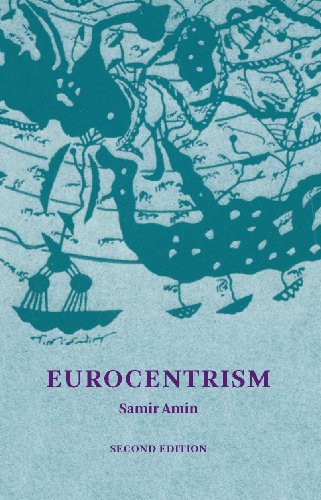
Eurocentrism
Authors:
Samir Amin
Publisher:
Monthly Review Press
Publication Date:
Not available
ISBN:
1583672079
Since its first publication twenty years ago, Eurocentrism has become a classic of radical thought. Written by one of the world's foremost political... economists, this original and provocative essay takes on one of the great "ideological deformations" of our time: Eurocentrism. Rejecting the dominant Eurocentric view of world history, which narrowly and incorrectly posits a progression from the Greek and Roman classical world to Christian feudalism and the European capitalist system, Amin presents a sweeping reinterpretation that emphasizes the crucial historical role played by the Arab Islamic world. Throughout the work, Amin addressesa broad set of concerns, ranging from the ideological nature of scholastic metaphysics to the meanings and shortcomingsof contemporary Islamic fundamentalism. This second edition contains a new introduction and concluding chapter, both of which make the author's arguments even more compelling.
Euroclash: The EU, European Identity, and the Future of Europe
Authors:
Neil Fligstein
Publisher:
Oxford University Press, USA
Publication Date:
Not available
ISBN:
0199580855
The European Union's market integration project has dramatically altered economic activity around Europe. This book presents extensive evidence on how... trade has increased, jobs have been created, and European business has been reorganized. The changes in the economy have been accompanied by dramatic changes in how people from different societies interact. This book argues provocatively that these changes have produced a truly transnational-European-society. The book explores the nature of that society and its relationship to the creation of a European identity, popular culture, and politics. Much of the current political conflict around Europe can be attributed to who is and who is not involved in European society. Business owners, managers, professionals, white-collar workers, the educated, and the young have all benefited from European economic integration, specifically by interacting more and more with their counterparts in other societies. They tend to think of themselves as Europeans. Older, poorer, less educated, and blue-collar citizens have benefited less. They view the EU as intrusive on national sovereignty, or they fear its pro-business orientation will overwhelm the national welfare states. They have maintained national identities. There is a third group of mainly-middle class citizens who see the EU in mostly positive terms and sometimes--but not always--think of themselves as Europeans. It is this swing group that is most critical for the future of the European project. If they favor more European cooperation, politicians will oblige. But, if they prefer that policies remain wedded to the nation, European cooperation will stall.
Eurolegalism: The Transformation of Law and Regulation in the...
Authors:
R. Daniel Kelemen
Publisher:
Harvard University Press
Publication Date:
Not available
ISBN:
0674046943
Despite western Europe’s traditional disdain for the United States’ “adversarial legalism,” the European Union is shifting toward a very similar... approach to the law, according to Daniel Kelemen. Coining the term “eurolegalism” to describe the hybrid that is now developing in Europe, he shows how the political and organizational realities of the EU make this shift inevitable.The model of regulatory law that had long predominated in western Europe was more informal and cooperative than its American counterpart. It relied less on lawyers, courts, and private enforcement, and more on opaque networks of bureaucrats and other interests that developed and implemented regulatory policies in concert. European regulators chose flexible, informal means of achieving their objectives, and counted on the courts to challenge their decisions only rarely. Regulation through litigation—central to the U.S. model—was largely absent in Europe.But that changed with the advent of the European Union. Kelemen argues that the EU’s fragmented institutional structure and the priority it has put on market integration have generated political incentives and functional pressures that have moved EU policymakers to enact detailed, transparent, judicially enforceable rules—often framed as “rights”—and back them with public enforcement litigation as well as enhanced opportunities for private litigation by individuals, interest groups, and firms.
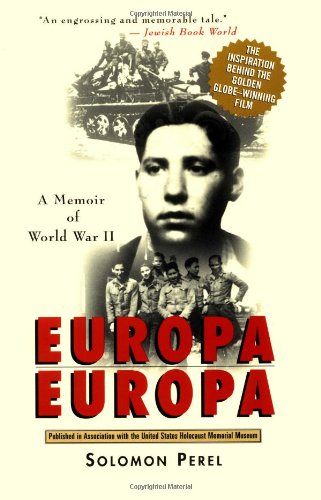
Europa, Europa
Authors:
Solomon Perel
Publisher:
Wiley
Publication Date:
Not available
ISBN:
0471283649
The Inspiration Behind The Golden Globe --Winning Film"An engrossing and memorable tale."Jewish Book World"The sheer emotion of telling the tale is... palpable. The whole is moving, and strange beyond belief." --The Times (London)International acclaim for Solomon Perel's Europa Europa"The wrenching memoir of a young man who survived the Holocaust by concealing his Jewish identity and finding unexpected refuge as a member of the Hitler Youth."It is a Holocaust memoir that is moving, straightforward, and quite completely bizarre, unsettling in all kinds of assumptions about identity, responsibility, and guilt." --Glasgow Herald"Perel bares his soul to readers in this fascinating, unusual personal narrative of the Holocaust." --Book Report"Many of the experiences of Holocaust survivors are incredible. None is more incredible than the story of a Jewish boy, Solomon Perel, who escaped from Germany to Russia, served with the Wehrmacht in Russia, was adopted by his commanding officer, and transferred to an elite Hitler Youth school." --London Jewish News"A most remarkable story . . . extraordinary." --The Australian"This book will move human hearts." --Berliner Morgenpost

Europe, 1648-1815: From the Old Regime to the Age of Revolution
Authors:
Robin W. Winks
Publisher:
Oxford University Press, USA
Publication Date:
Not available
ISBN:
0195154460
In 1648, Europe was reeling from the destabilizing effects of religious conflict, economic change, and social upheaval. The issues that divided the... Church in the late Middle Ages had forced Europeans to choose sides in a bitter and bloody Catholic/Protestant conflict. A powerful capitalist movement had broken down old social ties, leading to the near disappearance of serfdom in Western Europe and to the formation of a larger merchant class in the cities. The discoveries of the Scientific Revolution had begun to corrode old certainties about the universe, just as the exploration of the New World was revealing the existence of peoples, cultures, and even continents that would have been unimaginable to previous generations. In the face of such chaos, which led many to fear that society was heading towards an utter breakdown, the European elite engaged in a desperate effort to restore order. Between 1648 and 1750, peoples and governments throughout Europe sought to contain the shift toward anarchy through the reinforcement of religious orthodoxies, the strengthening of national states, and the stiffening of social hierarchies. But by the later eighteenth century, the success of this effort led paradoxically to new institutional and intellectual demands for change. The search for order had given way to a quest for progress. A new movement known as "the Enlightenment" was transforming the old order, and revolution was about to become a Western tradition. Europe, 1648-1815 is a concise narrative of this fascinating epoch in European history. Framing the events of the period in terms of two successive movements--the search for order and the pursuit of reform--this book surveys the political, economic, social, and cultural events of the period, from the rise of absolutism to the campaigns of Napoleon, from the creation of European empires in the Americas to the controversies of the Enlightenment. With numerous selections from primary sources, a detailed and updated bibliography, a chronology of the period, and numerous illustrations, Europe, 1648-1815 is indispensable for courses on Early Modern Europe. It can be used as a stand-alone textbook or in conjunction with supplementary readings.

Europe 1783-1914
Authors:
William Simpson
Publisher:
Routledge
Publication Date:
Not available
ISBN:
0415470668
Europe 1783–1914 provides a comprehensive overview of Europe from the background of the French Revolution to the origins of the First World War.... William Simpson and Martin Jones combine accounts of the most important countries with the wider political, economic, social and cultural themes affecting Europe as a whole, including: the impact of the French Revolution and Napoleon the rise of industry the growth of nationalism the 1848 revolutions Imperialism Marxism and left wing movements. This second edition has been significantly expanded with additional sections on Science and Technology and Thought and Culture. There are two entirely new chapters – 'Changes in the World of Ideas', which explores European responses to the Enlightenment and the French Revolution as reflected in literature, music and painting; and 'Europe and the United States', which examines the reciprocal relationship between these two continents during this critical period. The final chapter, 'Retrospect and Prospect', now addresses the changing intellectual climate under the influence of figures such as Darwin, Freud and Nietzsche, and new departures in the arts evident at the dawn of the twentieth century. Every chapter features a list of key dates, concise background information, and suggestions for further reading, as well as a concluding 'Topics for Debate' section which contains relevant contemporary sources and outlines the contrasting views of recent historians on the key issues. Extensively illustrated throughout with maps, contemporary cartoons and portraits, Europe 1783–1914 is a clear, detailed and highly accessible analysis of this turbulent and formative period of European History.
Europe: 1815-1914
Authors:
Gordon A. Craig
Publisher:
Holt Rinehart & Winston
Publication Date:
Not available
ISBN:
0030891949

Europe 1850-1914: Progress, Participation and Apprehension
Authors:
Jonathan Sperber
Publisher:
Longman
Publication Date:
Not available
ISBN:
1405801344
The second half of the nineteenth century was an era of relative tranquillity and progress It was an age of free acquisition and disposition of... private property among individuals and families, in a phrase, a bourgeois era. This book tells the story of European history from the middle of the nineteenth century to the outbreak of the First World War. Encompassing in his account the entire European continent, the author describes: - the structures and processes of economic growth - the creation of an urban-industrial society - the rise and transformation of voluntary associations - the changing structures of gender and the position of women - the triumphs and defeats of positivism and empiricism in the natural and social sciences - artists’ search for new forms of expression - the rise of mass politics and the growth of nationalism - the changing relations and scope of actions of the Great Powers.
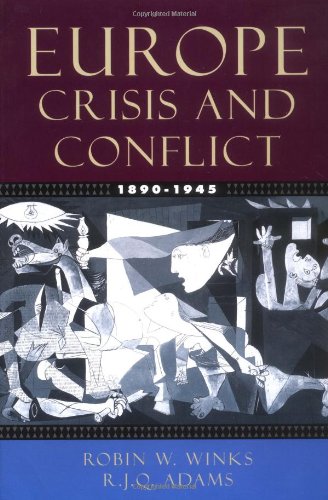
Europe, 1890-1945: Crisis and Conflict
Authors:
Robin W. Winks
Publisher:
Oxford University Press, USA
Publication Date:
Not available
ISBN:
0195154509
The first half of the twentieth century was of one of the most turbulent periods in Europe's history. While social theorists challenged orthodox ways of... thinking about the establishment of a "good society," scientists offered up new visions of the workings of the universe. Women fought for increased power within the altered social landscape, and change and controversy reigned in the worlds of art and culture. The chaos of world politics ushered in the two great wars, which would forever alter Europe's position in the world. Europe, 1890-1945 offers a concise, accessible overview of this tumultuous time period. It provides a clear outline of the political events that shaped the age and offers a discussion of the seismic shifts in social and cultural landscapes. Topics covered include the rise of modernism in the arts, Social Darwinism and its effects on theories of race, the making of "national" identities, the origins of the modern ecology movement, and the changing roles of women in an era of war and violence. The authors thoroughly analyze the causes and effects of the two great wars, while reaching beyond Europe to discuss the events in the United States, Africa, and Asia that contributed to the evolving face of world politics. With nine maps for easy reference, chapter summaries to aid in reader comprehension, a detailed chronology, and twenty-four photographs, Europe, 1890-1945 is an ideal text for undergraduate courses that explore the crisis and conflict that governed the early twentieth-century European world.

Europe, 1890-1945: Crisis and Conflict
Authors:
Robin W. Winks
Publisher:
Oxford University Press, USA
Publication Date:
Not available
ISBN:
0195154495
The first half of the twentieth century was of one of the most turbulent periods in Europe's history. While social theorists challenged orthodox ways of... thinking about the establishment of a "good society," scientists offered up new visions of the workings of the universe. Women fought for increased power within the altered social landscape, and change and controversy reigned in the worlds of art and culture. The chaos of world politics ushered in the two great wars, which would forever alter Europe's position in the world. Europe, 1890-1945 offers a concise, accessible overview of this tumultuous time period. It provides a clear outline of the political events that shaped the age and offers a discussion of the seismic shifts in social and cultural landscapes. Topics covered include the rise of modernism in the arts, Social Darwinism and its effects on theories of race, the making of "national" identities, the origins of the modern ecology movement, and the changing roles of women in an era of war and violence. The authors thoroughly analyze the causes and effects of the two great wars, while reaching beyond Europe to discuss the events in the United States, Africa, and Asia that contributed to the evolving face of world politics. With nine maps for easy reference, chapter summaries to aid in reader comprehension, a detailed chronology, and twenty-four photographs, Europe, 1890-1945 is an ideal text for undergraduate courses that explore the crisis and conflict that governed the early twentieth-century European world.
Europe: A Cultural History
Authors:
Peter Rietbergen
Publisher:
Routledge
Publication Date:
Not available
ISBN:
0415323592
Following on from his highly acclaimed first publication, Peter Rietbergen’s excellent second edition brings the reader up to date with Europe’s... current cultural trends. Rietbergen examines the many varied cultural building blocks of Europe, their importance in the continent’s cultural identity, and how the perception of Europe has changed over the centuries. Working chronologically from the beginnings of agricultural society in Africa before Christ, right up to today’s mass culture, the book studies culture through the media of literature, art, science, technology and music. With thorough revisions on the late twentieth and early twenty-first century, a wide selection of excerpts, lyrics from contemporary songs, and illustrations, this book is an excellent student resource for both historical and cultural studies.
Europe after Rome: A New Cultural History, 500-1000
Authors:
Julia Smith
Publisher:
Oxford University Press, USA
Publication Date:
Not available
ISBN:
0192892630
Europe after Rome: A New Cultural History 500-1000 is the first single-author study in more than fifty years to offer an integrated appraisal of the... early Middle Ages as a dynamic and formative period in European history. Written in an attractive and accessible style, the book makes extensive use of original sources in order to introduce early medieval men and women at all levels of society--from slave to emperor--and allows them to speak to students in their own words. It overturns traditional narratives and instead offers an entirely fresh approach to the centuries from c.500 to c.1000. Rejecting any notion of a dominant, uniform early medieval culture, Europe after Rome argues that the fundamental characteristic of the early middle ages is diversity of experience. To explain how the men and women who lived in this period ordered their world in cultural, social, and political terms, it employs an innovative methodology that combines cultural history, regional studies, and gender history. Ranging comparatively from Ireland to Hungary and from Scotland and Scandinavia to Spain and Italy, the analysis highlights three themes: regional variation, power, and the legacy of Rome. In the context of debates about the social, religious, and cultural meaning of "Europe" in the early twenty-first century, this book seeks the origins of European cultural pluralism and diversity in the early Middle Ages.

EUROPE AFTER ROME W/ THE EARLY MIDDLE AGES
Authors:
Not Available
Publisher:
Not available
Publication Date:
Not available
ISBN:
Not available
 '





