production
/viewbook/list/all/?page=4266
/
/static/
None
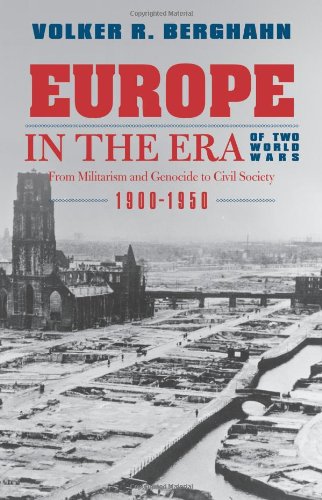
Europe in the Era of Two World Wars: From Militarism and Genocide...
Authors:
Volker R. Berghahn
Publisher:
Princeton University Press
Publication Date:
Not available
ISBN:
069112003X
How and why did Europe spawn dictatorships and violence in the first half of the twentieth century, and then, after 1945 in the west and after 1989 in... the east, create successful civilian societies? In this book, Volker Berghahn explains the rise and fall of the men of violence whose wars and civil wars twice devastated large areas of the European continent and Russia--until, after World War II, Europe adopted a liberal capitalist model of society that had first emerged in the United States, and the beginnings of which the Europeans had experienced in the mid-1920s. Berghahn begins by looking at how the violence perpetrated in Europe's colonial empires boomeranged into Europe, contributing to the millions of casualties on the battlefields of World War I. Next he considers the civil wars of the 1920s and the renewed rise of militarism and violence in the wake of the Great Crash of 1929. The second wave of even more massive violence crested in total war from 1939 to 1945 that killed more civilians than soldiers, and this time included the industrialized murder of millions of innocent men, women, and children in the Holocaust. However, as Berghahn concludes, the alternative vision of organizing a modern industrial society on a civilian basis--in which people peacefully consume mass-produced goods rather than being 'consumed' by mass-produced weapons--had never disappeared. With the United States emerging as the hegemonic power of the West, it was this model that finally prevailed in Western Europe after 1945 and after the end of the Cold War in Eastern Europe as well.

Europe in the Era of Two World Wars: From Militarism and Genocide...
Authors:
Volker R. Berghahn
Publisher:
Princeton University Press
Publication Date:
Not available
ISBN:
0691141223
How and why did Europe spawn dictatorships and violence in the first half of the twentieth century, and then, after 1945 in the west and after 1989 in... the east, create successful civilian societies? In this book, Volker Berghahn explains the rise and fall of the men of violence whose wars and civil wars twice devastated large areas of the European continent and Russia--until, after World War II, Europe adopted a liberal capitalist model of society that had first emerged in the United States, and the beginnings of which the Europeans had experienced in the mid-1920s. Berghahn begins by looking at how the violence perpetrated in Europe's colonial empires boomeranged into Europe, contributing to the millions of casualties on the battlefields of World War I. Next he considers the civil wars of the 1920s and the renewed rise of militarism and violence in the wake of the Great Crash of 1929. The second wave of even more massive violence crested in total war from 1939 to 1945 that killed more civilians than soldiers, and this time included the industrialized murder of millions of innocent men, women, and children in the Holocaust. However, as Berghahn concludes, the alternative vision of organizing a modern industrial society on a civilian basis--in which people peacefully consume mass-produced goods rather than being 'consumed' by mass-produced weapons--had never disappeared. With the United States emerging as the hegemonic power of the West, it was this model that finally prevailed in Western Europe after 1945 and after the end of the Cold War in Eastern Europe as well.
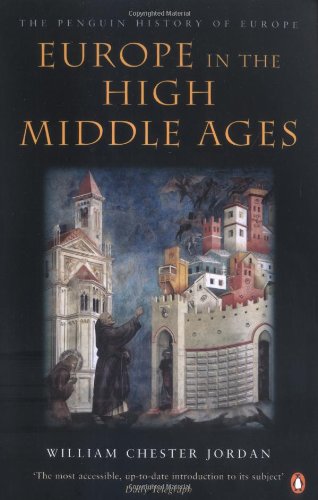
Europe in the High Middle Ages (Penguin History of Europe)
Authors:
William Chester Jordan
Publisher:
Penguin Books
Publication Date:
Not available
ISBN:
0140166645
With a lucid and clear narrative style William Chester Jordan has turned his considerable talents to composing a standard textbook of the opening... centuries of the second millennium in Europe. He brings this period of dramatic social, political, economic, cultural, religious and military change, alive to the general reader. Jordan presents the early Medieval period as a lost world, far removed from our current age, which had risen from the smoking rubble of the Roman Empire, but from which we are cut off by the great plagues and famines that ended it. Broad in scope, punctuated with impressive detail, and highly accessible, Jordan's book is set to occupy a central place in university courses of the medieval period.
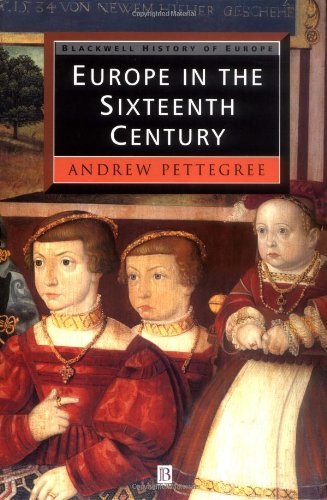
Europe in the Sixteenth Century (Blackwell History of Europe)
Authors:
Andrew Pettegree
Publisher:
Wiley-Blackwell
Publication Date:
Not available
ISBN:
063120704X
Assuming no prior knowledge of the period, this engaging narrative history introduces readers to the central features and main developments of... sixteenth-century Europe.
Europe in the Twentieth Century
Authors:
Robert O. Paxton
Publisher:
Wadsworth Publishing
Publication Date:
Not available
ISBN:
0618915206
Europe in the Twentieth Century presents a current look at the major issues, problems, and crises that have faced Europeans since 1914. This Fourth... Edition thoroughly addresses the central experiences of war, depression, revolution, and dictatorship, while examining Europe's social transformation and intellectual trends.
Europe in the Twentieth Century
Authors:
Robert O. Paxton
Publisher:
Wadsworth Publishing
Publication Date:
Not available
ISBN:
0495913197
EUROPE IN THE TWENTIETH CENTURY offers a comprehensive, yet streamlined narrative of twentieth-century Europe. The scholarship and currency is top-notch... as is the book's excellent consideration of important socio-cultural issues in the twentieth century, including youth movements and feminism.
Europe in the Twentieth Century, 2005 Update
Authors:
Robert O. Paxton
Publisher:
Wadsworth Publishing
Publication Date:
Not available
ISBN:
0534606326
This updated Fourth Edition presents a current look at the major issues, problems, and crises that have faced Europeans since 1914. EUROPE IN THE... TWENTIETH CENTURY thoroughly addresses the central experiences of war, depression, revolution, and dictatorship, while examining Europe's social transformation and intellectual trends. This new edition is updated through the end of 2000, and includes coverage of the Balkans. It has been revised throughout to ensure readability and accuracy.
Europe in the Twentieth Century (4th Edition)
Authors:
Roland N. Stromberg
Publisher:
Pearson
Publication Date:
Not available
ISBN:
0135693446
For courses in Twentieth Century Europe. Written by a noted intellectual historian, this concise, interpretive history of twentieth-century... European society and civilization surveys the full range of social, political, economic, cultural, and diplomatic events – from pre-World War I to the 1990s.
Europe In The Twentieth Century- (Value Pack w/MySearchLab) (4th...
Authors:
Roland N. Stromberg
Publisher:
Pearson
Publication Date:
Not available
ISBN:
0205703879
MySearchLab provides students with a complete understanding of the research process so they can complete research projects confidently and efficiently.... Students and instructors with an internet connection can visit www.MySearchLab.com and receive immediate access to thousands of full articles from the EBSCO ContentSelect database. In addition, MySearchLab offers extensive content on the research process itself—including tips on how to navigate and maximize time in the campus library, a step-by-step guide on writing a research paper, and instructions on how to finish an academic assignment with endnotes and bibliography. For courses in Twentieth Century Europe. Written by a noted intellectual historian, this concise, interpretive history of twentieth-century European society and civilization surveys the full range of social, political, economic, cultural, and diplomatic events – from pre-World War I to the 1990s.

EUROPE IN WIDER WORLD (PKG 1350-1650 1648-1815)
Authors:
Not Available
Publisher:
Not available
Publication Date:
Not available
ISBN:
Not available
EUROPE MAP(118128620)
Authors:
Not Available
Publisher:
Not available
Publication Date:
Not available
ISBN:
Not available
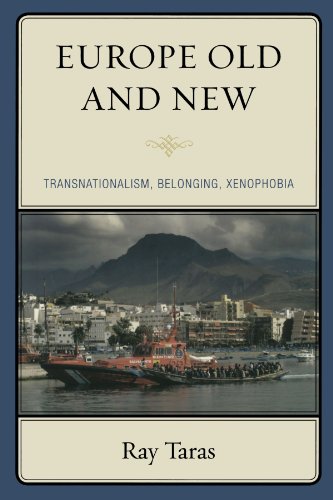
Europe Old and New: Transnationalism, Belonging, Xenophobia
Authors:
Ray Taras
Publisher:
Rowman & Littlefield Publishers
Publication Date:
Not available
ISBN:
074255516X
Is Europe indeed uniting or instead falling apart as a result of anti-immigrant prejudices, a massive Islamic influx, and ancient intra-European... hatreds? This innovative and engaging book explores this key question by examining the national and religious phobias and prejudices, antipathies and sympathies, stereotypes and heterotypes of Europe west and east. Considering the sources of Europe's culture-based divide, Ray Taras argues that the idea of two 'Europes' is grounded both in reality and myth. The accession process that brought a dozen new members into the European Union after 2004 highlighted the persisting gulf between "old" and "new" Europe. While many concrete borders between east and west were removed (commercial, legal, passport regimes), many remained (absence of a single Euro currency zone, labor market, and security community). Virtual borders too were invented or re-imagined: the postmaterialist, inclusionary, tolerant values supposedly found in old Europe versus the materialist, nationalistic, xenophobic ones of new Europe.After reviewing the two Europes' contrasting historical legacies, Taras examines the EU institutions designed to overcome the historical European divide. He considers the treaties, political rhetoric, citizen attitudes, and literary narratives of belonging and separation that both bind and fray the fabric of Europe. Throughout, this interdisciplinary work provides a comprehensive, hard-hitting, and unabashed review of how enlarged Europe embraces contrasting understandings of its political home and of who belongs and who does not.

Europe: Privilege and Protest: 1730-1789 (Blackwell Classic...
Authors:
Olwen Hufton
Publisher:
Wiley-Blackwell
Publication Date:
Not available
ISBN:
0631213813
This book is an updated and revised edition of a classic introduction to one of the key periods in modern European history. Olwen Hufton not only... illuminates the complex and significant events of the first era in which modernity is recognisable but provides the essential background to the revolutionary period that followed.
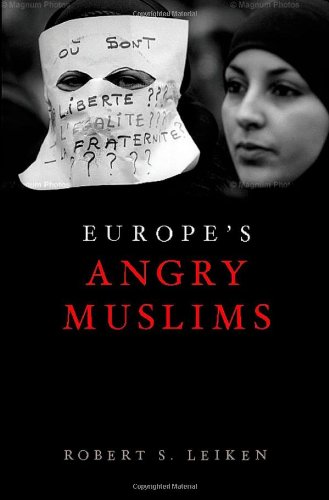
Europe's Angry Muslims: The Revolt of The Second Generation
Authors:
Robert Leiken
Publisher:
Oxford University Press, USA
Publication Date:
Not available
ISBN:
0195328973
Bombings in London, riots in Paris, terrorists in Germany, fury over mosques, veils and cartoons--such headlines underscore the tensions between Muslims... and their European hosts. Did too much immigration, or too little integration, produce Muslim second-generation anger? Is that rage imported or spawned inside Europe itself? What do the conflicts between Muslims and their European hosts portend for an America encountering its own angry Muslims? Europe's Angry Muslims traces the routes, expectations and destinies of immigrant parents and the plight of their children, transporting both the general reader and specialist from immigrants' ancestral villages to their strange new-fangled enclaves in Europe. It guides readers through Islamic nomenclature, chronicles the motive force of the Islamist narrative, offers them lively portraits of jihadists (a convict, a convert, and a community organizer) takes them inside radical mosques and into the minds of suicide bombers. The author interviews former radicals and security agents, examines court records and the sermons of radical imams and draws on a lifetime of personal experience with militant movements to present an account of the explosive fusion of Muslim immigration, Islamist grievance and second-generation alienation. Robert Leiken shines an unsentimental and yet compassionate light on Islam's growing presence in the West, combining in-depth reporting with cutting-edge and far-ranging scholarship in an engaging narrative that is both moving and mordant. Leiken's nuanced and authoritative analysis--historical, sociological, theological and anthropological--warns that "conflating rioters and Islamists, folk and fundamentalist Muslims, pietists and jihadis, immigrants and their children is the method of strategic incoherence--'in the night all cats are black.'"
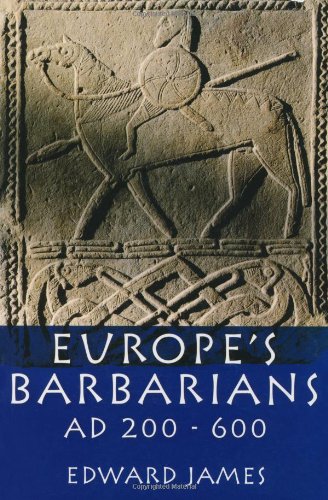
Europe's Barbarians AD 200-600
Authors:
Edward James
Publisher:
Longman
Publication Date:
Not available
ISBN:
0582772966
“Edward James, an Anglo-Saxon who lives amongst Celts, here offers a sure-footed, clear and sympathetic guide to the complex world of barbarian... Europe, where scholarly theories are fought over with almost as much passion as loot from the Empire." Bryan Ward-Perkins, Trinity College, Oxford "A lively and informative introduction to the problems of the collapse of the late Roman Empire and the creation of the medieval world." Hugh Elton, Trent University, Canada ‘Barbarians’ is the name the Romans gave to those who lived beyond the frontiers of the Roman Empire – the peoples they considered ‘uncivilised’. Most of the written sources concerning the barbarians come from the Romans too, and as such, need to be treated with caution. Only archaeology allows us to see beyond Roman prejudices – and yet these records are often as difficult to interpret as historical ones. Expertly guiding the reader through such historiographical complexities, Edward James traces the history of the barbarians from the height of Roman power through to AD 600. His book is the first to look at all Europe’s barbarians: the Picts and the Scots in the far north-west; the Franks, Goths and Slavic-speaking peoples; and relative newcomers such as the Huns and Alans from the Asiatic steppes. How did whole barbarian peoples migrate across Europe? What were their relations with the Romans? And why did they convert to Christianity? Drawing on the latest scholarly research, this book rejects easy generalisations to provide a clear, nuanced and comprehensive account of the barbarians and the tumultuous period they lived through.
 '





