production
/viewbook/list/all/?page=4269
/
/static/
None
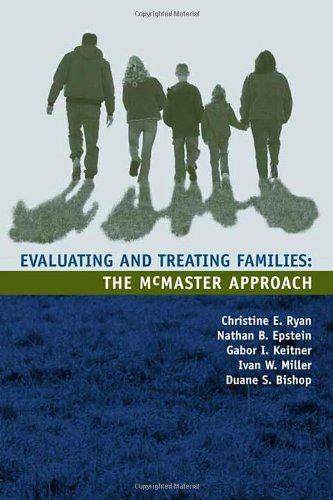
Evaluating and Treating Families: The McMaster Approach
Authors:
Christine E. Ryan
Publisher:
Routledge
Publication Date:
Not available
ISBN:
0415951585
This comprehensive text is organized into two parts, the first of which presents an overview of the history, development, and theory of the model, and... its specific applications to treatment, training, assessment, and research. Part II includes the instruments and assessment tools originally developed by the authors during their extensive clinical and research experience. Clinical case examples drawn from over four decades of family therapy work enrich the text, and an entire chapter is devoted to the authors' own research findings, current research plans, and new directions in their work.
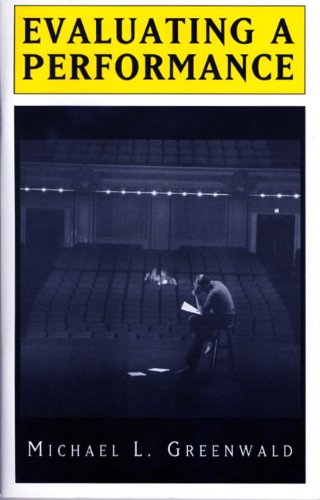
Evaluating a Performance
Authors:
Michael L. Greenwald
Publisher:
Longman
Publication Date:
Not available
ISBN:
0321095413
Perfect for the student assigned to review a local production, this supplement offers students a convenient place to record their evaluation. Useful... tips and suggestions of things to consider when evaluating a production are included.
Evaluating Children's Writing: A Handbook of Grading Choices for...
Authors:
Suzanne Bratcher
Publisher:
Routledge
Publication Date:
Not available
ISBN:
0805844546
Evaluating Children's Writing: A Handbook of Grading Choices for Classroom Teachers, Second Edition introduces and explains a wide range of specific... evaluation strategies used by classroom teachers to arrive at grades and gives explicit instructions for implementing them. Samples of student writing accompany the instructions to illustrate the techniques, and an appendix of additional student writing is provided to allow readers to practice particular evaluation strategies.More than just a catalog of grading options, however, this is a handbook with a point of view. Its purpose is to help teachers become intentional about their grading practices. Along with recipes for grading techniques, it offers a philosophy of evaluating student writing that encourages teachers to put grading into a communication context and to make choices among the many options available by determining the instructional purpose of the assignment and considering the advantages and disadvantages of particular grading strategies. Specific grading techniques are integrated with suggestions about the craft of evaluation--guidelines for instructional objectives, for student audience analysis, and for teacher self-analysis that help define communication contexts.New in the Second Edition:*a new chapter on state standards and assessments;*a reorganization of the chapter on approaches to grading;*additions to the chapter on management systems;*additions to the chapter on teaching yourself to grade;*additions to the annotated bibliography; and*updated references throughout the text.
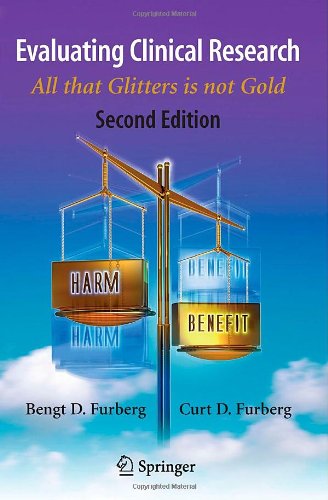
Evaluating Clinical Research: All that glitters is not gold
Authors:
Bengt D. Furberg
Publisher:
Springer
Publication Date:
Not available
ISBN:
0387728988
This book aims to make the readers better informed and more critical consumers of clinical research. It will help the reader recognize the strengths and... the weaknesses of scientific publications. In doing so, the reader will be able to distinguish patient-important and methodologically sound studies from those having limitations in design, conduct and interpretation. The text is basic and has no statistical formulas. Key take-home messages are listed at the end of each chapter. Cartoons make the text easier to read and generate a few laughs, and they underscore specific points, sometimes in a provocative way.

Evaluating College Writing Programs (Publications in Archaeology)
Authors:
Stephen P Witte PhD
Publisher:
Southern Illinois University Press
Publication Date:
Not available
ISBN:
0809311240
To establish the issues that must be considered by evaluators of college writing programs, Witte and Faigley review major evaluation studies conducted... at the University of Northern Iowa, the University of California San Diego, Miami University, and the University of Texas. For each study the authors devise a series of questions that probe every aspect of theory, pedagogy, and research: What do we presently know? What assumptions are we making and how do those assumptions limit our knowledge? Are those limitations necessary or desirable? What do we still need to know? Such questions demand much of program evaluators, who also must face additional difficult questions as they evaluate a writing program. Do the instructors conducting the writing classes share common assumptions that are reflected in their assignments, evaluative procedures, teaching procedures, and course content? How stable will the program prove to be over time? Will the writing program have a lasting effect? Do students leave the program with increased confidence in their ability to write? As Witte and Faigley urge program evaluators to pose these questions, they also bring to the problem a new comprehensive conceptual framework that both necessitates such queries and provides an opportunity to answer them.
Evaluating Couples: A Handbook for Practitioners (A Norton...
Authors:
Mark A. Karpel
Publisher:
W. W. Norton & Company
Publication Date:
Not available
ISBN:
0393701808
"The reader will find this book useful whether or not one agrees with Karpel's therapeutic style or clinical assumptions….[I]t succinctly reviews a... lot of the basics about couples and about couple therapy, and suggests an attitude toward work with couples that we would all do well to incorporate into our own ongoing therapy. It will definitely be on my recommended list of resources and I am sure to quote liberally from its author."—Eleanor Macklin, Journal of Family PsychotherapyEmphasizing "what to do and how to do it," this book is a detailed guide to evaluating couples, providing specific recommendations on every aspect of the evaluation, from the initial telephone call to the therapist's summary delivered at its conclusion. Introductory chapters balance this pragmatic focus by examining "organizing forces" of a relationship, including attachment, gender and sexuality, and its "unconscious matrix."
Evaluating Development Aid
Authors:
Basil Edward Cracknell
Publisher:
SAGE Publications Pvt. Ltd
Publication Date:
Not available
ISBN:
0761994033
This book is a 'must-have' for all development professionals. Basil Cracknell begins by reviewing the state-of-the-art of development aid evaluations,... including the history, the basic concepts, the methodological problems associated with the choice of techniques, the differences between monitoring and evaluation, the role of evaluation in organizational learning, how to ensure that evaluation findings lead to action, the need for evaluation reports to be user-friendly, and the role of automated data systems. He then considers the key issues and problems in aid evaluation, such as the trend towards impact evaluation, the importance of sustainability, stakeholder analysis, and special problems associated with sectors such as research and development, poverty alleviation and structural adjustment. He explores how aid evaluators can reconcile the requirements of accountability and objectivity with the growing realization that some kind of participatory approach is essential if one is to really understand the impact of people-centred projects on the intended beneficiaries.
EVALUATING EDUCATIONAL INTERVENTIONS
Authors:
Not Available
Publisher:
Not available
Publication Date:
Not available
ISBN:
Not available
Evaluating Educational Interventions: Single-Case Design for...
Authors:
T. Chris Riley-Tillman PhD
Publisher:
The Guilford Press
Publication Date:
Not available
ISBN:
1606231065
This user-friendly, practical book is the first guide to single-case design written specifically for practitioners using response-to-intervention (RTI)... models in schools. It provides essential skills for analyzing and presenting data to support valid educational decision making. Step-by-step explanations and many illustrative examples render complex concepts accessible and applicable to day-to-day work with elementary and secondary students. In a large-size format with lay-flat binding for ease of photocopying, the book includes reproducible graphs and forms. Two hands-on appendices offer clear instructions for summarizing and analyzing data using computer spreadsheets.This book is in The Guilford Practical Intervention in the Schools Series.
Evaluating e-Learning: Guiding Research and Practice (Connecting...
Authors:
Rob Phillips
Publisher:
Routledge
Publication Date:
Not available
ISBN:
0415881943
How can novice e-learning researchers and postgraduate learners develop rigorous plans to study the effectiveness of technology-enhanced learning... environments? How can practitioners gather and portray evidence of the impact of e-learning? How can the average educator who teaches online, without experience in evaluating emerging technologies, build on what is successful and modify what is not? By unpacking the e-learning lifecycle and focusing on learning, not technology, Evaluating e-Learning attempts to resolve some of the complexity inherent in evaluating the effectiveness of e-learning. The book presents practical advice in the form of an evaluation framework and a scaffolded approach to an e-learning research study, using divide-and-conquer techniques to reduce complexity in both design and delivery. It adapts and builds on familiar research methodology to offer a robust and accessible approach that can ensure effective evaluation of a wide range of innovative initiatives, including those covered in other books in the Connecting with e-Learning series. Readers will find this jargon-free guide is a must-have resource that provides the proper tools for evaluating e-learning practices with ease.
Evaluating Evidence Custom
Authors:
Not Available
Publisher:
Not available
Publication Date:
Not available
ISBN:
0558688926
Evaluating Health Promotion Programs
Authors:
Thomas W. Valente
Publisher:
Oxford University Press, USA
Publication Date:
Not available
ISBN:
0195141768
This is a comprehensive guide to the frameworks, theories, and methods used to evaluate health promotion programs. The book builds on the author's... experience in evaluating health communication projects in the US and developing countries and in teaching evaluation to graduate-level students in public health. It will be useful both to students and to researchers and practitioners involved in all types of evaluation activities. The chapters are divided into three sections. Part I covers health promotion frameworks and theories, formative research, and process evaluation methods. Part II deals with study designs, the techniques to determine sample selection and size, writing questionnaires, constructing scales, and managing data. Part III uses data from a national campaign to illustrate methods for impact evaluation including basic and advanced statistical analysis. This text provides the tools needed to understand how and why evaluations are conducted, and it will serve as a reference for evaluators. It covers every aspect of the research and evaluation activities needed to assess a health promotion program.
Evaluating Human Resources Programs: A 6-Phase Approach for...
Authors:
Jack E. Edwards
Publisher:
Pfeiffer
Publication Date:
Not available
ISBN:
0787994871
Evaluating Human Resources Programs is a groundbreaking book that offers readers a systematic method for enhancing the value and impact of HR and... supporting its emerging role as a strategic organizational leader. It provides a practical framework for adjusting and realigning strategies across all types of HR programs. The authors outline a proven six-phase process that will maximize the likelihood of a successful HR program evaluation, including real-world techniques, strategies, and examples to illustrate their recommended steps and actions.
Evaluating Human Services: A Practical Approach for the Human...
Authors:
Reginald O. York
Publisher:
Pearson
Publication Date:
Not available
ISBN:
0205503462
Evaluating Human Services: A Practical Approach for the Human Service Professional, enables students to learn the skills of evaluation through... practical application and analysis - from the simple to the complex. It is designed to equip the front-line human service practitioner with the ability to evaluate services in a practical step-by-step format. For, it covers both quantitative and qualitative research methods, includes all the essential concepts enumerated in social work accreditation standards, and addresses cultural competence in regard to research. In addition, while the process of evaluation research remains the book's focus, all essential concepts of research are included - and remain centered on competencies, rather than broad-based abstractions. Therefore, the model of this text is both developmental and experiential. Not only does it provide a clear progression from simple to more complex concepts and tasks, it also calls upon the learner to apply their research.
Evaluating Information: A Guide for Users of Social Science Research
Authors:
Jeffrey Katzer
Publisher:
McGraw-Hill Humanities/Social Sciences/Languages
Publication Date:
Not available
ISBN:
0070343098
This book introduces students to social science research from the consumer’s point of view. The authors believe that while social science may not... require that every student of the discipline will have to conduct research studies, it is still essential for students to successfully read, understand and evaluate the research published in their field. To that end, the authors of this text have streamlined their narrative, omitting the burden of technical jargon, and focusing on the broad elements common to all kinds of social science research, such as experimental, survey, and case study. Questions to Ask, found at the end of each chapter, highlight the specific criteria to consider when evaluating research and offer a clear and accessible presentation of the general principles in social science research.
 '





