production
/viewbook/list/all/?page=4284
/
/static/
None

Everyday Negotiation: Navigating the Hidden Agendas in Bargaining
Authors:
Deborah M. Kolb Ph.D.
Publisher:
Jossey-Bass
Publication Date:
Not available
ISBN:
0787965014
Everyday Negotiation shows how to recognize the shadow negotiation-- where the unspoken attitudes, hidden assumptions, and conflicting agendas that... drive the bargaining process play out-- and how to put that knowledge to work. Originally titled The Shadow Negotiation and named by Harvard Business Review as one the Ten Best Books of 2000, this best-selling book revealed how women could master the hidden agendas that determine bargaining success. Now, the new edition, Everyday Negotiation, broadens the scope and offers the same illuminating advice for both men and women. Everyday Negotiation lays out simple steps to* Overcome acts of self-sabotage* Increase your bargaining power* Establish the terms of your advocacy and encourage a collaborative discussion* Encourage a collaborative discussion* Think about the negotiation process in a whole new way
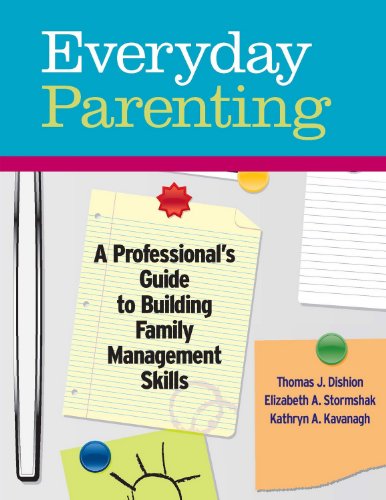
Everyday Parenting: A Professional's Guide to Building Family...
Authors:
Dr. Thomas J. Dishion
Publisher:
Research Press
Publication Date:
Not available
ISBN:
0878226583
Continuing the tradition of Gerald Patterson s classic best-seller Living with Children, the Everyday Parenting program can be used for guiding... individual family therapy, leading parent groups, and training counselors to work collaboratively with parents. This session-based approach is divided into three areas of skills based on the concept of mindful parenting: supporting positive behavior, setting healthy limits, and building family relationships by helping parents change interaction patterns that occur daily in families and relationships.The Everyday Parenting curriculum is an adaption of the social learning approach to parent training and family therapy and is based on an intervention model developed at the Oregon Social Learning Center. The curriculum emphasizes ways to support changes in families social interaction patterns to help reduce problem behavior in children and adolescents.An accompanying CD contains printable forms and handouts in PDF format (Adobe Acrobat Reader required to view and print).

Everyday People: Poems
Authors:
Albert Goldbarth
Publisher:
Graywolf Press
Publication Date:
Not available
ISBN:
1555976034
The not-at-all-everyday new poetry collection by Albert Goldbarth, twice winner of the National Book Critics Circle Award I brought a... book of many words to an emptiness in my heart, and I shook them out in there, to fill it. In my time I wrote this very thing. In your time you read it. —from “What We Were Like” Virtuoso poet Albert Goldbarth returns with a new collection that describes the wonders of everyday people—overprotective parents, online gamblers, newlyweds, Hercules, and Jesus. In Goldbarth’s poetry—expansive, wild, and hilarious—he argues that our ordinary failures, heroics, joy, and grief are worth giving voice to, giving thanks for. Everyday People is an extraordinary new book by a poet who “in thirty-five years of writing has amassed a body of work as substantial and intelligent as that of anyone in his generation” (William Doreski, The Harvard Review).
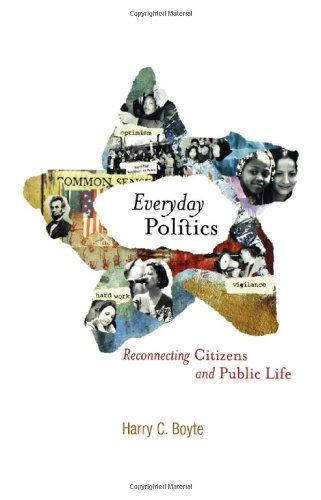
Everyday Politics: Reconnecting Citizens and Public Life
Authors:
Harry C. Boyte
Publisher:
University of Pennsylvania Press
Publication Date:
Not available
ISBN:
0812219317
Increasingly a spectator sport, electoral politics have become bitterly polarized by professional consultants and lobbyists and have been boiled down to... the distributive mantra of "who gets what." In Everyday Politics, Harry Boyte transcends partisan politics to offer an alternative. He demonstrates how community-rooted activities reconnect citizens to engaged, responsible public life, and not just on election day but throughout the year. Boyte demonstrates that this type of activism has a rich history and strong philosophical foundation. It rests on the stubborn faith that the talents and insights of ordinary citizens—from nursery school to nursing home—are crucial elements in public life.Drawing on concrete examples of successful public work projects accomplished by diverse groups of people across the nation, Boyte demonstrates how citizens can master essential political skills, such as understanding issues in public terms, mapping complex issues of institutional power to create alliances, raising funds, communicating, and negotiating across lines of difference. He describes how these skills can be used to address the larger challenges of our time, thereby advancing a renewed vision of democratic society and freedom in the twenty-first century.

Everyday Practice of Science: Where Intuition and Passion Meet...
Authors:
Frederick Grinnell
Publisher:
Oxford University Press, USA
Publication Date:
Not available
ISBN:
0195064577
Scientific facts can be so complicated that only specialists in a field fully appreciate the details, but the nature of everyday practice that gives... rise to these facts should be understandable by everyone interested in science. This book describes how scientists bring their own interests and passions to their work, illustrates the dynamics between researchers and the research community, and emphasizes a contextual understanding of science in place of the linear model found in textbooks with its singular focus on "scientific method."Everyday Practice of Science also introduces readers to issues about science and society. Practice requires value judgments: What should be done? Who should do it? Who should pay for it? How much? Balancing scientific opportunities with societal needs depends on appreciating both the promises and the ambiguities of science. Understanding practice informs discussions about how to manage research integrity, conflict of interest, and the challenge of modern genetics to human research ethics. Society cannot have the benefits of research without the risks. The last chapter contrasts the practices of science and religion as reflective of two different types of faith and describes a holistic framework within which they dynamically interact.

Everyday Practice of Science: Where Intuition and Passion Meet...
Authors:
Frederick Grinnell
Publisher:
Oxford University Press, USA
Publication Date:
Not available
ISBN:
0199794650
Scientific facts can be so complicated that only specialists in a field fully appreciate the details, but the nature of everyday practice that gives... rise to these facts should be understandable by everyone interested in science. This book describes how scientists bring their own interests and passions to their work, illustrates the dynamics between researchers and the research community, and emphasizes a contextual understanding of science in place of the linear model found in textbooks with its singular focus on "scientific method."Everyday Practice of Science also introduces readers to issues about science and society. Practice requires value judgments: What should be done? Who should do it? Who should pay for it? How much? Balancing scientific opportunities with societal needs depends on appreciating both the promises and the ambiguities of science. Understanding practice informs discussions about how to manage research integrity, conflict of interest, and the challenge of modern genetics to human research ethics. Society cannot have the benefits of research without the risks. The last chapter contrasts the practices of science and religion as reflective of two different types of faith and describes a holistic framework within which they dynamically interact.

Everyday Reasoning, Custom Edition for Rowan University (PHIL 09109)
Authors:
Patrick Hurley
Publisher:
Cengage Learning
Publication Date:
Not available
ISBN:
1133887368

Everyday Revolutionaries: Gender, Violence, and Disillusionment in...
Authors:
Prof. Irina Carlota Silber
Publisher:
Rutgers University Press
Publication Date:
Not available
ISBN:
0813549353
In Revolutionaries on the Postwar Highway: Disillusionment in El Salvador, the author chronicles the political violence, collective trauma, and... continued injustice for the people of El Salvador as they transition to peace and democracy following the twelve-year civil war between the Farabundo Marti National Liberation Front and the Salvadoran government. The book is centered largely upon twenty months of fieldwork spanning from 1993-2007 in the former war zone of Chalatenango. Following the war, this area was the focus of national and international reconstruction projects. The book is mainly structured around two central moments, the immediate postwar period of reconstruction (1993-1998), and the more recent period of emigration to the United States (2000-2007). Giving a long term view of what happens in the aftermath of a protracted war, Silber traces the lives of the rank and file members of this historic struggle for justice and reconstruction, following community members along their journey from revolutionary activists to postwar development recipients and ambivalent grassroots actors, to in many cases now undocumented migrants. Silber pays particular attention to the gendered dimensions of the clash between a revolutionary social project and the demands of postwar reconstruction and neoliberalism. She argues that the dynamics of postwar rebuilding served to remarginalize members of destroyed communities. This book will contribute to the recent wave of anthropological scholarship on political violence, providing an important case study on transitional justice and reconciliation.
Everyday Rhythms
Authors:
Not Available
Publisher:
Not available
Publication Date:
Not available
ISBN:
0767318528
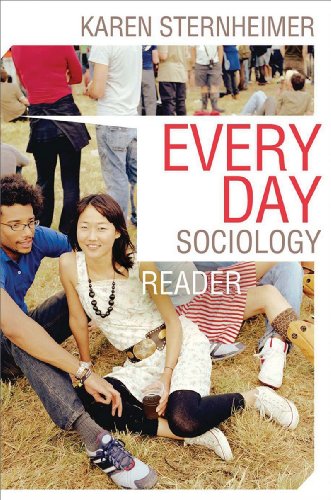
Everyday Sociology Reader
Authors:
Not Available
Publisher:
W. W. Norton & Company
Publication Date:
Not available
ISBN:
0393934292
A lively mix of traditional readings, blog posts, and activities to help students connect sociology to their own lives. Everyday Sociology Reader... combines classic and contemporary readings by sociologists and seeks to meet students where they are, offering observations on popular culture, family life, news events, and other aspects of everyday life. Posts from the Everyday Sociology Blog and traditional readings have been chosen for their relevance and readability; all are written in an engaging manner in order to engage students new to sociology and sociological thinking. Each section of the book features three blog posts and two traditional readings, as well as discussion questions, activities, research ideas, and essay suggestions so that students become not just active in the learning process, but creators of sociological thinking as well.
EVERYDAY SOCIOLOGY TEXT & READER
Authors:
Not Available
Publisher:
Not available
Publication Date:
Not available
ISBN:
Not available

Everyday Stalinism: Ordinary Life in Extraordinary Times: Soviet...
Authors:
Sheila Fitzpatrick
Publisher:
Oxford University Press, USA
Publication Date:
Not available
ISBN:
0195050010
Here is a pioneering account of everyday life under Stalin, written by a leading authority on modern Russian history. Focusing on the urban population,... Fitzpatrick depicts a world of privation, overcrowding, endless lines, and broken homes, in which the regime's promises of future socialist abundance rang hollowly. We read of a government bureaucracy that often turned life into a nightmare, and of how ordinary citizens tried to circumvent it. We also read of the secret police, whose constant surveillance was endemic at this time, and the waves of terror, like the Great Purges of 1937, which periodically cast society into turmoil.
Everyday Statistical Reasoning: Possibilities and Pitfalls (with...
Authors:
Timothy J. Lawson
Publisher:
Wadsworth Publishing
Publication Date:
Not available
ISBN:
0534590942
Lawson uses scientific research and interesting examples to explain to students how statistical concepts can be applied to everyday decisions and... judgements. Practical, user-friendly discussion of topics such as probability, correlation, and covariance help students make the connections between statistical concepts and the work they do in their psychology courses and labs.
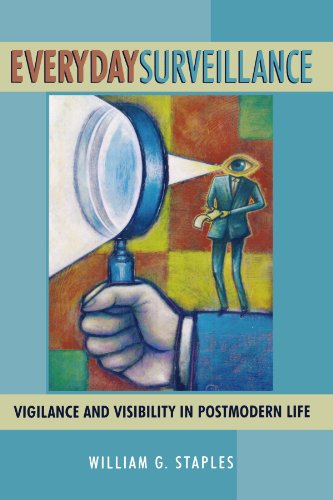
Everyday Surveillance: Vigilance and Visibility in Postmodern Life
Authors:
William G. Staples
Publisher:
Rowman & Littlefield Publishers
Publication Date:
Not available
ISBN:
0742500780
This book highlights 'mundane' practices that increasingly influence our schools, homes and communities; cameras, Opagers', electronic monitoring... instruments, the digital Opaper trailO of OcashlessO transactions, random drug testing, and Ointegrity testsO. The author journeys back and forth between the justice system and the everyday life of the postmodern to illustrate how the lines between these two spheres of social life are increasingly blurred by the use of new surveillance technologies. Taken together, these surveillance rituals constitute the building blocks of a rapidly emerging society of discipline, one increasingly stripped of personal privacy, individual trust, and a viable public life that supports and maintains democratic values and practices.
Everyday Talk: Building and Reflecting Identities
Authors:
Karen Tracy Phd
Publisher:
The Guilford Press
Publication Date:
Not available
ISBN:
1572307897
Learning how to listen to and analyze talk is fundamental to understanding human communication. This engaging text examines how the "little stuff" of... everyday conversation--what we say and how we say it, the terms we use to refer to others, the content and style of stories we tell, and myriad other factors--expresses both who we are and who we want to be. The book draws on discourse analytic research and applies it to a wide range of real-life situations and examples, including private conversations among friends and family as well as interchanges in the classroom, workplace, and public settings. Interweaving rhetorical and cultural perspectives, the author gives particular attention to the ways talk reflects communicators' cultural and social background, nationality, ethnicity, social class, and gender, as well as the dynamics between particular conversational partners. Illuminated is the complex role that talking plays in building relationships and creating--and hopefully, resolving--relational problems.
 '





