production
/viewbook/list/all/?page=4419
/
/static/
None

Facing East from Indian Country: A Native History of Early America
Authors:
Daniel K. Richter
Publisher:
Harvard University Press
Publication Date:
Not available
ISBN:
0674011171
In the beginning, North America was Indian country. But only in the beginning. After the opening act of the great national drama, Native Americans... yielded to the westward rush of European settlers. Or so the story usually goes. Yet, for three centuries after Columbus, Native people controlled most of eastern North America and profoundly shaped its destiny. In Facing East from Indian Country, Daniel K. Richter keeps Native people center-stage throughout the story of the origins of the United States. Viewed from Indian country, the sixteenth century was an era in which Native people discovered Europeans and struggled to make sense of a new world. Well into the seventeenth century, the most profound challenges to Indian life came less from the arrival of a relative handful of European colonists than from the biological, economic, and environmental forces the newcomers unleashed. Drawing upon their own traditions, Indian communities reinvented themselves and carved out a place in a world dominated by transatlantic European empires. In 1776, however, when some of Britain's colonists rebelled against that imperial world, they overturned the system that had made Euro-American and Native coexistence possible. Eastern North America only ceased to be an Indian country because the revolutionaries denied the continent's first peoples a place in the nation they were creating. In rediscovering early America as Indian country, Richter employs the historian's craft to challenge cherished assumptions about times and places we thought we knew well, revealing Native American experiences at the core of the nation's birth and identity.

Facing Ethical Issues: Dimensions of Character, Choices &...
Authors:
Patrick T. McCormick
Publisher:
Paulist Press
Publication Date:
Not available
ISBN:
0809140772
The authors provide here a consistent and systematic method for making connections between those three elements of moral experience--character, choices,... and community--and concrete ethical issues. They describe the method that they will use to "face the issues," and then address complex and controversial issues related to: the economy, war and violence, medicine, sexuality, and the environment. Facing Ethical Issues is useful across many denominations. It is a companion volume to the authors' Character, Choices and Community that stands alone very well and is written for non-experts, especially undergraduate and graduate students.

Facing Ethnic Conflicts: Toward a New Realism
Authors:
Not Available
Publisher:
Rowman & Littlefield Publishers
Publication Date:
Not available
ISBN:
0742535851
Ethnic conflict is the major form of mass political violence in the world today, and it has been since World War II. Dramatic acts of terrorism and... calculated responses to them may distract the attention of policymakers and the public, but ethnic and nationalist conflict continues to pose the greatest challenge to peace and security across the globe. Causes of such conflict and ideas about how to address it are hotly debated in the literature that has emerged over the past fifteen years. This volume offers a unique overview of research and policy approaches to ethnic conflicts. It is the first book to bring together experienced policymakers and key scholars from all disciplines. They debate how to best understand the rise and escalation of ethnic conflict, assess different strategies for peacemaking, mediation, and reconciliation, and evaluate the prospects for conflict management through institutional design. In contrast with a more enthusiastic assessment of the willingness and capacity to successfully intervene in ethnic conflict, this volume documents the new realism that has emerged over the past decade. It recognizes the complex and protracted nature of such conflicts and demands a multifaceted, case-by-case approach sustained by long-term political engagement. Published in co-operation with the Center for Development Research, University of Bonn.

Facing Fascism: New York and the Spanish Civil War
Authors:
Not Available
Publisher:
NYU Press
Publication Date:
Not available
ISBN:
0814716814
When the Spanish Civil War began in 1936, loosely affiliated groups of writers, artists, and other politically aware individuals emerged in New York... City to give voice to anti-fascist sentiment by supporting the Spanish Republic. Facing Fascism: New York and the Spanish Civil War examines the participation of New Yorkers in the political struggles and armed conflict that many historians consider a critical precursor to World War II. Nearly half of the 2,800 Americans who volunteered to fight in the Abraham Lincoln Brigade against Generalissimo Francisco Franco came from the New York area. Fundraising, propaganda, and deployment for anti-fascists everywhere in America were orchestrated through New York City. At the same time, powerful voices in New York expressed sympathy for the pro-fascist side.The fighting in Spain brought to the surface the complex ideological and ethnic identities always present in New York politics. Facing Fascism examines the full range of this experience, including that of the New Yorkers who supported Franco. It addresses the role of doctors, nurses, and social workers who left New York hospitals to provide assistance to the defenders of the Spanish Republic, as well as those who remained active on the home front. The book also describes the involvement of students in the war, the key role of writers and the media, and the contributions made by members of New York's art and theater communities.Facing Fascism also serves as the catalog to an exhibition of the same name appearing at the Museum of the City of New York in the spring of 2007. The book and exhibition both make use of the Abraham Lincoln Brigade Archives' extensive holdings, which range from historical documents to video recordings of oral histories. Numerous other libraries, archives, museums, and private collectors have also been consulted to make this the most complete exhibition of its kind ever mounted. The exhibition will also appear in Spain.
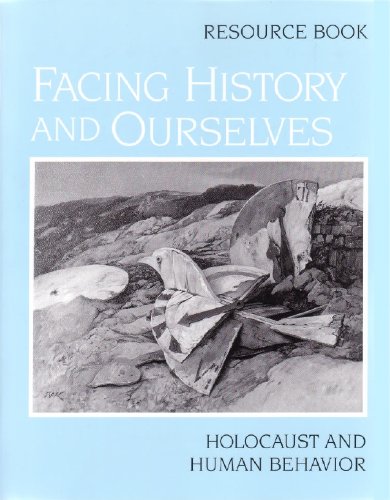
Facing History and Ourselves: Holocaust and Human Behavior
Authors:
Margot Stern Strom
Publisher:
Facing History and Ourselves National Foundation
Publication Date:
Not available
ISBN:
0961584149
This resource book is Facing History and Ourselves' core publication encompassing our scope and sequence methodology. Based on the latest scholarship, ... Facing History and Ourselves: Holocaust and Human Behavior provides an interdisciplinary approach to citizenship education. Students move from thought to judgment to participation as they confront the moral questions inherent in a study of violence, racism, antisemitism and bigotry. The readings and activities explore the consequences of discrimination, racism, and antisemitism by holding up "the tarnished mirror of history" to one of the most violent times in world history—the 1930s and 1940s. As students read and reflect, they investigate the forces that undermined democracy in Germany, betrayed a generation of young people, and ultimately led to the Holocaust. In doing so, students discover that many of those forces threaten our own society today. The book then helps students discover how their decisions can make a positive difference in their community, nation and the world.

Facing Messy Stuff in the Church: Case Studies for Pastors and...
Authors:
Kenneth L. Swetland
Publisher:
Kregel Academic & Professional
Publication Date:
Not available
ISBN:
0825436966
A collection of fourteen case studies that give church leaders practical and realistic preparation to handle tough issues like sexual harassment,... pornography, divorce, and the effects of abortion. Includes discussion questions and a bibliography of additional resources.

Facing Mount Kenya
Authors:
Jomo Kenyatta
Publisher:
Vintage
Publication Date:
Not available
ISBN:
0394702107
Besides its continuing value for an understanding of the problems of Kenya, Facing Mount Kenya has an enduring place in the literature of social... anthropology. As Professor Malinowski wrote in his introduction, it 'is a really competent and instructive contribution to African ethnography by a scholar of pure African parentage...As a first-hand account of a representative African culture, as an invaluable document in the principles underlying culture-contact and change; last, but not least, as a personal statement of the new outlook of a progressive African, this book will rank as a pioneering achievement of outstanding merit'.

Facing Racial Revolution: Eyewitness Accounts of the Haitian...
Authors:
Jeremy D. Popkin
Publisher:
University Of Chicago Press
Publication Date:
Not available
ISBN:
0226675831
The only truly successful slave uprising in the Atlantic world, the Haitian Revolution gave birth to the first independent black republic of the modern... era. Inspired by the revolution that had recently roiled their French rulers, black slaves and people of mixed race alike rose up against their oppressors in a bloody insurrection that led to the burning of the colony’s largest city, a bitter struggle against Napoleon’s troops, and in 1804, the founding of a free nation.Numerous firsthand narratives of these events survived, but their invaluable insights into the period have long languished in obscurity—until now. In Facing Racial Revolution, Jeremy D. Popkin unearths these documents and presents excerpts from more than a dozen accounts written by white colonists trying to come to grips with a world that had suddenly disintegrated. These dramatic writings give us our most direct portrayal of the actions of the revolutionaries, vividly depicting encounters with the uprising’s leaders—Toussaint Louverture, Boukman, and Jean-Jacques Dessalines—as well as putting faces on many of the anonymous participants in this epochal moment. Popkin’s expert commentary on each selection provides the necessary background about the authors and the incidents they describe, while also addressing the complex question of the witnesses’ reliability and urging the reader to consider the implications of the narrators’ perspectives.Along with the American and French revolutions, the birth of Haiti helped shape the modern world. The powerful, moving, and sometimes troubling testimonies collected in Facing Racial Revolution significantly expand our understanding of this momentous event.

Facing Terror: The Government's Response to Contemporary Extremists...
Authors:
Jim Rodgers
Publisher:
University Press Of America
Publication Date:
Not available
ISBN:
0761822151
Facing Terror is an interdisciplinary effort to examine the sociopolitical roots and consequences of radical right extremism and domestic terrorism in... the United States. This work is an analytical treatment of contemporary domestic terrorism and the groups and leaders associated with such extremism. Presented and organized in textbook form, complete with instructional aids, authors Jim Rodgers and Tim Kullman incorporate the social science model of system's based, policy analysis in the study of American policy responses to domestic terrorism from 1970 to the present. Rodgers and Kullman present a tremendous amount of historical and contemporary research on domestic extremism in responses presented in the text. They provide the student with a complete but concise examination of domestic terrorism with an eye toward the future, through the presentation of concrete options and suggestions for change in how domestic terrorism issues are dealt with.
Facing the Center: Toward an Identity Politics of One-to-One Mentoring
Authors:
Harry C. Denny
Publisher:
Utah State University Press
Publication Date:
Not available
ISBN:
0874217679
In the diversity of their clients as well as their professional and student staff, writing centers present a complicated set of relationships that... inevitably affect the instruction they offer. In Facing the Center, Harry Denny unpacks the identity matrices that enrich teachable moments, and he explores the pedagogical dynamics and implications of identity within the writing center. The face of the writing center, be it mainstream or marginal, majority or miority, orthodox or subversive, always has implications for teaching and learning. Facing the Center will extend current research in writing center theory to bring it in touch with theories now common in cultural studies curricula. Denny takes up issues of power, agency, language, and meaning, and pushes his readers to ask how they themselves, or the centers in which they work, might be perpetuating cultures that undermine inclusive, progressive education.

Facing the Lion, Being the Lion: Finding Inner Courage Where It Lives
Authors:
Mark Nepo
Publisher:
Conari Press
Publication Date:
Not available
ISBN:
1573243159
A work from the heart that calls us to look within and grow. Facing the Lion, Being the Lion is work from the heart that helps us find our own courage... and experience how connection to our own core connects us to all of humankind, as well as to nature and spirit itself. Nepo invites us to encounter the stories of ordinary people, political activists, artists, and spiritual teachers from all traditions--people who are summoning the best of who they are in all kinds of moments, great and small. This book empowers us to take those moments into our own hearts, to be inspired by them, to let them fill our lungs and circle our hearts, empowered to stand more firmly by our own core and a little taller in the world.
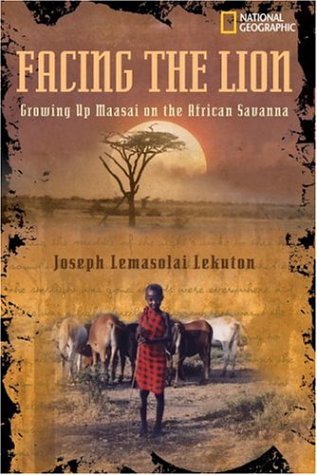
Facing the Lion: Growing Up Maasai on the African Savanna (National...
Authors:
Joseph Lemasolai Lekuton
Publisher:
National Geographic Children's Books
Publication Date:
Not available
ISBN:
0792272978
Joseph Lemasolai Lekuton gives American kids a firsthand look at growing up in Kenya as a member of a tribe of nomads whose livelihood centers on the... raising and grazing of cattle. Readers share Lekuton's first encounter with a lion, the epitome of bravery in the warrior tradition. They follow his mischievous antics as a young Maasai cattle herder, coming-of-age initiation, boarding school escapades, soccer success, and journey to America for college. Lekuton's riveting text combines exotic details of nomadic life with the universal experience and emotions of a growing boy.

Facing the Music (Front Porch Paperbacks)
Authors:
Larry Brown
Publisher:
Algonquin Books
Publication Date:
Not available
ISBN:
1565121252
This is the work of a writer unafraid to gaze directly at characters challenged by crisis and pathology. But for readers who are willing to look,... unblinkingly, along with the writer, there are unusual rewards.

FACING THE MUSLIM CHALLENGE
Authors:
Not Available
Publisher:
Not available
Publication Date:
Not available
ISBN:
Not available

Facing the Other: Ethical Disruption and the American Mind...
Authors:
Linda Bolton
Publisher:
Louisiana State University Press
Publication Date:
Not available
ISBN:
0807136468
Linda Bolton uses six extraordinarily resonant moments in eighteenth- and nineteenth-century American history to highlight the ethical challenge that... the treatment of Native and African persons presented to the new republic's ideal of freedom. Most daringly, she examines the efficacy of the Declaration of Independence as a revolutionary text and explores the provocative question "What happens when freedom eclipses justice, when freedom breeds injustice?" Guided by the intellectual influence of philosopher Emmanuel Levinas, Bolton asserts that the traditional subject-centered--or "I"--concept of freedom is dependent on the transcendent presence of the "Other," and thus freedom becomes a privilege subordinate to justice. There can be no authentic freedom as long as others, whether Native American or African, are reduced from full human beings to concepts and thus properties of control or power. An eloquent and thoughtful rereading of the U.S. touchstones of democracy, this book argues forcefully for an ethical understanding of American literary history.
 '





