production
/viewbook/list/all/?page=4423
/
/static/
None
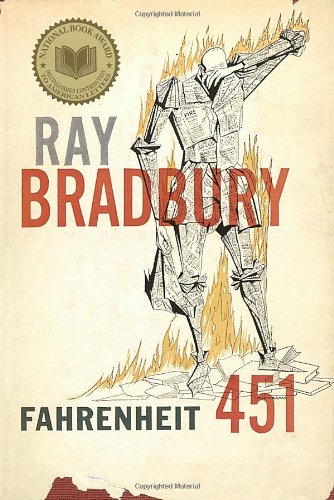
Fahrenheit 451
Authors:
Ray Bradbury
Publisher:
Ballantine Books
Publication Date:
Not available
ISBN:
0345410017
Internationally acclaimed with more than 5 million copies in print, Fahrenheit 451 is Ray Bradbury's classic novel of censorship and defiance, as... resonant today as it was when it was first published nearly 50 years ago.Guy Montag was a fireman whose job it was to start fires... The system was simple. Everyone understood it. Books were for burning ... along with the houses in which they were hidden. Guy Montag enjoyed his job. He had been a fireman for ten years, and he had never questioned the pleasure of the midnight runs nor the joy of watching pages consumed by flames... never questioned anything until he met a seventeen-year-old girl who told him of a past when people were not afraid. Then he met a professor who told him of a future in which people could think... and Guy Montag suddenly realized what he had to do!

FAHRENHEIT 451
Authors:
Not Available
Publisher:
Not available
Publication Date:
Not available
ISBN:
Not available
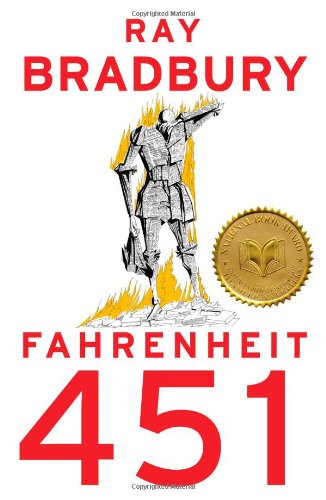
Fahrenheit 451: A Novel
Authors:
Ray Bradbury
Publisher:
Simon & Schuster
Publication Date:
Not available
ISBN:
1451673310
Ray Bradbury’s internationally acclaimed novel Fahrenheit 451 is a masterwork of twentieth-century literature set in a bleak, dystopian future. Guy... Montag is a fireman. In his world, where television rules and literature is on the brink of extinction, firemen start fires rather than put them out. His job is to destroy the most illegal of commodities, the printed book, along with the houses in which they are hidden. Montag never questions the destruction and ruin his actions produce, returning each day to his bland life and wife, Mildred, who spends all day with her television “family.” But then he meets an eccentric young neighbor, Clarisse, who introduces him to a past where people didn’t live in fear and to a present where one sees the world through the ideas in books instead of the mindless chatter of television. When Mildred attempts suicide and Clarisse suddenly disappears, Montag begins to question everything he has ever known. He starts hiding books in his home, and when his pilfering is discovered, the fireman has to run for his life.
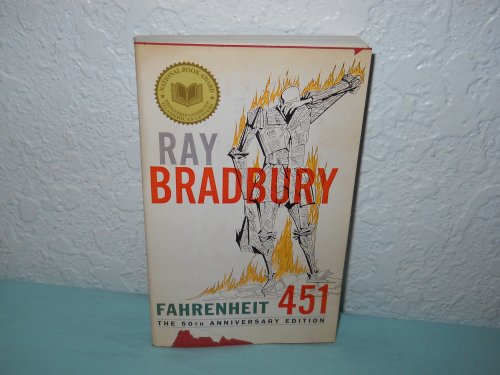
Fahrenheit 451, the 50th Anniversary Edition
Authors:
Ray Bradbury
Publisher:
Ballantine Books
Publication Date:
Not available
ISBN:
0345342968

Failed Illusions: Moscow, Washington, Budapest, and the 1956...
Authors:
Charles Gati
Publisher:
Stanford University Press
Publication Date:
Not available
ISBN:
0804759642
Winner of the 2007 Marshall Shulman PrizeThe 1956 Hungarian revolution, and its suppression by the U.S.S.R., was a key event in the cold war,... demonstrating deep dissatisfaction with both the communist system and old-fashioned Soviet imperialism. But now, fifty years later, the simplicity of this David and Goliath story should be revisited, according to Charles Gati's new history of the revolt.Denying neither Hungarian heroism nor Soviet brutality, Failed Illusions nevertheless modifies our picture of what happened. Imre Nagy, a reform communist who headed the revolutionary government and turned into a genuine patriot, could not rise to the occasion by steering a realistic course between his people's demands and Soviet geopolitical and ideological interests. The United States was all talk, no action, while Radio Free Europe simultaneously backed the insurgents' unrealizable demands and opposed Nagy. In the end, the Soviet Union followed its imperial impulse instead of seeking a political solution to the crisis in the spirit of de-Stalinization.Failed Illusions is based on extensive archival research, including the CIA's operational files, and hundreds of interviews with participants in Budapest, Moscow, and Washington. Personal observations by the author, a young reporter in Budapest in 1956, bring the tragic story vividly to life.
Failed Illusions: Moscow, Washington, Budapest, and the 1956...
Authors:
Charles Gati
Publisher:
Stanford University Press
Publication Date:
Not available
ISBN:
0804756066
Winner of the 2007 Marshall Shulman PrizeThe 1956 Hungarian revolution, and its suppression by the U.S.S.R., was a key event in the cold war,... demonstrating deep dissatisfaction with both the communist system and old-fashioned Soviet imperialism. But now, fifty years later, the simplicity of this David and Goliath story should be revisited, according to Charles Gati's new history of the revolt.Denying neither Hungarian heroism nor Soviet brutality, Failed Illusions nevertheless modifies our picture of what happened. Imre Nagy, a reform communist who headed the revolutionary government and turned into a genuine patriot, could not rise to the occasion by steering a realistic course between his people's demands and Soviet geopolitical and ideological interests. The United States was all talk, no action, while Radio Free Europe simultaneously backed the insurgents' unrealizable demands and opposed Nagy. In the end, the Soviet Union followed its imperial impulse instead of seeking a political solution to the crisis in the spirit of de-Stalinization.Failed Illusions is based on extensive archival research, including the CIA's operational files, and hundreds of interviews with participants in Budapest, Moscow, and Washington. Personal observations by the author, a young reporter in Budapest in 1956, bring the tragic story vividly to life.

Failing At Fairness: How Our Schools Cheat Girls
Authors:
Myra Sadker
Publisher:
Scribner
Publication Date:
Not available
ISBN:
068480073X
Failing at Fairness, the result of two decades of research, shows how gender bias makes it impossible for girls to receive an education equal to that... given to boys. Girls' learning problems are not identified as often as boys' are Boys receive more of their teachers' attention Girls start school testing higher in every academic subject, yet graduate from high school scoring 50 points lower than boys on the SAT Hard-hitting and eye-opening, Failing at Fairness should be read by every parent, especially those with daughters.
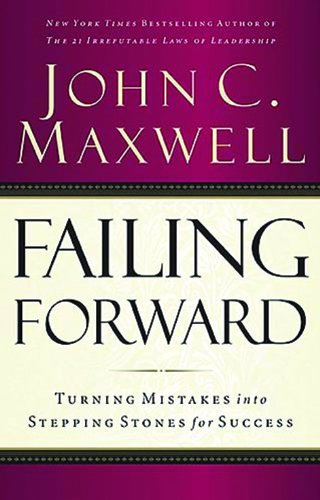
Failing Forward: Turning Mistakes into Stepping Stones for Success
Authors:
John Maxwell
Publisher:
Thomas Nelson
Publication Date:
Not available
ISBN:
0785288570
Are some people born to achieve anything they want while others struggle? Call them lucky, blessed, or possessors of the Midas touch. What is the real... reason for their success? Is it family background, wealth, greater opportunities, high morals, an easy childhood? New York Times best-selling author John C. Maxwell has the answer: The difference between average people and achieving people is their perception of and response to failure. Most people are never prepared to deal with failure. Maxwell says that if you are like him, coming out of school, you feared it, misunderstood it, and ran away from it. But Maxwell has learned to make failure his friend, and he can teach you to do the same. "I want to help you learn how to confidently look the prospect of failure in the eye and move forward anyway," says Maxwell. "Because in life, the question is not if you will have problems, but how you are going to deal with them. Stop failing backward and start failing forward!"
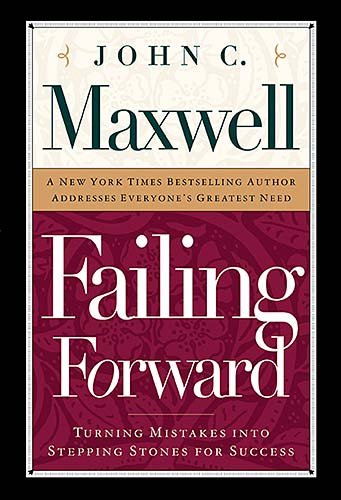
Failing Forward: Turning Mistakes into Stepping Stones for Success
Authors:
John C. Maxwell
Publisher:
Thomas Nelson
Publication Date:
Not available
ISBN:
0785274308
The major difference between achieving people and average people is their perception of and response to failure. John C. Maxwell takes a closer look at... failure-and reveals that the secret of moving beyond failure is to use it as a lesson and a stepping-stone. He covers the top reasons people fail and shows how to master fear instead of being mastered by it. Readers will discover that positive benefits can accompany negative experiences-if you have the right attitude. Chock full of action suggestions and real-life stores, Failing Forward is a strategic guide that will help men and women move beyond mistakes to fulfill their potential and achieve success.
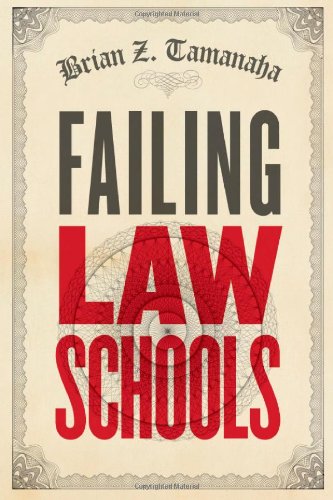
Failing Law Schools (Chicago Series in Law and Society)
Authors:
Brian Z. Tamanaha
Publisher:
University Of Chicago Press
Publication Date:
Not available
ISBN:
0226923614
On the surface, law schools today are thriving. Enrollments are on the rise, and their resources are often the envy of every other university... department. Law professors are among the highest paid and play key roles as public intellectuals, advisers, and government officials. Yet behind the flourishing facade, law schools are failing abjectly. Recent front-page stories have detailed widespread dubious practices, including false reporting of LSAT and GPA scores, misleading placement reports, and the fundamental failure to prepare graduates to enter the profession.Addressing all these problems and more in a ringing critique is renowned legal scholar Brian Z. Tamanaha. Piece by piece, Tamanaha lays out the how and why of the crisis and the likely consequences if the current trend continues. The out-of-pocket cost of obtaining a law degree at many schools now approaches $200,000. The average law school graduate’s debt is around $100,000—the highest it has ever been—while the legal job market is the worst in decades, with the scarce jobs offering starting salaries well below what is needed to handle such a debt load. At the heart of the problem, Tamanaha argues, are the economic demands and competitive pressures on law schools—driven by competition over U.S. News and World Report ranking. When paired with a lack of regulatory oversight, the work environment of professors, the limited information available to prospective students, and loan-based tuition financing, the result is a system that is fundamentally unsustainable.Growing concern with the crisis in legal education has led to high-profile coverage in the Wall Street Journal and the New York Times, and many observers expect it soon will be the focus of congressional scrutiny. Bringing to the table his years of experience from within the legal academy, Tamanaha has provided the perfect resource for assessing what’s wrong with law schools and figuring out how to fix them.

Failles
Authors:
Yanick Lahens
Publisher:
Sabine Wespieser
Publication Date:
Not available
ISBN:
284805090X
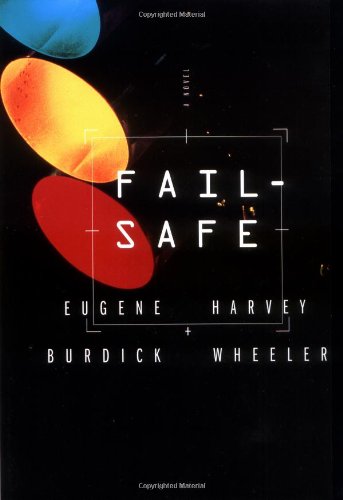
Fail Safe
Authors:
Eugene Burdick
Publisher:
Harper Perennial
Publication Date:
Not available
ISBN:
088001654X
Something has gone wrong. A group of American bombers armed with nuclear weapons is streaking past the fail-safe point, beyond recall, and no one knows... why. Their destination -- Moscow. In a bomb shelter beneath the White House, the calm young president turns to his Russian translator and says, "I think we are ready to talk to Premier Kruschchev." Not far away, in the War Room at the Pentagon, the secretary of defense and his aides watch with growing anxiety as the luminous blips crawl across a huge screen map. High over the Bering Strait in a large Vindicator bomber, a colonel stares in disbelief at the attack code number on his fail-safe box and wonders if it could possibly be a mistake.First published in 1962, when America was still reeling from the Cuban missle crisis, Fail-Safe reflects the apocalyptic attitude that pervaded society during the height of the Cold War, when disaster could have struck at any moment. As more countries develop nuclear capabilities and the potential for new enemies lurks on the horizon, Fail-Safe and its powerful issues continue to respond.
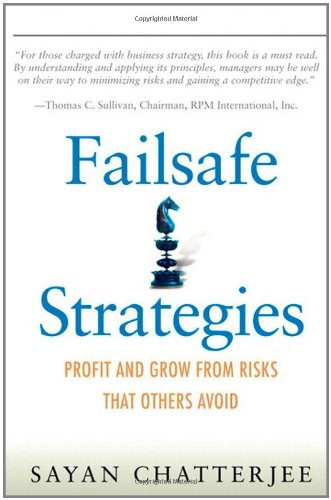
Failsafe Strategies: Profit and Grow from Risks That Others Avoid...
Authors:
Sayan Chatterjee
Publisher:
Pearson Prentice Hall
Publication Date:
Not available
ISBN:
013248059X
In the 1990s, in the name of "revolutionary business models," businesses took on massive risks almost without concern. They were burnt -- badly. Today,... many companies have become powerfully averse to taking the risks that are essential to long-term success. Now, there's a whole new way to think about risk: one that liberates you to act, while protecting you against danger. Dr. Sayan Chatterjee shows how to identify high-risk high return opportunities, and then systematically manage and reduce those risks up front, as you design your initiative...not after you operationalize it. Chatterjee draws his decade of breakthrough research on business research: work that's been recognized by institutions ranging from the Harvard Business School to the London School of Economics. Using his techniques, you can safely pursue opportunities your competitors will walk away from -- and sustain profit growth far into the future.
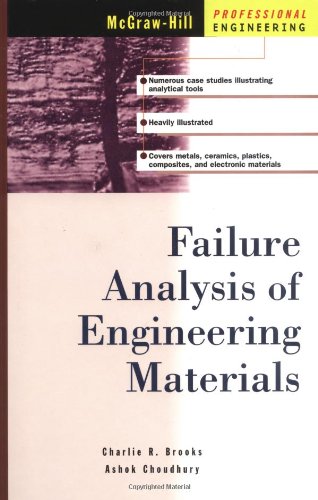
Failure Analysis of Engineering Materials
Authors:
Charles Brooks
Publisher:
McGraw-Hill Professional
Publication Date:
Not available
ISBN:
0071357580
Solve, correct, and avoid critical material failure problems Expertly analyze failures in common materials with Failure Analysis of Engineering... Materials. This investigatory/analytical tool by Charles R. Brooks and Ashok Choudhury is a time-saving, one-stop reference for engineers. A soundly written introduction to principals and practices, it’s invaluable for failure inquiries involving metals, ceramics, plastics, composites, and electronic materials. You get: * Practical, hands-on help with selecting and justifying analytic methods * Numerous case studies that illustrate the use of analytical tools to determine the condition of the material * Comparative fractographs to help you pinpoint fracture type.
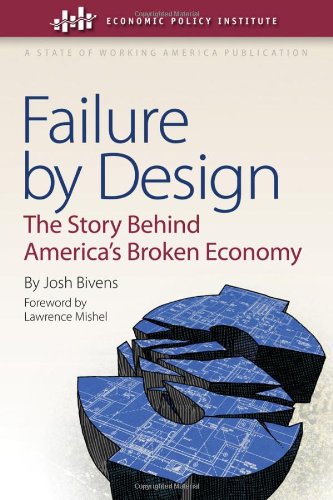
Failure by Design: The Story behind America's Broken Economy...
Authors:
Josh Bivens
Publisher:
ILR Press
Publication Date:
Not available
ISBN:
0801450152
In Failure by Design, the Economic Policy Institute's Josh Bivens takes a step back from the acclaimed State of Working America series, building on its... wealth of data to relate a compelling narrative of the U.S. economy's struggle to emerge from the Great Recession of 2008. Bivens explains the causes and impact on working Americans of the most catastrophic economic policy failure since the 1920s.As outlined clearly here, economic growth since the late 1970s has been slow and inequitably distributed, largely as a result of poor policy choices. These choices only got worse in the 2000s, leading to an anemic economic expansion. What growth we did see in the economy was fueled by staggering increases in private-sector debt and a housing bubble that artificially inflated wealth by trillions of dollars. As had been predicted, the bursting of the housing bubble had disastrous consequences for the broader economy, spurring a financial crisis and a rise in joblessness that dwarfed those resulting from any recession since the Great Depression. The fallout from the Great Recession makes it near certain that there will be yet another lost decade of income growth for typical families, whose incomes had not been boosted by the previous decade's sluggish and localized economic expansion.In its broad narrative of how the economy has failed to deliver for most Americans over much of the past three decades, Failure by Design also offers compelling graphical evidence on jobs, incomes, wages, and other measures of economic well-being most relevant to low- and middle-income workers. Josh Bivens tracks these trends carefully, giving a lesson in economic history that is readable yet rigorous in its analysis. Intended as both a stand-alone volume and a companion to the new State of Working America website that presents all of the data underlying this cogent analysis, Failure by Design will become required reading as a road map to the economic problems that confront working Americans.
 '





