production
/viewbook/list/all/?page=4452
/
/static/
None

Family Therapy W/Myhelpinglab
Authors:
Not Available
Publisher:
Not available
Publication Date:
Not available
ISBN:
0138016909
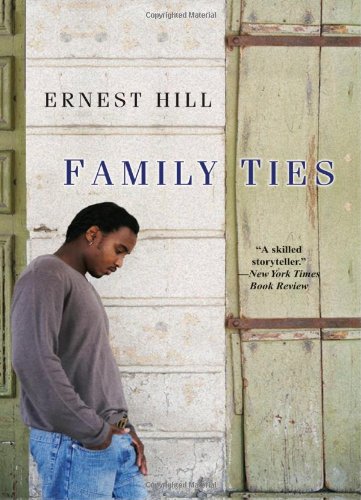
In the acclaimed A Life for a Life, Ernest Hill created an unforgettably candid story of violence, love, and redemption with teenaged D-Ray Reid at its... center. Now, with his jail time behind him, D-Ray has returned home to find that the real fight for survival is only beginning-Everyone was shocked when Mr. Henry took D-Ray Reid under his wing. After all, Mr. Henry-s real son, Stanley, was murdered by D-Ray-a crime D-Ray committed to save his brother, Little Man. Yet in the years since, Mr. Henry has tried to show D-Ray how to become the man Stanley would never be.After Mr. Henry-s death, D-Ray seeks out his own mother, Mira, hoping to rebuild their broken relationship. But D-Ray-s homecoming is more tumultuous than expected. Arrested for a crime he didn-t commit, Little Man has escaped and is in hiding. Mira blames D-Ray for Little Man-s troubled history, but she has her own secrets to hide. And putting things right will mean uncovering a legacy of lies and hidden agendas, and realizing the only way to be free of the past is to stand tall and confront it at last-Praise for the novels of Ernest Hill-If novels offer us a way of seeing the world that we could not imagine before, A Life for a Life does just that.- -The Times-Picayune-An exceptional literary piece that some readers will compare to Richard Wright-s Native Son.-Booklist on Satisfied with Nothin--As the story unfolds-these unforgettable characters come to full, sympathetic life.--Publishers Weekly on A Person of Interest-A skilled storyteller.- -New York Times Book Review
Family Ties and Aging
Authors:
Ingrid A. (Arnet) Connidis
Publisher:
Sage Publications, Inc
Publication Date:
Not available
ISBN:
1412959578
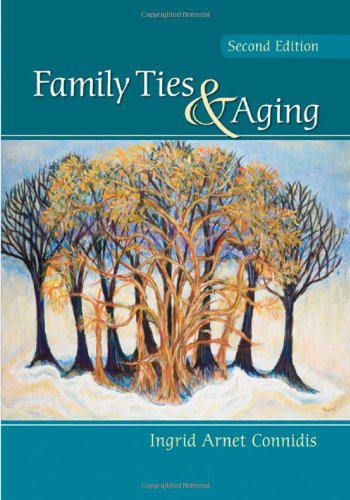
Providing an integrated and thorough representation of what we know from current research and contemporary society, Family Ties and Aging is the only... book that shows how pressing issues of our time-an aging population, changing family structures, and new patterns of work-family balance-are negotiated in the family lives of middle-aged and older adults. Focusing on such key questions as “How do current trends and social arrangements affect family relationships?” and “What are the implications of what we know for future research, theory, practice, and policy?” author Ingrid Arnet Connidis explores groups and relationships that typically receive short shrift, including single, divorced, and childless older people and their family relationships, as well as sibling relationships among the elderly, live-in partnerships not formalized by marriage, and the kinds of family ties forged by gay and lesbian individuals over the life course. The Second Edition is thoroughly updated to include the latest research and theoretical developments, recent media coverage of related issues, and new information on intimate relationships in later life, gay and lesbian partnerships, sibling ties, and elder neglect/abuse.Key FeaturesWeaves the vast range of information about the many facets of family relationships and aging into a critical, comprehensive, and integrated whole Explores a range of intimate relationships, what happens when they end, and pathways to intimacy in old ageEmphasizes diversity in terms of gender, age, class, race, ethnicity, and sexual orientation throughout to help readers learn about similarities and differences in family relationships as we ageLinks the discussion of various family relationships in mid- and later life to current and future directions for research, practice, and policyFamily Ties and Aging is appropriate for use in upper-level undergraduate and graduate courses such as Families and Aging, Sociology of Aging, and Introduction to Gerontology in departments of family studies, sociology, social work, and gerontology.
Family Ties (Texas Pan American Series)
Authors:
Clarice Lispector
Publisher:
University of Texas Press
Publication Date:
Not available
ISBN:
0292724489
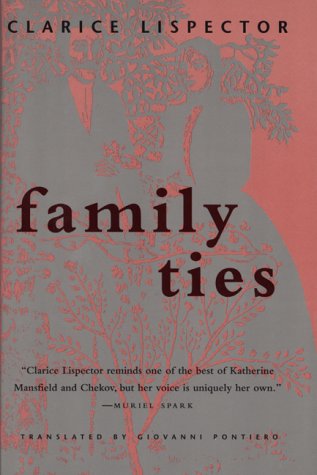
The silent rage that seizes a matriarch whose family is feting her eighty-ninth year.The tangle of emotions felt by a sophisticated young woman toward... her elderly mother. An adolescent girl's obsessive fear of being looked at. The "giddying sense of compassion" that a blind man introduces into a young housewife's settled existence. Of such is made the world of Clarice Lispector, the Brazilian writer whose finest work is acknowledged to be her exquisitely crafted short stories. Here, in these thirteen of Lispector's most brilliantly conceived stories, mysterious and unexpected moments of crisis propel characters to self-discovery or keenly felt intuitions about the human condition. Her characters mirror states of mind. Alienated by their unsettling sense of life's absurdity, they seem at times absorbed in their interior lives and in the passions that dominate and usually defeat them.
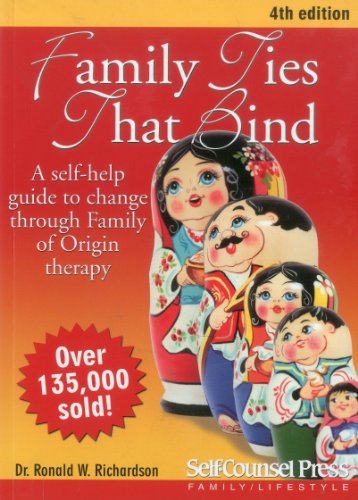
Family Ties That Bind: A self-help guide to change through Family...
Authors:
Dr. Ronald W. Richardson
Publisher:
Self-Counsel Press, Inc.
Publication Date:
Not available
ISBN:
1770400869
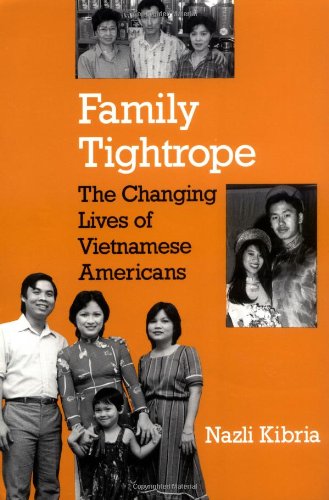
Family Tightrope
Authors:
Nazli Kibria
Publisher:
Princeton University Press
Publication Date:
Not available
ISBN:
0691021155
In recent years the popular media have described Vietnamese Americans as the quintessential American immigrant success story, attributing their... accomplishments to the values they learn in the traditional, stable, hierarchical confines of their family. Questioning the accuracy of such family portrayals, Nazli Kibria draws on in-depth interviews and participant observation with Vietnamese immigrants in Philadelphia to show how they construct their family lives in response to the social and economic challenges posed by migration and resettlement. To a surprising extent, the "traditional" family unit rarely exists, and its hierarchical organization has been greatly altered.
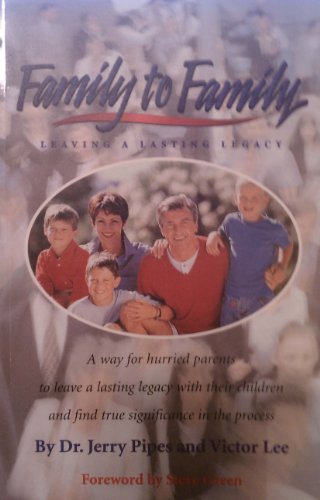
Family to Family: Leaving a Lasting Legacy
Authors:
Jerry Pipes
Publisher:
North American Mission Board of the Southern Baptist Convention
Publication Date:
Not available
ISBN:
0840085109
""Family to Family" should be required reading for every Christian family who wants to cooperate with God in building a strong family and carry out our... mission as Christians to make disciples."
Family Transitions: Continuity And Change Over The Life Cycle (The...
Authors:
Falicov
Publisher:
The Guilford Press
Publication Date:
Not available
ISBN:
0898624843
Of all concepts used by family therapists, the family development framework is among the least studied, in spite of its relevance to understanding... spontaneous family change and to facilitating therapeutic intervention. The notion that a "developmental difficulty" underlies the appearance of clinical symptoms has become a time-honored tradition in family therapy just as it has been in individual therapy. Yet, unlike the well-established and well-researched models of child and adult development, those in family development are rudimentary. Despite increasing interest in the family life cycle as a framework for family therapy, relatively little has been done to elucidate the specific dimensions and processes of spontaneous and therapeutically-induced change over the family life cycle. This volume gathers original contributions of some of the most prominent family theorists, researchers, and clinicians of our time to improve our understanding of these important and hitherto neglected domains.The book opens with a comprehensive overview by the editor that outlines contributions to the family life cycle framework from family sociology, and crisis theory. This is followed by a comparative analysis of developmental thinking, explicit or implicit, in the theory and interventions of the major family therapy approaches. Then divided into four parts, FAMILY TRANSITIONS introduces new conceptual models that integrate the temporality of the life cycle approach with systems theory.By their very nature, these models cut across therapeutic orientations and have important clinical applications.In Part II, family therapy's views of development are freed from the confines of the therapist's office, and placed in the context of other disciplines. Chapters provide analysis of changing--or static--sociocultural values that can affect conceptions of development; potential misuse of the concept of "cultural identity" in health, mental health, and education; how "family identity" operates as a vehicle for cultural transmission over generations; and family therapists assumptions about women's development.The role of expected and unexpected events in the family life cycle is the focus of Part III. Chapters on clinical approaches geared to dislocations of life cycle occurrences due to unexpected crises, chronic illnesses, loss, or drug abuse provide illustrations of interventions that utilize, enhance, or potentially detract from the family's developmental flow.Part IV explores the articulation of the life cycle framework within four major family therapy orientations: intergenerational, structural, systemic, and symbolic-experiential. Each of these chapters endeavors to elucidate: what is the place of family development in each orientation; concepts of continuity and change; use of the concept of stages, transitions, or developmental tasks; the specific dimensions that change in most families over time; and the links between family dysfunction and life cycle issues. Finally, each chapter illustrates through clinical example assessment strategies, formulation of treatment goals and interventions as these emerge from a particular life cycle model.FAMILY TRANSITIONS presents a significant advance in our understanding of functional and dysfunctional family development and offers a range of interventions to promote developmental change. It is an invaluable resource for clinical psychologists, psychiatrists, social workers, and counselors that will also interest human development professionals, family sociologists, and family researchers. FAMILY TRANSITIONS can serve as a developmentally oriented textbook for teaching family therapy in academic and professional settings.
FAMILY TREATMENT:EVIDENCE-BASED PRAC (PKG W/POPULATIONS AT RISK)
Authors:
Not Available
Publisher:
Not available
Publication Date:
Not available
ISBN:
Not available
Family Treatment: Evidence-Based Practice with Populations at Risk
Authors:
Curtis Janzen
Publisher:
Brooks Cole
Publication Date:
Not available
ISBN:
0534641458
Now featuring the work of two new co-authors (Catheleen Jordan and Cynthia Franklin) and emphasizing the field's current focus on evidence-based... approaches in family treatment, this text gives students an understanding of the relationship between individual and family functioning and problem solving. It helps students develop skills to assist individuals and families in solving their own problems as well as making use of interventions from outside the family. Written especially for social workers, and complete with many new case studies throughout, this text builds on basic social work knowledge, focuses on the kinds of situations that commonly confront social workers, and takes into account the environment in which families live.
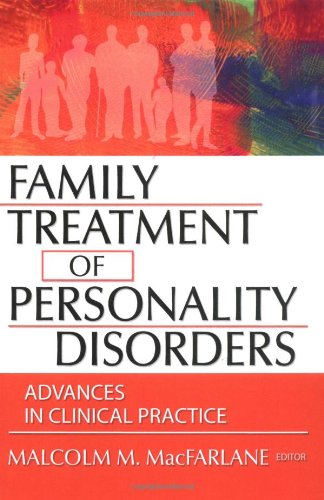
Family Treatment of Personality Disorders: Advances in Clinical...
Authors:
Malcolm M. MacFarlane
Publisher:
Routledge
Publication Date:
Not available
ISBN:
078901789X
Help families cope with the impact of personality dysfunction! Family Treatment of Personality Disorders: Advances in Clinical Practice examines the... application of marital and family therapy approaches to the treatment of a wide range of personality disorders. Valuable on its own and doubly useful as a companion volume to Family Therapy and Mental Health: Innovations in Theory and Practice (Haworth), the book integrates traditional individual models with family systems models to provide a multidimensional approach to treating personality disorders. Each chapter is written by a family therapist with extensive experience treating personality disorders and includes a case example, an exploration of the impact of the disorder on family members, a look at cultural and gender issues, and an examination of how the model is integrated with traditional psychiatric services and the proper application of medication. Family Treatment of Personality Disorders is a single, accessible source for significant contributions to the emerging literature on family treatment approaches that, until now, have been scattered through journals representing a variety of disciplines. The book’s strong clinical focus provides a concise summary of relevant theory and interventions for effective treatment, including discussion of how to manage crises and acting out behavior. Edited by a practicing frontline clinician, the book provides an overview of the personality disorders field, examines the Structural Analysis of Social Behavior model and the Interpersonal Reconstructive Therapy approach, and presents detailed descriptions of key concepts and treatment approaches. Family Treatment of Personality Disorders focuses on specific DSM-IV personality disorders, including: borderline narcissistic histrionic obsessive-compulsive passive-aggressive avoidant dependent paranoid Family Treatment of Personality Disorders: Advances in Clinical Practice is an excellent resource for clinicians treating mental health problems and for academic work in family psychopathology and family therapy and mental health.
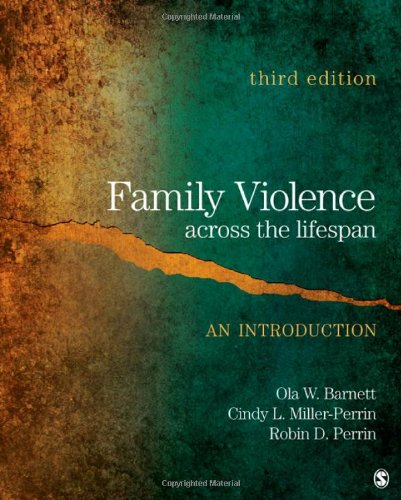
Family Violence Across the Lifespan: An Introduction
Authors:
Ola W. Barnett
Publisher:
Sage Publications, Inc
Publication Date:
Not available
ISBN:
1412981786
The most comprehensive research-based text on family violence – now more accessible and visually inviting than ever before Streamlined and updated... throughout with state-of-the-art information, this Third Edition of the authors’ bestselling book gives readers an accessible introduction to the methodology, etiology, prevalence, treatment, and prevention of family violence. Research from experts in the fields of psychology, sociology, criminology, and social welfare informs the book’s broad coverage of current viewpoints and debates within the field. Organized chronologically, chapters cover child physical, sexual, and emotional abuse; abused and abusive adolescents; courtship violence and date rape; spouse abuse, battered women, and batterers; and elder abuse.
FAMILY VIOLENCE ACROSS THE LIFESPAN DIGITAL BOOK
Authors:
Not Available
Publisher:
Not available
Publication Date:
Not available
ISBN:
Not available
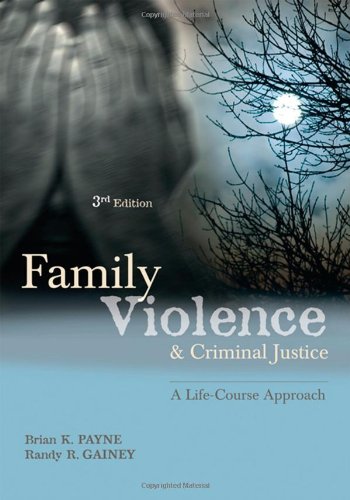
Family Violence and Criminal Justice, Third Edition: A Life-Course...
Authors:
Brian J. Payne
Publisher:
Anderson
Publication Date:
Not available
ISBN:
1422461386
The historical context of family violence is explored, as well as the various forms of violence, their prevalence in specific stages of life, and... responses to it made by the criminal justice system and other agencies. The linkage among child abuse, partner violence and elder abuse is scrutinized, and the usefulness of the life-course approach is couched in terms of its potential effect on policy implications; research methods that recognize the importance of life stages, trajectories, and transitions; and crime causation theories that can be enhanced by it.Tables, figures, charts, discussion questions and helpful boxes with supplemental information titled "Tool Box," "From the Field," and "Research Shows" enhance the text.
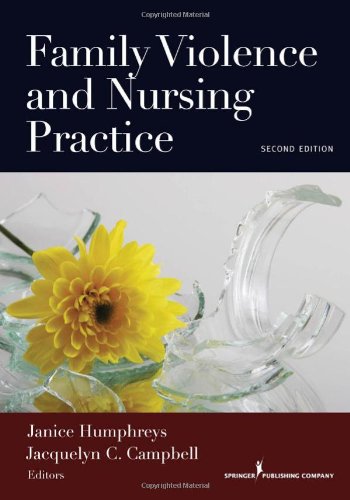
Family Violence and Nursing Practice, Second Edition
Authors:
Not Available
Publisher:
Springer Publishing Company
Publication Date:
Not available
ISBN:
0826118283
Nurses too often encounter battered women, abused children, and other victims of family violence in hospital and emergency room settings. Nurses... therefore have a unique and important role to play in the prevention, identification, and mitigation of violence. This newly revised second edition is a landmark resource that provides comprehensive, nursing-focused coverage of intimate partner violence (IPV), child abuse, and more. This textbook provides a detailed overview of all types of family and other violence, including IPV, same-sex IPV, abuse during pregnancy, intimate partner homicide, stalking, violence against women with disabilities, dating violence, child abuse, children witnessing violence, sexual assault of both children and adults, and elder abuse. The book offers both graduate and undergraduate nursing students a clear view of the essential theories, interventions, and issues surrounding nursing and family violence-presenting an approach that empowers nurses to contribute to the prevention of this worldwide health problem. Special Features: Chapters on legal and forensic issues address the nurse's role and responsibilities when confronting family violence In-depth attention to cultural issues promote culturally relevant practice Abundant diagrams and tables offer quick access to essential standards for care Practice assessment forms and model interventions give practical strategies for addressing family violence A new chapter describes international work in family violence
 '





