production
/viewbook/list/all/?page=4471
/
/static/
None

FAST TRACK PHONICS STUDENT BOOK
Authors:
PRENTICE HALL
Publisher:
Not available
Publication Date:
Not available
ISBN:
0130987417
The Fast Track Phonics audio program has chants, songs, listening activities, and photo stories and plays. Fast Track Phonics is a highly visual... activities program designed for students who are learning to read English.
fast trac new venture (discovering the world of entrepreneurship,...
Authors:
entrepreneurs for entrepreneurs
Publisher:
kauffman
Publication Date:
Not available
ISBN:
1891616641
Fat: A Cultural History of Obesity
Authors:
Sander L. Gilman
Publisher:
Polity
Publication Date:
Not available
ISBN:
0745644414
The modern world is faced with a terrifying new ‘disease’, that of ‘obesity’. As people get fatter, we have come to see excess weight as... unhealthy, morally repugnant and socially damaging. Fat it seems has long been a national problem and each age, culture and tradition have all defined a point beyond which excess weight is unacceptable, ugly or corrupting.This fascinating new book by Sander Gilman looks at the interweaving of fact and fiction about obesity, tracing public concern from the mid-nineteenth century to the modern day. He looks critically at the source of our anxieties, covering issues such as childhood obesity, the production of food, media coverage of the subject and the emergence of obesity in modern China. Written as a cultural history, the book is particularly concerned with the cultural meanings that have been attached to obesity over time and to explore the implications of these meanings for wider society. The history of these debates is the history of fat in culture, from nineteenth-century opera to our global dieting obsession. Fat, A Cultural History of Obesity is a vivid and absorbing cultural guide to one of the most important topics in modern society.
Fatal Colours: Towton 1461-England's Most Brutal Battle
Authors:
George Goodwin
Publisher:
W. W. Norton & Company
Publication Date:
Not available
ISBN:
0393080846
The tumultuous reign of Henry VI and its climax in the carnage of Towton—the bloodiest battle fought on English soil.The battle of Towton in 1461 was... unique in its ferocity and brutality, as the armies of two kings of England engaged with murderous weaponry and in appalling conditions to conclude the first War of the Roses. Variously described as the largest, longest, and bloodiest battle on English soil, Towton was fought with little chance of escape and none of surrender. Yet, as if too ghastly to contemplate, the battle itself and the turbulent reign of Henry VI were neglected for centuries. Combining medieval sources and modern scholarship, George Goodwin colorfully re-creates the atmosphere of fifteenth-century England. From the death of the great Henry V and his baby son’s inheritance first of England and then of France, Goodwin chronicles the vicious infighting at home in response to the vicissitudes of the Hundred Years War abroad. He vividly describes the pivotal year of 1450 and a decade of breakdown for both king and kingdom, as increasingly embittered factions struggle for a supremacy that could be secured only after the carnage of Towton. Fatal Colours includes a cast of strong and compelling characters: a warrior queen, a ruthless king-making earl, even a papal legate who excommunicates an entire army. And at its center is the first full explanation for the crippling incapacity of the enduringly childlike Henry VI—founder of Eton and King’s College, Cambridge. With a substantive and sparkling introduction by David Starkey, Fatal Colours brings to life a vibrant and violent age. 16 pages of color illustrations; 3 maps

Fatal Deception : The Terrifying True Story of How Asbestos is...
Authors:
Michael Bowker
Publisher:
Touchstone
Publication Date:
Not available
ISBN:
0743251431
STILL LEGAL, STILL LETHAL Most Americans mistakenly believe asbestos was banned long ago. In fact, it is still legal and can still kill you. Its... microscopic fibers cause painful and incurable diseases. Despite being outlawed in nearly every other industrialized country, asbestos remains a legal component of more than three thousand common products in the United States. These include toasters, washers/dryers, ovens, building supplies, and automobile brakes. Our confusion about asbestos is no accident. Fatal Deception is a chilling exposé of the asbestos industry's successful seventy-year campaign to hide the deadly effects of its products from the American people. The stakes are high -- tens of thousands of lives and hundreds of billions of dollars. Michael Bowker rips the cover off the decades of deceit, including the treachery in Libby, Montana, site of the most deadly environmental disaster in U.S. history. He also unveils a startling and ongoing cover-up at Ground Zero -- where thousands of New Yorkers may still be suffering from exposure to dangerous levels of asbestos fibers. Compelling, enraging, and very timely, Fatal Deception is not just a fascinating story, it is a plea to the government and to the American people to help sponsor research into asbestos-related diseases -- and a call to arms to ban asbestos now.

Fatal Embrace: Christians, Jews, and the Search for Peace in the...
Authors:
Mark Braverman
Publisher:
Beaufort Books
Publication Date:
Not available
ISBN:
0825306760
Mark Braverman shows how the Jewish quest for safety and empowerment and the Christian endeavor to atone for centuries of anti-Semitism have combined to... suppress the conversations needed to bring about a just and lasting peace in the Holy Land. Fatal Embrace charts Braverman's journey as an American Jew struggling with the difficult realities of modern Israel. The book vividly describes the spiritual and psychological forces driving the discourse and is a call to action to Americans of all faiths.

Fatal Equilibrium
Authors:
Marshall Jevons
Publisher:
Ballantine Books
Publication Date:
Not available
ISBN:
0345331583
At Harvard, tenure decisions are a matter of life -- or death.For Dennis Gossen, the economics department whiz kid currently being considered for... tenure, it's definitely death. When he's turned down by the high-and-mighty Promotion and Tenure Committee, Gossen commits suicide.A Question of Cost Accounting...Or does he? It's hard to imagine why a young man with a brilliant scholarly future -- at Harvard or not -- would come up with an equation in which the opportunity cost of killing himself (a high price, considering his potential earnings) would be outweighed by the emotional cost of failing to receive tenure.... Or Utility?Then two members of the P and T Committee are murdered, and it becomes clear to Professor Henry Spearman of the Economics Department that the killer must be on the committee. But which of his illustrious colleagues would have significantly increased his -- or her -- utility (i.e., happiness) by murdering a faculty member or two? Or three?
Fatal Freedom: The Ethics and Politics of Suicide
Authors:
Thomas Szasz
Publisher:
Syracuse University Press
Publication Date:
Not available
ISBN:
0815607555
Fatal Freedom is an eloquent defense of every individual's right to choose a voluntary death. The author, a renowned psychiatrist, believes that we can... speak about suicide calmly and rationally, as he does in this book, and that we can ultimately accept suicide as part of the human condition. By maintaining statutes that determine that voluntary death is not legal, our society is forfeiting one of its basic freedoms and causing the psychiatric/medical establishment to treat individuals in a manner that is disturbingly inhumane according to Dr. Szasz. His important work asks and points to clear, intelligent answers to some of the most significant ethical questions of our time: . Is suicide a voluntary act? . Should physicians be permitted to prevent it? . Should they be authorized to abet it? The author's thoughtful analysis of these questions consistently holds forth patient autonomy as paramount; therefore, he argues, patients should not be prevented from exercising their free will, nor should physicians be permitted to enter the process by prescribing or providing the means for voluntary death.Dr. Szasz predicts that we will look back at our present prohibitory policies toward suicide with the same amazed disapproval with which we regard past policies toward homosexuality, masturbation, and birth control. This comparison with other practices that started as sins, became crimes, then were regarded as mental illnesses, and are now becoming more widely accepted, opens up the discussion and understanding of suicide in a historical context. The book explores attitudes toward suicide held by the ancient Greeks and Romans, through early Christianity and the Reformation, to the advent of modern psychiatry and contemporary society as a whole. Our tendency to define disapproved behaviors as diseases has created a psychiatric establishment that exerts far too much influence over how and when we choose to die. Just as we have come to accept the individual's right to birth control, so too must we accept his right to death control before we can call our society humane or free.
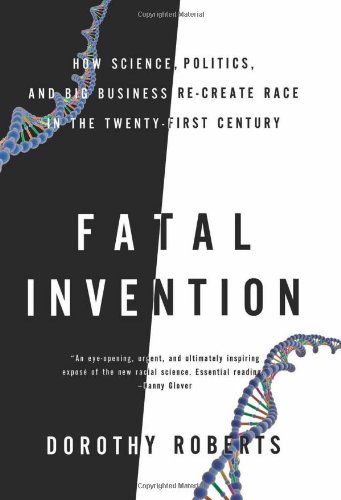
Fatal Invention: How Science, Politics, and Big Business Re-create...
Authors:
Dorothy Roberts
Publisher:
New Press, The
Publication Date:
Not available
ISBN:
1595584951
A decade after the Human Genome Project proved that human beings are not naturally divided by race, the emerging fields of personalized medicine,... reproductive technologies, genetic genealogy, and DNA databanks are attempting to resuscitate race as a biological category written in our genes. In this provocative analysis, leading legal scholar and social critic Dorothy Roberts argues that America is once again at the brink of a virulent outbreak of classifying population by race. By searching for differences at the molecular level, a new race-based science is obscuring racism in our society and legitimizing state brutality against communities of color at a time when America claims to be post-racial.Moving from an account of the evolution of race—proving that it has always been a mutable and socially defined political division supported by mainstream science—Roberts delves deep into the current debates, interrogating the newest science and biotechnology, interviewing its researchers, and exposing the political consequences obscured by the focus on genetic difference. Fatal Invention is a provocative call for us to affirm our common humanity.
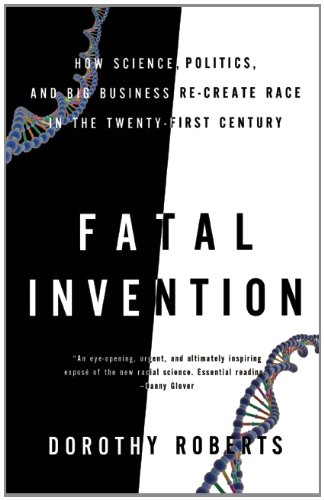
Fatal Invention: How Science, Politics, and Big Business Re-create...
Authors:
Dorothy Roberts
Publisher:
New Press, The
Publication Date:
Not available
ISBN:
1595588345
Featured on The Tavis Smiley Show and named one of the ten best black nonfiction books of 2011 by AFRO.com, Fatal Invention is a provocative... analysis” (Nature) of race, science, and politics by leading legal scholar and social critic Dorothy Roberts. It examines how the archaic belief system underlying the concept of racerevived by purportedly cutting-edge scienceundermines a just society and promotes continuing inequality.Alarming but not alarmist, controversial but evidential, impassioned but rational” (Publishers Weekly, starred review), Fatal Invention exposes the falseness of the biological concept of raceused in the past to divide humans and justify prejudice and used today to enable everything from the race-targeted therapies developed in the pharmaceutical industry and stop-and-frisks that disproportionately target African Americans to a proliferation of for-profit ancestry-testing services.Called vitally important” and a massive achievement” by Race and the Law, Fatal Invention devastatingly counters any argument that can be made for a racial view of genetics” (The Brooklyn Rail).
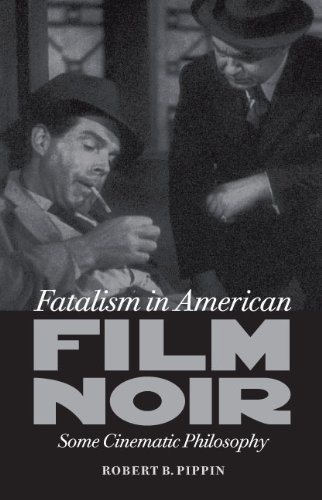
Fatalism in American Film Noir: Some Cinematic Philosophy...
Authors:
Robert B. Pippin
Publisher:
University of Virginia Press
Publication Date:
Not available
ISBN:
0813931894
The crime melodramas of the 1940s known now as film noir shared many formal and thematic elements, from unusual camera angles and lighting to moral... ambiguity and femmes fatales. In this book Robert Pippin argues that many of these films also raise distinctly philosophical questions. Where most Hollywood films of that era featured reflective individuals living with purpose, taking action and effecting desired consequences, the typical noir protagonist deliberates and plans, only to be confronted by the irrelevance of such deliberation and by results that contrast sharply, often tragically, with his or her intentions or true commitments. Pippin shows how this terrible disconnect sheds light on one of the central issues in modern philosophy--the nature of human agency. How do we distinguish what people do from what merely happens to them? Looking at several film noirs--including close readings of three classics of the genre, Fritz Lang’s Scarlet Street, Orson Welles’s The Lady from Shanghai, and Jacques Tourneur’s Out of the Past--Pippin reveals the ways in which these works explore the declining credibility of individuals as causal centers of agency, and how we live with the acknowledgment of such limitations.
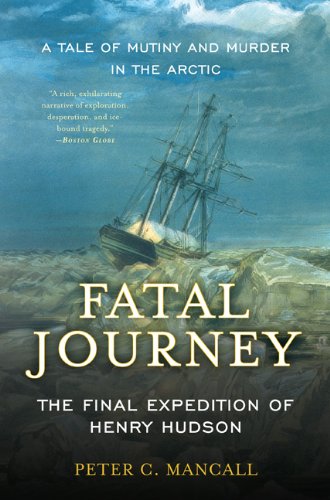
Fatal Journey: The Final Expedition of Henry Hudson
Authors:
Peter C. Mancall
Publisher:
Basic Books
Publication Date:
Not available
ISBN:
0465020313
An acclaimed historian tells the tale of Henry Hudson's doomed final voyage in search of sea passage across the New World. In 1610, the English mariner... Henry Hudson set off on a journey to find the Northwest Passage, the famed water route that all Europeans hoped would speed the time of travel to East Asia. But Hudson's search for the Northwest Passage did not go well. Taking a far northerly route past Iceland, Hudson and his crew on the ship Discovery passed through fields of dangerous icebergs as they rounded the northern tip of Labrador. Braving the harsh arctic climate, the Discovery entered what would eventually become known as Hudson Bay. By winter, the ship was trapped in ice near the shores of James Bay. Provisions grew scarce, tensions among crew-members flared, and when the ice began to thaw the following June, members of his crew mutinied. They forced Hudson, his teenage son, and seven other men onto a shallow-bottomed boat and pushed them away. Historian Peter C. Mancall's "Fatal Journey" is the first book to tell the full story of Hudson and the other 23 men who set sail from London in April 1610. Based on an extraordinary array of primary sources, including narratives from the expedition itself, testimony offered in two trials of the survivors, and indigenous sources from the Hudson Bay area, "Fatal Journey" teases out what the experience must have been like for the men on Discovery. An exhilarating narrative of exploration, desperation, and icebound tragedy, "Fatal Journey" vividly chronicles the undoing of a great explorer-not by an angry ocean, but at the hands of his own men.
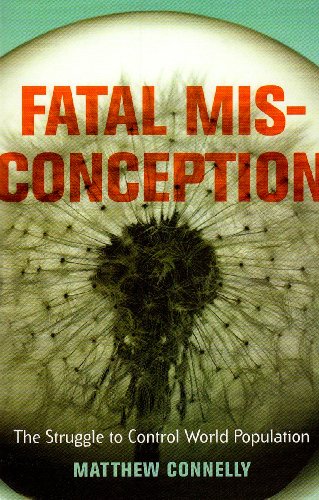
Fatal Misconception: The Struggle to Control World Population
Authors:
Matthew Connelly
Publisher:
Belknap Press of Harvard University Press
Publication Date:
Not available
ISBN:
0674034600
Listen to a short interview with Matthew Connelly Host: Chris Gondek | Producer: Heron & Crane Fatal Misconception is the disturbing story of our... quest to remake humanity by policing national borders and breeding better people. As the population of the world doubled once, and then again, well-meaning people concluded that only population control could preserve the "quality of life." This movement eventually spanned the globe and carried out a series of astonishing experiments, from banning Asian immigration to paying poor people to be sterilized. Supported by affluent countries, foundations, and non-governmental organizations, the population control movement experimented with ways to limit population growth. But it had to contend with the Catholic Church's ban on contraception and nationalist leaders who warned of "race suicide." The ensuing struggle caused untold suffering for those caught in the middle--particularly women and children. It culminated in the horrors of sterilization camps in India and the one-child policy in China. Matthew Connelly offers the first global history of a movement that changed how people regard their children and ultimately the face of humankind. It was the most ambitious social engineering project of the twentieth century, one that continues to alarm the global community. Though promoted as a way to lift people out of poverty--perhaps even to save the earth--family planning became a means to plan other people‘s families. With its transnational scope and exhaustive research into such archives as Planned Parenthood and the newly opened Vatican Secret Archives, Connelly's withering critique uncovers the cost inflicted by a humanitarian movement gone terribly awry and urges renewed commitment to the reproductive rights of all people.
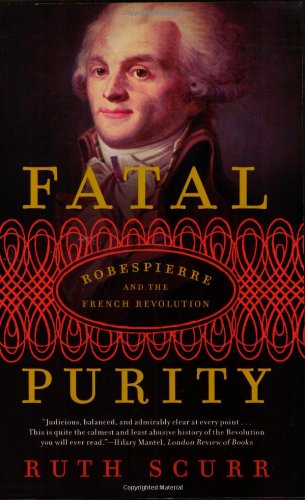
Fatal Purity: Robespierre and the French Revolution
Authors:
Ruth Scurr
Publisher:
Holt Paperbacks
Publication Date:
Not available
ISBN:
0805082611
"Judicious, balanced, and admirably clear at every point. This is quite the calmest and least abusive history of the Revolution you will ever... read."--Hilary Mantel, London Review of BooksSince his execution by guillotine in July 1794, Maximilien Robespierre has been contested terrain for historians. Was he a bloodthirsty charlatan or the only true defender of revolutionary ideals? The first modern dictator or the earliest democrat? Was his extreme moralism a heroic virtue or a ruinous flaw? Against the dramatic backdrop of the French Revolution, historian Ruth Scurr tracks Robespierre's evolution from provincial lawyer to devastatingly efficient revolutionary leader, righteous and paranoid in equal measure. She explores his reformist zeal, his role in the fall of the monarchy, his passionate attempts to design a modern republic, even his extraordinary effort to found a perfect religion. And she follows him into the Terror, as the former death- penalty opponent makes summary execution the order of the day, himself falling victim to the violence at the age of thirty-six. Written with epic sweep, full of nuance and insight, Fatal Purity is a fascinating portrait of a man who identified with the Revolution to the point of madness, and in so doing changed the course of history.
Fatal Self-Deception: Slaveholding Paternalism in the Old South
Authors:
Eugene D. Genovese
Publisher:
Cambridge University Press
Publication Date:
Not available
ISBN:
1107605024
Slaveholders were preoccupied with presenting slavery as a benign, paternalistic institution in which the planter took care of his family, and slaves... were content with their fate. In this book, Eugene D. Genovese and Elizabeth Fox-Genovese discuss how slaveholders perpetuated and rationalized this romanticized version of life on the plantation. Slaveholders' paternalism had little to do with ostensible benevolence, kindness, and good cheer. It grew out of the necessity to discipline and morally justify a system of exploitation. At the same time, this book also advocates the examination of masters' relations with white plantation laborers and servants - a largely unstudied subject. Southerners drew on the work of British and European socialists to conclude that all labor, white and black, suffered de facto slavery, and they championed the South's "Christian slavery" as the most humane and compassionate of social systems, ancient and modern.
 '





