production
/viewbook/list/all/?page=4475
/
/static/
None

Fathom Computer Software Singe Student Home Use 1Yr
Authors:
Not Available
Publisher:
Not available
Publication Date:
Not available
ISBN:
1604402571
Fathom Computer Software Single Student Home Use Non Exp. Lic
Authors:
Not Available
Publisher:
Not available
Publication Date:
Not available
ISBN:
1604402547
Fathom Dynamic Data Vers.2 (Olcard)
Authors:
Not Available
Publisher:
Not available
Publication Date:
Not available
ISBN:
Not available

Fathoming the Cosmos and Ordering the World: The Yijing (I Ching,...
Authors:
Richard J. Smith
Publisher:
University of Virginia Press
Publication Date:
Not available
ISBN:
0813927056

Fat Hoochie Prom Queen
Authors:
Nico Medina
Publisher:
Simon Pulse
Publication Date:
Not available
ISBN:
1416936033
What does it take to be the queen? Margarita "Madge" Diaz is fat, foxy, and fabulous. She loves herself, and is adored by almost everyone... else...except queen bee/student-body president Bridget Benson. These two girls have a history that's uglier than a drag queen after last call. During a heated argument, they decide there's only one way to end their rivalry: be named prom queen and the other backs off -- for good. Of course, everything looks different in the sober light of morning, but pride is at stake and the race is on. Madge is committed to doing whatever it takes to secure the title, but so is Bridget. And everyone's got something to hide. Welcome to Winter Park High School, where the dirt's not just gonna fly...it's gonna go into freakin' orbit.
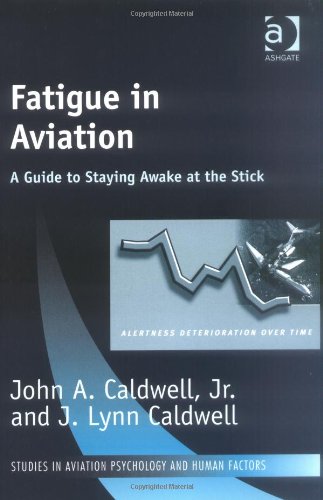
Fatigue in Aviation: A Guide to Staying Awake at the Stick (Studies...
Authors:
John A. Caldwell
Publisher:
Ashgate Pub Ltd
Publication Date:
Not available
ISBN:
0754633004
This overview of fatigue includes fatigue definitions, the measurement/assessment of fatigue and the performance, mood and safety problems associated... with fatigue in the operational setting. The physiological bases of fatigue are discussed, so the reader understands that fatigue is a physiological phenomenon that is not "just a state of mind". Finally, scientifically valid countermeasures are discussed and data from a variety of sources are included to provide readers with a "toolbox" from which they can choose solutions to fatigue related problems. This book is meant to be a "user-friendly" book, not a scientific book, although science is included to help the reader understand why certain behaviours occur.
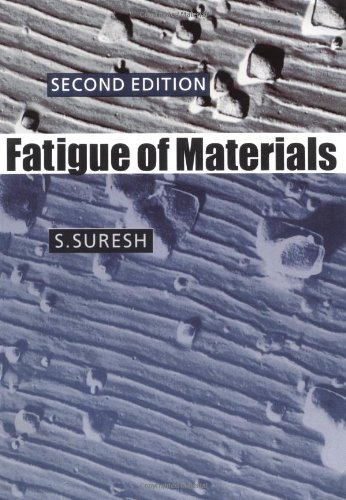
Fatigue of Materials (Cambridge Solid State Science Series) Second...
Authors:
S. Suresh
Publisher:
Cambridge University Press
Publication Date:
Not available
ISBN:
0521578477
This revised and updated second edition of a highly successful book provides an authoritative, comprehensive and unified treatment of the mechanics and... micromechanisms of fatigue in metals, nonmetals and composites. The author, a leading researcher in the field, discusses the principles of cyclic deformation, crack initiation and crack growth by fatigue, covering both microscopic and continuum aspects. The book begins with discussions of cyclic deformation and fatigue crack initiation in monocrystalline and polycrystalline ductile alloys as well as in brittle and semi-/non-crystalline solids. Total life and damage-tolerant approaches are then introduced in metals, nonmetals and composites. This will be an important reference for anyone studying fracture and fatigue in materials science and engineering, mechanical, civil, nuclear and aerospace engineering, and biomechanics.

Fatigue Testing and Analysis: Theory and Practice
Authors:
Yung-Li Lee
Publisher:
Butterworth-Heinemann
Publication Date:
Not available
ISBN:
0750677198
This book is a summary of experimental and analytical techniques that are essential to students and practicing engineers for conducting mechanical... component design and testing for durability. There is a serious need for engineers to have an overview on the entire methodology of durability testing and reliability to bridge the gap between fundamental fatigue research and its durability applications. · Covers the useful techniques for component load measurement and data acquisition, fatigue properties determination, fatigue analysis, and accelerated life test criteria development, and, most importantly, test plans for reliability demonstrations. · Written from a practical point of view, based on the authors' industrial and academic experience in automotive engineering design.· Extensive practical examples are used to illustrate the main concepts in all chapters.

Fat Land: How Americans Became the Fattest People in the World
Authors:
Greg Critser
Publisher:
Mariner Books
Publication Date:
Not available
ISBN:
0618380604
In this astonishing expose, journalist Greg Critser looks beyond the sensational headlines to reveal why nearly 60 percent of Americans are now... overweight. Critser's sharp-eyed reportage and sharp-tongued analysis make for a disarmingly funny and truly alarming book. Critser investigates the many factors of American life -- from supersize to Super Mario, from high-fructose corn syrup to the high cost of physical education in schools -- that have converged and conspired to make us some of the fattest people on the planet. He also explains why pediatricians are treating conditions rarely before noticed in children, why Type 2 diabetes is on the rise, and how agribusiness has unwittingly altered the American diet.
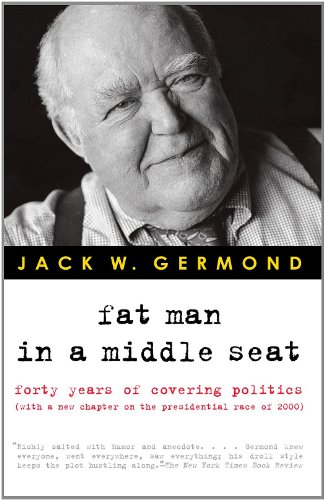
Fat Man in a Middle Seat: Forty Years of Covering Politics
Authors:
Jack W. Germond
Publisher:
Random House Trade Paperbacks
Publication Date:
Not available
ISBN:
0375758674
For more than forty years, Jack Germond enjoyed an extraordinary career in political reporting. With his trademark no-nonsense style and tremendous wit... in abundance, Fat Man in a Middle Seat remembers the personalities that dominated national politics during Germond’s career: Richard Nixon, Hubert Humphrey, Eugene McCarthy, George McGovern, Jimmy Carter, Ronald Reagan, and Bill Clinton. Germond writes about the real stuff of politics and captures the details of the reporter’s life on the road—the off-the-record briefings and strategy sessions, countless late nights in bars, and overcrowded Friday-night standby flights. In the words of Tim Russert, this is “quintessential Germond—candid, insightful, and irreverent.”

Fat Men in Skirts - Acting Edition
Authors:
Nicky Silver
Publisher:
Dramatists Play Service, Inc.
Publication Date:
Not available
ISBN:
0822213990
After their plane crashes, Phyllis, and her son, Bishop, are stranded on a desert island for five years. During their stay, Bishop is transformed from a... stuttering, Katherine Hepburn-obsessed little boy, in to a feral savage who eventually rapes his mother. Phyllis devolves from a glib, callused sophisticate to a helpless, addled shell. Left to fend for themselves, they dine on the bodies of those less fortunate and eventually become lovers. At home, we see Howard, Phyllis' husband and famous movie director, continuing life with his somewhat loopy, ex-porn-star mistress, Pam. Pam moves in with Howard and becomes pregnant. In Act Two, Bishop and Phyllis return to civilization, but their savage lifestyle is not easily shed. All four characters live together, walking on eggshells around Bishop, who now is barbarous beyond reason and has amassed an incredible shoe collection to impress his mother. Pam is reduced to pretending she is the domestic help and is rapidly growing tired of it. Howard is too burdened with guilt to act on anyone's behalf. Phyllis reaches out to Pam and confides that she and Bishop are lovers, but before Pam can convey this to Howard, she is killed by Bishop, who proceeds to eat her. When Howard discovers this, he too pays the price and becomes dinner for Bishop and Phyllis. In Act Three, Bishop is being treated in a hospital for the criminally insane. He is haunted by his mother's ghost and pursued by a demonically cheerful fellow inmate. He refuses to accept what the doctors know to be true, that he killed Phyllis. Finally, as the walls between past and present break down in Bishop's mind, he confesses to his matricide. We see the scene where Phyllis asks Bishop tomurder her. Bishop remembers his mother's recurring dream about a three-hundred-pound transvestite. This monstrosity multiplied in her dreams and became several fat men in skirts, in cages. It is the acceptance of this memory that may allow Bishop to heal move forward.
Fat Pig: A Play
Authors:
Neil LaBute
Publisher:
Faber & Faber
Publication Date:
Not available
ISBN:
057121150X
Cow. Slob. Pig. How many insults can you hear before you have to stand up and defend the woman you love? Tom faces just that question when he falls for... Helen, a bright, funny, sexy young woman who happens to be plus sized-and then some. Forced to explain his new relationship to his shallow (although shockingly funny) friends, finally he comes to terms with his own preconceptions of the importance of conventional good looks. Neil LaBute's sharply drawn play not only critiques our slavish adherence to Hollywood ideals of beauty but boldy questions our own ability to change what we dislike about ourselves.
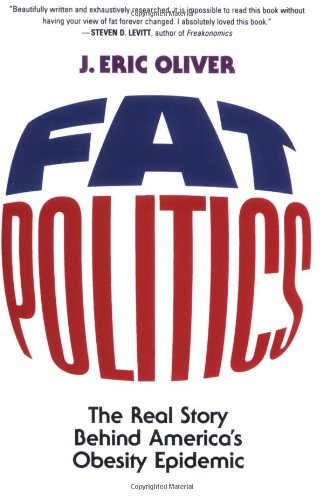
Fat Politics: The Real Story behind America's Obesity Epidemic
Authors:
J. Eric Oliver
Publisher:
Oxford University Press, USA
Publication Date:
Not available
ISBN:
0195313208
It seems almost daily we read newspaper articles and watch news reports exposing the growing epidemic of obesity in America. Our government tells us we... are experiencing a major health crisis, with sixty percent of Americans classified as overweight, and one in four as obese. But how valid are these claims? In Fat Politics, J. Eric Oliver shows how a handful of doctors, government bureaucrats, and health researchers, with financial backing from the drug and weight-loss industries, have campaigned to create standards that mislead the public. They mislabel more than sixty million Americans as "overweight," inflate the health risks of being fat, and promote the idea that obesity is a killer disease. In reviewing the scientific evidence, Oliver shows there is little proof that obesity causes so much disease and death or that losing weight is what makes people healthier. Our concern with obesity, he writes, is fueled more by social prejudice, bureaucratic politics, and industry profit than by scientific fact. Misinformation pushes millions of Americans towards dangerous surgeries, crash diets, and harmful diet drugs, while we ignore other, more real health problems. Oliver goes on to examine why it is that Americans despise fatness and explores why, despite this revulsion, we continue to gain weight. Fat Politics will topple your most basic assumptions about obesity and health. It is essential reading for anyone with a stake in the nation's--or their own--good health.

Fat Shame: Stigma and the Fat Body in American Culture
Authors:
Amy Erdman Farrell
Publisher:
NYU Press
Publication Date:
Not available
ISBN:
0814727697
To be fat hasn’t always occasioned the level of hysteria that this condition receives today and indeed was once considered an admirable trait. Fat... Shame: Stigma and the Fat Body in American Culture explores this arc, from veneration to shame, examining the historic roots of our contemporary anxiety about fatness. Tracing the cultural denigration of fatness to the mid 19th century, Amy Farrell argues that the stigma associated with a fat body preceded any health concerns about a large body size. Firmly in place by the time the diet industry began to flourish in the 1920s, the development of fat stigma was related not only to cultural anxieties that emerged during the modern period related to consumer excess, but, even more profoundly, to prevailing ideas about race, civilization and evolution. For 19th and early 20th century thinkers, fatness was a key marker of inferiority, of an uncivilized, barbaric, and primitive body. This idea--that fatness is a sign of a primitive person--endures today, fueling both our $60 billion “war on fat” and our cultural distress over the “obesity epidemic.” Farrell draws on a wide array of sources, including political cartoons, popular literature, postcards, advertisements, and physicians’ manuals, to explore the link between our historic denigration of fatness and our contemporary concern over obesity. Her work sheds particular light on feminisms’ fraught relationship to fatness. From the white suffragists of the early 20th century to contemporary public figures like Oprah Winfrey, Monica Lewinsky, and even the Obama family, Farrell explores the ways that those who seek to shed stigmatized identities--whether of gender, race, ethnicity or class--often take part in weight reduction schemes and fat mockery in order to validate themselves as “civilized.” In sharp contrast to these narratives of fat shame are the ideas of contemporary fat activists, whose articulation of a new vision of the body Farrell explores in depth. This book is significant for anyone concerned about the contemporary “war on fat” and the ways that notions of the “civilized body” continue to legitimate discrimination and cultural oppression.
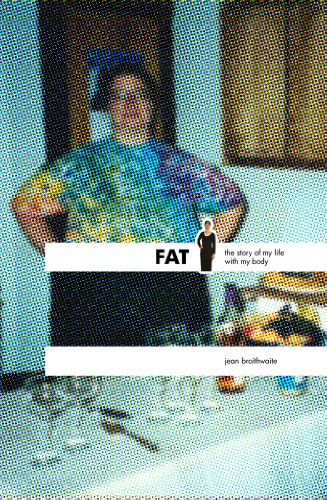
FAT: The story of My Life With My Body
Authors:
Jean Braithwaite
Publisher:
Snake Nation Press
Publication Date:
Not available
ISBN:
0982543042
The Gilte Legende was widely read as a model for everyday life, including the education of women through examples set by early Christian martyrs. This... book divides the lives of female saints into: the "ryght hooly virgins", who vocally defend their bodies against Roman persecution; "holy mothers", who give up their traditional role to pursue a life of contemplation; the "repentant sinners", who convert and voice their defiance against a society that demanded silence in women; and the "holy transvestites", who cast off their gender identity to find absolution and salvation. Their lives reach through the ages to speak to a modern audience, forcing a re-examination of women's roles in the medieval period. LARISSA TRACY is Adjunct Assistant Professor of English at Georgetown University and George Mason University. Series editor JANE CHANCE
 '





