production
/viewbook/list/all/?page=4531
/
/static/
None
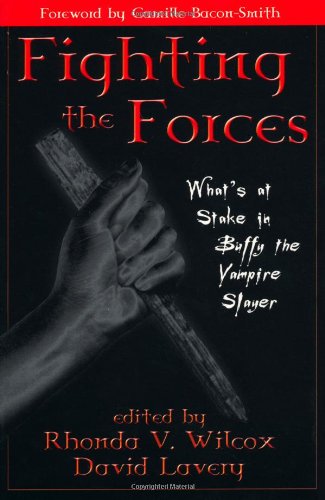
Fighting The Forces: What's At Stake In Buffy The Vampire Slayer?
Authors:
Not Available
Publisher:
Rowman & Littlefield Publishers
Publication Date:
Not available
ISBN:
0742516814
For every television series, the original vision grows within a press of forces-both social and artistic expectations, conventions of the business, as... well as conventions of the art. Bad television--predictable, commercial, exploitative--simply yields to the forces. Good television, like the character of Buffy the Vampire Slayer, fights them.Fighting the Forces explores the struggle to create meaning in an impressive example of popular culture, the television series phenomenon Buffy the Vampire Slayer. In the essays collected here, contributors examine the series using a variety of techniques and viewpoints. They analyze the social and cultural issues implicit in the series and place it in its literary context, not only by examining its literary influences (from German liebestod to Huckleberry Finn) but also by exploring the series' purposeful literary allusions. Furthermore, the book explores the extratextual, such as fanfiction and online discussion groups. The book is additionally supplemented by an online journal Slayage (www.slayage.tv), created by the book editors in acknowledgement of the ongoing nature of television art.Rhonda V. Wilcox and David Lavery have written and edited several books and articles exploring the social, literary, and artistic merit of quality television. In addition to Buffy the Vampire Slayer, their work has covered a variety of programs including Twin Peaks, Northern Exposure, The X-Files, and The Sopranos.

Fighting the Greater Jihad: Amadu Bamba and the Founding of the...
Authors:
Cheikh Anta Babou
Publisher:
Ohio University Press
Publication Date:
Not available
ISBN:
0821417665
In Senegal, the Muridiyya, a large Islamic Sufi order, is the single most influential religious organization, including among its numbers the nation’s... president. Yet little is known of this sect in the West. Drawn from a wide variety of archival, oral, and iconographic sources in Arabic, French, and Wolof, Fighting the Greater Jihad offers an astute analysis of the founding and development of the order and a biographical study of its founder, Cheikh Amadu Bamba Mbacke. Cheikh Anta Babou explores the forging of Murid identity and pedagogy around the person and initiative of Amadu Bamba as well as the continuing reconstruction of this identity by more recent followers. He makes a compelling case for reexamining the history of Muslim institutions in Africa and elsewhere in order to appreciate believers’ motivation and initiatives, especially religious culture and education, beyond the narrow confines of political collaboration and resistance. Fighting the Greater Jihad also reveals how religious power is built at the intersection of genealogy, knowledge, and spiritual force, and how this power in turn affected colonial policy. Fighting the Greater Jihad will dramatically alter the perspective from which anthropologists, historians, and political scientists study Muslim mystical orders.
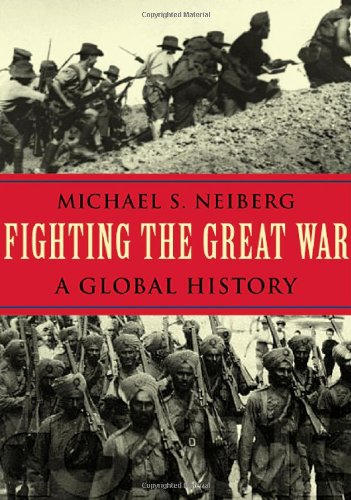
Fighting the Great War: A Global History
Authors:
Michael S. Neiberg
Publisher:
Harvard University Press
Publication Date:
Not available
ISBN:
0674016963
Despair at Gallipoli. Victory at Vimy Ridge. A European generation lost, an American spirit found. The First World War, the deadly herald of a new era,... continues to captivate readers. In this lively book, Michael Neiberg offers a concise history based on the latest research and insights into the soldiers, commanders, battles, and legacies of the Great War. Tracing the war from Verdun to Salonika to Baghdad to German East Africa, Neiberg illuminates the global nature of the conflict. More than four years of mindless slaughter in the trenches on the western front, World War I was the first fought in three dimensions: in the air, at sea, and through mechanized ground warfare. New weapons systems--tanks, bomber aircraft, and long-range artillery--all shaped the battle environment. Moving beyond the standard portrayal of the war's generals as "butchers and bunglers," Neiberg offers a nuanced discussion of officers constrained by the monumental scale of complex events. Diaries and letters of men serving on the front lines capture the personal stories and brutal conditions--from Alpine snows to Mesopotamian sands--under which these soldiers lived, fought, and died. Generously illustrated, with many never-before-published photographs, this book is an impressive blend of analysis and narrative. Anyone interested in understanding the twentieth century must begin with its first global conflict, and there is no better place to start than with Fighting the Great War.
Fighting the Great War: A Global History (Polity Short Introductions)
Authors:
Michael S. Neiberg
Publisher:
Harvard University Press
Publication Date:
Not available
ISBN:
0674022513
Despair at Gallipoli. Victory at Vimy Ridge. A European generation lost, an American spirit found. The First World War, the deadly herald of a new era,... continues to captivate readers. In this lively book, Michael Neiberg offers a concise history based on the latest research and insights into the soldiers, commanders, battles, and legacies of the Great War. Tracing the war from Verdun to Salonika to Baghdad to German East Africa, Neiberg illuminates the global nature of the conflict. More than four years of mindless slaughter in the trenches on the western front, World War I was the first fought in three dimensions: in the air, at sea, and through mechanized ground warfare. New weapons systems--tanks, bomber aircraft, and long-range artillery--all shaped the battle environment. Moving beyond the standard portrayal of the war's generals as "butchers and bunglers," Neiberg offers a nuanced discussion of officers constrained by the monumental scale of complex events. Diaries and letters of men serving on the front lines capture the personal stories and brutal conditions--from Alpine snows to Mesopotamian sands--under which these soldiers lived, fought, and died. Generously illustrated, with many never-before-published photographs, this book is an impressive blend of analysis and narrative. Anyone interested in understanding the twentieth century must begin with its first global conflict, and there is no better place to start than with Fighting the Great War.

Fighting Their Own Battles: Mexican Americans, African Americans,...
Authors:
Brian Behnken
Publisher:
The University of North Carolina Press
Publication Date:
Not available
ISBN:
0807834785
Between 1940 and 1975, Mexican Americans and African Americans in Texas fought a number of battles in court, at the ballot box, in schools, and on the... streets to eliminate segregation and state-imposed racism. Although both groups engaged in civil rights struggles as victims of similar forms of racism and discrimination, they were rarely unified. In Fighting Their Own Battles, Brian Behnken explores the cultural dissimilarities, geographical distance, class tensions, and organizational differences that all worked to separate Mexican Americans and blacks. Behnken further demonstrates that prejudices on both sides undermined the potential for a united civil rights campaign. Coalition building and cooperative civil rights efforts foundered on the rocks of perceived difference, competition, distrust, and, oftentimes, outright racism. Behnken's in-depth study reveals the major issues of contention for the two groups, their different strategies to win rights, and significant thematic developments within the two civil rights struggles. By comparing the histories of these movements in one of the few states in the nation to witness two civil rights movements, Behnken bridges the fields of Mexican American and African American history, revealing the myriad causes that ultimately led these groups to "fight their own battles."
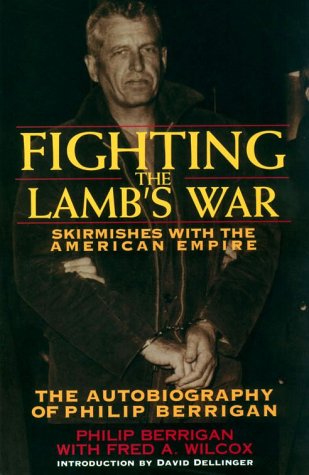
Fighting the Lamb's War: Skirmishes with the American Empire
Authors:
Fred A Wilcox
Publisher:
Common Courage Press
Publication Date:
Not available
ISBN:
1567511007
"A Christian who truly walks the radical way of the cross. Phil Berrigan overturns the tables of injustice and summons us to love our enemies and... worship the God of peace. Like Thoreau, Ghandi, King, and Dorothy Day, Phil Berrigan exemplifies courage. He is both an inspiration and a challenge to me and countless others. Here is a true hero of our turbulent times. -Martin Sheen "Few nations in history have had a prophet of Phil Berrigan's stature. With iron intransigency he has stood in the breach leading to nuclear omnicide. The state has tried to quash his witness time after time: arrests, lockups, long sentences, all the paraphenalia of intimidation. Why doesn't it work? What enables this jack-in-thebox prophet to pop up, again and again? Find out. Read this book." -Walter Wink, author, Engaging the Powers "How important it is for our children to know this history of courage, risk, and commitment that they won't find in history books." -Grace Paley "I have been waiting for Phil Berrigan's autobiography and it is a pleasure to read. His words have the direct, simple eloquence of his actions. He provokes and inspires, and dares to be critical of himself even as he recounts a life committed to peace, justice and community." -Howard Zinn "One of the best books I have ever read. I loved its honest probing of the thoughts, feelings and actions of an unusually sensitive, occasionally wrong-headed, but clearly not self-righteous pioneer in the struggle for a better world. Its acute analyses of of the periods in which Phil have lived, from before World War II to the present, are invaluable contributions to real history." -David Dellinger, author, From Yale to Jail "It is difficult to be dispassionate about the Berrigans. No one who knows them can doubt that they are heroic individuals, willing to do what many realize should be done, regardless of the personal cost...There are not too many people of whom this can honestly be said." -Noam Chomsky

Fighting the Lamb's War: Skirmishes with the American Empire
Authors:
Philip Berrigan
Publisher:
iUniverse.com
Publication Date:
Not available
ISBN:
1450279732
"A Christian who truly walks the radical way of the cross. Phil Berrigan overturns the tables of injustice and summons us to love our enemies and... worship the God of peace. Like Thoreau, Ghandi, King, and Dorothy Day, Phil Berrigan exemplifies courage. He is both an inspiration and a challenge to me and countless others. Here is a true hero of our turbulent times. -Martin Sheen "Few nations in history have had a prophet of Phil Berrigan's stature. With iron intransigency he has stood in the breach leading to nuclear omnicide. The state has tried to quash his witness time after time: arrests, lockups, long sentences, all the paraphenalia of intimidation. Why doesn't it work? What enables this jack-in-thebox prophet to pop up, again and again? Find out. Read this book." -Walter Wink, author, Engaging the Powers "How important it is for our children to know this history of courage, risk, and commitment that they won't find in history books." -Grace Paley "I have been waiting for Phil Berrigan's autobiography and it is a pleasure to read. His words have the direct, simple eloquence of his actions. He provokes and inspires, and dares to be critical of himself even as he recounts a life committed to peace, justice and community." -Howard Zinn "One of the best books I have ever read. I loved its honest probing of the thoughts, feelings and actions of an unusually sensitive, occasionally wrong-headed, but clearly not self-righteous pioneer in the struggle for a better world. Its acute analyses of of the periods in which Phil have lived, from before World War II to the present, are invaluable contributions to real history." -David Dellinger, author, From Yale to Jail "It is difficult to be dispassionate about the Berrigans. No one who knows them can doubt that they are heroic individuals, willing to do what many realize should be done, regardless of the personal cost...There are not too many people of whom this can honestly be said." -Noam Chomsky
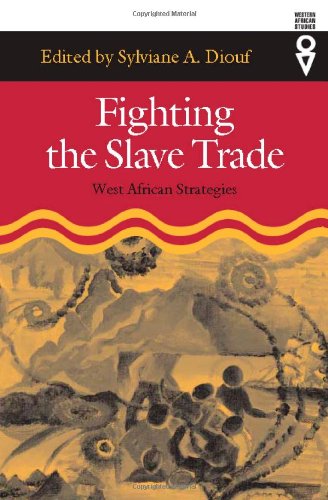
Fighting the Slave Trade: West African Strategies (Western African...
Authors:
Sylviane A. Diouf
Publisher:
Ohio University Press
Publication Date:
Not available
ISBN:
0821415174
While most studies of the slave trade focus on the volume of captives and on their ethnic origins, the question of how the Africans organized their... familial and communal lives to resist and assail it has not received adequate attention. But our picture of the slave trade is incomplete without an examination of the ways in which men and women responded to the threat and reality of enslavement and deportation. Fighting the Slave Trade is the first book to explore in a systematic manner the strategies Africans used to protect and defend themselves and their communities from the onslaught of the Atlantic slave trade a nd how they assaulted it. It challenges widely held myths of African passivity and general complicity in the trade and shows that resistance to enslavement and to involvement in the slave trade was much more pervasive than has been acknowledged by the orthodox interpretation of historical literature. Focused on West Africa, the essays collected here examine in detail the defensive, protective, and offensive strategies of individuals, families, communities, and states. In ch apters discussing the manipulation of the environment, resettlement, the redemption of captives, the transformation of social relations, political centralization, marronage, violent assaults on ships and ports, shipboard revolts, and controlled participation in the slave trade as a way to procure the means to attack it, Fighting the Slave Trade presents a much more complete picture of the West African slave trade than has previously been available.
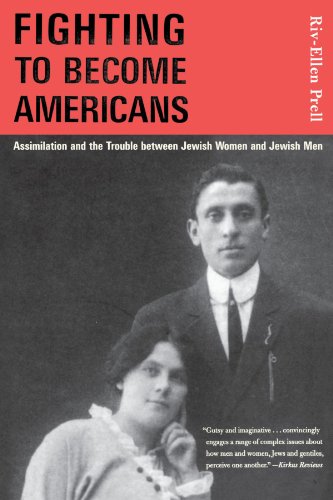
Fighting to Become Americans: Assimilation and the Trouble Between...
Authors:
Riv-Ellen Prell
Publisher:
Beacon Press
Publication Date:
Not available
ISBN:
0807036331
Why would an American ethnic group use racist terms, such as "JAP", "the Jewish prince', and the "ghetto girl", to describe itself? In her history of... Jewish acculturation during the twentieth century, Riv-Ellen Press addresses this compelling question as she observes how deeply anti-Semitic stereotypes--particularly gender stereotypes--infuse Jewish men's and women's views of one another.
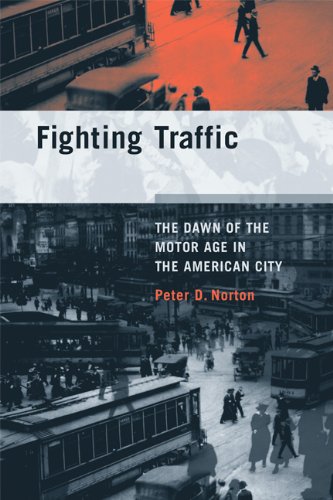
Fighting Traffic: The Dawn of the Motor Age in the American City
Authors:
Peter D. Norton
Publisher:
The MIT Press
Publication Date:
Not available
ISBN:
0262516128
Before the advent of the automobile, users of city streets were diverse and included children at play and pedestrians at large. By 1930, most streets... were primarily a motor thoroughfares where children did not belong and where pedestrians were condemned as "jaywalkers." In Fighting Traffic, Peter Norton argues that to accommodate automobiles, the American city required not only a physical change but also a social one: before the city could be reconstructed for the sake of motorists, its streets had to be socially reconstructed as places where motorists belonged. It was not an evolution, he writes, but a bloody and sometimes violent revolution. Norton describes how street users struggled to define and redefine what streets were for. He examines developments in the crucial transitional years from the 1910s to the 1930s, uncovering a broad anti-automobile campaign that reviled motorists as "road hogs" or "speed demons" and cars as "juggernauts" or "death cars." He considers the perspectives of all users--pedestrians, police (who had to become "traffic cops"), street railways, downtown businesses, traffic engineers (who often saw cars as the problem, not the solution), and automobile promoters. He finds that pedestrians and parents campaigned in moral terms, fighting for "justice." Cities and downtown businesses tried to regulate traffic in the name of "efficiency." Automotive interest groups, meanwhile, legitimized their claim to the streets by invoking "freedom"--a rhetorical stance of particular power in the United States. Fighting Traffic offers a new look at both the origins of the automotive city in America and how social groups shape technological change.Peter D. Norton is Assistant Professor in the Department of Science, Technology, and Society at the University of Virginia.
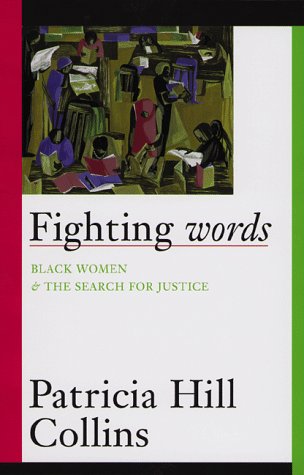
Fighting Words: Black Women and the Search for Justice...
Authors:
Patricia Hill Collins
Publisher:
Univ Of Minnesota Press
Publication Date:
Not available
ISBN:
0816623775
Anderson's essay shows how the European processes of inventing nationalism were transported to the Third World through colonialism and were adapted by... subject races in Latin America and Asia.

Fight Like a Girl: How to be a Fearless Feminist
Authors:
Megan Seely
Publisher:
NYU Press
Publication Date:
Not available
ISBN:
0814740022
View the Author's website! Seely, the youngest elected president of California's chapter of the National Organization for Women, combines her own story... of third-wave feminism with an overview of the feminist movement and words to guide others. Third-wave feminists are aware of both the victories won by earlier feminists and the problems of class, race, sexual orientation, and internationalism that must still be overcome. This book weaves a deep respect for the foremothers with commonsense discussion of current obstacles and suggestions for direct action, resulting in a work that reminds us of what too many activists forget-every progressive movement has a long history, few organizing tricks are new, and problems must be understood before they can be solved. Seely includes booklists, time lines, web sites, and how-to tips that will help readers over the bridge from her insights to real world activism. For midsize to larger public libraries, academic libraries, and all feminist collections.—Library Journal"Want to know what it means to be a feminist of the third wave? Megan Seely's Fight Like a Girl is the answer; there's enough information here to make you angry and enough resources to make you an effective activist.—Jennifer Baumgardner and Amy Richards, co-authors of Manifesta: Young Women, Feminism and the Future "Always engaging, interesting, and insightful. Fascinating and sure to engage many young women!" —Sherrie A. Inness, editor of Action Chicks "The resources, helpful hints about organizing and working with the press, the short bios of companies and fabulous feminists are great!" Caryn Aviv, co-editor of American Queer, Then and Now Fight Like a Girl is packed with both information and inspiration for young women by a young woman who knows her stuff. It's a terrific practical feminist resource book with an optimistic attitude that says in clear language, “You're in charge of your life and here's how to stay that way”. Gloria Feldt, former president, Planned Parenthood Federation of America and author of The War on Choice: The Right-Wing Attack on Women's Rights and How to Fight Back Fight Like a Girl offers a fearless vision for the future of feminism. By boldly detailing what is at stake for women and girls today, Megan Seely outlines the necessary steps to achieve true political, social and economic equity for all. Reclaiming feminism for a new generation, Fight Like a Girl speaks to young women who embrace feminism in substance but not necessarily in name. With an eye toward what it takes to create actual change, Seely offers a practical guide for how to get involved, take action and wage successful events and campaigns. The book is full of valuable resources for novice and committed activists alike, including such features as "How to Write a Press Release," "Guidelines to a Good Media Interview," "A Feminist Shopping Guide," and a list of over 100 Fabulous Feminist Resources, including organizations, websites, and events to attend. Each chapter is full of ideas, both big and small, for ways to get involved, get active, and make a difference. Exploring such issues as body image and self-acceptance, education and empowerment, health and sexuality, political representation, economic justice, and violence against women, Fight Like a Girl looks at the challenges that women and girls face while emphasizing the strength that they independently, and collectively, embody. Seely delves into the politics of the feminist movement, exploring both women's history and current–day realities with easy-to-follow lists and timelines like those on "Women Who Made a Difference," "Chronology of the U.S. Women's Movement," and "Do's and Don'ts for Young Feminists." A Third Wave manifesto as well as an introduction to feminism for a new generation, Fight Like A Girl is a powerful blueprint for young women today.

Fight Pictures: A History of Boxing and Early Cinema
Authors:
Dan Streible
Publisher:
University of California Press
Publication Date:
Not available
ISBN:
0520250753
The first filmed prizefight, Veriscope's Corbett-Fitzsimmons Fight (1897) became one of cinema's first major attractions, ushering in an era in which... hugely successful boxing films helped transform a stigmatized sport into legitimate entertainment. Exploring a significant and fascinating period in the development of modern sports and media, Fight Pictures is the first work to chronicle the mostly forgotten story of how legitimate bouts, fake fights, comic sparring matches, and more came to silent-era screens and became part of American popular culture.
Fights of Our Lives: Elections, Leadership and the Making of Canada
Authors:
John Duffy
Publisher:
HarperCollins Publishers
Publication Date:
Not available
ISBN:
000200089X
Figuratively Speaking: Revised Edition
Authors:
Robert J. Fogelin
Publisher:
Oxford University Press, USA
Publication Date:
Not available
ISBN:
0199739994
In this updated edition of his brief, engaging book, Robert J. Fogelin examines figures of speech that concern meaning--irony, hyperbole,... understatement, similes, metaphors, and others--to show how they work and to explain their attraction. Building on the ideas of Grice and Tversky, Fogelin contends that figurative language derives its power from its insistence that the reader participate in the text, looking beyond the literal meaning of the figurative language to the meanings that are implied. With examples ranging from Shakespeare, John Donne, and Jane Austen to e.e. cummings, Bessie Smith, and Monty Python, Fogelin demonstrates that the intellectual and aesthetic force of figurative language is derived from the opportunity it provides for unlimited elaboration. Fogelin presents a modern restatement of the view, first put forward by Aristotle, that metaphors are to be treated as elliptical similes. He then offers a detailed defense of this "comparativist" view of metaphors in response to criticisms that have been brought against it by a series of eminent philosophers. This new edition is updated to reflect more recent work on the topic and will interest philosophers, linguists, and literary theorists.
 '





