production
/viewbook/list/all/?page=4534
/
/static/
None
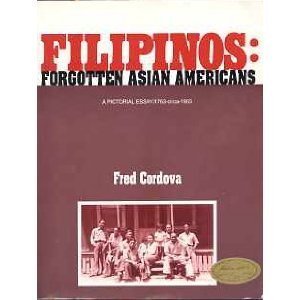
Filipinos: Forgotten Asian Americans
Authors:
Fred Cordova
Publisher:
Dorothy Cordova
Publication Date:
Not available
ISBN:
0840328974
"Filipinos: Forgotten Asian Americans" is a pictorial- essay which gives the reader a sweeping vista of the presence and life of Filipinos in America... from 1763 to 1963 through collection of 250 photographs, documents and 22 essays. Although Filipinos settled in North America before the American Revolution, very little known about them and even less is available in libraries, resource centers or institutions of higher education. This book is a must for every Filipino home in the world.
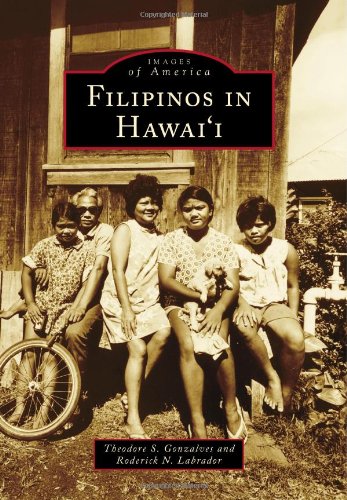
Filipinos in Hawai'i (Images of America)
Authors:
Theodore S. Gonzalves
Publisher:
Arcadia Publishing
Publication Date:
Not available
ISBN:
0738576085
Nearly one in four persons in Hawai'i is of Filipino heritage. Representing one-fifth of the state's workforce, Filipinos have been in Hawai'i for more... than a century, turning the rough and raw materials of sugar and pineapple into billion-dollar commodities. This book traces a history from 1946--the last year that sakadas (plantation workers) were imported from the Philippines--to the centennial year of their settlement in Hawai'i. Filipinos are central to much that has been built and cherished in the state, including the agricultural industry, tourism, military presence, labor movements, community activism, politics, education, entertainment, and sports.
Filipino Tapestry: Tagalog Language through Culture (English and...
Authors:
Rhodalyne Gallo-Crail
Publisher:
University of Wisconsin Press
Publication Date:
Not available
ISBN:
0299281647
An official language of the Philippines, Filipino is based on Tagalog, with elements of Spanish, English, and Chinese mixed in. The result is a rich,... expressive language spoken in the Philippines and throughout the far-reaching Filipino diaspora. Filipino Tapestry offers an innovative approach to learning language by emphasizing the critical intersection of language and culture. It provides activities and exercises that immerse beginning and intermediate students of Filipino in a variety of authentic situations to simulate an in-country experience. Starting with chapters on such topics as family, friends, and home, it then expands the student’s world in chapters prompting conversation about food, shopping, parties, and pastimes. Its later chapters push learners to discuss city and country life, cultural traditions, religion, history, and politics. Features include:• background chapters on phonology, sentence construction, and common expressions• photos and cultural notes about chapter themes• grammar, reading, listening, and speaking exercises• glossaries of words and additional expressions

FILLER PAPER
Authors:
Not Available
Publisher:
Not available
Publication Date:
Not available
ISBN:
Not available
FILLER PAPER 130CT COLLEGE RULED
Authors:
Not Available
Publisher:
Not available
Publication Date:
Not available
ISBN:
Not available

Filling and Wrapping: Three-Dinemsional Measurement (Connected...
Authors:
Glenda Lappan
Publisher:
Not available
Publication Date:
Not available
ISBN:
0131656449
Are soft-bound, 3-hole-punched to fit in students' binders 4-color with an engaging Unit Opener, Investigations, Go Online web codes, ACE ... Homework, Mathematical Reflections, a Unit Project, Looking Back and Looking Ahead, and a Glossary of Terms in English and SpanishAvailable in English and Spanish
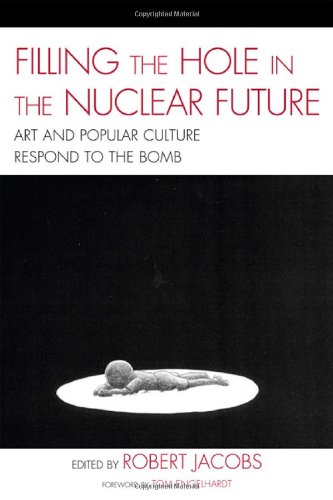
Filling the Hole in the Nuclear Future: Art and Popular Culture...
Authors:
Robert Jacobs
Publisher:
Lexington Books
Publication Date:
Not available
ISBN:
0739135570
From the dawn of the atomic age, art and popular culture have played an essential role interpreting nuclear issues to the public and investigating the... implications of nuclear weapons to the future of human civilization. Political and social forces often seemed paralyzed in thinking beyond the advent of nuclear weapons and articulating a creative response to the dilemma posed by this apocalyptic technology. Art and popular culture are uniquely suited to grapple with the implications of the bomb and the disruptions in the continuity of traditional narratives about the human future endemic to the atomic age. Filling the Hole in the Nuclear Future explores the diversity of visions evoked in American and Japanese society by the mushroom cloud hanging over the future of humanity during the last half of the twentieth century. It presents historical scholarship on art and popular culture alongside the work of artists responding to the bomb, as well as artists discussing their own work. From the effect of nuclear testing on sci-fi movies during the mid-fifties in both the U.S. and Japan, to the socially engaged visual discussion about power embodied in Japanese manga, Filling the Hole in the Nuclear Future takes readers into unexpected territory
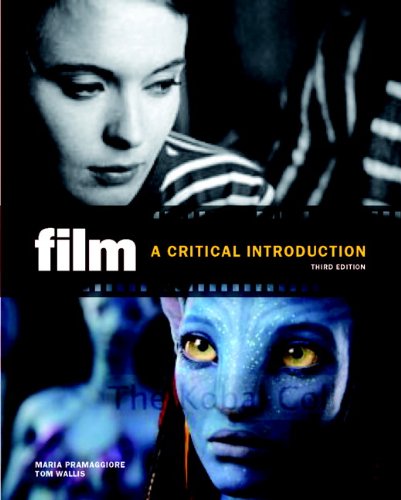
Film: A Critical Introduction (3rd Edition)
Authors:
Maria T. Pramaggiore
Publisher:
Pearson
Publication Date:
Not available
ISBN:
0205770770
Film: A Critical Introduction provides readers with the skills needed to successfully critique and analyze film and teaches strategies for... translating ideas about film into written criticism and analysis. Intricate discussions of the current issues in film theory, from sound production to documentaries, keep readers’ perspectives on film fresh and informed. Part I introduces readers to the importance of film analysis, offering helpful strategies for discerning the way films produce meaning. Part II examines the fundamental elements of film, including narrative form, mise en scène, cinematography, editing, and sound, and shows how these concepts can be used to interpret films. Part III frames the debates around ideological criticism, national and transnational cinema, and genre and auteur theory that animate contemporary film scholarship.
Film Adaptation and Its Discontents: From <I>Gone with the...
Authors:
Thomas Leitch
Publisher:
The Johns Hopkins University Press
Publication Date:
Not available
ISBN:
0801885655
Most books on film adaptation—the relation between films and their literary sources—focus on a series of close one-to-one comparisons between... specific films and canonical novels. This volume identifies and investigates a far wider array of problems posed by the process of adaptation. Beginning with an examination of why adaptation study has so often supported the institution of literature rather than fostering the practice of literacy, Thomas Leitch considers how the creators of short silent films attempted to give them the weight of literature, what sorts of fidelity are possible in an adaptation of sacred scripture, what it means for an adaptation to pose as an introduction to, rather than a transcription of, a literary classic, and why and how some films have sought impossibly close fidelity to their sources. After examining the surprisingly divergent fidelity claims made by three different kinds of canonical adaptations, Leitch's analysis moves beyond literary sources to consider why a small number of adapters have risen to the status of auteurs and how illustrated books, comic strips, video games, and true stories have been adapted to the screen. The range of films studied, from silent Shakespeare to Sherlock Holmes to The Lord of the Rings, is as broad as the problems that come under review.
Film Adaptation and Its Discontents: From <I>Gone with the...
Authors:
Thomas Leitch
Publisher:
The Johns Hopkins University Press
Publication Date:
Not available
ISBN:
0801892716
Most books on film adaptation—the relation between films and their literary sources—focus on a series of close one-to-one comparisons between... specific films and canonical novels. This volume identifies and investigates a far wider array of problems posed by the process of adaptation. Beginning with an examination of why adaptation study has so often supported the institution of literature rather than fostering the practice of literacy, Thomas Leitch considers how the creators of short silent films attempted to give them the weight of literature, what sorts of fidelity are possible in an adaptation of sacred scripture, what it means for an adaptation to pose as an introduction to, rather than a transcription of, a literary classic, and why and how some films have sought impossibly close fidelity to their sources. After examining the surprisingly divergent fidelity claims made by three different kinds of canonical adaptations, Leitch's analysis moves beyond literary sources to consider why a small number of adapters have risen to the status of auteurs and how illustrated books, comic strips, video games, and true stories have been adapted to the screen. The range of films studied, from silent Shakespeare to Sherlock Holmes to The Lord of the Rings, is as broad as the problems that come under review.
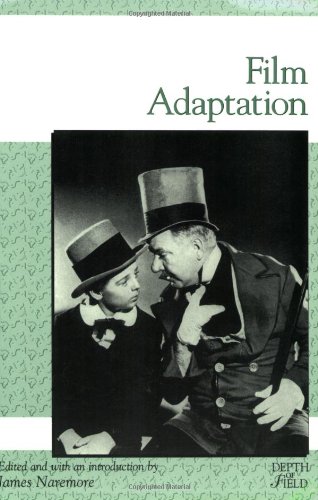
Film Adaptation (Depth of Field)
Authors:
Not Available
Publisher:
Rutgers University Press
Publication Date:
Not available
ISBN:
0813528143
Some of the earliest feature films were derived from classic literature. Even today, most of the movies we see are adaptations of one kind or another.... People who have never read Jane Austen can see her characters on the screen; but filmgoers can also see material taken from theater, television, comic books, and every other medium.The essays in this volume, most of which have never before been published, raise fundamental questions about cinema and adaptation: what is the nature of the "literary" and the "cinematic"? Why do so many of the films described as adaptions seem to derive from canonical literature rather than from other sources? How do the different media affect the ways stories are told?Film Adaptation offers fresh approaches to the art, theory, and cultural politics of movie adaptations, even challenging what is meant by the term "adaptation" itself. Contributors examine the process of adaptation in both theory and practice, discussing a wide variety of films. James Naremore's introduction provides an accessible historical overview of the field and reveals the importance of adaptation study to the many different academic disciplines now attracted to the analysis of film as commodity, document, and cultural artifact.
Film Analysis: A Norton Reader
Authors:
R. L. Rutsky
Publisher:
W. W. Norton & Company
Publication Date:
Not available
ISBN:
0393979830
Film Analysis: A Norton Reader offers concise analyses—each written exclusively for this text by a leading scholar—of forty-four diverse,... historically significant films.Written with undergraduate readers in mind, these essays cover the central issues raised in today’s cinema courses and provide students with practical models to help them improve their own writing and film-analysis skills. Film Analysis also includes a helpful introduction and an extensive glossary. Already half the price of competing texts when purchased alone, Film Analysis can be packaged at 50 percent off with either A History of Narrative Film or Looking at Movies.
FILM ANALYSIS GUIDE
Authors:
WHITE DR. TIMOTHY R.
Publisher:
Kendall Hunt Publishing
Publication Date:
Not available
ISBN:
0757523544
FILM: AND INTRODUCTION W/FILM: AN ANALY
Authors:
Not Available
Publisher:
Not available
Publication Date:
Not available
ISBN:
Not available
Film and Literature: An Introduction and Reader
Authors:
Not Available
Publisher:
Routledge
Publication Date:
Not available
ISBN:
0415560101
The Routledge new edition of this classic book functions as an accessible introduction to the historical and theoretical exchanges between film and... literature and also includes the key critical readings necessary for an understanding of this increasingly vibrant and popular field of adaption studies. This new edition has been fully updated and is usefully separated into three sections: in the first section Timothy Corrigan guides readers through the history of film and literature to the present; the second section has expanded to reprint 28 key essays by leading theorists in the field including André Bazin, Linda Hutcheon and Robert Stam, as well as new essays by Timothy Corrigan and William Galperin; and the third section offers hands-on strategies and advice for students writing about film and literature. Film and Literature will fill a gap for many film and literature courses and courses concentrating on the interplay between the two. The companion website features an interactive timeline, extended filmography and comprehensive bibliography, by Geoff Wright, Samford University, USA. www.routledge.com/cw/corrigan
 '





