production
/viewbook/list/all/?page=4536
/
/static/
None
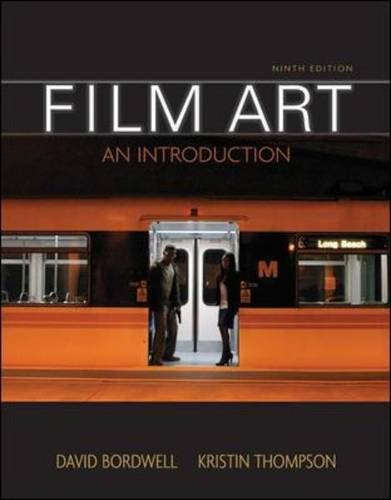
Film Art: An Introduction [With CDROM]
Authors:
David Bordwell
Publisher:
McGraw-Hill
Publication Date:
Not available
ISBN:
007739643X
Film is an art form with a language and an aesthetic all its own. Since 1979, David Bordwell and Kristin Thompson's Film Art has been the best-selling... and widely respected introduction to the analysis of cinema. Taking a skills-centered approach supported by a wide range of examples from various periods and countries, the authors strive to help students develop a core set of analytical skills that will deepen their understanding of any film, in any genre. Frame enlargements throughout the text enable students to view images taken directly from completed films, while an optional, text-specific tutorial CD-ROM helps clarify and reinforce specific concepts addressed in the text with the use of film clips. Building on these strengths, the ninth edition adds coverage of new technologies, updated examples, and references to the authors' acclaimed weblog to provide unparalleled currency and connect students with the world of cinema today.
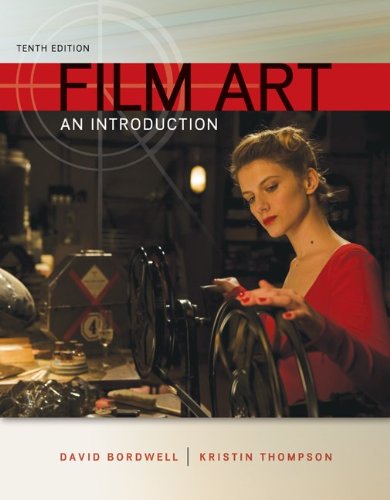
Film Art: An Introduction with Connect Access Card
Authors:
David Bordwell
Publisher:
McGraw-Hill Humanities/Social Sciences/Languages
Publication Date:
Not available
ISBN:
0077689062
Film is an art form with a language and an aesthetic all its own. Since 1979, David Bordwell and Kristin Thompson's Film Art has been the best-selling... and most widely respected introduction to the analysis of cinema. Taking a skills-centered approach supported by examples from many periods and countries, the authors help students develop a core set of analytical skills that will enrich their understanding of any film, in any genre. In-depth examples deepen students’ appreciation for how creative choices by filmmakers affect what viewers experience and how they respond. Film Art is generously illustrated with more than 1,000 frame enlargements taken directly from completed films, providing concrete illustrations of key concepts. Along with updated examples and expanded coverage of digital filmmaking, the tenth edition also offers Connect for Film Art, a digital solution that includes multimedia tutorials along with web-based assignment and assessment tools.
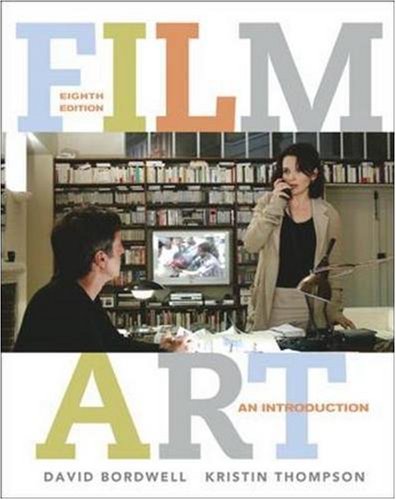
Film Art: An Introduction with Tutorial CD-ROM
Authors:
David Bordwell
Publisher:
McGraw-Hill Humanities/Social Sciences/Languages
Publication Date:
Not available
ISBN:
0073310271
Film is an art form with a language and an aesthetic all its own. Since 1979, David Bordwell's and Kristin Thompson's Film Art has been the best-selling... and widely respected introduction to the analysis of cinema. While it continues to provide the best introduction to the fundamentals of serious film study, the eighth edition has been revised be more classroom friendly by introducing film techniques earlier in the text, followed by the chapters on Film Genres. Supported by a text-specific Tutorial CD-ROM with video clips, Film Art is automatically packaged with this outstanding student learning tool.

FILM ART(CUSTOM)MUST HAVE CD
Authors:
Not Available
Publisher:
Not available
Publication Date:
Not available
ISBN:
Not available
FILM ART W/ DVD
Authors:
Not Available
Publisher:
Not available
Publication Date:
Not available
ISBN:
Not available
FILM AS ART
Authors:
Not Available
Publisher:
Not available
Publication Date:
Not available
ISBN:
Not available
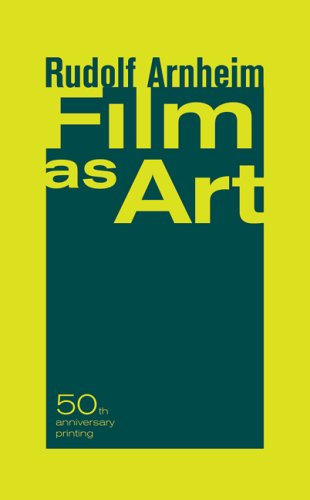
Film as Art: 50th Anniversary Printing
Authors:
Rudolf Arnheim
Publisher:
University of California Press
Publication Date:
Not available
ISBN:
0520248376
In the fall of 1957 the University of California Press expanded Arnheim's 1933 book Film by four essays and brought that landmark work back into print... as Film as Art. Now nearly fifty years after that re-edition, the book continues to occupy an important place in the literature of film. Arnheim's method, provocative in this age of technological wizardry, was to focus on the way art in film was derived from that medium's early limitations: no sound, no color, no three-dimensional depth.
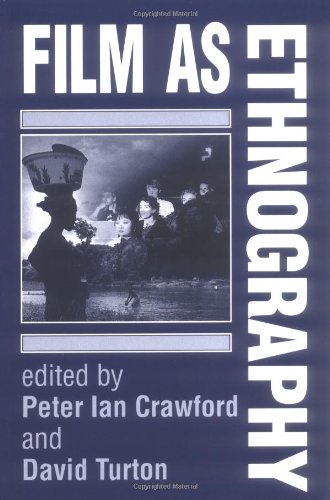
Film As Ethnography
Authors:
Not Available
Publisher:
Manchester University Press
Publication Date:
Not available
ISBN:
0719036836
This work examines the reasons why anthropologists have not used the camera as a research instrument or film as a means of communicating ethnographic... knowledge. It suggests that images and words in this discipline operate on different logical levels; that they are hierarchically related; that whereas writings may encompass the images produced by film, the inverse of this cannot be true. The author argues for this position further by suggesting that the visual is to the written mode as "thin description" (giving a record of the form of behaviour) is to "thick description" (giving an account of meaning).
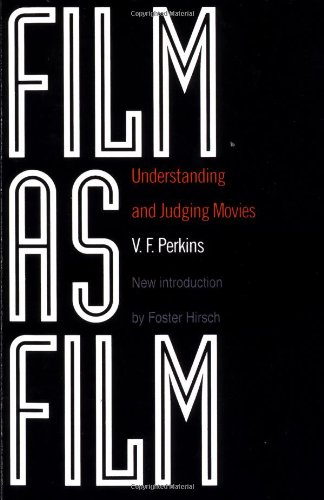
Film As Film: Understanding And Judging Movies
Authors:
V. F. Perkins
Publisher:
Da Capo Press
Publication Date:
Not available
ISBN:
0306805413
Here at last is an introduction to film theory and its history without the jargon. Noted film scholar V. F. Perkins presents criteria for expanding our... understanding and enjoyment of movies. He employs common sense words like balance, coherence, significance, and satisfaction to develop his insightful support of the subtle approach and of the unobtrusive director. Readers will learn why a scene from the humbler movie Carmen Jones is a deeper realization of filmmaking than the bravura lion sequence in the classic Battleship Potemkin. Along the way Perkins invites readers to re-experience with clarity, directness, and simplicity other famous scenes by directors like Hitchcock, Eisenstein, and Chaplin. Perkins examines the origins of movies and embraces their use of both realism and magic, their ability to record as well as to create. In the process he seeks to discover the synthesis between these opposing elements. With the delight of the fan and the perception of the critic, Perkins advances a film theory, based on the work of Bazin and other early film theorists, that is rich with suggestion for debate and further pursuit. Sit beside Perkins as he reacquaints you with cinema, heightens your awareness, deepens your pleasure, and increases your return every time you invest in a movie ticket.
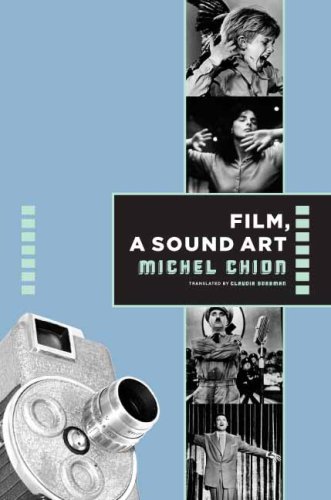
Film, a Sound Art
Authors:
Michel Chion
Publisher:
Columbia University Press
Publication Date:
Not available
ISBN:
023113777X
French critic and composer Michel Chion argues that watching movies is more than just a visual exercise—it enacts a process of audio-viewing. The... audiovisual makes use of a wealth of tropes, devices, techniques, and effects that convert multiple sensations into image and sound, therefore rendering, instead of reproducing, the world through cinema.The first half of Film, A Sound Art considers developments in technology, aesthetic trends, and individual artistic style that recast the history of film as the evolution of a truly audiovisual language. The second half explores the intersection of auditory and visual realms. With restless inventiveness, Chion develops a rhetoric that describes the effects of audio-visual combinations, forcing us to rethink sound film. He claims, for example, that the silent era (which he terms "deaf cinema") did not end with the advent of sound technology but continues to function underneath and within later films. Expanding our appreciation of cinematic experiences ranging from Dolby multitrack in action films and the eerie tricycle of Stanley Kubrick's The Shining to the way actors from different nations use their voices and words, Film, A Sound Art showcases the vast knowledge and innovative thinking of a major theorist.
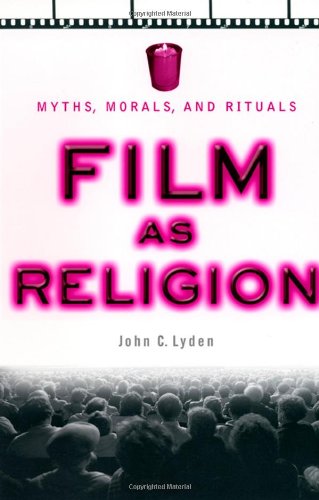
Film as Religion: Myths, Morals, and Rituals
Authors:
John C. Lyden
Publisher:
NYU Press
Publication Date:
Not available
ISBN:
0814751814
Choice Outstanding Academic Title 2003 Film as Religion argues that popular films perform a religious function in our culture. Like more formal... religious institutions, films can provide us with ways to view the world and values to confront it. Lyden contends that approaches which interpret films only ideologically or theologically miss the mark in understanding their appeal to viewers. He develops an alternative method which shows how films can be understood as representing a “religious” worldview in their own right.Lyden surveys the state of the study of religion and film, offering an overview of previous methods before presenting his own. Rather than seeking to uncover hidden meanings in film detectable only to scholars, Lyden emphasizes how film functions for its audiencesᾹthe beliefs and values it conveys, and its ritual power to provide emotional catharsis. He includes a number of brief cases studies in which he applies this method to the study of film genres—including westerns and action movies, children's films, and romantic comedies—and individual films from The Godfather to E.T., showing how films can function religiously.
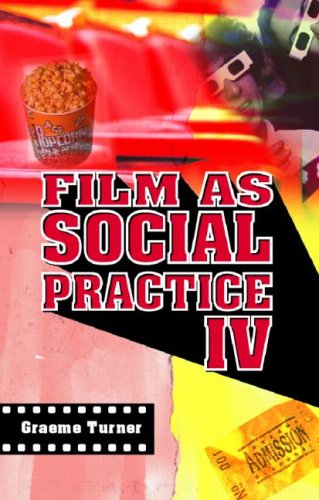
Film as Social Practice IV (Studies in Culture and Communication)
Authors:
Graeme Turner
Publisher:
Routledge
Publication Date:
Not available
ISBN:
0415375142
This fourth edition of our bestselling classic text has been comprehensively updated and revised to include contemporary film analysis and recent... films. With a focus on contemporary popular cinema and examples from Classical Hollywood, Graeme Turner examines the social and cultural aspects of film from audiences and ideologies to exhibition and technology. This fourth edition now includes: new sections dealing with debates about spectacle and special effects an extended treatment of sound and its contribution to cinema film theory’s discussion of the representation of race and ethnicity a thorough update of individual film references a revised applications chapter that includes new contemporary examples new illustrations from contemporary popular cinema. Students of film studies, film practice and film theory will find this a welcome addition to their degree course studies.
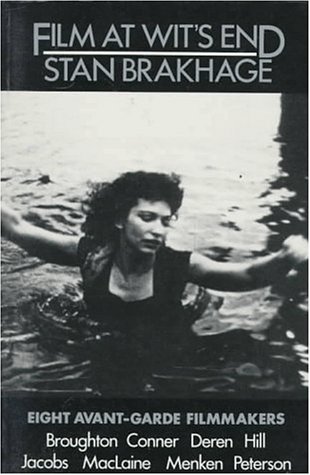
Film at Wit's End: Eight Avant-Garde Filmmakers
Authors:
Stan Brakhage
Publisher:
McPherson
Publication Date:
Not available
ISBN:
092970116X
Of all art forms, filmmaking is the one most taken for granted: no sooner is an artistic or technical advance made than its salient features are... employed in the harness of commerce. Yet, innovation is almost always the province of individual expression. Film at Wit's End presents eight artists who have electrified American independent cinema across four decades: James Broughton, Bruce Conner, Maya Deren, Jerome Hill, Ken Jacobs, Christopher MacLaine, Marie Menken, and Sidney Peterson. Each of these filmmakers' lives and work is brought into sharp focus as we enter the art scenes of New York and San Francisco during times of ferment and controversy. Film at Wit's End tells marvelous tales of serendipitous encounters, of life lived at the edge of social disapproval, and of the insistent development of an art form.
Film: A Very Short Introduction
Authors:
Not Available
Publisher:
Oxford University Press
Publication Date:
Not available
ISBN:
0192803530
Film is arguably the dominant art form of the twentieth century. In this Very Short Introduction, Michael Wood offers a wealth of insight into the... nature of film, considering its role and impact on society as well as its future in the digital age. As Wood notes, film is many things, but it has become above all a means of telling stories through images and sounds. The stories are often quite false, frankly and beautifully fantastic, and they are sometimes insistently said to be true. Indeed, many condemn movies as an instrument of illusion, an emphatic way of seeing what is not there. And others celebrate the reverse: that film brings us closest to the world as it actually is. "Photography is truth," a character says in a film by Jean-Luc Godard. "And cinema is the truth twenty-four times per second." But they are stories in either case, and there are very few films, Wood observes, even in avant-garde art, that don't imply or quietly slip into narrative.
Film Budgeting: Or How Much Will It Cost to Shoot Your Movie?
Authors:
Ralph S. Singleton
Publisher:
Lone Eagle
Publication Date:
Not available
ISBN:
0943728657
 '





