production
/viewbook/list/all/?page=4581
/
/static/
None
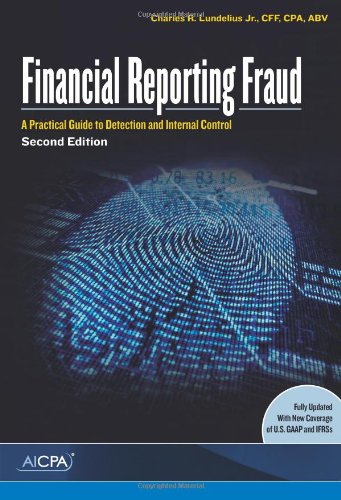
Financial Reporting Fraud: A Practical Guide to Detection and...
Authors:
Charles R. Lundelius Jr.
Publisher:
AICPA
Publication Date:
Not available
ISBN:
0870518909
Congress has placed responsibility for internal controls squarely on senior management's shoulders. Financial Reporting Fraud discusses, in detail, the... role of senior management and the CPA in the prevention of financial reporting fraud.Through case studies, you'll find explanations on: · Where to look for the fraud
· Who is most likely to perpetrate the fraud
· What the fraud will look like
· What should be done to expose the fraud
· What to do to cut down the risk of future fraud
Example scenarios and analysis illustrate key points, especially red flags that CPAs should be aware of. The guide also recommends procedures and controls that can prevent or diminish fraud.Covers Financial Reporting Fraud in the World of IFRSs
Principles-based International Financial Reporting Standards (IFRSs) may give management an even greater degree of discretion than the more detailed and rules-based U.S. GAAP. Financial Reporting Fraud discusses how to avoid operating on the edge of GAAP or IFRSs permissibility, where internal controls are stretched so heavily, that, left unchecked, even one mistake in a seemingly small area can result in significant and drastic consequences. Includes Discussion of Fraud as it Relates to COSO
The guide also discusses the seven most common occurrences of financial reporting fraud, in accordance with COSO's research. These include:· Fictitious revenues· Premature revenues· Understatement of expenses and liabilities· Overstatement of assets· Fictitious assets· Capitalized expenditures that should be expensed· Misappropriation of assetsAs a trusted adviser, when your clients look to you to guide them on procedures and controls to minimize or eliminate the risk of fraud in their organizations, you can look to Financial Reporting Fraud for answers.

FINANCIAL REPORTING III ]CUSTOM[
Authors:
Not Available
Publisher:
Not available
Publication Date:
Not available
ISBN:
Not available
FINANCIAL REPORTING (REVSINE)
Authors:
Not Available
Publisher:
Not available
Publication Date:
Not available
ISBN:
Not available
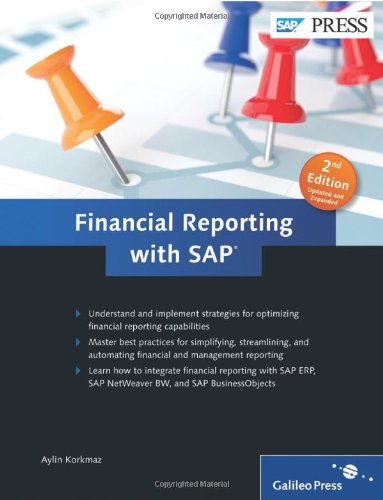
Financial Reporting with SAP (2nd Edition)
Authors:
Aylin Korkmaz
Publisher:
SAP PRESS (2nd Edition)
Publication Date:
Not available
ISBN:
1592293913
This book provides finance and IT teams with best practices for delivering financial reports faster, more accurately, and in compliance with various... international accounting standards. Featuring step-by-step coverage of all major FI reporting functions (including Sub-Ledger, Corporate Finance Management, and Governance, Risk and Compliance), this book will help you streamline and simplify financial business processes and automate financial and management reporting in SAP ERP Financials.
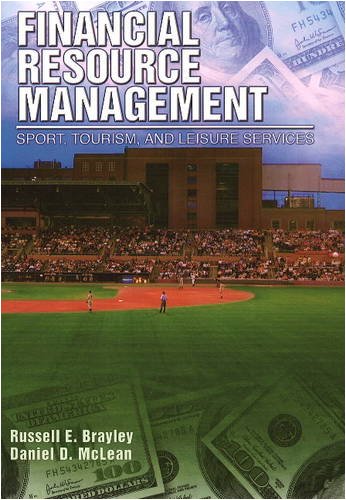
Financial Resource Management: Sport, Tourism, and Leisure Services
Authors:
Russell E. Brayley and Daniel D. McLean
Publisher:
Sagamore Publishing
Publication Date:
Not available
ISBN:
1571675574
This book is written with the needs of the sport, tourism, and leisure service manager in mind. Initially discussing the principles of economics and... finance, this book provides the reader with the necessary skills and knowledge to prepare, present, and manage budgets, as well as generate revenues for capital development and day-to-day operations.
Financial Responsibilities of Nonprofit Boards, 2nd Edition
Authors:
CPA Andrew Lang
Publisher:
BoardSource
Publication Date:
Not available
ISBN:
1586861085
While nonprofit success is measured in more than just dollars, board members must maintain a close eye on the financial direction of the organization... and its economic stability if they are to truly fulfill their fiduciary responsibility. This book uses nontechnical language to help board members gain a basic understanding of their financial oversight responsibilities and gives them a starting point for comprehending key financial data.
Financial Risk Forecasting: The Theory and Practice of Forecasting...
Authors:
Jon Danielsson
Publisher:
Wiley
Publication Date:
Not available
ISBN:
0470669438
Financial Risk Forecasting is a complete introduction to practical quantitative risk management, with a focus on market risk. Derived from the authors... teaching notes and years spent training practitioners in risk management techniques, it brings together the three key disciplines of finance, statistics and modeling (programming), to provide a thorough grounding in risk management techniques.Written by renowned risk expert Jon Danielsson, the book begins with an introduction to financial markets and market prices, volatility clusters, fat tails and nonlinear dependence. It then goes on to present volatility forecasting with both univatiate and multivatiate methods, discussing the various methods used by industry, with a special focus on the GARCH family of models. The evaluation of the quality of forecasts is discussed in detail. Next, the main concepts in risk and models to forecast risk are discussed, especially volatility, value-at-risk and expected shortfall. The focus is both on risk in basic assets such as stocks and foreign exchange, but also calculations of risk in bonds and options, with analytical methods such as delta-normal VaR and duration-normal VaR and Monte Carlo simulation. The book then moves on to the evaluation of risk models with methods like backtesting, followed by a discussion on stress testing. The book concludes by focussing on the forecasting of risk in very large and uncommon events with extreme value theory and considering the underlying assumptions behind almost every risk model in practical use – that risk is exogenous – and what happens when those assumptions are violated.Every method presented brings together theoretical discussion and derivation of key equations and a discussion of issues in practical implementation. Each method is implemented in both MATLAB and R, two of the most commonly used mathematical programming languages for risk forecasting with which the reader can implement the models illustrated in the book.The book includes four appendices. The first introduces basic concepts in statistics and financial time series referred to throughout the book. The second and third introduce R and MATLAB, providing a discussion of the basic implementation of the software packages. And the final looks at the concept of maximum likelihood, especially issues in implementation and testing.The book is accompanied by a website - www.financialriskforecasting.com – which features downloadable code as used in the book.
Financial Services Marketing: An international guide to principles...
Authors:
Christine Ennew
Publisher:
Butterworth-Heinemann
Publication Date:
Not available
ISBN:
0750669977
Financial Services Marketing: an international guide to principles and practice contains the ideal balance of marketing theory and practice to appeal to... advanced undergraduates and those on professional courses such as the Chartered Institute of Banking. Taking an international and strategic view of an increasingly important and competitive sector, Financial Services Marketing adopts a fresh approach in terms of structure, and is organised around the core marketing activities of marketing for acquisition and marketing for retention. Financial Services Marketing features:* Strong international focus: case studies and vignettes representing Asia-Pacific, Europe and the US.* Comprehensive coverage, focusing on both B2B and B2C marketing.* Expert insights into the latest innovations in the sector, from technological developments, CRM and customer loyalty to issues of social responsibility. Financial Services Marketing will help both the student and the practitioner to develop a firm grounding in the fundamentals of: financial services strategy, customer acquisition, and customer development. Reflecting the realities of financial services marketing in an increasingly complex sector, it provides the most up-to-date, international and practical guide to the subject available. * Comprehensive coverage of the fundamentals of: financial services strategy, customer acquisition, and customer development* Strong international dimension: Asian-Pacific, European and US examples* Draws on both academic theory and practitioner experience, ensuring a blend of academic rigour and insight from practice
Financial Shenanigans: How to Detect Accounting Gimmicks &...
Authors:
Howard Schilit
Publisher:
McGraw-Hill
Publication Date:
Not available
ISBN:
0071703071
From the “ Sherlock Holmes of Accounting,” the tools you need to stay a step ahead of the crooks “Howard Schilit is the authority on... forensic accounting. Financial Shenanigans is invaluable reading for market participants seeking to identify deceptive behavior in company financial statements.” Julian Robertson, legendary investor and founder, Tiger Management “A must-read! The authors teach forensic financial statement analysis in an easy-to-digest format with lots of war stories. Guaranteed to help investors in their quest to avoid ticking time bombs in their portfolios.” Marc A. Siegel, board member, Financial Accounting Standards Board “This is a timeless guide to better understand how financial malfeasance can be spotted early. Financial Shenanigans teaches all of us fraud-detection-made-easy.” Jules Kroll, pioneering private investigator and founder of Kroll Associates and K2 Global “Required reading for every investor who desires to avoid financial losses. This new edition is a classic and better than ever.” Thornton L. O’glove, author, Quality of Earnings “If the original Financial Shenanigans was the Bible of detecting accounting frauds, then this latest version is the Talmud of cooked books. Regulators, audit committee members, and business journalists should be required to read this work if they are involved in public companies.” Boris Feldman, partner, Wilson Sonsini Goodrich & Rosati, Palo Alto “An incisive and entertaining review of the recipes used by corporations and executives to ‘cook the books.’ It’s a must-read for investors, lawyers, corporate directors, and anyone else interested in the integrity of the accounting and governance process.” Joseph A. Grundfest, professor of law and business and codirector, Rock Center on Corporate Governance, Stanford Law School About the Book: With major financial scandals popping up in greater numbers—and with more inevitably on the way—it has never been more important for you to understand what dishonest companies do to trick investors. Since the early 1990s, Financial Shenanigans has been helping investors unearth deceptive financial reporting at the most critical time— before they suffer major losses. Now, the third edition broadens its focus to include the newest, most sophisticated techniques companies use to mislead investors. Referred to as the “Sherlock Holmes of Accounting” by BusinessWeek, Howard Schilit and renowned forensic accounting expert Jeremy Perler take you deeper into the corporate bag of tricks, exposing new levels of accounting gimmickry and arming you with the investigative tools you need to detect: Earnings Manipulation Shenanigans: Learn the latest tricks companies use to exaggerate revenue and earnings. Cash Flow Shenanigans: Discover new techniques devised by management that allow it to manipulate cash flow as easily as earnings. Key Metrics Shenanigans: See how companies use misleading “key”metrics to fool investors about their financial performance. Financial Shenanigans brings you completely up to date on accounting chicanery in the global markets, shining a light on the most shocking frauds and financial reporting miscreants. This insightful, detailed guide written by recognized experts on the subject provides the knowledge and tools you need to spot even the most subtle signs of financial shenanigans.

Financial Shock (Updated Edition), (Paperback): Global Panic and...
Authors:
Mark Zandi
Publisher:
FT Press
Publication Date:
Not available
ISBN:
0137016638
"In Financial Shock, Mr. Zandi provides a concise and lucid account of the economic, political, and regulatory forces behind this binge." –The... Wall Street Journal “The obvious place to start is the financial crisis, and the clearest guide to it that I’ve read is Financial Shock by Mark Zandi....It is an impressively lucid guide to the big issues.” – David Leonhardt, The New York Times “If you wonder how it could be possible for a subprime mortgage loan to bring the global financial system and the U.S. economy to its knees, you should read this book. No one is better qualified to provide this insight and advice than Mark Zandi.” – Larry Kudlow, Host, CNBC’s Kudlow & Company “Mark Zandi provides insightful analysis, thoughtful recommendations, and a comprehensible explanation of the financial crisis that is accessible to the general public and extremely useful to those who specialize in the area.” – Barney Frank, Chairman, House Financial Services Committee The Definitive Financial Meltdown Exposé: Now completely updated to include discussions of the Obama administration’s many policy initiatives and proposed solutions. •Includes expanded coverage of the market meltdown, the bailout bill and stimulus plans, the bank rescue plan, and the foreclosure mitigation plan • Sifting the wreckage, fixing the blame: the roles of mortgage lenders, investment bankers, speculators, the real estate industry, regulators, the Fed, and homebuyers • Tomorrow’s emerging financial shocks—and how to prevent them
FINANCIAL & STAT CONCEPTS
Authors:
Not Available
Publisher:
Not available
Publication Date:
Not available
ISBN:
Not available
FINANCIAL STATEMENT ANAL. & VAL]CUSTOM[
Authors:
Not Available
Publisher:
Cambridge Business Publisher
Publication Date:
Not available
ISBN:
1618530356
FINANCIAL STATEMENT ANALYSES AND VALUAT
Authors:
Not Available
Publisher:
Not available
Publication Date:
Not available
ISBN:
Not available
Financial Statement Analysis
Authors:
John J Wild
Publisher:
McGraw-Hill/Irwin
Publication Date:
Not available
ISBN:
0073100234
Financial Statement Analysis, 9e, emphasizes effective business analysis and decision making by analysts, investors, managers, and other stakeholders of... the company. It continues to set the standard (over 8 prior editions and hundreds of thousands in unit book sales) in showing students the keys to effective financial statement analysis. It begins with an overview (chapters 1-2), followed by accounting analysis (chapters 3-6) and then financial analysis (chapters 7-11). The book presents a balanced view of analysis, including both equity and credit analysis, and both cash-based and earnings-based valuation models. The book is aimed at accounting and finance classes, and the professional audience as it shows the relevance of financial statement analysis to all business decision makers. The authors: 1. Use numerous and timely “real world” examples and cases 2. Draw heavily on actual excerpts from financial reports and footnotes 3. Focus on analysis and interpretation of financial reports and their footnotes 4. Illustrate debt and equity valuation that uses results of financial statement analysis 5. Have a concise writing style to make the material accessible.
Financial Statement Analysis
Authors:
K. R. Subramanyam
Publisher:
McGraw-Hill/Irwin
Publication Date:
Not available
ISBN:
0073379433
Financial Statement Analysis, 10e, emphasizes effective business analysis and decision making by analysts, investors, managers, and other stakeholders... of the company. It continues to set the standard in showing students the keys to effective financial statement analysis. The textbook is set up in a three part framework which makes this textbook one of the best selling books in the market. It begins with an overview (chapters 1-2), followed by accounting analysis (chapters 3-6) and then financial analysis (chapters 7-12). The book presents a balanced view of analysis, including both equity and credit analysis, and both cash-based and earnings-based valuation models. The tenth edition is aimed at accounting and finance classes, and the professional audience – as it shows the relevance of financial statement analysis to all business decision makers. The authors: 1. Use numerous and timely “real world” examples and cases 2. Draw heavily on actual excerpts from financial reports and footnotes 3. Focus on analysis and interpretation of financial reports and their footnotes 4. Illustrate debt and equity valuation that uses results of financial statement analysis 5. Apply a concise and succinct writing style to make the material accessible
 '





