production
/viewbook/list/all/?page=4684
/
/static/
None
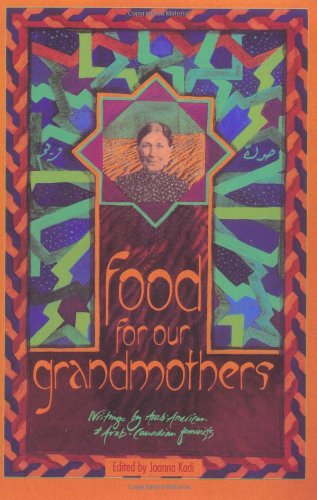
Food for Our Grandmothers: Writings by Arab-American and...
Authors:
Not Available
Publisher:
South End Press
Publication Date:
Not available
ISBN:
0896084892
This groundbreaking collection creates a space in which Arab-American and Arab-Canadian feminsts speak out about issues of history, culture and... identity. While anti-Arab racism depicts Arab women as veiled, passive victims living in hopelessly sexist communities, Food for our Grandmothers analyzes and challenges these innacurate and distorted views.
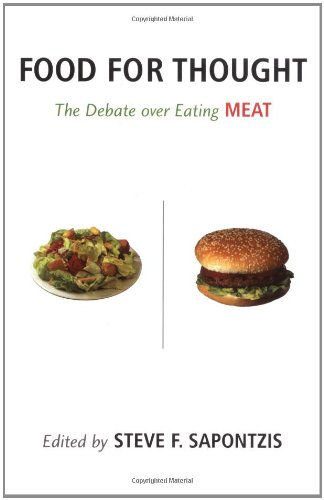
Food for Thought: The Debate over Eating Meat (Contemporary Issues...
Authors:
Steve F. Sapontzis
Publisher:
Prometheus Books
Publication Date:
Not available
ISBN:
1591021189
For anyone who has ever wondered about the ethics of killing animals for food, this is the definitive collection of essays on the ethical debate.... Written by internationally recognized scholars on both sides of the debate, the provocative articles here compiled will give vegetarians and meat-eaters a thorough grounding in all aspects of this controversial issue.
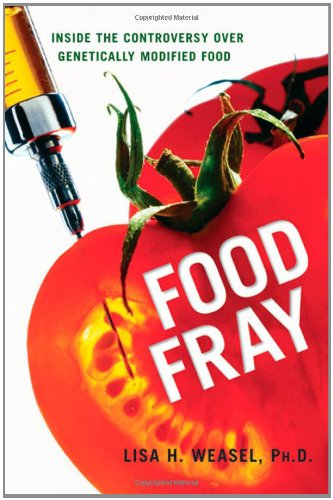
Food Fray: Inside the Controversy over Genetically Modified Food
Authors:
Lisa H. Weasel
Publisher:
AMACOM
Publication Date:
Not available
ISBN:
0814401643
More than ten years ago, the first genetically modified foods took their place on the shelves of American supermarkets. But while American consumers... remained blissfully unconcerned with the new products that suddenly filled their kitchens, Europeans were much more wary of these "Frankenfoods." When famine struck Africa in 2002, several nations refused shipments of genetically modified foods, fueling a controversy that put the issue on the world's political agenda for good. In "Food Fray," esteemed molecular biologist Dr. Lisa H. Weasel brings readers into the center of this debate, capturing the real-life experiences of the scientists, farmers, policymakers and grassroots activists on the front lines. Here she combines solid scientific knowledge and a gripping narrative to tell the real story behind the headlines and the hype. Seminal and cutting-edge, "Food Fray" enlightens and informs and will allow readers to make up their own minds about one of the most important issues facing us today.
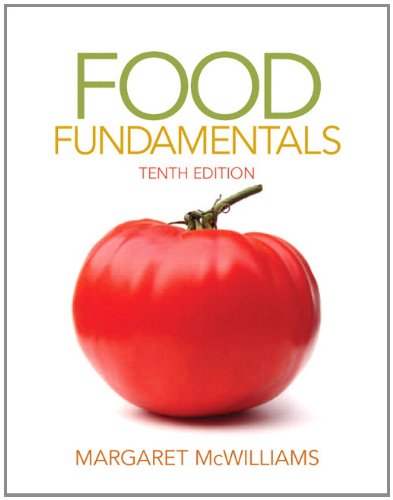
Food Fundamentals
Authors:
Margaret McWilliams
Publisher:
Prentice Hall
Publication Date:
Not available
ISBN:
0132747731
FOOD FUNDAMENTALS, 10/e integrates the scientific principles of safe and nutritious food preparation with the basic techniques students need to work... effectively with food. It introduces the scientific basis of current practices and procedures, and explains ingredients both as nutrient sources and as food product components. The effects of preparation techniques are discussed in the context of the science underlying food manipulation, ingredients, ratios, effects of heat and cold, storage, preservation, and evaluation. Foods from diverse cultures are covered, and “Cultural Accents” features present a global perspective. Study aids include “Key Concepts” chapter roadmaps; “Science Notes” and “Industry Insights”; “Judging Points” to help students evaluate food products; updated web links; and many new illustrations. Fully revised to reflect MyPlate and the 2010 Dietary Guidelines for Americans, this edition adds more information on healthy food choices, labeling, vegetarian diets, and gluten-free products.

Food Fundamentals (9th Edition)
Authors:
Margaret McWilliams
Publisher:
Prentice Hall
Publication Date:
Not available
ISBN:
0132412357
This book explains the how’s and the why’s that are basic to the production of safe, high-quality foods. Its goal is to help students... develop an understanding of food preparation and science within the context of societal concerns related to health and food safety. By integrating scientific principles of food preparation with the basic production techniques, it enables students to develop a strong foundation in each of the topics. This edition retains popular features such as Science Notes, Cultural Accents, and Ingredient Highlights and contains a new feature focusing on food evaluation. Essential for all students majoring in food science, dietetics, and nutrition; the book’s knowledge base will help prepare individuals to function effectively in their future careers.

FOOD FUNDAMENTAL & SERVSAFE&NEW MSSL&MCL PK
Authors:
Not Available
Publisher:
Not available
Publication Date:
Not available
ISBN:
Not available
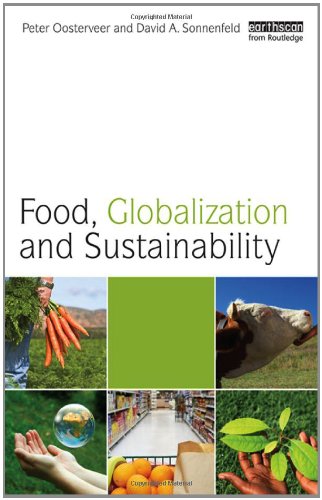
Food, Globalization and Sustainability
Authors:
Peter Oosterveer
Publisher:
Routledge
Publication Date:
Not available
ISBN:
1849712611
Food is increasingly traded internationally, thereby transforming the organization of food production and consumption globally and influencing most... food-related practices. This transition is generating unfamiliar challenges related to sustainability of food provision, the social impacts of international trade and global food governance. Distance in time and space between food producers and consumers is increasing and new concerns are arising. These include the environmental impact of food production and trade, animal welfare, the health and safety of food and the social and economic impact of international food trade. This book provides an overview of the principal conceptual frameworks that have been developed for understanding these changes. It shows how conventional regulation of food provision through sovereign national governments is becoming elusive, as the distinctions between domestic and international, and between public and private spheres, disappear. At the same time multi-national companies and supranational institutions put serious limits to governmental interventions. In this context, other social actors including food retailers and NGOs are shown to take up innovative roles in governing food provision, but their contribution to agro-food sustainability is under continuous scrutiny. The authors apply these themes in several detailed case studies, including organic, fair trade, local food and fish. On the basis of these cases, future developments are explored, with a focus on the respective roles of agricultural producers, retailers and consumers.

Foodies: Democracy and Distinction in the Gourmet Foodscape...
Authors:
Josee Johnston
Publisher:
Routledge
Publication Date:
Not available
ISBN:
0415965373
This important new cultural analysis tells two stories about food. The first depicts good food as democratic. Foodies frequent ‘hole in the wall’... ethnic eateries, appreciate the pie found in working-class truck stops, and reject the snobbery of fancy French restaurants with formal table service. The second story describes how food operates as a source of status and distinction for economic and cultural elites, indirectly maintaining and reproducing social inequality. While the first storyline insists that anybody can be a foodie, the second asks foodies to look in the mirror and think about their relative social and economic privilege. By simultaneously considering both of these stories, and studying how they operate in tension, a delicious sociology of food becomes available, perfect for teaching a broad range of cultural sociology courses.
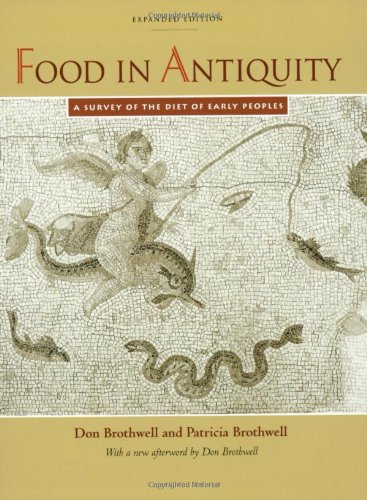
Food in Antiquity: A Survey of the Diet of Early Peoples
Authors:
Don R. Brothwell
Publisher:
The Johns Hopkins University Press
Publication Date:
Not available
ISBN:
0801857406
A world-wide survey of the eating and drinking habits of early peoples, Don and Patricia Brothwell's Food in Antiquity covers a broad geographical... range, from the early populations of Asia, Sub-Saharan Africa, and the Americas to the more familiar Egyptian, Mesopotamian, Greek, and Roman worlds. From meat, insects, vegetables, and fruits to cooking oils and beverages, each source of sustenance is described in terms of who consumed it, how it was prepared, and how it spread from its region of origin. The Brothwells' treatment is engaging and the information they provide fascinating. We learn, for example, that the vinegar carried by Roman foot soldiers on long marches was mixed with water to serve as a refreshing drink and that fungi provided a reliable source of diet for peoples from Europe, Australia, Japan, and China. The authors consider such questions as whether St. John ate carob or actual locusts in his desert hermitage and whether ancient farmers may have rid their crops of troublesome pests by capturing and eating them. They discuss cannibalism, food taboos, and the radical changes that took place with the introduction of the domestication of animals. The story they unfold is a compelling one that sheds much light on the intricate detective work, the problems and rewards, of biological research in archeology.
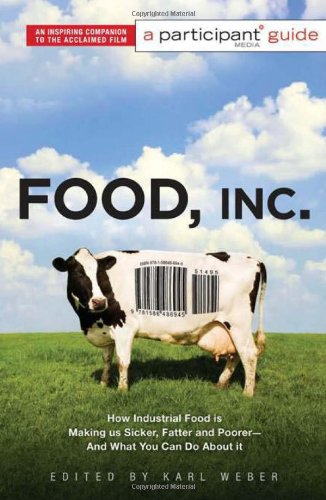
Food Inc.: A Participant Guide: How Industrial Food is Making Us...
Authors:
Not Available
Publisher:
PublicAffairs
Publication Date:
Not available
ISBN:
1586486942
Food, Inc. is guaranteed to shake up our perceptions of what we eat. This powerful documentary deconstructing the corporate food industry in America was... hailed by Entertainment Weekly as more than a terrific movieit’s an important movie.” Aided by expert commentators such as Michael Pollan and Eric Schlosser, the film poses questions such as: Where has my food come from, and who has processed it? What are the giant agribusinesses and what stake do they have in maintaining the status quo of food production and consumption? How can I feed my family healthy foods affordably?Expanding on the film’s themes, the book Food, Inc. will answer those questions through a series of challenging essays by leading experts and thinkers. This book will encourage those inspired by the film to learn more about the issues, and act to change the world.
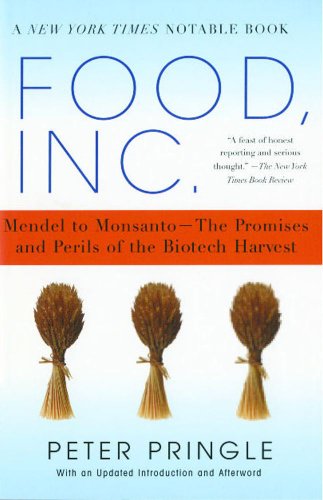
Food, Inc.: Mendel to Monsanto--The Promises and Perils of the...
Authors:
Peter Pringle
Publisher:
Simon & Schuster
Publication Date:
Not available
ISBN:
074326763X
For most people, the global war over genetically modified foods is a distant and confusing one. The battles are conducted in the mystifying language of... genetics. A handful of corporate "life science" giants, such as Monsanto, are pitted against a worldwide network of anticorporate ecowarriors like Greenpeace. And yet the possible benefits of biotech agriculture to our food supply are too vital to be left to either partisan. The companies claim to be leading a new agricultural revolution that will save the world with crops modified to survive frost, drought, pests, and plague. The greens warn that "playing God" with plant genes is dangerous. It could create new allergies, upset ecosystems, destroy biodiversity, and produce uncontrollable mutations. Worst of all, the antibiotech forces say, a single food conglomerate could end up telling us what to eat. In Food, Inc., acclaimed journalist Peter Pringle shows how both sides in this overheated conflict have made false promises, engaged in propaganda science, and indulged in fear-mongering. In this urgent dispatch, he suggests that a fertile partnership between consumers, corporations, scientists, and farmers could still allow the biotech harvest to reach its full potential in helping to overcome the problem of world hunger, providing nutritious food and keeping the environment healthy.
Food in Colonial and Federal America (Food in American History)
Authors:
Sandra Oliver
Publisher:
Greenwood
Publication Date:
Not available
ISBN:
0313329885
The success of the new settlements in what is now the United States depended on food. This book tells about the bounty that was here and how Europeans... forged a society and culture, beginning with help from the Indians and eventually incorporating influences from African slaves. They developed regional food habits with the food they brought with them, what they found here, and what they traded for all around the globe. Their daily life is illuminated through descriptions of the typical meals, holidays, and special occasions, as well as their kitchens, cooking utensils, and cooking methods over an open hearth. Readers will also learn how they kept healthy and how their food choices reflected their spiritual beliefs.This thorough overview endeavors to cover all the regions settled during the Colonial and Federal. It also discusses each immigrant group in turn, with attention also given to Indian and slave contributions. The content is integral for U.S. history standards in many ways, such as illuminating the settlement and adaptation of the European settlers, the European struggle for control of North America, relations between the settlers from different European countries, and changes in Native American society resulting from settlements.

Food Industry Quality Control Systems
Authors:
Mark Clute
Publisher:
CRC Press
Publication Date:
Not available
ISBN:
0849380286
After a sordid litany of recalls courtesy of the food industry, consumers are pointing the finger at companies that have failed to institute proper... recall prevention techniques. While historical analysis shows no company is exempt from recall risk, most can be prevented with an efficient and verifiable quality control program. Authored by a 20-year food management specialist, Food Industry Quality Control Systems is the only single-source summary of basic quality control program requirements. With an emphasis on top-down management commitment, this book demonstrates the complete information collection process and essential program elements, including pest control, lot coding, organizational charts, specifications, supplier certification, and sanitation programs. This valuable reference devotes an entire chapter to each of the program areas discussed for enhanced understanding of each. Additionally, it outlines a variety of sub-programs and functions, including HACCP, a seven-principle framework that assists food manufacturers in ensuring comprehensive and sustainable food safety. This example-filled resource helps industry decision-makers answer these key questions: What will management’s commitment to quality be? Will top management provide the personnel and resources to create and maintain a thorough quality control program? Who will run the quality program, and what will the reporting structure be? Where will ideas regarding quality come from? This book is a springboard for food industry professionals to start their own quality protection program while adhering to federal, state, and local regulations. It is a clear and concise knowledge base that food safety and quality managers truly cannot afford to be without. Readers can visit the CRC website to download supporting programs in a "plug-and-play" format and adaptable forms with specific examples and resources that enable companies to customize forms to fit their own needs.
Food in History
Authors:
Reay Tannahill
Publisher:
Broadway
Publication Date:
Not available
ISBN:
0517884046
An enthralling world history of food from prehistoric times to the present. A favorite of gastronomes and history buffs alike, Food in History is packed... with intriguing information, lore, and startling insights--like what cinnamon had to do with the discovery of America, and how food has influenced population growth and urban expansion.
Food in History
Authors:
Reay Tannahill
Publisher:
Crown
Publication Date:
Not available
ISBN:
0517571862
Spanning over half a million years, this describes the world history of food and the way in which food has influenced the whole course of human... development.
 '





