production
/viewbook/list/all/?page=4686
/
/static/
None

Food Microbiology: A Laboratory Manual
Authors:
Ahmed E. Yousef
Publisher:
Wiley-Interscience
Publication Date:
Not available
ISBN:
0471391050
Yousef and Carlstrom’s Food Microbiology: A Laboratory Manual serves as a general laboratory manual for undergraduate and graduate students in food... microbiology, as well as a training manual in analytical food microbiology. Focusing on basic skill-building throughout, the Manual provides a review of basic microbiological techniques–media preparation, aseptic techniques, dilution, plating, etc.–followed by analytical methods and advanced tests for food-bourne pathogens. The Manual includes a total of fourteen complete experiments.The first of the Manual’s four sections reviews basic microbiology techniques; the second contains exercises to evaluate the microbiota of various foods and enumerate indicator microorganisms. Both of the first two sections emphasize conventional cultural techniques. The third section focuses on procedures for detecting pathogens in food, offering students the opportunity to practice cultural, biochemical, immunoassay, and genetic methods. The final section discusses beneficial microorganisms and their role in food fermentations, concentrating on lactic acid bacteria and their bacteriocins. This comprehensive text also:- Focuses on detection and analysis of food-bourne pathogenic microorganisms like Escherichia coli 0157:H7, Listeria monocytogenes, and Salmonella- Includes color photographs on a companion Web site in order to show students what their own petri plates or microscope slides should look like: http://class.fst.ohio-state.edu/fst636/fst636.htm- Explains techniques in an accessible manner, using flow charts and drawings- Employs a "building block" approach throughout, with each new chapter building upon skills from the previous chapter
Food Microbiology: An Introduction
Authors:
Thomas J. Montville
Publisher:
Amer Society for Microbiology
Publication Date:
Not available
ISBN:
1555813968
An indispensable undergraduate textbook that covers the critical topic of food microbiology The second edition of Food Microbiology: an Introduction... offers authoritative coverage as well as an appealing design for today's instructors and students. This impressive second edition by Thomas Montville and Karl Matthews builds upon the earlier edition's success covering the complex field of food microbiology while also motivating students to venture beyond memorization to a broader understanding of the concepts. Following up on the critical success of the first edition, this textbook presents a classroom-friendly adaptation that has been student tested for level and depth of coverage. This new edition offers a straightforward approach to learning the core principles without sacrificing depth, clarity, or rigor. It introduces the genetics and mechanisms important to specific issues in food microbiology. This textbook encourages today's students to acquire the understanding and skills necessary for practicing food safety in the future. The textbook has been completely updated based on student input and on new discoveries in food microbiology. Organized into five major sections, which can be taught in any order, this new edition adds important new details, including expanded coverage of food fermentations. Additionally, this student-friendly textbook employs attractive instructive material such as text boxes, case studies, chapter summaries, questions for critical thought, and a glossary. The first section, "Basics of Food Microbiology," cements foundational material, while the next four sections detail specific food-borne organisms and strategies for controlling them. Descriptions of outbreaks of food-related infections inject life into each pathogen covered. Key Features: A thoroughly updated undergraduate textbook Engages students with case studies of current issues in food microbiology Includes up-to-date coverage of "in the news" issues such as "mad cow" disease, molecularly-based detection systems, and food biosecurity Provides richly-illustrated chapters with useful teaching tools to stimulate critical thought Explains the genetics and mechanisms important in food microbiology Written in an accessible style and language Reviewed thoroughly by students for depth of coverage and use of terminology appropriate for undergraduates Hardcover, 446 pages, two-color throughout, illustrations, index
Food Microbiology: An Introduction
Authors:
Thomas J. Montville
Publisher:
ASM Press
Publication Date:
Not available
ISBN:
1555816363
Authoritative coverage presented in a format designed to facilitate teaching and learning The newly updated and expanded third edition Includes expert... perspectives on parasites, viruses and prions, and non-thermal processes. Incorporates instructors' input to further clarify complex topics in the field of food microbiology. Encourages students to venture beyond memorization and think critically to gain a broader conceptual understanding of food microbiology and acquire the understanding and skills necessary to ensure the safety of tomorrow's food supply. Presents explicit learning goals to focus students on the core principles of food microbiology. Introduces the genetics and molecular mechanisms important for the understanding of foodborne microbes.
Food Microbiology An Introduction - 2005 publication.
Authors:
Karl RMatws
Publisher:
Amrr Socirty for Microbiology,
Publication Date:
Not available
ISBN:
1555813089
In this work, the authors provide the first systematic exploration of the philosophical foundations and the historical development of qualitative... inquiry for language and literacy researchers, novices and experts alike.
Food Microbiology: Fundamentals and Frontiers (Doyle, Food...
Authors:
Not Available
Publisher:
ASM Press
Publication Date:
Not available
ISBN:
1555814077
New third edition of this well-known volume provides information on recent advances in all areas of food microbiology. Major revisions have been made to... chapters addressing foodborne pathogens and new chapters covering Enterobacter sakazakii, prions, genomics and proteomics, source tracking, nuts and cereals, and biodefense have all been added.
Food Microbiology Laboratory (Contemporary Food Science)
Authors:
Lynne McLandsborough
Publisher:
CRC Press
Publication Date:
Not available
ISBN:
0849312671
In order to truly understand food microbiology, it is necessary to have some experience in a laboratory. Food Microbiology Laboratory presents 18... well-tested, student-proven, and thoroughly outlined experiments for use in a one-semester introductory food microbiology course. Based on lab experiments developed for food science and microbiology courses at the University of Massachusetts, this manual provides students with hands-on experience with both traditional methods of enumerating microorganisms from food samples and "rapid methods" often used by industry. It covers topics such as E. coli, Staph, and Salmonella detection, as well as the thermal destruction of microorganisms, and using PCR to confirm Listeria monocytogenes. All parameters and dilutions presented in the text have been optimized to ensure the success of each exercise. An instructor's manual is also available with qualifying course adoptions to assist in the planning, ordering, and preparation of materials. This valuable text features well-established laboratory exercises based upon methods published in the FDA Bacteriological Analytical Manual. It provides the backbone for any laboratory session and may be customized with test kits to reflect the emphasis and level of the class.

Food Movements Unite!: Strategies to Transform Our Food System
Authors:
Samir Amin
Publisher:
Food First Books
Publication Date:
Not available
ISBN:
0935028382
Food Movements Unite!Strategies to transform our food systemsThe present corporate food regime dominating the planet’s food systems is environmentally... destructive, financially volatile and socially unjust. Though the regime’s contributions to the planet’s four-fold food-fuel-finance and climate crises are well documented, the solutions” advanced by our national and global institutions reinforce the same destructive technological path, the same global market fundamentalism, and the same unregulated consolidation of corporate power in the food system that brought us the crisis in the first place.A dynamic global food movement has risen up in the face of this sustained corporate assault on our food systems. Around the world, local food justice activists have taken back pieces of the food system through local gardening, organic farming, community-supported agriculture, farmers markets, and locally-owned processing and retail operations. Food sovereignty advocates have organized locally and internationally for land reform, the end of destructive free trade agreements, and support for family farmers, women and peasants. Protests againstand viable alternatives tothe expansion of GMOs, agrofuels, land grabs and the oligopolistic control of our food, are growing everywhere every day, giving the impression that food movements are literally breaking through the asphalt” of a reified corporate food regime.The social and political convergence of the practitioners” and advocates” in these food movements is also well underway, as evidenced by the growing trend in local-regional food policy councils in the US, coalitions for food sovereignty spreading across Latin America, Africa, Asia and Europe, and the increasing attention to practical-political solutions to the food crisis appearing in academic literature and the popular media. The global food movement springs from strong commitments to food justice, food democracy and food sovereignty on the part of thousands of farmers unions, consumer groups, faith-based, civil society and community organizations across the urban-rural and north-south divides of our food systems. This magnificent movement of movements” is widespread, highly diverse, refreshingly creativeand politically amorphous.Many publications point to the hopeful initiatives in food production-processing-distribution and consumption; and many analyses unpack and identify the structural impediments to a fair and sustainable food system. However, there has been little strategic reflection on just how to get from where we are: a broad but marginalized collection of hopeful alternativesto where we need to be: the norm. Unfortunately, social, environmental and economic visions of what a good food system should look like are rarely accompanied by a clear political vision of how to roll back the corporate food regime and rollout the transformation of the world’s food system.Food Movements Unite! will be a collection of essays by food movement leaders from around the world that all seek to answer the perennial political question: What is to be done?The answersfrom the multiple perspectives of community food security activists, peasants and family farm leaders, labor activists, and leading food systems analystswill lay out convergent strategies for the fair, sustainable, and democratic transformation of our food systems. Authors will address the corporate food regime head on, arguing persuasively not only for specific changes to the way our food is produced, processed, distributed and consumed, but specifying how these changes may come about, politically.

Food Nations: Selling Taste in Consumer Societies (Hagley...
Authors:
Not Available
Publisher:
Routledge
Publication Date:
Not available
ISBN:
0415930774
This original collection abandons culinary nostalgia and the cataloguing of regional cuisines to examine the role of food and food marketing in... constructing culture, consumer behavior, and national identity.

Food, Nutrition and Sports Performance II: The International...
Authors:
Not Available
Publisher:
Routledge
Publication Date:
Not available
ISBN:
0415339073
This book summarizes the latest meeting of the world's leading researchers in sports nutrition, held at the IOC headquarters in Lausanne, Switzerland.... The aim of the conference was to review the latest developments in the world of sport nutrition, to follow up on developments since the previous 1991 conference, and to draw up guidelines to help athletes and coaches optimise their performance by using nutrition to support training and maximise performance in competition. Subjects discussed in this cutting-edge collection include: * energy balance and body composition * the role of carbohydrates * the role of proteins and amino acids * athlete fluid and electrolyte requirements * the use of dietary supplements for optimum performance and immune function.

Food, Nutrition, and the Young Child (5th Edition)
Authors:
Jeannette Endres
Publisher:
Pearson
Publication Date:
Not available
ISBN:
013098485X
The only book of its kind on the market today, this practical, easy-to-read volume provides readers with a basic understanding of food and nutrition... as it applies to the care of children from birth through age eight. Great attention is given to food and nutrition problems seen in young children, and strategies are provided for parents in fostering good eating habits. This book introduces the current Centers for Disease Control (CDC) growth charts for body mass index (BMI) for children over the age of two, as well as the latest Food Guide Pyramid for Young Children. Coverage encompasses basic nutrition principles, examines what to feed children and when, and explores ways to use the requisite daily eating ritual as a teaching/learning experience. Discussions include the latest American Academy of Pediatrics recommendations for television viewing and for daily activity. Hot topics include: the promotion of healthful eating behaviors, reflux and reflux disease, and the new standard allowing a wider acceptable fat range for each age group. Numerous appendices providing additional helpful material in an easy-to-use format, making this the perfect resource for educators, administrators, parents, food-service staffs and food-service planners.

Food Packaging: Principles and Practice, Second Edition (Food...
Authors:
Gordon L. Robertson
Publisher:
CRC Press
Publication Date:
Not available
ISBN:
0849337755
A comprehensive and accessible textbook, Food Packaging: Principles and Practice, Second Edition presents an integrated approach to understanding the... principles underlying food packaging and their applications. Integrating concepts from chemistry, microbiology, and engineering, it continues in the fine tradition of its bestselling predecessor - and has been completely updated to include new, updated, and expanded content. The author divides the book's subject matter into five parts for ease-of-use. The first part addresses the manufacture, properties, and forms of packaging materials, placing emphasis on those properties that influence the quality and shelf life of food. The second part then details the various types of deteriorative reactions that foods undergo, examines the extrinsic factors controlling their reaction rates, and discusses specific factors influencing shelf life and the methodology used to estimate that shelf life. Chapters on the aseptic packaging of foods, active and intelligent packaging, modified atmosphere packaging, and microwavable food packaging are explored in the third part, while the fourth part describes packaging requirements of the major food groups. The final section examines the safety and legislative aspects of food packaging. The book also includes over 300 industry abbreviations, acronyms, and symbols, and an expansive index. What's New in the Second Edition: Includes five new chapters and diagrams that explain recent developments in packaging materials and processesProvides the latest information on new and active packaging technologiesPresents new, updated, and expanded references Adhering to the highly organized format that made the first edition so straightforward and informative, this latest edition of Food Packaging: Principles and Practice presents students with the most essential and cutting-edge information available. The author maintains a website with more information.
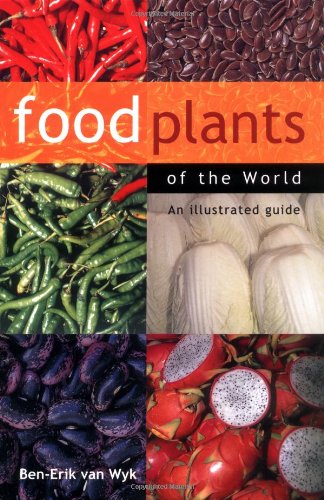
Food Plants of the World: An Illustrated Guide
Authors:
Ben-Erik van Wyk
Publisher:
Timber Press
Publication Date:
Not available
ISBN:
0881927430
A comprehensive survey of the plants that provide food, beverages, spices, and flavorings, this book will serve as an invaluable reference to gardeners,... ethnobotanists, nutritionists, culinary professionals, dieticians, and food enthusiasts. This scientifically accurate guide will allow them to identify all the major plant-derived foods and flavors, research culinary uses, and understand their dietetic and nutritional properties. Introductory chapters cover the various categories of plant use, including cereals, pulses (legumes), nuts and seeds, fruits, vegetables, culinary herbs, sugar plants, beverages, spices, and flavorings. The core of the volume is an encyclopedic description of more than 350 food and flavor plants in use worldwide, with over 1000 color photographs. This accessible, pictorial guide is a concise source of practical information, not readily available elsewhere, and should be on every food enthusiast's bookshelf.
Food Policy for Developing Countries: The Role of Government in...
Authors:
Per Pinstrup-Andersen
Publisher:
Cornell University Press
Publication Date:
Not available
ISBN:
0801448182
Despite technological advances in agriculture, nearly a billion people around the world still suffer from hunger and poor nutrition while a billion are... overweight or obese. This imbalance highlights the need not only to focus on food production but also to implement successful food policies.In this new textbook intended to be used with the three volumes of Case Studies in Food Policy for Developing Countries (also from Cornell), the 2001 World Food Prize laureate Per Pinstrup-Andersen and his colleague Derrill D. Watson II analyze international food policies and discuss how such policies can and must address the many complex challenges that lie ahead in view of continued poverty, globalization, climate change, food price volatility, natural resource degradation, demographic and dietary transitions, and increasing interests in local and organic food production.Food Policy for Developing Countries offers a "social entrepreneurship" approach to food policy analysis. Calling on a wide variety of disciplines including economics, nutrition, sociology, anthropology, environmental science, medicine, and geography, the authors show how all elements in the food system function together.

Food Policy: Integrating health, environment and society
Authors:
Tim Lang
Publisher:
Oxford University Press, USA
Publication Date:
Not available
ISBN:
019856788X
For over half a century, food policy has mapped a path for progress based upon a belief that the right mix of investment, scientific input, and human... skills could unleash a surge in productive capacity which would resolve humanity's food-related health and welfare problems. It assumed that more food would yield greater health and happiness by driving down prices, increasing availability, and feeding more mouths. In the 21st century, this policy mix is quietly becoming unstuck. In a world marred by obesity alongside malnutrition, climate change alongside fuel and energy crises, water stress alongside more mouths to feed, and social inequalities alongside unprecedented accumulation of wealth, the old rubric of food policy needs re-evaluation. This book explores the enormity of what the new policy mix must address, taking the approach that food policy must be inextricably linked with public with public health, environmental damage, and social inequalities to be effective.Written by three authors with differing backgrounds, one in political science, another in environmental health and health promotion, and the third in social psychology, this book reflects the myriad of perspectives essential to a comprehensive view of modern food policy. It attempts to make sense of what is meant by food policy; explores whether the term has any currency in current policy discourse, assesses whether current policies help or hinder what happens; judges whether consensus can triumph in the face of competing bids for understanding; looks at all levels of governance, across the range of actors in the food system, from companies and the state to civil society and science; considers what direction food policies are taking, not jsut in the UK, but internationally; assesse who (and what) gains or loses in the making of these food policies; and identifies a modern framework for judging how good or limited processes of policy making are.This book provides a major comprehensive review of current and past food policy, thinking and proposing the need for what the authors call an ecological public health approach to food policy. Nothing less will be fit for the 21st century.
Food Politics: How the Food Industry Influences Nutrition, and...
Authors:
Marion Nestle
Publisher:
University of California Press
Publication Date:
Not available
ISBN:
0520254031
An accessible and balanced account, Food Politics laid the groundwork for today's food revolution and changed the way we respond to food industry... marketing practices. Now, a new introduction and concluding chapter bring us up to date on the key events in that movement. This pathbreaking, prize-winning book helps us understand more clearly than ever before what we eat and why.
 '





