production
/viewbook/list/all/?page=4688
/
/static/
None

FOOD SAFETY MANAGER CERTIFICATION
Authors:
Not Available
Publisher:
Not available
Publication Date:
Not available
ISBN:
Not available
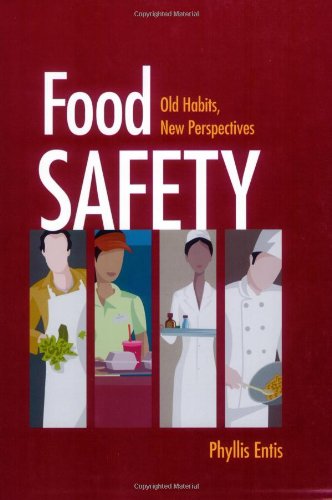
Food Safety: Old Habits and New Perspectives
Authors:
Phyllis Entis
Publisher:
Amer Society for Microbiology
Publication Date:
Not available
ISBN:
1555814174
Provides accurate food safety information in an informal style with minimal jargon. Emphasizes that the responsibility for a safe food supply is shared... by various groups of people from food processors and consumers to educators and regulators. An extensive bibliography is included.

FoodSafetyPrep powered by ServSafe (Access Card) with ServSafe...
Authors:
National Restaurant Association
Publisher:
Prentice Hall
Publication Date:
Not available
ISBN:
0132488116
This package contains the following components: -0135107725: FoodSafetyPrep powered by ServSafe -- Access Card -0135107431: ServSafe Essentials with... AnswerSheet Update with 2009 FDA Food Code
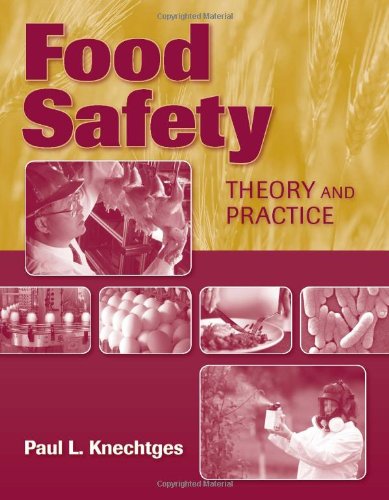
Food Safety: Theory And Practice
Authors:
Paul L. Knechtges
Publisher:
Jones & Bartlett Learning
Publication Date:
Not available
ISBN:
0763785563
Written for graduate students or college seniors, Food Safety: Theory and Practice emphasizes a comprehensive and multidisciplinary approach to food... safety. It covers important topics related to the prevention of foodborne illnesses and diseases with a farm-to-fork perspective. Each chapter starts with a set of learning objectives for the student and ends with a list of important references and websites for further study and research. Scientific principles that underpin food safety are introduced, and terminology is explained to facilitate comprehension by the student. In keeping with current trends, risk analysis and food safety management are stressed throughout the textbook. The writing style is concise and to the point, and the book contains hundreds of references, figures, and tables. Extremely well organized, this book can serve as the primary text for a food safety course, or it can serve as a background text for more specialized courses in food safety. Key topics include: Risk and hazard analysis of goods - covers risk assessment and hazard analysis and critical control point (HACCP) evaluations of food safety. Safety management of the food supply - provides a farm-to-fork overview of food safety, emphasizing the risks associated with each step in the food supply. Food safety laws, regulations, enforcement, and responsibilities - describes the major provisions, relationship, and hierarchy of laws and guidelines designed to ensure a safe food supply. The pivotal role of food sanitation/safety inspectors - including the interpretation of standards, problem solving and decision making, education of the food handling staff, and participation in foodborne illness outbreak investigations.
Foods: A Scientific Approach (3rd Edition)
Authors:
Helen Charley
Publisher:
Prentice Hall
Publication Date:
Not available
ISBN:
0023219513
This edition, written for readers who have an adequate background in chemistry, continues the emphasis of the scientific aspects of the study of... foods. Drawing upon the basic sciences of chemistry, physics, microbiology, and physiology, it provides readers with an understanding of the complex nature of food and the changes that occur when it is prepared, processed and stored, whether at home, in the industrial kitchen, or in industry. The book integrates the theoretical and practical aspects involved in the production and handling of foods.
FOOD SCIENCE ACCESS CARD ONLY
Authors:
Not Available
Publisher:
Not available
Publication Date:
Not available
ISBN:
Not available

Food Science (Food Science Text Series)
Authors:
Norman N. Potter
Publisher:
Springer
Publication Date:
Not available
ISBN:
083421265X
Now in its fifth edition, Food Science remains the most popular and reliable text for introductory courses in food science and technology. This new... edition retains the basic format and pedagogical features of previous editions and provides an up-to-date foundation upon which more advanced and specialized knowledge can be built. This essential volume introduces and surveys the broad and complex interrelationships among food ingredients, processing, packaging, distribution and storage, and explores how these factors influence food quality and safety. Reflecting recent advances and emerging technologies in the area, this new edition includes updated commodity and ingredient chapters to emphasize the growing importance of analogs, macro-substitutions, fat fiber and sugar substitutes and replacement products, especially as they affect new product development and increasing concerns for a healthier diet. Revised processing chapters include changing attitudes toward food irradiation, greater use of microwave cooking and microwaveable products, controlled and modified atmosphere packaging and expanding technologies such a extrusion cooking, ohmic heating and supercritical fluid extraction, new information that addresses concerns about the responsible management of food technology, considering environmental, social and economic consequences, as well as the increasing globalization of the food industry. Discussions of food safety an consumer protection including newer phychrotropic pathogens; HAACP techniques for product safety and quality; new information on food additives; pesticides and hormones; and the latest information on nutrition labeling and food regulation. An outstanding text for students with little or no previous instruction in food science and technology, Food Science is also a valuable reference for professionals in food processing, as well as for those working in fields that service, regulate or otherwise interface with the food industry.
Food Science Laboratory Manual
Authors:
Karen S. Jamesen
Publisher:
Prentice Hall
Publication Date:
Not available
ISBN:
0023601922

Food Security and Global Environmental Change
Authors:
John Ingram
Publisher:
Routledge
Publication Date:
Not available
ISBN:
1849711283
Global environmental change (GEC) represents an immediate and unprecedented threat to the food security of hundreds of millions of people, especially... those who depend on small-scale agriculture for their livelihoods. As this book shows, at the same time, agriculture and related activities also contribute to GEC by, for example, intensifying greenhouse gas emissions and altering the land surface. Responses aimed at adapting to GEC may have negative consequences for food security, just as measures taken to increase food security may exacerbate GEC. The authors show that this complex and dynamic relationship between GEC and food security is also influenced by additional factors; food systems are heavily influenced by socioeconomic conditions, which in turn are affected by multiple processes such as macro-level economic policies, political conflicts and other important drivers. The book provides a major, accessible synthesis of the current state of knowledge and thinking on the relationships between GEC and food security. Most other books addressing the subject concentrate on the links between climate change and agricultural production, and do not extend to an analysis of the wider food system which underpins food security; this book addresses the broader issues, based on a novel food system concept and stressing the need for actions at a regional, rather than just an international or local, level. It reviews new thinking which has emerged over the last decade, analyses research methods for stakeholder engagement and for undertaking studies at the regional level, and looks forward by reviewing a number of emerging 'hot topics' in the food security-GEC debate which help set new agendas for the research community at large. Published with Earth System Science Partnership, GECAFS and SCOPE
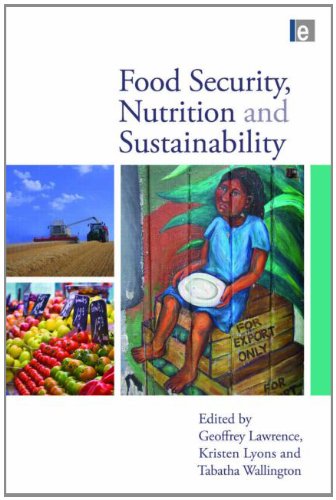
Food Security, Nutrition and Sustainability
Authors:
Not Available
Publisher:
Routledge
Publication Date:
Not available
ISBN:
1849713871
As the threats of food insecurity loom ever larger, the world faces the sad irony of food shortages in the global South alongside a purported 'obesity... epidemic' in the global North. The twin issues of food production and food access are of particular concern in the context of climate change, 'peak oil', biofuels, and land grabs by wealthy nations. Food Security, Nutrition and Sustainability offers critical insights by international scholars, with chapters on global food security, supermarket power, new technologies, and sustainability. The book also assesses the contributions of diet and nutrition research in building socially just and environmentally sustainable food systems and provides policy recommendations to improve the health and environmental status of contemporary agri-food systems. The book features contributions from a range of social science perspectives, including sociology, anthropology, public health and geography, with case study material drawn from throughout the world.
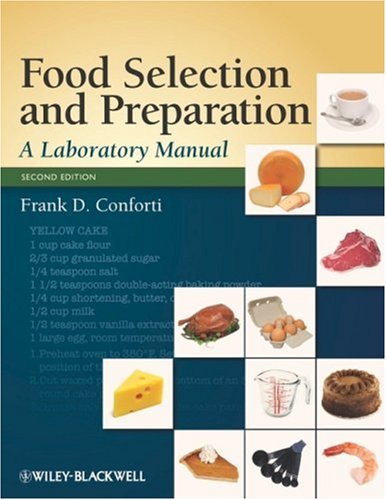
Food Selection and Preparation: A Laboratory Manual
Authors:
Frank Conforti
Publisher:
Wiley-Blackwell
Publication Date:
Not available
ISBN:
081381488X
Knowledge, skill, and art are the three words to remember when working with foods. They are also the focus of the second edition of Food Selection and... Preparation: A Laboratory Manual, which guides students through the fundamentals and basic principles of food preparation, from the recipe to the table, from the raw ingredients to the final product.This manual equips students with a working knowledge of the nature of ingredients and how they function in particular foods. A wide range of exercises--addressing topics from food preservation to frozen desserts, measuring techniques to fats and emulsions, fruit selection to egg cookery, breads and pastry to meat and poultry--guide students through standard recipes, with clear and complete directions for handling ingredients and cooking foods. Throughout, vocabularies introduce technical words essential to understanding food products and preparation. Questions to test students' knowledge follow each exercise. The text also includes discussion of laboratory procedures, sanitation in the kitchen, emergency substitutions, identification of meat cuts, the safe storage of food, and the care and cleaning of small appliances.New to this edition are over 50 additional recipes, which reflect the many tastes that influence today's palate. All recipes have been reviewed and updated to ensure healthful and nutritious food preparation, as well as product quality and performance. Students and instructors alike will find the new and improved recipes and updated nutritional and food facts of Food Selection and Preparation, Second Edition a truly satisfying full course.
Foodservice Management & Food Safety
Authors:
rd sue grossbauer
Publisher:
dietary managers association
Publication Date:
Not available
ISBN:
0975347659
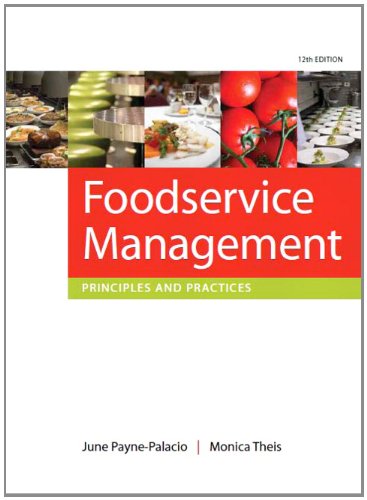
Foodservice Management: Principles and Practices
Authors:
June Payne-Palacio
Publisher:
Prentice Hall
Publication Date:
Not available
ISBN:
0135122163
FOODSERVICE MANAGEMENT: PRINCIPLES AND PRACTICES, 12/e is today’s most comprehensive, current, and practical overview of foodservice operations and... the business principles needed to manage them successfully. Authored by leading industry experts and experienced instructors, it covers all core topics, including food safety, organizational design, human resources, performance improvement, finance, equipment, design, layout, and marketing. This 12th Edition is retitled to better reflect its college level. The content is still concentrated on basic principles, but increasingly reflects the impact of current social, economic, technological, and political factors. For example, it now focuses on sustainability throughout, and offers greater emphasis on culinary issues. The textbook also contains a new running case study based on University of Wisconsin, Madison’s University Dining Services.
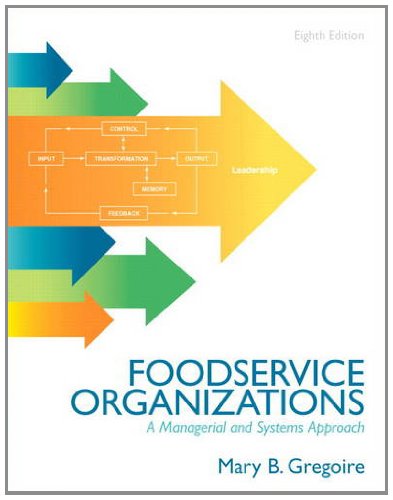
Food Service Organizations: A Managerial and Systems Approach
Authors:
Mary B. Gregoire
Publisher:
Prentice Hall
Publication Date:
Not available
ISBN:
0132620812
Organized around the well-proven foodservice systems model, FOOD SERVICE ORGANIZATIONS: A MANAGERIAL AND SYSTEMS APPROACH, 8/e provides detailed and... current information on how managers can optimally transform human, material, facility, and operational inputs into outputs of meals, customer satisfaction, employee satisfaction, and financial accountability. Blending theory and practice, it gives foodservice managers a strong empirical base for managing operations. After thoroughly introducing the model, it presents in-depth coverage of each functional subsystem: procurement, production, distribution, service, safety, sanitation, and maintenance. Next, readers master today’s most relevant leadership, communication, decision making, HR, financial, and marketing techniques. The book concludes with a full section on system outputs, including methods for evaluating them. This edition adds new coverage of sustainability; updated information on energy management and food safety; expanded coverage of marketing and globalization; and the latest dietary guidelines.
Foodservice Organizations: A Managerial and Systems Approach (7th...
Authors:
Mary B. Gregoire
Publisher:
Prentice Hall
Publication Date:
Not available
ISBN:
0135060559
Written for junior and senior level student, this best-selling text presents a comprehensive portrait of how to manage commercial and on-site... foodservice operations effectively and efficiently in the 21st century. Using the foodservice systems model as a guide, it shows managers how to transform the human, material, facility, and operational inputs of the system into outputs of meals, customer satisfaction, employee satisfaction, and financial accountability. This edition features expanded coverage of sustainability, social responsibility, and globalization and offers principles that will lead to managerial success.
 '





