production
/viewbook/list/all/?page=4695
/
/static/
None
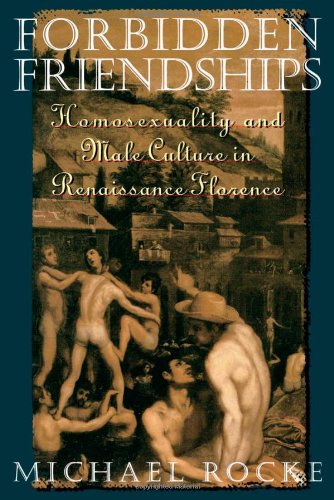
Forbidden Friendships: Homosexuality and Male Culture in...
Authors:
Michael Rocke
Publisher:
Oxford University Press, USA
Publication Date:
Not available
ISBN:
0195122925
"This is a superb work of scholarship, impossible to overpraise.... It marks a milestone in the 20-year rise of gay and lesbian studies."--Martin... Duberman, The AdvocateThe men of Renaissance Florence were so renowned for sodomy that "Florenzer" in German meant "sodomite." In the late fifteenth century, as many as one in two Florentine men had come to the attention of the authorities for sodomy by the time they were thirty. In 1432 The Office of the Night was created specifically to police sodomy in Florence. Indeed, nearly all Florentine males probably had some kind of same-sex experience as a part of their "normal" sexual life. Seventy years of denunciations, interrogations, and sentencings left an extraordinarily detailed record, which author Michael Rocke has used in his vivid depiction of this vibrant sexual culture in a world where these same-sex acts were not the deviant transgressions of a small minority, but an integral part of a normal masculine identity. Rocke roots this sexual activity in the broader context of Renaissance Florence, with its social networks of families, juvenile gangs, neighbors, patronage, workshops, and confraternities, and its busy political life from the early years of the Republic through the period of Lorenzo de' Medici, Savonarola, and the beginning of Medici princely rule. His richly detailed book paints a fascinating picture of Renaissance Florence and calls into question our modern conceptions of gender and sexual identity.
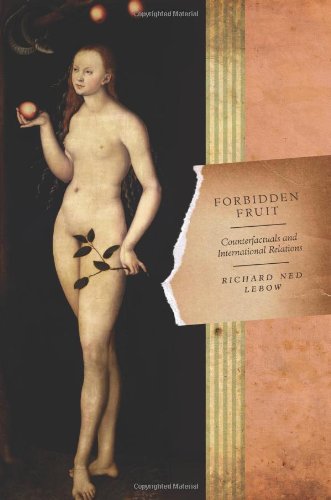
Forbidden Fruit: Counterfactuals and International Relations
Authors:
Richard Ned Lebow
Publisher:
Princeton University Press
Publication Date:
Not available
ISBN:
0691132909
Could World War I have been averted if Franz Ferdinand and his wife hadn't been murdered by Serbian nationalists in 1914? What if Ronald Reagan had been... killed by Hinckley's bullet? Would the Cold War have ended as it did? In Forbidden Fruit, Richard Ned Lebow develops protocols for conducting robust counterfactual thought experiments and uses them to probe the causes and contingency of transformative international developments like World War I and the end of the Cold War. He uses experiments, surveys, and a short story to explore why policymakers, historians, and international relations scholars are so resistant to the contingency and indeterminism inherent in open-ended, nonlinear systems. Most controversially, Lebow argues that the difference between counterfactual and so-called factual arguments is misleading, as both can be evidence-rich and logically persuasive. A must-read for social scientists, Forbidden Fruit also examines the binary between fact and fiction and the use of counterfactuals in fictional works like Philip Roth's The Plot Against America to understand complex causation and its implications for who we are and what we think makes the social world work.
Forbidden Fruit: Sex & Religion in the Lives of American Teenagers
Authors:
Mark D. Regnerus
Publisher:
Oxford University Press, USA
Publication Date:
Not available
ISBN:
0195395859
Americans remain deeply ambivalent about teenage sexuality. Many presume that such uneasiness is rooted in religion. But how exactly does religion... contribute to the formation of teenagers' sexual values and actions? What difference, if any, does religion make in adolescents' sexual attitudes and behaviors? Are abstinence pledges effective? What does it mean to be "emotionally ready" for sex? Who expresses regrets about their sexual activity and why? Tackling these and other questions, Forbidden Fruit tells the definitive story of the sexual values and practices of American teenagers, paying particular attention to how participating in organized religion shapes sexual decision-making. Merging analyses of three national surveys with stories drawn from interviews with over 250 teenagers across America, Mark Regnerus reviews how young people learn-and what they know-about sex from their parents, schools, peers and other sources. He examines what experiences teens profess to have had, and how they make sense of these experiences in light of their own identities as religious, moral, and responsible persons. Religion can and does matter, Regnerus finds, but religious claims are often swamped by other compelling sexual scripts. Particularly interesting is the emergence of what Regnerus calls a new middle class sexual morality which has little to do with a desire for virginity but nevertheless shuns intercourse in order to avoid risks associated with pregnancy and STDs. And strikingly, evangelical teens aren't less sexually active than their non-evangelical counterparts, they just tend to feel guiltier about it. In fact, Regnerus finds that few religious teens have internalized or are even able to articulate the sexual ethic taught by their denominations. The only-and largely ineffective-sexual message most religious teens are getting is, "Don't do it until you're married." Ultimately, Regnerus concludes, religion may influence adolescent sexual behavior, but it rarely motivates sexual decision making.
Forbidden Fruit: Sex & Religion in the Lives of American Teenagers
Authors:
Mark D. Regnerus
Publisher:
Oxford University Press, USA
Publication Date:
Not available
ISBN:
0195320948
Americans remain deeply ambivalent about teenage sexuality. Many presume that such uneasiness is rooted in religion. But how exactly does religion... contribute to the formation of teenagers' sexual values and actions? What difference, if any, does religion make in adolescents' sexual attitudes and behaviors? Are abstinence pledges effective? What does it mean to be "emotionally ready" for sex? Who expresses regrets about their sexual activity and why? Tackling these and other questions, Forbidden Fruit tells the definitive story of the sexual values and practices of American teenagers, paying particular attention to how participating in organized religion shapes sexual decision-making. Merging analyses of three national surveys with stories drawn from interviews with over 250 teenagers across America, Mark Regnerus reviews how young people learn-and what they know-about sex from their parents, schools, peers and other sources. He examines what experiences teens profess to have had, and how they make sense of these experiences in light of their own identities as religious, moral, and responsible persons. Religion can and does matter, Regnerus finds, but religious claims are often swamped by other compelling sexual scripts. Particularly interesting is the emergence of what Regnerus calls a new middle class sexual morality which has little to do with a desire for virginity but nevertheless shuns intercourse in order to avoid risks associated with pregnancy and STDs. And strikingly, evangelical teens aren't less sexually active than their non-evangelical counterparts, they just tend to feel guiltier about it. In fact, Regnerus finds that few religious teens have internalized or are even able to articulate the sexual ethic taught by their denominations. The only-and largely ineffective-sexual message most religious teens are getting is, "Don't do it until you're married." Ultimately, Regnerus concludes, religion may influence adolescent sexual behavior, but it rarely motivates sexual decision making.
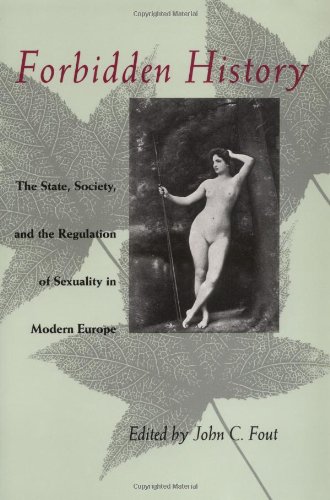
Forbidden History: The State, Society, and the Regulation of...
Authors:
Not Available
Publisher:
University of Chicago Press Journals
Publication Date:
Not available
ISBN:
0226257835
How have society's values and attitudes toward sexuality and morality changed over the centuries? Why and how has the state sought to criminalize... certain forms of sexual behavior and to control reproduction? How have churches tried to influence the state in its regulation of sexuality?This anthology encompasses a broad range of essays on sexuality spanning European history from the fifteenth century to the present. The topics in this collection of fifteen essays have both historic importance and current relevance. All crucial issues in the regulation of sexuality are addressed, from incest to infanticide, from breast-feeding and women's sexuality to female prostitution, from pornography to reproductive politics, and from the first homosexual rights movement to AIDS.Contributions from a diverse group of prominent scholars representing a variety of disciplines are included in this anthology. Essays by Randolph Trumbach on "Sex, Gender, and Identity in Modern Culture: Male Sodomy and Female Prostitution in Enlightenment London"; Ruth Perry on "Colonizing the Breast: Sexuality and Maternity in Eighteenth Century England"; Theo van der Meer on "Female Same-Sex Offenders in Late Eighteenth Century Amsterdam"; Robin Ann Sheets on "Pornography, Fairy Tales, and Feminism: Angela Carter's 'The Bloody Chamber'"; and James W. Jones on "Discourses on and of AIDS in West Germany, 1986-1990."Offering the most up-to-date scholarship from a significant and growing field, this collection is essential for both students and faculty in social history, family history, women's and gender studies, gay studies, sociology and literature.
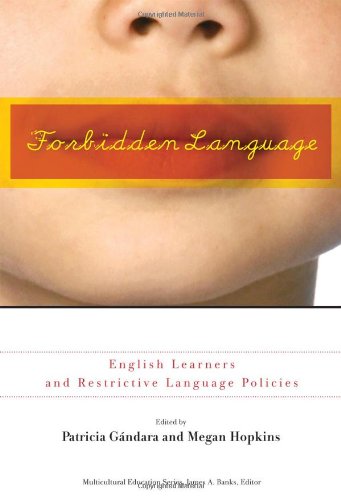
Forbidden Language: English Learners and Restrictive Language...
Authors:
Not Available
Publisher:
Teachers College Press
Publication Date:
Not available
ISBN:
080775045X
Pulling together the most up-to-date research on the effects of restrictive language policies, this timely volume focuses on what we know about the... actual outcomes for students and teachers in California, Arizona, and Massachusetts, states where these policies have been adopted. Prominent legal experts in bilingual education analyze these policies and specifically consider whether the new data undermine their legal viability. Other prominent contributors examine alternative policies and how these have fared. Finally, Patricia Gándara, Daniel Losen, and Gary Orfield suggest how better policies, that rely on empirical research, might be constructed. This timely volume features contributions from well-known educators and scholars in bilingual education. It includes an overview of English learners in the United States and a brief history of the policies that have guided their instruction. It also analyzes the current research on teaching English learners in order to determine the most effective instructional strategies.
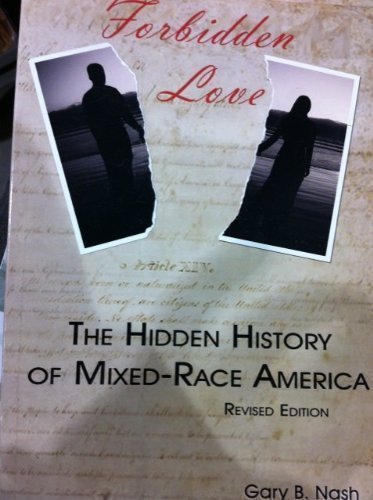
Forbidden Love (The Hidden History of Mixed-Race America, Revised...
Authors:
Gary B Nash
Publisher:
Not available
Publication Date:
Not available
ISBN:
0963321889
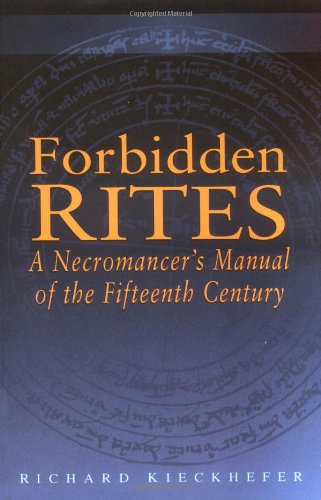
Forbidden Rites: A Necromancer's Manual of the Fifteenth Century...
Authors:
Richard Kieckhefer
Publisher:
Penn State Press
Publication Date:
Not available
ISBN:
0271017511
A general introduction to medieval magic, containing a little-known handbook from the late Middle Ages. 'Forbidden Rites is the best book on magic in... the late Middle Ages and a great introduction to the problematic relations of magic and religion in general.' H. C. Erik Midelfort, University of Virginia Preserved in the Bavarian State Library in Munich is a manuscript that few scholars have noticed and that no one in modern times has treated with the seriousness it deserves. Forbidden Rites consists of an edition of this medieval Latin text with a full commentary, including detailed analysis of the text and its contents, discussion of the historical context, translation of representative sections of the text, and comparison with other necromantic texts of the late Middle Ages. The result is the most vivid and readable introduction to medieval magic now available. Like many medieval texts for the use of magicians, this handbook is a miscellany rather than a systematic treatise. It is exceptional, however, in the scope and variety of its contents prayers and conjurations, rituals of sympathetic magic, procedures involving astral magic, a catalogue of spirits, lengthy ceremonies for consecrating a book of magic, and other materials. With more detail on particular experiments than the famous thirteenth-century Picatrix and more variety than the Thesaurus Necromatiae ascribed to Roger Bacon, the manual is one of the most interesting and important manuscripts of medieval magic that has yet come to light.
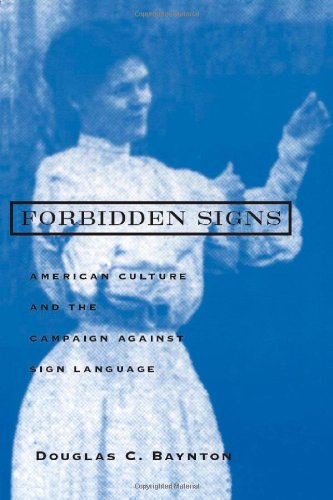
Forbidden Signs: American Culture and the Campaign against Sign...
Authors:
Douglas C. Baynton
Publisher:
University Of Chicago Press
Publication Date:
Not available
ISBN:
0226039641
Forbidden Signs explores American culture from the mid-nineteenth century to 1920 through the lens of one striking episode: the campaign led by... Alexander Graham Bell and other prominent Americans to suppress the use of sign language among deaf people.The ensuing debate over sign language invoked such fundamental questions as what distinguished Americans from non-Americans, civilized people from "savages," humans from animals, men from women, the natural from the unnatural, and the normal from the abnormal. An advocate of the return to sign language, Baynton found that although the grounds of the debate have shifted, educators still base decisions on many of the same metaphors and images that led to the misguided efforts to eradicate sign language."Baynton's brilliant and detailed history, Forbidden Signs, reminds us that debates over the use of dialects or languages are really the linguistic tip of a mostly submerged argument about power, social control, nationalism, who has the right to speak and who has the right to control modes of speech."—Lennard J. Davis, The Nation"Forbidden Signs is replete with good things."—Hugh Kenner, New York Times Book Review
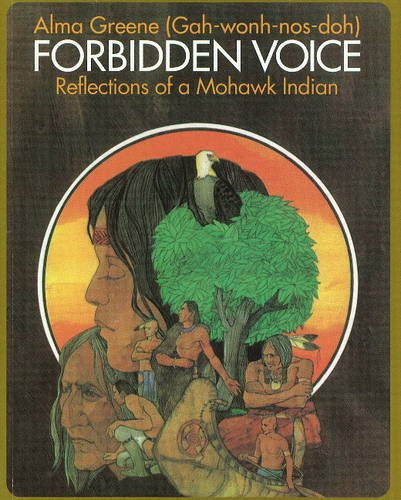
Forbidden voice: Reflections of a Mohawk Indian
Authors:
Alma Greene
Publisher:
Gazelle Distribution Trade
Publication Date:
Not available
ISBN:
1896781047
Alma Greene, descended from a long line of Mohawk chieftains and the daughter of a Clan Mother, was recognised from early childhood as a natural healer.... She grew up on a farm just outside the edge of the Grand River Lands in Ontario and wrote about her people's past and the contemporary events she witnessed, including the remedies practised for generations by her forebears; the ceremonies that perpetuate the line of clan leader; the gods whom the Mohawks honour; the variety of their beliefs. She also expressed the Native people's disillusionment with Christianity, the imposition of the white man's world and the land claim deceptions.
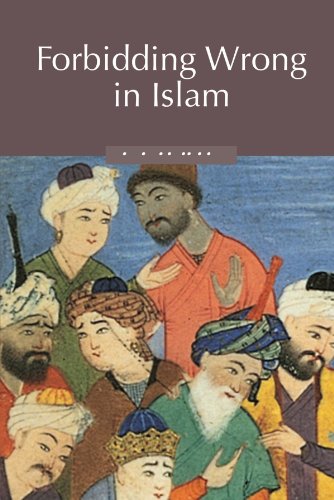
Forbidding Wrong in Islam: An Introduction (Themes in Islamic History)
Authors:
Michael Cook
Publisher:
Cambridge University Press
Publication Date:
Not available
ISBN:
0521536022
Michael Cook's classic study, Commanding Right and Forbidding Wrong in Islamic Thought (Cambridge, 2001), reflected upon the Islamic injunction to... forbid wrongdoing. This book is a short, accessible survey of the same material. Using Islamic history to illustrate his argument, Cook unravels the complexities of the subject by demonstrating how the past informs the present. At the book's core is an important message about the values of Islamic traditions and their relevance in the modern world.
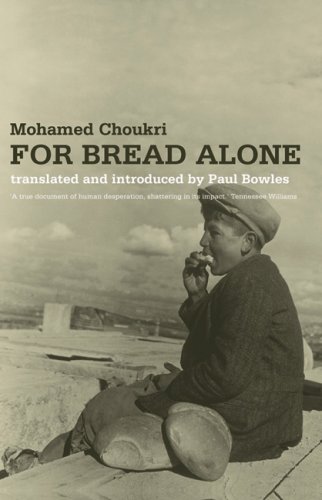
For Bread Alone
Authors:
Mohamed Choukri
Publisher:
Telegram Books
Publication Date:
Not available
ISBN:
1846590108
“A true story of human desperation, shattering in its impact.”—Tennessee WilliamsDriven by famine from their home in the Rif, Mohamed’s family... walks to Tangiers in search of a better life. But his father is unable to find work and grows violent. Mohamed learns how to charm and steal. During a short spell in a filthy Moroccan jail, a fellow inmate kindles his life-altering love of poetry.The distinguished writer Paul Bowles, perhaps best known for his novel The Sheltering Sky, collaborated closely with Mohamed Choukri on the translation of For Bread Alone, and penned the introduction.
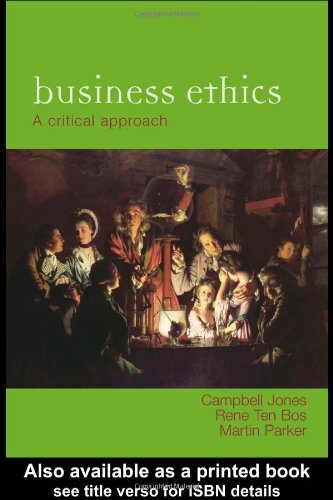
For Business Ethics: A Critical Text
Authors:
Campbell Jones
Publisher:
Routledge
Publication Date:
Not available
ISBN:
0415311357
For Business Ethics is a daring adventure into the world of business ethics. It offers a clear and accessible introduction to business ethics and also... expands business ethics beyond its current narrow confines. It is ground-breaking in the sense that it invites a distinctively critical approach to business ethics, an approach that the authors argue is part and parcel of ethics. With a thought-provoking glossary and recommendations for further readings, For Business Ethics is an essential purchase for students and practitioners alike. It is at once an introduction to business ethics and a challenge to anyone who wishes to take part in or change contemporary organized society.
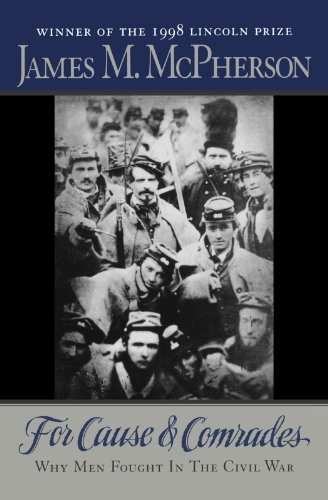
For Cause and Comrades: Why Men Fought in the Civil War
Authors:
James M. McPherson
Publisher:
Oxford University Press, USA
Publication Date:
Not available
ISBN:
0195124995
General John A. Wickham, commander of the famous 101st Airborne Division in the 1970s and subsequently Army Chief of Staff, once visited Antietam... battlefield. Gazing at Bloody Lane where, in 1862, several Union assaults were brutally repulsed before they finally broke through, he marveled, "You couldn't get American soldiers today to make an attack like that." Why did those men risk certain death, over and over again, through countless bloody battles and four long, awful years ? Why did the conventional wisdom -- that soldiers become increasingly cynical and disillusioned as war progresses -- not hold true in the Civil War? It is to this question--why did they fight--that James McPherson, America's preeminent Civil War historian, now turns his attention. He shows that, contrary to what many scholars believe, the soldiers of the Civil War remained powerfully convinced of the ideals for which they fought throughout the conflict. Motivated by duty and honor, and often by religious faith, these men wrote frequently of their firm belief in the cause for which they fought: the principles of liberty, freedom, justice, and patriotism. Soldiers on both sides harkened back to the Founding Fathers, and the ideals of the American Revolution. They fought to defend their country, either the Union--"the best Government ever made"--or the Confederate states, where their very homes and families were under siege. And they fought to defend their honor and manhood. "I should not lik to go home with the name of a couhard," one Massachusetts private wrote, and another private from Ohio said, "My wife would sooner hear of my death than my disgrace." Even after three years of bloody battles, more than half of the Union soldiers reenlisted voluntarily. "While duty calls me here and my country demands my services I should be willing to make the sacrifice," one man wrote to his protesting parents. And another soldier said simply, "I still love my country." McPherson draws on more than 25,000 letters and nearly 250 private diaries from men on both sides. Civil War soldiers were among the most literate soldiers in history, and most of them wrote home frequently, as it was the only way for them to keep in touch with homes that many of them had left for the first time in their lives. Significantly, their letters were also uncensored by military authorities, and are uniquely frank in their criticism and detailed in their reports of marches and battles, relations between officers and men, political debates, and morale. For Cause and Comrades lets these soldiers tell their own stories in their own words to create an account that is both deeply moving and far truer than most books on war. Battle Cry of Freedom, McPherson's Pulitzer Prize-winning account of the Civil War, was a national bestseller that Hugh Brogan, in The New York Times, called "history writing of the highest order." For Cause and Comrades deserves similar accolades, as McPherson's masterful prose and the soldiers' own words combine to create both an important book on an often-overlooked aspect of our bloody Civil War, and a powerfully moving account of the men who fought it.
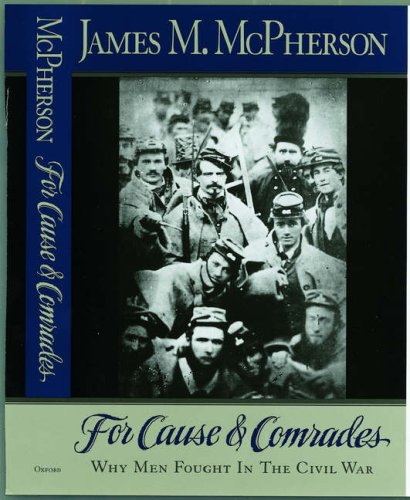
For Cause and Comrades: Why Men Fought in the Civil War
Authors:
James M. McPherson
Publisher:
Oxford University Press, USA
Publication Date:
Not available
ISBN:
0195090233
General John A. Wickham, commander of the famous 101st Airborne Division in the 1970s and subsequently Army Chief of Staff, once visited Antietam... battlefield. Gazing at Bloody Lane where, in 1862, several Union assaults were brutally repulsed before they finally broke through, he marveled, "You couldn't get American soldiers today to make an attack like that." Why did those men risk certain death, over and over again, through countless bloody battles and four long, awful years ? Why did the conventional wisdom -- that soldiers become increasingly cynical and disillusioned as war progresses -- not hold true in the Civil War?It is to this question--why did they fight-- that James McPherson, America's preeminent Civil War historian, now turns his attention. He shows that, contrary to what many scholars believe, the soldiers of the Civil War remained powerfully convinced of the ideals for which they fought throughout the conflict. Motivated by duty and honor, and often by religious faith, these men wrote frequently of their firm belief in the cause for which they fought: the principles of liberty, freedom, justice, and patriotism. Soldiers on both sides harkened back to the Founding Fathers, and the ideals of the American Revolution. They fought to defend their country, either the Union--"the best Government ever made"--or the Confederate states, where their very homes and families were under siege. And they fought to defend their honor and manhood. "I should not lik to go home with the name of a couhard," one Massachusetts private wrote, and another private from Ohio said, "My wife would sooner hear of my death than my disgrace." Even after three years of bloody battles, more than half of the Union soldiers reenlisted voluntarily. "While duty calls me here and my country demands my services I should be willing to make the sacrifice," one man wrote to his protesting parents. And another soldier said simply, "I still love my country."McPherson draws on more than 25,000 letters and nearly 250 private diaries from men on both sides. Civil War soldiers were among the most literate soldiers in history, and most of them wrote home frequently, as it was the only way for them to keep in touch with homes that many of them had left for the first time in their lives. Significantly, their letters were also uncensored by military authorities, and are uniquely frank in their criticism and detailed in their reports of marches and battles, relations between officers and men, political debates, and morale. For Cause and Comrades lets these soldiers tell their own stories in their own words to create an account that is both deeply moving and far truer than most books on war.Battle Cry of Freedom, McPherson's Pulitzer Prize-winning account of the Civil War, was a national bestseller that Hugh Brogan, in The New York Times, called "history writing of the highest order." For Cause and Comrades deserves similar accolades, as McPherson's masterful prose and the soldiers' own words combine to create both an important book on an often-overlooked aspect of our bloody Civil War, and a powerfully moving account of the men who fought it.
 '





