production
/viewbook/list/all/?page=4704
/
/static/
None

Forensic Psychology (Digital)
Authors:
Not Available
Publisher:
Not available
Publication Date:
Not available
ISBN:
Not available
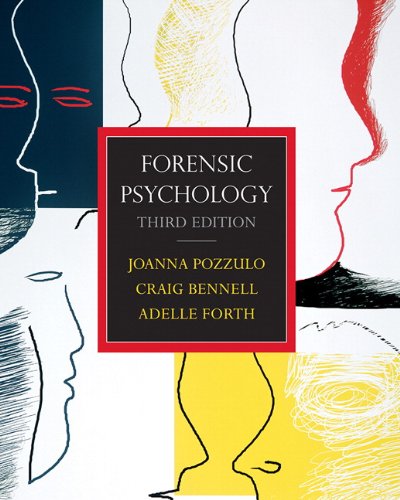
Forensic Psychology, Third Edition with MyPsychKit
Authors:
Joanna Pozzulo
Publisher:
Pearson Education Canada
Publication Date:
Not available
ISBN:
0132315602
Forensic Psychology, 3e is “the” Canadian source of stimulating and accessible course materials for Forensic Psychology courses from some of the... biggest names in the discipline. It takes a broad-based perspective that incorporates both experimental and clinical topics and presents the important ideas, issues, and research in a way that everyone will understand and enjoy, and in some cases find useful in their careers. The text covers topics that might otherwise be discussed in traditional social and cognitive psychology courses–including eyewitness testimony, jury decision making, and police procedures–as well as topics that are clinical in nature and might otherwise be discussed in traditional personality or abnormal psychology courses–such as the meaning of being unfit to stand trial, mentally disordered offenders, and psychopathy. Now available with a MyPsychKit access card for students to use the online Study Guide and interactive practice exercises.
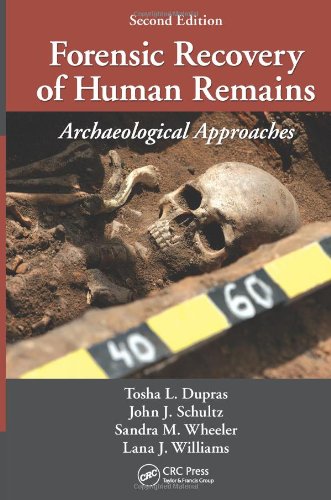
Forensic Recovery of Human Remains: Archaeological Approaches,...
Authors:
Tosha L. Dupras
Publisher:
CRC Press
Publication Date:
Not available
ISBN:
1439850305
This reference, now in its second edition, is a comprehensive guide that focuses on the practical aspects of excavating and recovering human remains, as... well as any associated evidence, from crime scenes. It highlights the protocols and techniques that are used to successfully survey, map, recover, document, collect, and transport evidence. New additions to the reference include discussion questions and suggested readings, updated mapping and measuring techniques, including a section on GIS and backpack differential GPS systems, expanded information on botany, DNA, and soil, and non-forensic burial contexts. Almost 200 illustrations are included to help clarify concepts.
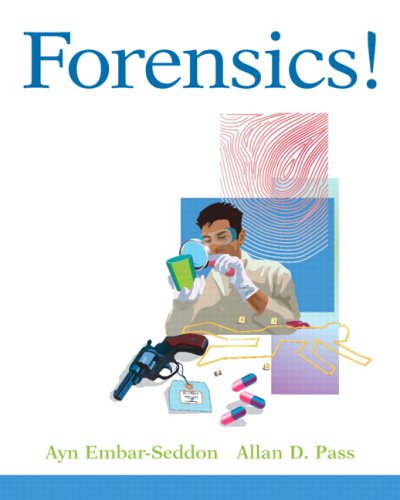
Forensics
Authors:
Ayn Embar-Seddon
Publisher:
Prentice Hall
Publication Date:
Not available
ISBN:
0205493459
BENEFIT: This easy to read, comprehensive primer is written by criminal justice professionals specifically for criminal justice students. It reviews 89... specific and timely forensic areas of academic investigation and its discussions are tempered with significant day-to-day field application experience. Its chapter-opening outlines and end-of-chapter learning features strive to make the material relevant for readers and its goal is to encourage students to understand how they will use forensic science in the criminal justice field. TOPICS: Discusses forensic topics as they relate to the world of the CJ professional. Includes topics such as the history of the field, the scope of forensic mental health, the trial consultant, treating offenders, and family court issues. Explores forensics around the world, the future of forensics and ethical considerations. Criminal justice students.
FORENSIC SCIENCE
Authors:
Not Available
Publisher:
Kendall Hunt Publishing
Publication Date:
Not available
ISBN:
1465204571
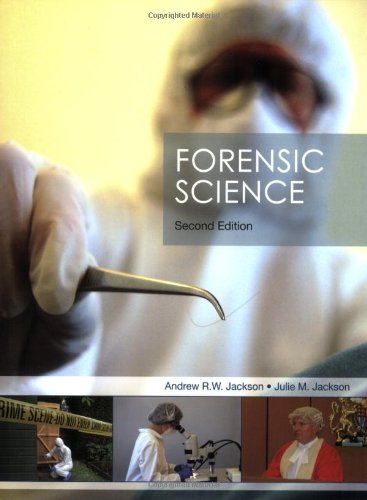
Forensic Science (2nd Edition)
Authors:
Andrew R.W Jackson
Publisher:
Prentice Hall
Publication Date:
Not available
ISBN:
0131998803
This book provides a clear and authoritative introduction to forensic science. It is comprehensive in that it covers the core topics throughout the... process of doing forensic science: from collecting evidence at the crime scene; through the analysis of that evidence; through to the presentation of the scientific findings in court. Scientifically rigorous, the book is primarily aimed at undergraduates starting out on forensic science degree programmes or those taking a forensic science elective module. Due to the book’s accessible and engaging tone related professions such as lawyers or police officers may also find this of interest as may the general reader who simply wishes to learn more about the subject. Case studies, chapter objectives and summaries and exercises feature throughout to enhance the reader’s learning experience. "A useful and relevant text which serves as a primer for students tounderstand current processes and structures. Well laid out andillustrated; a very readable text which is objective and factual in itspresentation." Rob Bird, Coventry University (formerly SIO/Police Superintendent)
Forensic Science: An Illustrated Dictionary
Authors:
John C. Brenner
Publisher:
CRC Press
Publication Date:
Not available
ISBN:
0849314577
Investigators, prosecutors, defense attorneys, professionals within the field of law enforcement, and other criminal justice personnel need to... understand forensic terms when communicating with forensic scientists or interpreting forensic lab results.Forensic Science-An Illustrated Dictionary introduces commonly-used forensic terms, many of which are crucial to the interpretation and understanding of laboratory report findings. The field of forensics grew considerably since the publication of the previous version of this book, the Forensic Science Glossary. With the introduction of new procedures and methods of analysis, many new terms have emerged. This volume adds many of the new terms used in criminal court cases, forensic entomology, forensic psychiatry, crime scene reconstruction, and other forensic disciplines.The definitions and accompanying illustrations come from various domains including toxicology, drug chemistry, criminalistics, bioscience/DNA, firearms/ballistics, forensic pathology, and the legal system. The illustrations communicate the use of laboratory instruments, investigative techniques, and laboratory methods of analysis.These detailed definitions and illustrations are valuable references to students and nonscientific professionals including police investigators interpreting lab reports, court reporters, prosecutors and defense attorneys preparing for trial.About the AuthorJohn C. Brenner earned a B.S. in Health Care Administration from the University of Southern Illinois while serving full time in the U.S. Navy. Upon completion of his naval career he received an MS in Forensic Science from the University of New Haven. He is a member of the Northeastern Association of Forensic Scientists (NEAFS). Mr. Brenner has spent 20 years as a forensic scientist with the New York State Police, and is trained in toxicology, serology, and DNA analysis. While providing testimony for more than 160 criminal court cases including homicides, rapes, blood assaults, burglaries, and DWIs, the author developed the idea for the first book, Forensic Science Glossary.Creating Forensic Science - An Illustrated Dictionary is one way of giving something back to the forensic community for the knowledge and experience he has gained working in the field of forensics.
Forensic Science: An Introduction to Scientific and Investigative...
Authors:
Jon J. Nordby
Publisher:
CRC Press
Publication Date:
Not available
ISBN:
1420064932
Now revised and updated, this comprehensive work, long considered the top textbook in the forensics field, reaches far beyond the scope of those... introductory texts that concentrate primarily on criminalistics. Covering a range of fundamental topics, it introduces newcomers to the field while providing the technical detail necessary to understand the field as a science. To this end the book is compatible with CRC lab manuals, including Forensic Science Laboratory Manual and Workbook, Third Edition (87193) and Crime Scene Processing and Laboratory Workbook (85425). Praise for the Previous Edition:"The first-hand experience of the authors and the use of real case studies, including photographs, captivate the reader. Even non-forensic science students and the general public would find this book interesting reading." —Kieran F. Lim, Physical Sciences Educational Reviews, Vol. 7, No. 1 This updated third edition includes: New material on forensic photography, crime scenes, and forensic pathology, including a chapter on Forensic Digital Photo Imaging Simplified, easy-to-understand chapters on computer forensics and DNA analysis Revised materials in each chapter to reflect advances in the field New and More Extensive Teaching Materials:An instructor’s guide with objectives, questions and answers, suggested activities, and material in electronic format is available upon qualifying course adoption.
Forensic Science: From the Crime Scene to the Crime Lab
Authors:
Richard Saferstein
Publisher:
Prentice Hall
Publication Date:
Not available
ISBN:
0135158494
A new first edition by the # 1 author in Forensic Science (Richard Saferstein) Forensic Science: From theCrime Scene to the Crime Lab is designed to... present forensic science in a very straightforward and easy to understand format. A book in forensic science can quickly overwhelm readers who have little or no course work in basic science. While a book in Forensic Science cannot avoid a discussion of some basic science principles, it can be done in a fashion that does not confuse the student. This book does just that!
Forensic Science: From the Crime Scene to the Crime Lab (2nd Edition)
Authors:
Richard Saferstein
Publisher:
Prentice Hall
Publication Date:
Not available
ISBN:
0131391879
Forensic Science: From the Crime Scene to the Crime Lab, Second Edition, is designed to present forensic science in a straightforward and... student-friendly format. Ideal for students with limited background in the sciences, topics are arranged to integrate scientific methodology with actual forensic applications. Discussions are focused on explaining state-of-the-art technology without delving into extraneous theories that may bore or overwhelm non-science students. Only the most relevant scientific and technological concepts are presented, keeping students focused on the practical knowledge they’ll need in the field.
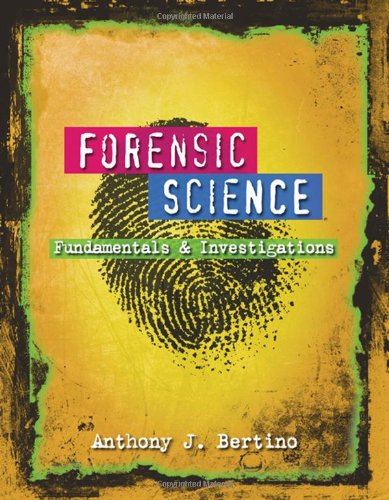
Forensic Science: Fundamentals and Investigations
Authors:
Anthony J. Bertino
Publisher:
South-Western Educational Pub
Publication Date:
Not available
ISBN:
0538445866
Explore the exciting world of forensic science firsthand with this interactive, experiential approach that balances scientific concepts and hands-on lab... activities with readings and access to the exclusive Gale Forensic Science eCollection database.
Forensic Science Handbook, Vol. II (2nd Edition)
Authors:
Richard Saferstein
Publisher:
Prentice Hall
Publication Date:
Not available
ISBN:
013112434X
Designed to provide practicing scientists with extensive knowledge and reference material to support scientific testimony in the courtroom, this book... presents authoritative, updated reviews designed to familiarize the reader with the latest techniques and methods available to forensic scientists. Practitioners will find this volume and its two other companions to be a handy reference for acquiring a working knowledge of examination techniques for a wide-range of crime-scene evidence. This volume focuses on DNA analysis, fiber analysis, drug identification, firearm examination, the microscopic examination of physical evidence, and the characterization of biological stains. An invaluable training aid for those preparing themselves for a career in forensic science, and an invaluable reference handbook for those already in the profession.
Forensic Science Handbook, Volume 1 (2nd Edition)
Authors:
Richard Saferstein
Publisher:
Prentice Hall
Publication Date:
Not available
ISBN:
0130910589
The second in a three-volume series, this popular and widely circulated professional handbook describes the theories and practices of today's... criminalistics, and covers a wide range of subject areas relevant to the services rendered by crime laboratories and related facilities. Presents authoritative reviews from recognized forensic criminologists and forensic scientists well-versed in their chosen areas of expertise. Considers a specific examination technique for a wide-range of evidence prevalent in the modern crime laboratory, e.g., DNA, hair, paint, soil, glass, petroleum products, explosives, alcohol in blood and breath, and questioned documents. Describes the theory, operation, and forensic utilization of such modern analytical instruments as mass spectrometry, capillary electrophoresis, high-performance liquid chromatography, and the visible microspectrophotometer. Emphasizes the symbiotic relationship between forensic science and criminal law as it examines the role and conduct of the expert witness, rules of evidence, and the legal requirements governing the admissibility of scientifically evaluated evidence. For professionals in forensic science and criminology.
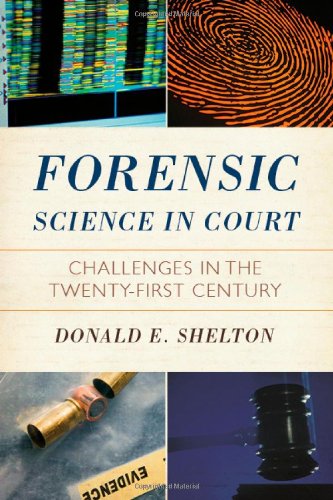
Forensic Science in Court: Challenges in the Twenty First Century...
Authors:
Donald Shelton
Publisher:
Rowman & Littlefield Publishers
Publication Date:
Not available
ISBN:
1442201886
.cs7CED571B{text-align:left;text-indent:0pt;padding:0pt 0pt 0pt 0pt;margin:0pt 0pt 0pt 0pt}... .csA62DFD6A{color:#000000;background-color:transparent;font-family:Times New Roman; font-size:12pt; font-weight:normal; font-style:italic; } .cs5EFED22F{color:#000000;background-color:transparent;font-family:Times New Roman; font-size:12pt; font-weight:normal; font-style:normal; } Forensic Science in Court explores the legal implications of forensic science--an increasingly important and complex part of the justice system. Judge Donald Shelton provides an accessible overview of the legal issues, from the history of evidence in court, to 'gatekeeper' judges determining what evidence can be allowed, to the 'CSI effect' in juries. The book describes and evaluates various kinds of evidence, including DNA, fingerprints, handwriting, hair, bite marks, tool marks, firearms and bullets, fire and arson investigation, and bloodstain evidence. Assessing the strengths and limitations of each kind of evidence, the author also discusses how they can contribute to identifying the 'who,' 'how,' and 'whether' questions that arise in criminal prosecutions. Author Donald Shelton draws on the depth of his experiences as courtroom prosecutor, professor, and judge, to provide a well-rounded look at these increasingly critical issues. Case studies throughout help bring the issues to life and show how forensic science has been used, both successfully and not, in real-world situations.
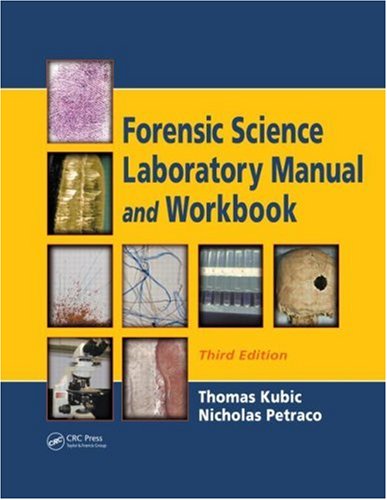
Forensic Science Laboratory Manual and Workbook, Third Edition
Authors:
Thomas Kubic
Publisher:
CRC Press
Publication Date:
Not available
ISBN:
1420087193
A laboratory companion to Forensic Science: An Introduction to Scientific and Investigative Techniques and other undergraduate texts, Forensic Science... Laboratory Manual and Workbook, Third Edition provides a plethora of basic, hands-on experiments that can be completed with inexpensive and accessible instrumentation, making this an ideal workbook for non-science majors and an excellent choice for use at both the high school and college level. This revised edition of a bestselling lab manual provides numerous experiments in odontology, anthropology, archeology, chemistry, and trace evidence. The experiments cover tests involving body fluid, soil, glass, fiber, ink, and hair. The book also presents experiments in impression evidence, such as fingerprints, bite marks, footwear, and firearms, and it features digital and traditional photography and basic microscopy. All of the experiments incorporate practical elements to facilitate the learning process. Students must apply the scientific method of reasoning, deduction, and problem-solving in order to complete the experiments successfully and attain a solid understanding of fundamental forensic science. Each of the 39 chapters features a separate experiment and includes teaching goals, offers the requisite background knowledge needed to conduct the experiments, and lists the required equipment and supplies. The book is designed for a cooperative learning setting in which three to five students comprise a group. Using the hands-on learning techniques provided in this manual, students will master the practical application of their theoretical knowledge of forensics.
 '





