production
/viewbook/list/all/?page=4758
/
/static/
None

FOUND.EARTH SCI+MASTGEO+CD GEOSCI
Authors:
Not Available
Publisher:
Not available
Publication Date:
Not available
ISBN:
Not available
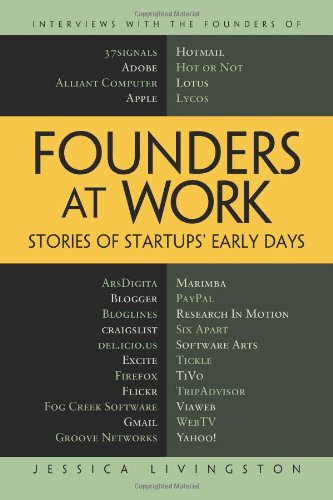
Founders at Work: Stories of Startups' Early Days (Recipes: a...
Authors:
Jessica Livingston
Publisher:
Apress
Publication Date:
Not available
ISBN:
1430210788
Now available in paperback—with a new preface and interview with Jessica Livingston about Y Combinator! Founders at Work: Stories of Startups’ Early... Days is a collection of interviews with founders of famous technology companies about what happened in the very earliest days. These people are celebrities now. What was it like when they were just a couple friends with an idea? Founders like Steve Wozniak (Apple), Caterina Fake (Flickr), Mitch Kapor (Lotus), Max Levchin (PayPal), and Sabeer Bhatia (Hotmail) tell you in their own words about their surprising and often very funny discoveries as they learned how to build a company. Where did they get the ideas that made them rich? How did they convince investors to back them? What went wrong, and how did they recover? Nearly all technical people have thought of one day starting or working for a startup. For them, this book is the closest you can come to being a fly on the wall at a successful startup, to learn how it's done. But ultimately these interviews are required reading for anyone who wants to understand business, because startups are business reduced to its essence. The reason their founders become rich is that startups do what businesses do—create value—more intensively than almost any other part of the economy. How? What are the secrets that make successful startups so insanely productive? Read this book, and let the founders themselves tell you.
Found: God's Will (John MacArthur Study)
Authors:
John MacArthur Jr.
Publisher:
David C. Cook
Publication Date:
Not available
ISBN:
1434702987
Does God have a path for me?How do I make the right choices in life?Why is it so difficult to uncover God’s will? Trusted pastor and teacher John... MacArthur answers these vital questions and more. Found: God’s Will shares six powerful principles that will give you direction, fill you with purpose, and give you the confidence to live out His plan for you.
Founding Brothers - The Revolutionary Generation
Authors:
Joseph J. Ellis
Publisher:
BALLANTINE BOOKS @
Publication Date:
Not available
ISBN:
0375705244
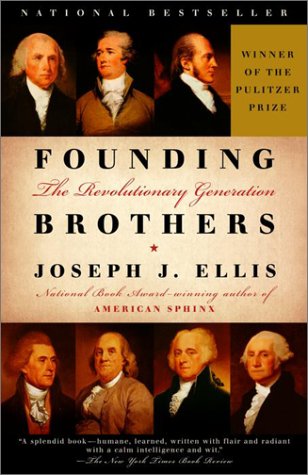
Founding Brothers: The Revolutionary Generation
Authors:
Joseph J. Ellis
Publisher:
Knopf
Publication Date:
Not available
ISBN:
0375405445
An illuminating study of the intertwined lives of the founders of the American republic--John Adams, Aaron Burr, Benjamin Franklin, Alexander Hamilton,... Thomas Jefferson, James Madison, and George Washington.During the 1790s, which Ellis calls the most decisive decade in our nation's history, the greatest statesmen of their generation--and perhaps any--came together to define the new republic and direct its course for the coming centuries. Ellis focuses on six discrete moments that exemplify the most crucial issues facing the fragile new nation: Burr and Hamilton's deadly duel, and what may have really happened; Hamilton, Jefferson, and Madison's secret dinner, during which the seat of the permanent capital was determined in exchange for passage of Hamilton's financial plan; Franklin's petition to end the "peculiar institution" of slavery--his last public act--and Madison's efforts to quash it; Washington's precedent-setting Farewell Address, announcing his retirement from public office and offering his country some final advice; Adams's difficult term as Washington's successor and his alleged scheme to pass the presidency on to his son; and finally, Adams and Jefferson's renewed correspondence at the end of their lives, in which they compared their different views of the Revolution and its legacy.In a lively and engaging narrative, Ellis recounts the sometimes collaborative, sometimes archly antagonistic interactions between these men, and shows us the private characters behind the public personas: Adams, the ever-combative iconoclast, whose closest political collaborator was his wife, Abigail; Burr, crafty, smooth, and one of the most despised public figures of his time; Hamilton, whose audacious manner and deep economic savvy masked his humble origins; Jefferson, renowned for his eloquence, but so reclusive and taciturn that he rarely spoke more than a few sentences in public; Madison, small, sickly, and paralyzingly shy, yet one of the most effective debaters of his generation; and the stiffly formal Washington, the ultimate realist, larger-than-life, and America's only truly indispensable figure.Ellis argues that the checks and balances that permitted the infant American republic to endure were not primarily legal, constitutional, or institutional, but intensely personal, rooted in the dynamic interaction of leaders with quite different visions and values. Revisiting the old-fashioned idea that character matters, Founding Brothers informs our understanding of American politics--then and now--and gives us a new perspective on the unpredictable forces that shape history.
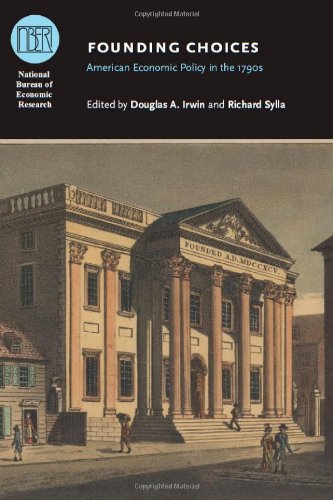
Founding Choices: American Economic Policy in the 1790s (National...
Authors:
Not Available
Publisher:
University Of Chicago Press
Publication Date:
Not available
ISBN:
0226384756
The political decisions made by the founding fathers were crucial to the success of the early republic. But the economic decisions they made were just... as pivotal, ensuring the general welfare and common defense of the United States for decades to come. Founding Choices explores these economic choices and their profound influence on American life, westward expansion, and influence abroad. Among the topics covered are finance, trade, and monetary and banking policy, with a focus on the factors guiding those policies and their end result. This book redresses the relative neglect of the economic achievements of the founders. It will be essential reading for historians and economists alike.
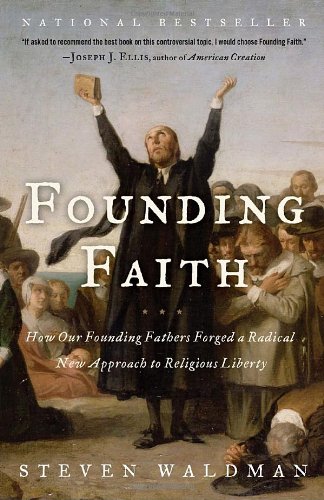
Founding Faith: How Our Founding Fathers Forged a Radical New...
Authors:
Steven Waldman
Publisher:
Random House Trade Paperbacks
Publication Date:
Not available
ISBN:
0812974743
The culture wars have distorted the dramatic story of how Americans came to worship freely. Many activists on the right maintain that the United States... was founded as a “Christian nation.” Many on the left contend that the First Amendment was designed to boldly separate church and state. Neither of these claims is true, argues Beliefnet.com editor in chief Steven Waldman. With refreshing objectivity, Waldman narrates the real story of how our nation’s Founders forged a new approach to religious liberty.Founding Faith vividly describes the religious development of five Founders. Benjamin Franklin melded the Puritan theology of his youth and the Enlightenment philosophy of his adulthood. John Adams’s pungent views on religion stoked his revolutionary fervor and shaped his political strategy. George Washington came to view religious tolerance as a military necessity. Thomas Jefferson pursued a dramatic quest to “rescue” Jesus, in part by editing the Bible. Finally, it was James Madison who crafted an integrated vision of how to prevent tyranny while encouraging religious vibrancy.The spiritual custody battle over the Founding Fathers and the role of religion in America continues today. Waldman at last sets the record straight, revealing the real history of religious freedom to be dramatic, unexpected, paradoxical, and inspiring.
Founding Faith: Providence, Politics, and the Birth of Religious...
Authors:
Steven Waldman
Publisher:
Random House
Publication Date:
Not available
ISBN:
1400064376
The culture wars have distorted the dramatic story of how Americans came to worship freely. Many activists on the right maintain that the United States... was founded as a “Christian nation.” Many on the left contend that the Founders were secular or Deist and that the First Amendment was designed to boldly separate church and state throughout the land. None of these claims are true, argues Beliefnet.com editor in chief Steven Waldman. With refreshing objectivity, Waldman narrates the real story of how our nation’s Founders forged a new approach to religious liberty, a revolutionary formula that promoted faith . . . by leaving it alone.This fast-paced narrative begins with earlier settlers’ stunningly unsuccessful efforts to create a Christian paradise, and concludes with the presidencies of Washington, Adams, Jefferson, and Madison, during which the men who had devised lofty principles regarding the proper relationship between church and state struggled to practice what they’d preached. We see how religion helped cause, and fuel, the Revolutionary War, and how the surprising alliance between Enlightenment philosophers such as Jefferson and Madison and evangelical Christians resulted in separation of church and state.As the drama unfolds, Founding Faith vividly describes the religious development of five Founders. Benjamin Franklin melded the morality-focused Puritan theology of his youth and the reason-based Enlightenment philosophy of his adulthood. John Adams’s pungent views on religion–hatred of the Church of England and Roman Catholics–stoked his revolutionary fervor and shaped his political strategy. George Washington came to view religious tolerance as a military necessity. Thomas Jefferson pursued a dramatic quest to “rescue” Jesus, in part by editing the Bible. Finally, it was James Madison–the tactical leader of the battle for religious freedom–who crafted an integrated vision of how to prevent tyranny while encouraging religious vibrancy.The spiritual custody battle over the Founding Fathers and the role of religion in America continues today. Waldman provocatively argues that neither side in the culture war has accurately depicted the true origins of the First Amendment. He sets the record straight, revealing the real history of religious freedom to be dramatic, unexpected, paradoxical, and inspiring.An interactive library of the key writings by the Founding Father, on separation of church and state, personal faith, and religious liberty can be found at www.beliefnet.com/foundingfaith.Praise for Founding Faith“Steven Waldman, a veteran journalist and co-founder of Beliefnet.com, a religious web site, surveys the convictions and legacy of the founders clearly and fairly, with a light touch but a careful eye.”—New York Times Book Review“Waldman ends by encouraging us to be like the founders. We should understand their principles, learn from their experience, then have at it ourselves. “We must pick up the argument that they began and do as they instructed – use our reason to determine our views.” A good place to start is this entertaining, provocative book.”—New York Times Book Review"Steven Waldman's enlightening new book, "Founding Faith," is wise and engaging on many levels, but Waldman has done a particular service in detailing Madison's role in creating a culture of religious freedom that has served America so well for so long…."Founding Faith" is an excellent book about an important subject: the inescapable—but manageable—intersection of religious belief and public life. With a grasp of history and an understanding of the exigencies of the moment, Waldman finds a middle ground between those who think of the Founders as apostles in powdered wigs and those who assert, equally inaccurately, that the Founders believed religion had no place in politics."–Newsweek"Well-wrought, well-written and well-reasoned—a welcome infusion of calm good sense into a perennially controversial and relevant subject."–Kirkus"Founding Faith takes up two central questions about religion in early America. First, what did such Founding Fathers as Benjamin Franklin, John Adams, George Washington, Thomas Jefferson and James Madison usually believe? And second, how did it come about that the First Amendment to the Constitution guarantees that "Congress shall make no laws respecting an establishment of religion, or prohibiting the free exercise thereof"? The answers to these questions carry implications for our lives today, since at stake is the flash-point principle of the separation of church and state." –Washington Post“There is a fierce custody battle going on out there for ownership of the Founding Fathers. Founding Faith strikes me as a major contribution to that debate, a sensible and sophisticated argument that the Founders’ religious convictions defy our current categories.”–Joseph Ellis, author of American Creation“Steven Waldman does a great job describing the nuances of the Founders’ beliefs and the balances they struck, thus rescuing them from those on both sides who would oversimplify their ideas.” –Walter Isaacson, president of the Aspen Institute and author of Benjamin Franklin: An American Life.“This is a history every American should know, and Waldman masterfully tells it.”–Jim Wallis, author of The Great Awakening“Steven Waldman recovers the founders’ true beliefs with an insightful and truly original argument. It will change the way you think about the separation of church and state.” –George Stephanopoulos, chief Washington correspondent, ABC News, and anchor of This Week “Steve Waldman makes the strong case that the culture wars have distorted how and why we have religious freedom in America. Americans can be inspired by this story–the extraordinary birth story of freedom of religion.”–William J. Bennett, author of America: The Last Best Hope“An unusually well-balanced book on an unusually controversial subject. Not every reader will agree with Waldman that, of the Founding Fathers, James Madison’s conclusions about religion and society were best. But all should be grateful for the way Waldman replaces myths with facts, clarifies the complexity in making the Founders speak to present-day problems, and allows the Founders who differed with Madison a full and sympathetic hearing. An exceptionally fair, well-researched, and insightful book.”–Mark A. Noll, University of Notre Dame, author of America’s God
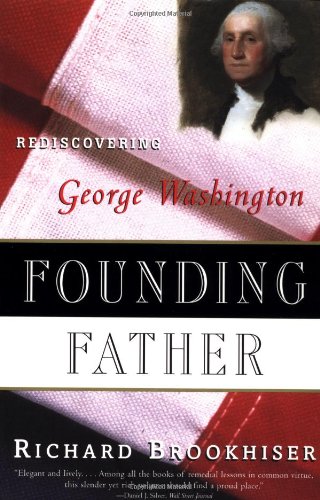
Founding Father: Rediscovering George Washington
Authors:
Richard Brookhiser
Publisher:
Free Press
Publication Date:
Not available
ISBN:
0684831422
In this thought-provoking look at George Washington as soldier and statesman, Richard Brookhiser traces the astonishing achievements of Washington's... career and illuminates how his character and his values shaped the beginnings of American politics.
Founding Fictions (Albma Rhetoric Cult & Soc Crit)
Authors:
Dr. Jennifer R. Mercieca
Publisher:
University Alabama Press
Publication Date:
Not available
ISBN:
0817316906
Part political history, part rhetorical criticism, Founding Fictions is an extended analysis of how Americans imagined themselves as citizens between... 1764 and 1845. It critically re-interrogates our fundamental assumptions about a government based upon the will of the people, with profound implications for our ability to assess democracy today. Founding Fictions develops the concept of a "political fiction," or a narrative that people tell about their own political theories, and analyzes how republican and democratic fictions positioned American citizens as either romantic heroes, tragic victims, or ironic partisans. By re-telling the stories that Americans have told themselves about citizenship, Mercieca highlights an important contradiction in American political theory and practice: that national stability and active citizen participation are perceived as fundamentally at odds.
Founding Gardeners: The Revolutionary Generation, Nature, and the...
Authors:
Andrea Wulf
Publisher:
Knopf
Publication Date:
Not available
ISBN:
0307269906
From the author of the acclaimed The Brother Gardeners, a fascinating look at the founding fathers from the unique and intimate perspective of their... lives as gardeners, plantsmen, and farmers.For the founding fathers, gardening, agriculture, and botany were elemental passions, as deeply ingrained in their characters as their belief in liberty for the nation they were creating. Andrea Wulf reveals for the first time this aspect of the revolutionary generation. She describes how, even as British ships gathered off Staten Island, George Washington wrote his estate manager about the garden at Mount Vernon; how a tour of English gardens renewed Thomas Jefferson’s and John Adams’s faith in their fledgling nation; how a trip to the great botanist John Bartram’s garden helped the delegates of the Constitutional Congress break their deadlock; and why James Madison is the forgotten father of American environmentalism. These and other stories reveal a guiding but previously overlooked ideology of the American Revolution.Founding Gardeners adds depth and nuance to our understanding of the American experiment and provides us with a portrait of the founding fathers as they’ve never before been seen.

Founding Gardeners: The Revolutionary Generation, Nature, and the...
Authors:
Andrea Wulf
Publisher:
Vintage
Publication Date:
Not available
ISBN:
0307390683
For the Founding Fathers, gardening, agriculture, and botany were elemental passions: a conjoined interest as deeply ingrained in their characters as... the battle for liberty and a belief in the greatness of their new nation. Founding Gardeners is an exploration of that obsession, telling the story of the revolutionary generation from the unique perspective of their lives as gardeners, plant hobbyists, and farmers. Acclaimed historian Andrea Wulf describes how George Washington wrote letters to his estate manager even as British warships gathered off Staten Island; how a tour of English gardens renewed Thomas Jefferson’s and John Adams’s faith in their fledgling nation; and why James Madison is the forgotten father of environmentalism. Through these and other stories, Wulf reveals a fresh, nuanced portrait of the men who created our nation.
Founding Mothers & Fathers: Gendered Power and the Forming of...
Authors:
Mary Beth Norton
Publisher:
Vintage
Publication Date:
Not available
ISBN:
0679749772
In this pioneering study of the ways in which the first settlers defined the power, prerogatives, and responsibilities of the sexes, one of our most... incisive historians opens a window onto the world of Colonial America. Drawing on a wealth of contemporary documents, Mary Beth Norton tells the story of the Pinion clan, whose two-generation record of theft, adultery, and infanticide may have made them our first dysfunctional family. She reopens the case of Mistress Ann Hibbens, whose church excommunicated her for arguing that God had told husbands to listen to their wives. And here is the enigma of Thomas, or Thomasine Hall, who lived comfortably as both a man and a woman in 17th century Virginia. Wonderfully erudite and vastly readable, Founding Mothers & Fathers reveals both the philosophical assumptions and intimate domestic arrangements of our colonial ancestors in all their rigor, strangeness, and unruly passion."An important, imaginative book. Norton destroys our nostalgic image of a 'golden age' of family life and re-creates a more complex past whose assumptions and anxieties are still with us."--Raleigh News and Observer
Founding Myths: Stories That Hide Our Patriotic Past
Authors:
Ray Raphael
Publisher:
New Press, The
Publication Date:
Not available
ISBN:
1595580735
The highly praised book in which cherished stories from American history are exposed as myths.Widely praised following its initial publication, Founding... Myths is a page-turner created out of the stuff of American history primers. Reexamining thirteen well-known tales from the American struggle for independence, the book documents the errors and inventions that permeate these cherished national myths—myths that are often still taught in American history classes—in what Baltimore's City Paper calls a "debunking that does not disappoint.""Engaging and eye-opening" (The Sacramento Bee), Ray Raphael's bold and provocative book reexamines the story of Paul Revere's midnight ride, which turns out to have involved far more than one rider; Patrick Henry's famous (and fictitious) "Give Me Liberty" speech; and the made-up character of Molly Pitcher, among many others. Raphael cleverly demonstrates how these stories evolved over time. And in each case, he offers an alternative version, one that is both more historically accurate and more in tune with our nation's democratic ideals.For anyone who is curious about the true story of the nation's founding, and for those searching for a genuine chronicle of democratic struggle, Founding Myths is American history at its truest and most vital.
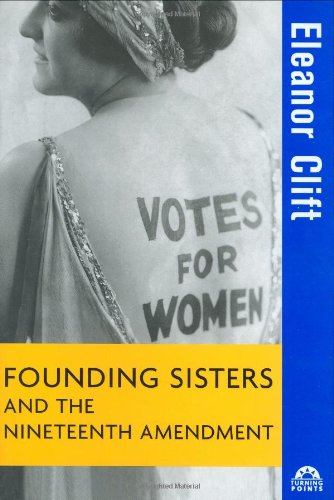
Founding Sisters and the Nineteenth Amendment (Turning Points in...
Authors:
Eleanor Clift
Publisher:
Wiley
Publication Date:
Not available
ISBN:
0471426121
"An extraordinary new series intended to capture extraordinary moments in history."-Chicago TribuneTURNING POINTS features preeminent writers offering... fresh, personal perspectives on the defining events of our time. Available NowEleanor Clift, Founding Sisters and the Nineteenth AmendmentAlan Dershowitz, America Declares IndependenceThomas Fleming, The Louisiana PurchaseWilliam Least Heat-Moon, Columbus in the AmericasScott Simon, Jackie Robinson and the Integration of BaseballForthcoming TitlesDouglas Brinkley on the March on WashingtonWilliam F. Buckley Jr. on the Fall of the Berlin WallSir Martin Gilbert on D-DayMartin Goldsmith on the Beatles Coming to AmericaKweisi Mfume on the Emancipation Proclamation
 '





