production
/viewbook/list/all/?page=4793
/
/static/
None
Freedom to Learn (3rd Edition)
Authors:
Carl R. Rogers
Publisher:
Pearson
Publication Date:
Not available
ISBN:
0024031216
Spirituality is the sacred center out of which all life comes, including Mondays and Tuesdays and Rainy Saturday afternoons in all their mundane and... glorious detail... This luminous book on journal writing and inner development will help you discover the precious bond between spiritual experience and everyday event that is the heart of the spiritual journey. In Life's Companion Christina Baldwin points out that writing is a means of expanding our inner horizons, of relating more meanigfully to the world we live in and to other spiritual travelers. Using a technique, facing-page format, the book illuminates its text with enlightening quotations, exercises, questions, and techniques to nurture the writer and seeker within you. Centered in a broad spiritual philosophy, Life's Companion will show you how to transform writing into a toll for self-growth, heightened awareness, and personal fulfillment.
Freedom, Vol. 1: Freedom in the Making of Western Culture
Authors:
Orlando Patterson
Publisher:
Basic Books
Publication Date:
Not available
ISBN:
0465025323
This magisterial work traces the history of our most cherished value. Patterson links the birth of freedom in primitive societies with the institution... of slavery, and traces the evolution of three forms of freedom in the West from antiquity through the Middle Ages.
Freedom within Reason
Authors:
Susan Wolf
Publisher:
Oxford University Press, USA
Publication Date:
Not available
ISBN:
0195085655
Philosophers typically see the issue of free will and determinism in terms of a debate between two standard positions. Incompatibilism holds that... freedom and responsibility require causal and metaphysical independence from the impersonal forces of nature. According to compatibilism, people are free and responsible as long as their actions are governed by their desires. In Freedom Within Reason, Susan Wolf charts a path between these traditional positions: We are not free and responsible, she argues, for actions that are governed by desires that we cannot help having. But the wish to form our own desires from nothing is both futile and arbitrary. Some of the forces beyond our control are friends to freedom rather than enemies of it: they endow us with faculties of reason, perception, and imagination, and provide us with the data by which we come to see and appreciate the world for what it is. The independence we want, Wolf argues, is not independence from the world, but independence from forces that prevent or preclude us from choosing how to live in light of a sufficient appreciation of the world. The freedom we want is a freedom within reason and the world.

Freedom with Violence: Race, Sexuality, and the US...
Authors:
Chandan Reddy
Publisher:
Duke University Press Books
Publication Date:
Not available
ISBN:
0822351056
In Freedom with Violence, Chandan Reddy develops a new paradigm for understanding race, sexuality, and national citizenship. He examines a crucial... contradiction at the heart of modernity: the nation-state’s claim to provide freedom from violence depends on its systematic deployment of violence against peoples perceived as nonnormative and irrational. Reddy argues that the modern liberal state is organized as a “counterviolence” to race even as, and precisely because, race persists as the condition of possibility for the modern subject. Rejecting liberal notions of modernity as freedom from violence or revolutionary ideas of freedom through violence, Reddy contends that liberal modernity is a structure for authorizing state violence. Contemporary neoliberal societies link freedom to the notion of legitimate (state) violence and produce narratives of liberty that tie rights and citizenship to institutionalized violence. To counter these formulations, Reddy proposes an alternative politics of knowledge grounded in queer of color critique and critical ethnic studies. He uses issues that include asylum law and the military’s “don’t ask, don’t tell” policy to illustrate this major rethinking of the terms of liberal modernity.
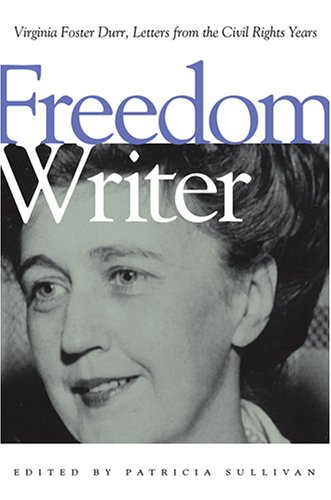
Freedom Writer: Virginia Foster Durr, Letters from the Civil Rights...
Authors:
Virginia Foster Durr
Publisher:
University of Georgia Press
Publication Date:
Not available
ISBN:
0820328219
Virginia Foster Durr (1903-1999) was a monumental champion of civil rights and yet, as a privileged white southern woman, an unlikely one. Freedom... Writer is a collection of her letters from across three decades of struggle for the cause of racial equality. In 1951, returning to her native Alabama after a twenty-year absence, Durr was deeply affronted by the same unchecked racism she recalled from her childhood. To help understand the South and battle her sense of isolation, Durr wrote hundreds of letters--humorous, sharp, and observant--to her friends outside the region, among them Eleanor Roosevelt, Lyndon and Lady Bird Johnson, Hugo Black, Jessica Mitford, and C. Vann Woodward.Durr often wrote from the movement's front lines--the sit-ins, freedom rides, and student protests. Moving in the same circles as Rosa Parks, E. D. Nixon, Martin Luther King Jr., and others, Durr often put her life on the line as a bridge between blacks and whites during dangerous times. Countless details of this personal journey, and the shifting political landscape across which it unfolded, found their way into Durr's correspondence.Originally published on the one hundredth anniversary of Durr's birth, Freedom Writer explores the life and times of a woman whose insatiable appetite for justice immersed her in many of the defining issues and events of the day.
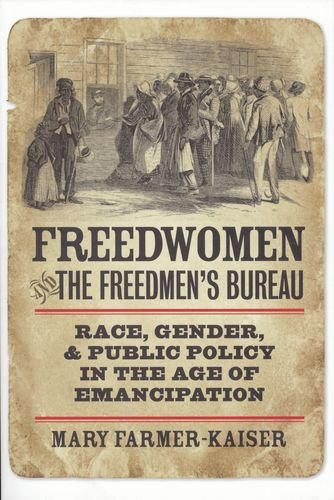
Freedwomen and the Freedmen's Bureau: Race, Gender, and Public...
Authors:
Mary J. Farmer-Kaiser
Publisher:
Fordham University Press
Publication Date:
Not available
ISBN:
0823232123
Established by congress in early 1865, the Bureau of Refugees, Freedmen, and Abandoned Lands-more commonly known as the Freedmen's Bureau-assumed the... Herculean task of overseeing the transition from slavery to freedom in the post-Civil War South. Although it was called the Freedmen's Bureau, the agency profoundly affected African-American women. Until now remarkably little has been written about the relationship between black women and this federal government agency. As Mary Farmer-Kaiser clearly demonstrates in this revealing work, by failing to recognize freedwomen as active agents of change and overlooking the gendered assumptions at work in Bureau efforts, scholars have ultimately failed to understand fully the Bureau's relationships with freedwomen, freedmen, and black communities in this pivotal era of American history.
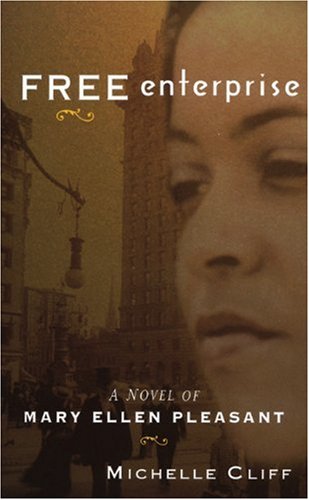
Free Enterprise: A Novel of Mary Ellen Pleasant
Authors:
Michelle Cliff
Publisher:
City Lights Publishers
Publication Date:
Not available
ISBN:
0872864375
In 1858, two black women meet at a restaurant and begin to plot a revolution. Mary Ellen Pleasant owns a string of hotels in San Francisco that secretly... double as havens for runaway slaves. Her comrade, Annie, is a young Jamaican who has given up her life of privilege to fight for the abolitionist cause. Together they join John Brown’s doomed enterprise and barely escape with their lives.With mesmerizing skill, Cliff weaves a multitude of voices into a gripping, poignant story of the struggle for liberation that began not long after the first slaves landed on America’s shores.Michelle Cliff is the author of No Telephone to Heaven, among other books of fiction, and a forthcoming essay collection, Apocalypso. She lives in Santa Cruz, CA.
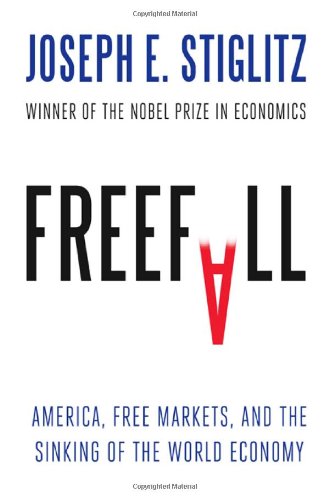
Freefall: America, Free Markets, and the Sinking of the World Economy
Authors:
Joseph E. Stiglitz
Publisher:
W. W. Norton & Company
Publication Date:
Not available
ISBN:
0393075966
An incisive look at the global economic crisis, our flawed response, and the implications for the world’s future prosperity.The Great Recession, as it... has come to be called, has impacted more people worldwide than any crisis since the Great Depression. Flawed government policy and unscrupulous personal and corporate behavior in the United States created the current financial meltdown, which was exported across the globe with devastating consequences. The crisis has sparked an essential debate about America’s economic missteps, the soundness of this country’s economy, and even the appropriate shape of a capitalist system. Few are more qualified to comment during this turbulent time than Joseph E. Stiglitz. Winner of the 2001 Nobel Prize in Economics, Stiglitz is “an insanely great economist, in ways you can’t really appreciate unless you’re deep into the field” (Paul Krugman, New York Times). In Freefall, Stiglitz traces the origins of the Great Recession, eschewing easy answers and demolishing the contention that America needs more billion-dollar bailouts and free passes to those “too big to fail,” while also outlining the alternatives and revealing that even now there are choices ahead that can make a difference. The system is broken, and we can only fix it by examining the underlying theories that have led us into this new “bubble capitalism.” Ranging across a host of topics that bear on the crisis, Stiglitz argues convincingly for a restoration of the balance between government and markets. America as a nation faces huge challenges—in health care, energy, the environment, education, and manufacturing—and Stiglitz penetratingly addresses each in light of the newly emerging global economic order. An ongoing war of ideas over the most effective type of capitalist system, as well as a rebalancing of global economic power, is shaping that order. The battle may finally give the lie to theories of a “rational” market or to the view that America’s global economic dominance is inevitable and unassailable. For anyone watching with indignation while a reckless Wall Street destroyed homes, educations, and jobs; while the government took half-steps hoping for a “just-enough” recovery; and while bankers fell all over themselves claiming not to have seen what was coming, then sought government bailouts while resisting regulation that would make future crises less likely, Freefall offers a clear accounting of why so many Americans feel disillusioned today and how we can realize a prosperous economy and a moral society for the future.
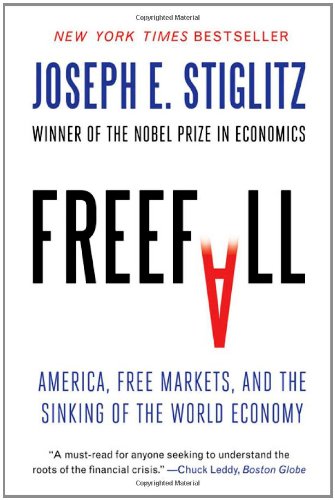
Freefall: America, Free Markets, and the Sinking of the World Economy
Authors:
Joseph E. Stiglitz
Publisher:
W. W. Norton & Company
Publication Date:
Not available
ISBN:
0393338959
The New York Times bestseller: "A lucid account" (New York Times) of the recent financial crisis and the way forward by the Nobel Prize-winning... economist, with a new afterword.The Great Recession, as it has come to be called, has impacted more people worldwide than any crisis since the Great Depression. Flawed government policy and unscrupulous personal and corporate behavior in the United States created the current financial meltdown, which was exported across the globe with devastating consequences. The crisis has sparked an essential debate about America’s economic missteps, the soundness of this country’s economy, and even the appropriate shape of a capitalist system. Few are more qualified to comment during this turbulent time than Joseph E. Stiglitz. Winner of the 2001 Nobel Prize in Economics, Stiglitz is “an insanely great economist, in ways you can’t really appreciate unless you’re deep into the field” (Paul Krugman, New York Times). In Freefall, Stiglitz traces the origins of the Great Recession, eschewing easy answers and demolishing the contention that America needs more billion-dollar bailouts and free passes to those “too big to fail,” while also outlining the alternatives and revealing that even now there are choices ahead that can make a difference. The system is broken, and we can only fix it by examining the underlying theories that have led us into this new “bubble capitalism.” Ranging across a host of topics that bear on the crisis, Stiglitz argues convincingly for a restoration of the balance between government and markets. America as a nation faces huge challenges—in health care, energy, the environment, education, and manufacturing—and Stiglitz penetratingly addresses each in light of the newly emerging global economic order. An ongoing war of ideas over the most effective type of capitalist system, as well as a rebalancing of global economic power, is shaping that order. The battle may finally give the lie to theories of a “rational” market or to the view that America’s global economic dominance is inevitable and unassailable. For anyone watching with indignation while a reckless Wall Street destroyed homes, educations, and jobs; while the government took half-steps hoping for a “just-enough” recovery; and while bankers fell all over themselves claiming not to have seen what was coming, then sought government bailouts while resisting regulation that would make future crises less likely, Freefall offers a clear accounting of why so many Americans feel disillusioned today and how we can realize a prosperous economy and a moral society for the future.
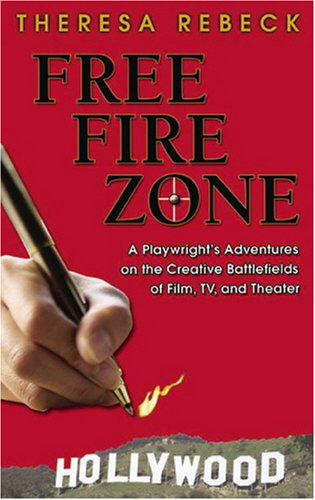
Free Fire Zone: A Playwright's Adventures on the Creative...
Authors:
Theresa Rebeck
Publisher:
Smith & Kraus Pub Inc
Publication Date:
Not available
ISBN:
1575252406
Theresa Rebeck’s career has hopscotched between the Off-Broadway successes of plays such as Spike Heels, The Family of Mann, and View of the Dome,... to award– winning work writing and producing network television such as NYPD Blue, to writing screenplays for independent and studio features. This writer’s guide is both a discussion of the writer’s craft and a no-holds-barred discussion of the politics in the movie, television, and theater worlds. Rebeck writes, "Someone once asked me, ‘What advice would you give to young writers who wanted to go into show business?’ And I answered, almost without thinking, ‘Tell all of them to go back and reread Machiavelli.’ " In a series of hilarious and provocative discussions covering all aspects of dramatic writing, Rebeck attempts to address what she considers both of a writer’s primary concerns — how to tell a story with truth and vision and how to maneuver as a dramatic writer in a dangerous world.
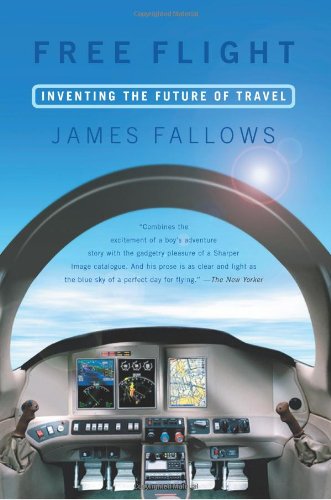
Free Flight: Inventing the Future of Travel
Authors:
James Fallows
Publisher:
PublicAffairs
Publication Date:
Not available
ISBN:
1586481401
The troubles of the airline system have become acute in the post-terrorist era. As the average cost of a flight has come down in the last twenty years,... the airlines have survived by keeping planes full and funneling traffic through a centralized hub-and-spoke routing system. Virtually all of the technological innovation in airplanes in the last thirty years has been devoted to moving passengers more efficiently between major hubs. But what was left out of this equation was the convenience and flexibility of the average traveler. Now, because of heightened security, hours of waiting are tacked onto each trip. As James Fallows vividly explains, a technological revolution is under way that will relieve this problem. Free Flight features the stories of three groups who are inventing and building the future of all air travel: NASA, Cirrus Design in Duluth, Minnesota, and Eclipse Aviation in Albuquerque, New Mexico. These ventures should make it possible for more people to travel the way corporate executives have for years: in small jet planes, from the airport that's closest to their home or office directly to the airport closest to where they really want to go. This will be possible because of a product now missing from the vast array of flying devices: small, radically inexpensive jet planes, as different from airliners as personal computers are from mainframes. And, as Fallows explains in a new preface, a system that avoids the congestion of the overloaded hub system will offer advantages in speed, convenience, and especially security in the new environment of air travel.

Free for All: Fixing School Food in America (California Studies in...
Authors:
Janet Poppendieck
Publisher:
University of California Press
Publication Date:
Not available
ISBN:
0520269888
How did our children end up eating nachos, pizza, and Tater Tots for lunch? Taking us on an eye-opening journey into the nation's school kitchens, this... superbly researched book is the first to provide a comprehensive assessment of school food in the United States. Janet Poppendieck explores the deep politics of food provision from multiple perspectives--history, policy, nutrition, environmental sustainability, taste, and more. How did we get into the absurd situation in which nutritionally regulated meals compete with fast food items and snack foods loaded with sugar, salt, and fat? What is the nutritional profile of the federal meals? How well are they reaching students who need them? Opening a window onto our culture as a whole, Poppendieck reveals the forces--the financial troubles of schools, the commercialization of childhood, the reliance on market models--that are determining how lunch is served. She concludes with a sweeping vision for change: fresh, healthy food for all children as a regular part of their school day.

Free for All?: Lessons from the RAND Health Insurance Experiment
Authors:
Joseph P. Newhouse
Publisher:
Harvard University Press
Publication Date:
Not available
ISBN:
0674319141
From 1971 to 1982, researchers at the RAND Corporation devised an experiment to address two key questions in health care financing: how much more... medical care will people use if it is provided free of charge? and what are the consequences for their health? This book presents a comprehensive account of the experiment and its findings. It will be an invaluable teaching tool and reference for anyone concerned with health-care policy.
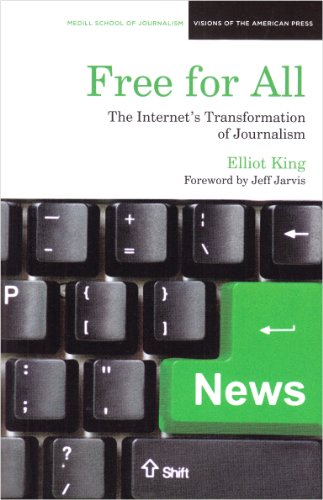
Free for All: The Internet's Transformation of Journalism (Medill...
Authors:
Elliot King
Publisher:
Northwestern University Press
Publication Date:
Not available
ISBN:
0810123282
From rear cover: "King begins with a brief history of the development of news media from the appearance of newspapers in the sixteenth century to the... rise of broadcasting and the Internet. As he chronicles the emergence of online communications and social media as the third major technological platform for news what results in a much less daunting view of the current media landscape,

Free Frank: A Black Pioneer on the Antebellum Frontier
Authors:
Juliet E.K. Walker
Publisher:
The University Press of Kentucky
Publication Date:
Not available
ISBN:
0813108403
 '





