production
/viewbook/list/all/?page=4795
/
/static/
None
Free Market Fairness
Authors:
John Tomasi
Publisher:
Princeton University Press
Publication Date:
Not available
ISBN:
069114446X
Can libertarians care about social justice? In Free Market Fairness, John Tomasi argues that they can and should. Drawing simultaneously on moral... insights from defenders of economic liberty such as F. A. Hayek and advocates of social justice such as John Rawls, Tomasi presents a new theory of liberal justice. This theory, free market fairness, is committed to both limited government and the material betterment of the poor. Unlike traditional libertarians, Tomasi argues that property rights are best defended not in terms of self-ownership or economic efficiency but as requirements of democratic legitimacy. At the same time, he encourages egalitarians concerned about social justice to listen more sympathetically to the claims ordinary citizens make about the importance of private economic liberty in their daily lives. In place of the familiar social democratic interpretations of social justice, Tomasi offers a "market democratic" conception of social justice: free market fairness. Tomasi argues that free market fairness, with its twin commitment to economic liberty and a fair distribution of goods and opportunities, is a morally superior account of liberal justice. Free market fairness is also a distinctively American ideal. It extends the notion, prominent in America's founding period, that protection of property and promotion of real opportunity are indivisible goals. Indeed, according to Tomasi, free market fairness is social justice, American style. Provocative and vigorously argued, Free Market Fairness offers a bold new way of thinking about politics, economics, and justice--one that will challenge readers on both the left and right.
Free Market Madness: Why Human Nature is at Odds with...
Authors:
Peter A. Ubel
Publisher:
Harvard Business School Press
Publication Date:
Not available
ISBN:
1422126099
Humans just aren't entirely rational creatures. We decide to roll over and hit the snooze button instead of going to the gym. We take out home loans we... can't possibly afford. And did you know that people named Paul are more likely to move to St. Paul than other cities? All too often, our subconscious causes us to act against our own self-interest.But our free-market economy is based on the assumption that we always do act in our own self-interest. In this provocative book, physician Peter Ubel uses his understanding of psychology and behavior to show that in some cases government must regulate markets for our own health and well-being. And by understanding and controlling the factors that go into our decisions, big and small, we can all begin to stop the damage we do to our bodies, our finances, and our economy as a whole. Ubel's vivid stories bring his message home for anyone interested in improving the way our society works.
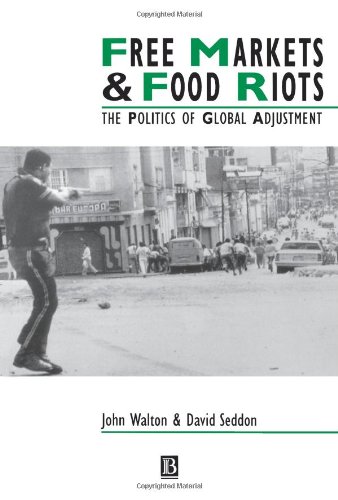
Free Markets and Food Riots: The Politics of Global Adjustment...
Authors:
John K. Walton
Publisher:
Wiley-Blackwell
Publication Date:
Not available
ISBN:
0631182470
This book describes and explains the extraordinary wave of popular protest that swept across the so-called Third World and the countries of the former... socialist bloc during the period from the late 1970s to the early 1990s, in response to the mounting debt crisis and the austerity measures widely adopted as part of economic "reform" and "adjustment". Explores this general proposition in a cross-national study of the austerity protests, or the 'IMF Riots' that have affected so many debtor nations since the mid-1970sArgues that modern austerity protests, like the classical "bread riots" in eighteenth-century Europe are political acts aimed at injustice, but acts that are an integral part of the process of international economic and political restructuringEvaluates how modern food riots are most important for what they reveal about global economic transformation and its social, and political, consequencesProvides a general framework (drawing on comparative and historical material) and then trace the cycle of uneven development, debt, neo-liberal reform, and protest in Latin America, Africa, Asia, the Middle East, and Eastern EuropeFocusses on the role of women in structural adjustment and protest politics and the features of seemingly anomalous cases which qualify the general argument
Free Play
Authors:
Stephen Nachmanovitch
Publisher:
Jeremy P. Tarcher, Inc.
Publication Date:
Not available
ISBN:
0874776317
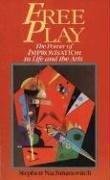
Free Play Improvisation in Life and Art
Authors:
Stephen Nachmanovitch
Publisher:
Tarcher
Publication Date:
Not available
ISBN:
0874775787
This book is about the inner sources of spontaneous creation. It is about where art in the widest sense comes from. It is about why we create and what... we learn when we do. It is about the flow of unhindered creative energy: the joy of making art in all its varied forms.Free Play is directed toward people in any field who want to contact, honor, and strengthen their own creative powers. It integrates material from a wide variety of sources among the arts, sciences, and spiritual traditions of humanity. Filled with unusual quotes, amusing and illuminating anecdotes, and original metaphors, it reveals how inspiration arises within us, how that inspiration may be blocked, derailed or obscured by certain unavoidable facts of life, and how finally it can be liberated - how we can be liberated - to speak or sing, write or paint, dance or play, with our own authentic voice.The whole enterprise of improvisation in life and art, of recovering free play and awakening creativity, is about being true to ourselves and our visions. It brings us into direct, active contact with boundless creative energies that we may not even know we had.
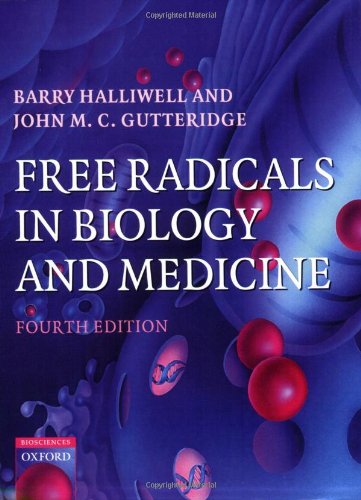
Free Radicals in Biology and Medicine
Authors:
Barry Halliwell
Publisher:
Oxford University Press, USA
Publication Date:
Not available
ISBN:
019856869X
Free Radicals in Biology and Medicine has become a classic text in the field of free radical and antioxidant research since its first publication in... 1985. This latest edition has been comprehensively rewritten and updated (over 80% of the text is new), while maintaining the clarity of its predecessor. There is expanded coverage of isoprostanes and related compounds, mechanisms of oxidative damage to DNA and proteins (and the repair of such damage), the free radical theory of aging and the roles played by reactive species in signal transduction, cell death, human reproduction, and other important biological events. Greater emphasis has also been placed on the methods available to measure reactive species and oxidative damage (and their potential pitfalls), as well as the importance of antioxidants in the human diet. This book is recommended as a comprehensive introduction to the field for students, clinicians and researchers, and an invaluable companion to all those interested in the role of free radicals in the life and biomedical sciences.
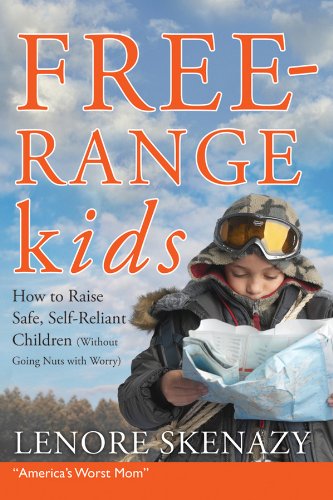
Free-Range Kids, How to Raise Safe, Self-Reliant Children (Without...
Authors:
Lenore Skenazy
Publisher:
Jossey-Bass
Publication Date:
Not available
ISBN:
0470574755
FREE RANGE KIDS has become a national movement, sparked by the incredible response to Lenore Skenazy?s piece about allowing her 9-year-old ride the... subway alone in NYC. Parent groups argued about it, bloggers, blogged, spouses became uncivil with each other, and the media jumped all over it. A lot of parents today, Skenazy says, see no difference between letting their kids walk to school and letting them walk through a firing range. Any risk is seen as too much risk. But if you try to prevent every possible danger or difficult in your child?s everyday life, that child never gets a chance to grow up. We parents have to realize that the greatest risk of all just might be trying to raise a child who never encounters choice or independence.
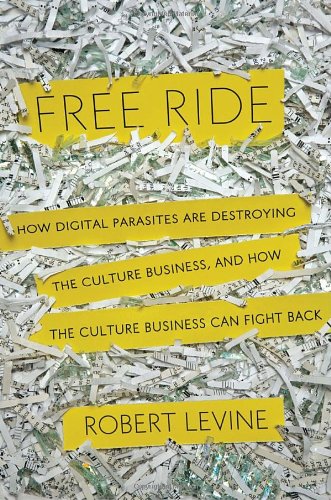
Free Ride: How Digital Parasites are Destroying the Culture...
Authors:
Robert Levine
Publisher:
Doubleday
Publication Date:
Not available
ISBN:
0385533764
How did the newspaper, music, and film industries go from raking in big bucks to scooping up digital dimes? Their customers were lured away by the free... ride of technology. Now, business journalist Robert Levine shows how they can get back on track. On the Internet, “information wants to be free.” This memorable phrase shaped the online business model, but it is now driving the media companies on whom the digital industry feeds out of business. Today, newspaper stocks have fallen to all-time lows as papers are pressured to give away content, music sales have fallen by more than half since file sharing became common, TV ratings are plummeting as viewership migrates online, and publishers face off against Amazon over the price of digital books. In Free Ride, Robert Levine narrates an epic tale of value destruction that moves from the corridors of Congress, where the law was passed that legalized YouTube, to the dorm room of Shawn Fanning, the founder of Napster; from the bargain-pricing dramas involving iTunes and Kindle to Google’s fateful decision to digitize first and ask questions later. Levine charts how the media industry lost control of its destiny and suggests innovative ways it can resist the pull of zero. Fearless in its reporting and analysis, Free Ride is the business history of the decade and a much-needed call to action.
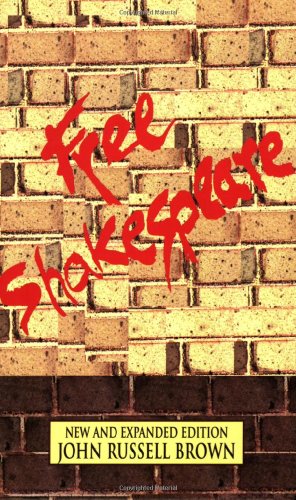
Free Shakespeare: The New Expanded Edition (Shakespeare editions)
Authors:
John Russell Brown
Publisher:
Applause Theatre & Cinema Books
Publication Date:
Not available
ISBN:
1557832838
(Applause Books). This expanded edition of Free Shakespeare is a tool to liberate the works of Shakespeare from directors and academics who seek to... impose their ideas upon the plays. John Russell Brown empowers actors and readers to approach the plays freshly and boldly armed with the many different interpretations inherent in the plays. Recognized as a benchmark for the understanding of Shakespearean performance in the twentieth century, a new chapter explores the technological and funding challenges facing Shakespearean productions in the next millennium.
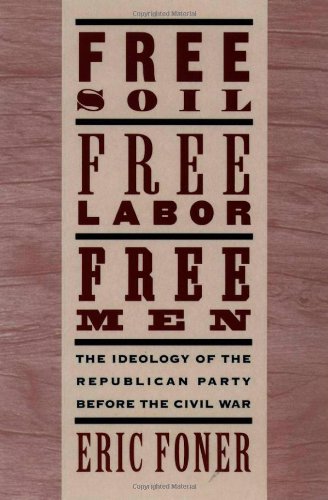
Free Soil, Free Labor, Free Men: The Ideology of the Republican...
Authors:
Eric Foner
Publisher:
Oxford University Press, USA
Publication Date:
Not available
ISBN:
0195094972
Since its publication twenty-five years ago, Free Soil, Free Labor, Free Men has been recognized as a classic, an indispensable contribution to our... understanding of the causes of the American Civil War. A key work in establishing political ideology as a major concern of modern American historians, it remains the only full-scale evaluation of the ideas of the early Republican party. Now with a new introduction, Eric Foner puts his argument into the context of contemporary scholarship, reassessing the concept of free labor in the light of the last twenty-five years of writing on such issues as work, gender, economic change, and political thought. A significant reevaluation of the causes of the Civil War, Foner's study looks beyond the North's opposition to slavery and its emphasis upon preserving the Union to determine the broader grounds of its willingness to undertake a war against the South in 1861. Its search is for those social concepts the North accepted as vital to its way of life, finding these concepts most clearly expressed in the ideology of the growing Republican party in the decade before the war's start. Through a careful analysis of the attitudes of leading factions in the party's formation (northern Whigs, former Democrats, and political abolitionists) Foner is able to show what each contributed to Republican ideology. He also shows how northern ideas of human rights--in particular a man's right to work where and how he wanted, and to accumulate property in his own name--and the goals of American society were implicit in that ideology. This was the ideology that permeated the North in the period directly before the Civil War, led to the election of Abraham Lincoln, and led, almost immediately, to the Civil War itself. At the heart of the controversy over the extension of slavery, he argues, is the issue of whether the northern or southern form of society would take root in the West, whose development would determine the nation's destiny. In his new introductory essay, Foner presents a greatly altered view of the subject. Only entrepreneurs and farmers were actually "free men" in the sense used in the ideology of the period. Actually, by the time the Civil War was initiated, half the workers in the North were wage-earners, not independent workers. And this did not account for women and blacks, who had little freedom in choosing what work they did. He goes onto show that even after the Civil War these guarantees for "free soil, free labor, free men" did not really apply for most Americans, and especially not for blacks. Demonstrating the profoundly successful fusion of value and interest within Republican ideology prior to the Civil War, Free Soil, Free Labor, Free Men remains a classic of modern American historical writing. Eloquent and influential, it shows how this ideology provided the moral consensus which allowed the North, for the first time in history, to mobilize an entire society in modern warfare.
Free Soil, Free Labor, Free Men: The Ideology of the Republican...
Authors:
Eric Foner
Publisher:
Oxford University Press, USA
Publication Date:
Not available
ISBN:
0195013522
Since its publication twenty five years ago, Free Soil, Free Labor, Free Men has been recognized as a classic, an indispensable contribution to our... understanding of the causes of the American Civil War. A key work in establishing political ideology as a major concern of modern American historians, it remains the only full-scale evaluation of the ideas of the early Republican party. Now with a new introduction, Eric Foner puts his argument into the context of contemporary scholarship, reassessing the concept of free labor in the light of the last tweny-five years of writing on such issues as work, gender, economic change, and political thought. A significant reevaluation of the causes of the Civil War, Foner's study looks beyond the North's opposition to slavery and its emphasis upon preserving the Union to determine the broader grounds of its willingness to undertake a war against the South in 1861. Its search is for those social concepts the North accepted as vital to its way of life, and it finds these most clearly expressed in the ideology of the growing Republican party in the decade before the war's start. By a careful analysis of the attitudes of leading factions in the party's formation (northern Whigs, former Democrats, and political abolitionists) Foner is able to show what each contributed to Republican ideology. He also shows how northern ideas of human rights--in particular a man's right to work where and how he wanted, and to accumulate property in his own name--and the goals of American society were implicit in that ideology. This was the ideology that permeated the North in the period directly before the Civil War, led to the election of Abraham Lincoln, and led, almost immediately, to the Civil War itself. At the heart of the controversy over the extension of slavery, he argues, is the issue of whether the northern or southern form of society would take root in the West, whose development would determine determine the nation's destiny. In his new introductory essay, Foner presents a greatly altered view of the subject. Only entrepreneurs and farmers were actually "free men" in the sense used in the ideology of the period. Actually, by the time the Civil War was initiated, half the workers in the North were wage-earners, not independent workers. And this did not account for women and blacks, who had little freedom in choosing what work they did. He goes onto show that even after the Civil War these guarantees for "free soil, free labor, free men" did not really apply for most Americans, and especially not for blacks.
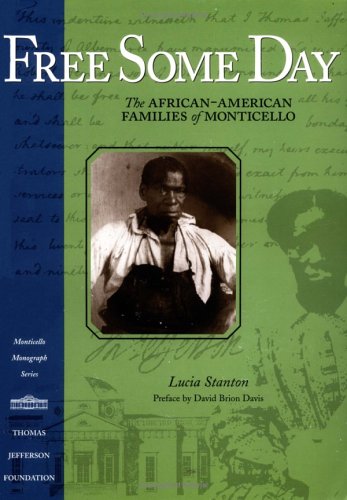
Free Some Day: The African-American Families of Monticello
Authors:
Lucia Stanton
Publisher:
The University of North Carolina Press
Publication Date:
Not available
ISBN:
1882886143
Although Thomas Jefferson, author of the words "All men are created equal," was a lifelong enemy of the institution of slavery, he considered over six... hundred human beings his legal possessions over the course of his long life. Building on Stanton's highly acclaimed Slavery at Monticello, this fascinating work highlights the stories of six enslaved families who lived and worked at Monticello and provides general information on events and issues that affected the entire African-American community. Informed by the extensive records and accounts of Thomas Jefferson, the book also draws from oral histories of the descendants of former slaves as well as the reminiscences and letters left by men and women who lived in slavery at Monticello. Stanton unveils the lives of the African Americans who experienced bondage on Jefferson's plantations and examines the wide variety of ways in which individuals responded to their situation, whether as "trusty servants," resourceful leaders, or outright rebels. The book also chronicles the many accomplishments of Monticello slaves and their descendants, either during their enslavement, as the creators of hand-crafted furniture in Monticello's joinery and European-inspired cuisine served in the Monticello dining room; or after gaining freedom, as the founders of churches and schools and businesses. The skills practiced at Monticello were carried to all parts of the country, and the fight for education, freedom, and family integrity continued long after they left the mountaintop.
Free Speech: A Very Short Introduction
Authors:
Nigel Warburton
Publisher:
Oxford University Press, USA
Publication Date:
Not available
ISBN:
0199232350
Voltaire's comment--"I disapprove of what you say, but I will defend to the death your right to say it"--is frequently quoted by defenders of free... speech. Yet it is rare to find someone prepared to defend all freedom of speech, especially if the views expressed are obnoxious or obviously false. So where do we draw the line? How important is our right to freedom of speech? In this accessible and up-to-date Very Short Introduction, Nigel Warburton covers a wide range of controversial free-speech issues, from Holocaust denial and pornography to the status of modern copyright law. The book offers a concise guide to many of the vexing issues concerning our right to speak freely, including: Should a civilized society set limits on freedom of speech? How can we balance free speech with the sensitivities of religious and minority groups? How have digital technology and the Internet changed the debate?
Free Speech in an Open Society
Authors:
Rodney A. Smolla
Publisher:
Vintage
Publication Date:
Not available
ISBN:
0679742131
This grand tour of First Amendment law underlines the intimate connection between free expression and democratic values as it leads us through the most... treacherous and emotionally charged cases in American jurisprudence. “Intellectually venturesome. . . .”—The New York Times Book Review
Free Speech On Trial: Communication Perspectives on Landmark...
Authors:
Not Available
Publisher:
University Alabama Press
Publication Date:
Not available
ISBN:
081735025X
Describes landmark free speech decisions of the Supreme Court while highlighting the issues of language, rhetoric, and communication that underlie them.... At the intersection of communication and First Amendment law reside two significant questions: What is the speech we ought to protect, and why should we protect it? The 20 scholars of legal communication whose essays are gathered in this volume propose various answers to these questions, but their essays share an abiding concern with a constitutional guarantee of free speech and its symbiotic relationship with communication practices.Free Speech on Trial fills a gap between textbooks that summarize First Amendment law and books that analyze case law and legal theory. These essays explore questions regarding the significance of unregulated speech in a marketplace of goods and ideas, the limits of offensive language and obscenity as expression, the power of symbols, and consequences of restraint prior to publication versus the subsequent punishment of sources. As one example, Craig Smith cites Buckley vs. Valeo to examine how the context of corruption in the 1974 elections shaped the Court's view of the constitutionality of campaign contributions and expenditures.Collectively, the essays in this volume suggest that the life of free speech law is communication. The contributors reveal how the Court's free speech opinions constitute discursive performances that fashion, deconstruct, and reformulate the contours and parameters of the Constitution’s guarantee of free expression and that, ultimately, reconstitute our government, our culture, and our society.
 '





