production
/viewbook/list/all/?page=4797
/
/static/
None
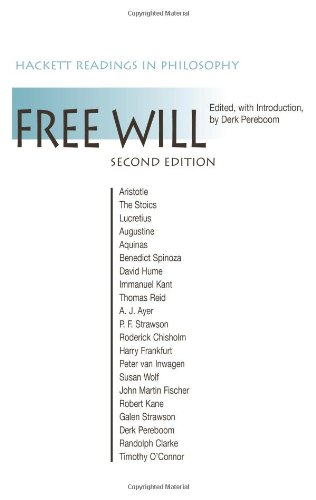
Free Will
Authors:
Derk Pereboom (editor)
Publisher:
Hackett Publishing Co.
Publication Date:
Not available
ISBN:
1603841296
A unique anthology featuring contributions to the dispute over free will from Aristotle to the twenty-first century, Derk Pereboom's volume presents the... most thoughtful positions taken in this crucial debate and discusses their consequences for free will's traditional corollary, moral responsibility.The Second Edition retains the organizational structure that made its predecessor the leading anthology of its kind, while adding major new selections by such philosophers as Spinoza, Reid, John Martin Fischer, Robert Kane, Galen Strawson, and Timothy O'Connor.Hackett Readings in Philosophy is a versatile series of compact anthologies, each devoted to a topic of traditional interest. Selections include classical, modern, and contemporary writings chosen for their elegance of exposition and success at stimulating thought and discussion.
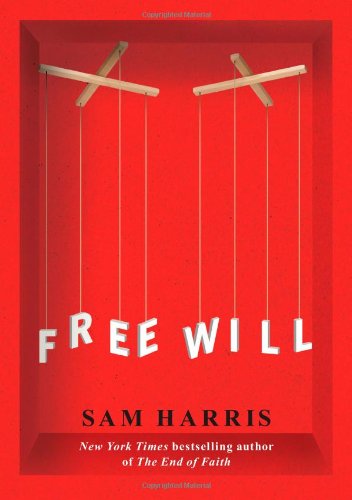
Free Will
Authors:
Sam Harris
Publisher:
Free Press
Publication Date:
Not available
ISBN:
1451683405
A BELIEF IN FREE WILL touches nearly everything that human beings value. It is difficult to think about law, politics, religion, public policy, intimate... relationships, morality—as well as feelings of remorse or personal achievement—without first imagining that every person is the true source of his or her thoughts and actions. And yet the facts tell us that free will is an illusion. In this enlightening book, Sam Harris argues that this truth about the human mind does not undermine morality or diminish the importance of social and political freedom, but it can and should change the way we think about some of the most important questions in life.
Free Will and Consciousness: How Might They Work?
Authors:
Not Available
Publisher:
Oxford University Press, USA
Publication Date:
Not available
ISBN:
019538976X
This volume is aimed at readers who wish to move beyond debates about the existence of free will and the efficacy of consciousness and closer to... appreciating how free will and consciousness might operate. It draws from philosophy and psychology, the two fields that have grappled most fundamentally with these issues. In this wide-ranging volume, the contributors explore such issues as how free will is connected to rational choice, planning, and self-control; roles for consciousness in decision making; the nature and power of conscious deciding; connections among free will, consciousness, and quantum mechanics; why free will and consciousness might have evolved; how consciousness develops in individuals; the experience of free will; effects on behavior of the belief that free will is an illusion; and connections between free will and moral responsibility in lay thinking. Collectively, these state-of-the-art chapters by accomplished psychologists and philosophers provide a glimpse into the future of research on free will and consciousness.
Free Will and Determinism: A Dialogue
Authors:
Clifford Williams
Publisher:
Hackett Pub Co
Publication Date:
Not available
ISBN:
0915144778
Free Will and Illusion
Authors:
Saul Smilansky
Publisher:
Oxford University Press, USA
Publication Date:
Not available
ISBN:
0199252599
Saul Smilansky presents an original new approach to the problem of free will, which lies at the heart of morality and self-understanding. He maintains... that the key to the problem is the role played by illusion. Smilansky boldly claims that we could not live adequately with a complete awareness of the truth about human freedom and that illusion lies at the center of the human condition.
Free Will and Modern Science (British Academy Original Paper)
Authors:
Not Available
Publisher:
Oxford University Press, USA
Publication Date:
Not available
ISBN:
0197264891
Do humans have a free choice of which actions to perform? Three recent developments of modern science can help us to answer this question. First, new... investigative tools have enabled us to study the processes in our brains which accompanying our decisions. The pioneer work of Benjamin Libet has led many neuroscientists to hold the view that our conscious intentions do not cause our bodily movements but merely accompany them. Then, Quantum Theory suggests that not all physical events are fully determined by their causes, and so opens the possibility that not all brain events may be fully determined by their causes, and so maybe - if neuroscience does not rule this out - there is a role for intentions after all. Finally, a theorem of mathematics, Godel's theory, has been interpreted to suggest that the initial conditions and laws of development of a mathematician's brain could not fully determine which mathematical conjectures he sees to be true. Papers by Patrick Haggard, Tim Bayne, Harald Atmanspacher and Stefan Rotter, Solomon Feferman, and John Lucas investigate these issues.The extent to which human behaviour is determined by brain events may well depend on whether conscious events, such as intentions, are themselves merely brain events, or whether they are separate events which interact with brain events (perhaps in the radical form that intentions are events in our soul, and not in our body). The papers of Frank Jackson, Richard Swinburne, and Howard Robinson investigate these issues. The remaining papers, of Galen Strawson, Helen Steward, and R.A. Duff, consider what kind of free will we need in order to be morally responsible for our actions or to be held guilty in a court of law. Is it sufficient merely that our actions are uncaused by brain events, or what?
Free Will (Blackwell Readings in Philosophy)
Authors:
Not Available
Publisher:
Wiley-Blackwell
Publication Date:
Not available
ISBN:
0631221026
Free Will brings together the essential readings on the debate of free will and determinism. Written by top scholars in the field, the essays represent... some of the clearest and most accessible thinking on this subject. The introduction offers a concise yet thorough mapping of this age-old debate as well as a helpful overview of the selections.
FREE WILL: Oxford Readings in Philosophy
Authors:
Gary (editor) Watson
Publisher:
Oxford University Press, USA
Publication Date:
Not available
ISBN:
019925494X
The new edition of this highly successful text will once again provide the ideal introduction to free will. This volume brings together some of the most... influential contributions to the topic of free will during the past 50 years, as well as some notable recent work.
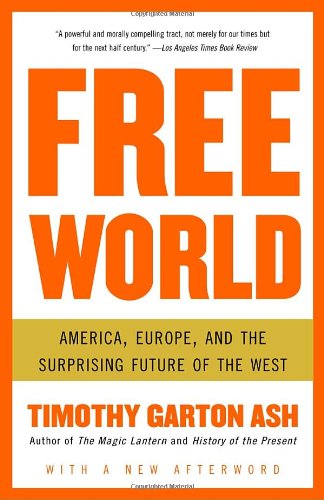
Free World: America, Europe, and the Surprising Future of the West
Authors:
Timothy Garton Ash
Publisher:
Vintage
Publication Date:
Not available
ISBN:
1400076463
“We, the free, face a daunting opportunity. Previous generations could only dream of a free world. Now we can begin to make it.” In his welcome... alternative to the rampant pessimism about Euro-American relations, award-winning historian Timothy Garton Ash shares an inspiring vision for how the United States and Europe can collaborate to promote a free world.At the start of the twenty-first century, the West has plunged into crisis. Europe tries to define itself in opposition to America, and America increasingly regards Europe as troublesome and irrelevant. What is to become of what we used to call “the free world”? Part history, part manifesto, Free World offers both a scintillating assessment of our current geopolitical quandary and a vitally important argument for the future of liberty and the shared values of the West.
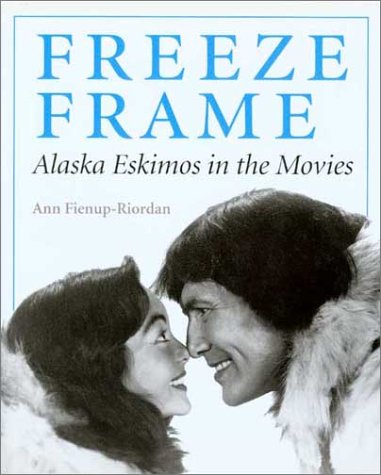
Freeze Frame: Alaska Eskimos in the Movies
Authors:
Ann Fienup-Riordan
Publisher:
University of Washington Press
Publication Date:
Not available
ISBN:
029598337X
"Freeze Frame" takes a penetrating, often humorous, look at how Eskimos have been portrayed in nearly a century of film, from the pioneering... documentaries of missionaries and Arctic explorers to Eskimo Pie commercials of the 1990s. Some of these works are serious attempts to depict a culture; others are unabashed entertainment, featuring papier mache igloos and zebra-skin parkas. Even film-makers who sought authenticity were likely to build igloos in villages that had never seen one, and to hire non-Native actors to portray the Eskimo principals. The groundbreaking film, "Nanook of the North", released in 1922, solidified the popular impression of Eskimos and set the precedent for dozens of ethnographic docudramas to follow. "Freeze Frame" documents the ideas that motivate and lie behind this abundant generation of images. The first study to look at the popular image of Alaska Eskimos, it makes an important contribution to our understanding of Native American stereotyping. Anthropologist, Ann Fienup-Riordan is the author of numerous books on the peoples of Alaska, including "The Living Tradition of Yupik Masks: Agayuliyararput, Our Way of Making Prayer".
Frege Explained (Ideas Explained)
Authors:
Joan Weiner
Publisher:
Open Court
Publication Date:
Not available
ISBN:
0812694600
What is the number one? Does 2 plus 2 always equal 4? These seemingly simple questions have perplexed philosophers for eons, but the ideas of German... philosopher Gottlob Frege (1848–1925) transformed the discussion. Frege believed that the truths of arithmetic and of all mathematics are derived from self-evident logical truths. His new way of looking at logic and mathematics was influential and his convictions revolutionized logic and laid the foundation for modern analytic philosophy. Joan Weiner presents an accurate, accessible explanation of Frege's ideas, tracing the development of his thought and making the essential concepts understandable.
Frege's Puzzle
Authors:
Nathan Salmon
Publisher:
Ridgeview Pub Co
Publication Date:
Not available
ISBN:
0924922052
The nature of the information content of declarative sentences is a central topic in the philosophy of language. The natural view that a sentence like... "John loves Mary" contains information in which two individuals occur as constituents is termed the naive theory, and is one that has been abandoned by most contemporary scholars. This theory was refuted originally by philosopher Gottlob Frege. His argument that the naive theory did not work is termed Frege's puzzle, and his rival account of information content is termed the orthodox theory. In this detailed study, Nathan Salmon defends a version of the naive theory and presents a proposal for its extension that provides a better picture of information content than the orthodox theory gives. He argues that a great deal of what has generally been taken for granted in the philosophy of language over the past few decades is either mistaken or unsupported, and consequently, much current research is focused on the wrong set of questions. Salmon dissolves Frege's puzzle as it is usually formulated and demonstrates how it can be reconstructed and strengthened to yield a more powerful objection to the naive theory. He then defends the naive theory against the new Frege puzzle by presenting an idea that yields both a surprisingly rich and powerful extension of the naive theory and a better picture of information content than that of the original orthodox theory. Nathan Salmon is Professor of Philosophy, University of California at Santa Barbara. A Bradford Book.

Fre-Histoire de La Marquise-Ma (Texts and Translations) (French...
Authors:
Charles Perrault
Publisher:
Modern Language Association of America
Publication Date:
Not available
ISBN:
0873529316
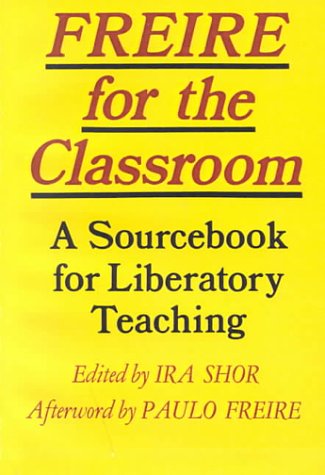
Freire for the Classroom: A Sourcebook for Liberatory Teaching
Authors:
Not Available
Publisher:
Heinemann
Publication Date:
Not available
ISBN:
0867091975
Freire for the Classroom is an anthology of essays by teachers using Paulo Freire's methods in their classrooms. These essays, collected from... professional journals, represent some of the best experimental teaching done to adapt Freire's liberatory pedagogy to North American classrooms. The articles show the creative enthusiasm many teachers gain from Freire's ideas, as well as the critical literacy and political awareness students gain through this approach. The book offers critical theory side by side with actual reports of teaching practice, so that philosophy is brought down to earth in terms familiar to practicing teachers. Included in the volume is a "Letter to North American Teachers" written by Paulo Freire expressly for this book, along with an essay by Cynthia Brown discussing the original methods used by Freire.
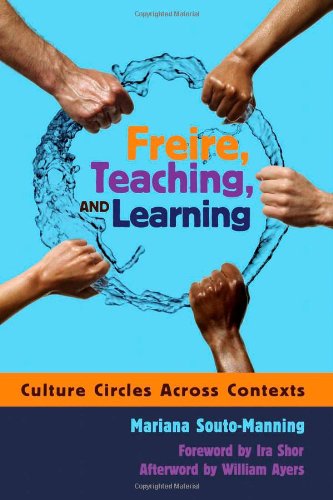
Freire, Teaching, and Learning: Culture Circles Across Contexts...
Authors:
Mariana Souto-Manning
Publisher:
Peter Lang Publishing
Publication Date:
Not available
ISBN:
1433104067
In this book, Paulo Freire's culture circles cross linguistic, cultural, and socioeconomic borders to work across contexts in the U.S. (early education,... pre-service and in-service teacher education) and in Brazil (adult education). Freire, Teaching, and Learning makes culture circles accessible to those seeking to embrace equity and democracy through everyday educational practices.
 '





