production
/viewbook/list/all/?page=4877
/
/static/
None

Fundamentals Of College Math Pkg W/ Mymathlab
Authors:
Not Available
Publisher:
Not available
Publication Date:
Not available
ISBN:
1256142530

Fundamentals of College Physics Volume 2 (Updated 5th Edition)
Authors:
Peter J. Nolan
Publisher:
Pearson Custom Publishing
Publication Date:
Not available
ISBN:
0536836116
FUNDAMENTALS OF COLLISION TECHNOLOGY
Authors:
Not Available
Publisher:
Not available
Publication Date:
Not available
ISBN:
Not available

FUNDAMENTALS OF COMMUNICATION ELECTRONICS
Authors:
MCDANIEL DREW O
Publisher:
Kendall Hunt Publishing
Publication Date:
Not available
ISBN:
0757561411
Excellent treatment of subject geared toward students with background in linear algebra, advanced calculus, physics and engineering. Text covers... introduction to inner-product spaces, normed, metric spaces, and topological spaces; complete orthonormal sets, the Hahn-Banach Theorem and its consequences, and many other related subjects. Includes detailed proofs of theorems, bibliography, and index of symbols. 1966 edition.
Fundamentals of Communications Systems (Communications Engineering)
Authors:
Michael Fitz
Publisher:
McGraw-Hill Professional
Publication Date:
Not available
ISBN:
0071482806
Get a Solid Account of Physical Layer Communications Theory, Illustrated with Numerous Interactive MATLAB Mini-Projects You can rely on... Fundamentals of Communications Systems for a solid introduction to physical layer communications theory, filled with modern implementations and MATLAB examples. This state-of-the-art guide covers essential theory and current engineering practice, carefully explaining the real-world tradeoffs necessary among performance, spectral efficiency, and complexity. Written by an award-winning communications expert, the book first takes readers through analog communications basics, amplitude modulations, analog angle modulation, and random processes. This essential resource then explains noise in bandpass communications systems…bandpass Gaussian random processes…digital communications basics…complexity of optimum demodulation…spectrally efficient data transmission...and more. Fundamentals of Communications Systems features: A modern approach to communications theory, reflecting current engineering applications Numerous MATLAB problems integrated throughout, with software available for download Detailed coverage of tradeoffs among performance, spectral efficiency, and complexity in engineering design Text written in four parts for easy modular presentation Inside This On-Target Communications Engineering Tool • Mathematical Foundations • Analog Communications Basics • Amplitude Modulations • Analog Angle Modulation • More Topics in Analog Communications • Random Processes • Noise in Bandpass Communications Systems • Bandpass Gaussian Random Processes • Digital Communications Basics • Optimal Single Bit Demodulation Structures • Transmitting More than One Bit • Complexity of Optimum Demodulation • Spectrally Efficient Data Transmission
Fundamentals of Communication Systems
Authors:
John G. Proakis
Publisher:
Prentice Hall
Publication Date:
Not available
ISBN:
013147135X
This book introduces the basic techniques used in modern communication systems and provides fundamental tools and methodologies used in the analysis... and design of these systems. The authors emphasize digital communication systems - the backbone of modern communication systems - including new generations of wireless communication systems, satellite communications, and data transmission networks. Discusses traditional analog communication systems. Reviews the background material needed in two separate chapters at the end of the book. Provides computer problems in each chapter that require MATLAB to solve. Offers a large number of problems in varying levels of difficulty at the end of each chapter. Features many worked examples throughout. Includes two separate chapters on Information Theory and Coding to give sufficient emphasis to these key topics. A useful reference for practicing engineers.

Fundamentals of Comparative Cognition (Fundamentals in Cognition)
Authors:
Sara J. Shettleworth
Publisher:
Oxford University Press, USA
Publication Date:
Not available
ISBN:
0195343107
A foremost scholar in comparative cognition--a discipline closely connected to behavioral biology, evolution, and cognitive neuroscience--author Sara J.... Shettleworth delivers a focused treatment of the essentials in writing that is both lucid and captivating. Brief, yet brimming with detail, Fundamentals of Comparative Cognition conveys the richness and complexity of this diverse field while addressing two fundamental questions: "What makes us uniquely human?" and "What do our minds share with other creatures?"

Fundamentals of Complementary and Alternative Medicine, 4e
Authors:
Marc S. Micozzi
Publisher:
Saunders
Publication Date:
Not available
ISBN:
1437705774
Focusing on emerging therapies and those best supported by clinical trials and scientific evidence, Fundamentals of Complementary and Alternative... Medicine describes some of the most prevalent and the fastest-growing CAM therapies in use today. Prominent author Dr. Marc Micozzi provides a complete overview of CAM, creating a solid foundation and context for therapies in current practice. Coverage of systems and therapies includes mind, body, and spirit; traditional Western healing; and traditional ethnomedical systems from around the world. Discussions include homeopathy, massage and manual therapies, chiropractic, a revised chapter on osteopathy, herbal medicine, aromatherapy, naturopathic medicine, and nutrition and hydration. With its wide range of topics, this is the ideal CAM reference for both students and practitioners!An evidence-based approach focuses on treatments best supported by clinical trials and scientific evidence.Coverage of CAM therapies and systems includes those most commonly encountered or growing in popularity, so you carefully evaluate each treatment.Global coverage includes discussions of traditional healing arts from Europe, Asia, Africa, and the Americas.Longevity in the market makes this a classic, trusted text.Expert contributors include well-known writers such as Kevin Ergil, Patch Adams, Joseph Pizzorno, Victor Sierpina, and Marc Micozzi himself.Suggested readings and references in each chapter list the best resources for further research and study.New, expanded organization covers the foundations of CAM, traditional Western healing, and traditional ethnomedical systems from Asia, Africa, and the Americas, putting CAM in perspective and making it easier to understand CAM origins and contexts.NEW content includes legal and operational issues in integrative medicine, creative and expressive arts therapies, ecological pharmacology, hydration, mind-body thought and practice in America, osteopathy, reflexology, South American healing, traditional medicines of India, and Unani medicine.Revised and updated chapters include aromatherapy, classical acupuncture, energy medicine, biophysical devices (electricity, light, and magnetism), massage and touch therapies, traditional osteopathy, reflexology, vitalism, and yoga.New research studies explain how and why CAM therapies work, and also demonstrate that they do work, in areas such as acupuncture, energy healing, and mind-body therapies.Expanded content on basic sciences includes biophysics, ecology, ethnomedicine, neurobiology, and pschoneuroimmunology, providing the scientific background needed to learn and practice CAM and integrative medicine.Expanded coverage of nutrition and hydration includes practical information on Vitamin D and healthy hydration with fluid and electrolytes.

Fundamentals of Complex Analysis with Applications to Engineering,...
Authors:
Edward B. Saff
Publisher:
Pearson
Publication Date:
Not available
ISBN:
0139078746
This book provides a comprehensive introduction to complex variable theory and its applications to current engineering problems and is designed to... make the fundamentals of the subject more easily accessible to readers who have little inclination to wade through the rigors of the axiomatic approach. Modeled after standard calculus books--both in level of exposition and layout--it incorporates physical applications throughout, so that the mathematical methodology appears less sterile to engineers. It makes frequent use of analogies from elementary calculus or algebra to introduce complex concepts, includes fully worked examples, and provides a dual heuristic/analytic discussion of all topics. A downloadable MATLAB toolbox--a state-of-the-art computer aid--is available. Complex Numbers. Analytic Functions. Elementary Functions. Complex Integration. Series Representations for Analytic Functions. Residue Theory. Conformal Mapping. The Transforms of Applied Mathematics. MATLAB ToolBox for Visualization of Conformal Maps. Numerical Construction of Conformal Maps. Table of Conformal Mappings. Features coverage of Julia Sets; modern exposition of the use of complex numbers in linear analysis (e.g., AC circuits, kinematics, signal processing); applications of complex algebra in celestial mechanics and gear kinematics; and an introduction to Cauchy integrals and the Sokhotskyi-Plemeij formulas. For mathematicians and engineers interested in Complex Analysis and Mathematical Physics.
Fundamentals of Composites Manufacturing: Materials, Methods and...
Authors:
A. Brent Strong
Publisher:
Society of Manufacturing Engineers
Publication Date:
Not available
ISBN:
0872638545
Whether in college or in the workplace, students and practitioners have relied on the first edition of;Fundamentals of Composites; for years to learn... about the basics of composites manufacturing. Building upon the solid foundation of the first edition, this revised and expanded book describes recent advances, adding key information, case studies, and examples that will broaden your knowledge of composites materials and manufacturing methods. The first focus of this text is on materials. Several major chapters are devoted to describing the basic materials that are put together to create composite structures. You'll learn about matrix properties, polyesters, epoxies, specialty and high-performance resins, thermoplastics, ceramic and metal matrix composites, reinforcements, reinforcement forms, testing and properties, design, and sandwich structures, joints, and finishing. The book simply and clearly presents the details of why composite materials behave the way they do. Thus composites designers will gain an understanding of the causes of material performance, allowing them a wider choice of materials than might otherwise be possible. Secondly, the book describes composites manufacturing methods, providing tips for getting the best results that weigh the required material properties against cost and production efficiency. You'll find chapters on: the open molding of engineering and advanced composites, compression molding, resin infusion technologies, filament winding and fiber placement, pultrusion, thermoplastic molding, damage prevention and repair, factory issues, the business of composites, and composites applications. Fully illustrated, this comprehensive text and reference presents material in an easily understandable format. Many features are provided to make learning easier. * Each chapter begins with an overview of the key points to be addressed. * A case study discusses specific application of one or more principles discussed in the chapter. * A chapter summary is provided so that key learning points can be reviewed. * Each chapter has a laboratory experiment to provide grounding in key concepts. * Questions at the end of the chapter are provided to assess learning. * A bibliography details additional resources for the chapter. * A glossary provides definitions of the terms used in the book. * The Composites Manufacturing Video series complements this text. It offers excellent visual representations of the materials and manufacturing methods addressed. Use the set of eight videos to supplement learning, lectures, and laboratories. The Composites Manufacturing sampler DVD, which contains selected clips from the series, is now bundled with the book to complement individual study.
Fundamentals of Computational Neuroscience
Authors:
Thomas Trappenberg
Publisher:
Oxford University Press, USA
Publication Date:
Not available
ISBN:
0199568413
Computational neuroscience is the theoretical study of the brain to uncover the principles and mechanisms that guide the development, organization,... information processing, and mental functions of the nervous system. Although not a new area, it is only recently that enough knowledge has been gathered to establish computational neuroscience as a scientific discipline in its own right. Given the complexity of the field, and its increasing importance in progressing our understanding of how the brain works, there has long been a need for an introductory text on what is often assumed to be an impenetrable topic.The new edition of Fundamentals of Computational Neuroscience build on the success and strengths of the first edition. It introduces the theoretical foundations of neuroscience with a focus on the nature of information processing in the brain. The book covers the introduction and motivation of simplified models of neurons that are suitable for exploring information processing in large brain-like networks. Additionally, it introduces several fundamental network architectures and discusses their relevance for information processing in the brain, giving some examples of models of higher-order cognitive functions to demonstrate the advanced insight that can be gained with such studies.Each chapter starts by introducing its topic with experimental facts and conceptual questions related to the study of brain function. An additional feature is the inclusion of simple Matlab programs that can be used to explore many of the mechanisms explained in the book. An accompanying webpage includes programs for download. The book will be the essential text for anyone in the brain sciences who wants to get to grips with this topic.
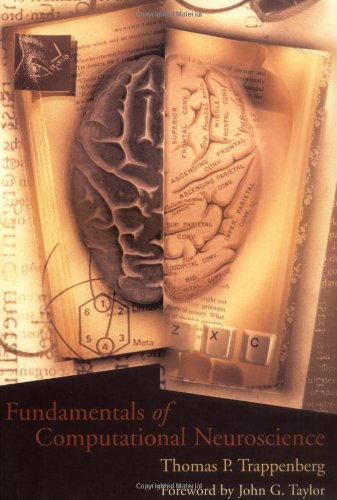
Fundamentals of Computational Neuroscience
Authors:
Thomas Trappenberg
Publisher:
Oxford University Press, USA
Publication Date:
Not available
ISBN:
0198515839
Computational neuroscience is the theoretical study of the brain to uncover the principles and mechanisms that guide the development, organization,... information processing, and mental functions of the nervous system. Although not a new area, it is only recently that enough knowledge has been gathered to establish computational neuroscience as a scientific discipline in its own right. Given the complexity of the field, and its increasing importance in progressing our understanding of how the brain works, there has long been a need for an introductory text on what is often assumed to be an impenetrable topic. "Fundamentals of Computational Neuroscience" is one of the first introductory books on this topic. It introduces the theoretical foundations of neuroscience with a focus on the nature of information processing in the brain. The book covers the introduction and motivation of simplified models of neurons that are suitable for exploring information processing in large brain-like networks. Additionally, it introduces several fundamental network architectures and discusses their relevance for information processing in the brain, giving some examples of models of higher-order cognitive functions to demonstrate the advanced insight that can be gained with such studies. Each chapter starts by introducing its topic with experimental facts and conceptual questions related to the study of brain function. An additional feature is the inclusion of simple Matlab programs that can be used to explore many of the mechanisms explained in the book. An accompanying webpage includes programs for download. The book is aimed at those within the brain and cognitive sciences, from graduate level and upwards.
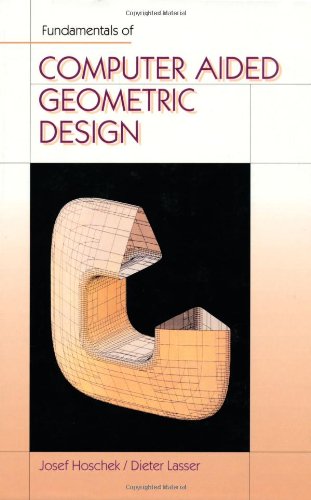
Fundamentals of Computer Aided Geometric Design
Authors:
Josef Hoschek
Publisher:
A K Peters/CRC Press
Publication Date:
Not available
ISBN:
1568810075
A classic reference and text, this book introduces the foundations used to create an accurate computer screen image using mathematical tools. This... comprehensive guide is a handbook for students and practitioners and includes an extensive bibliography for further study.
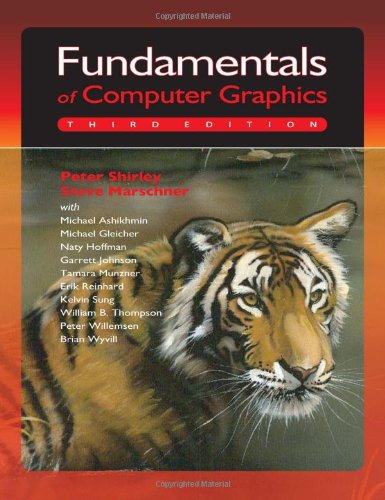
Fundamentals of Computer Graphics
Authors:
Peter Shirley
Publisher:
A K Peters
Publication Date:
Not available
ISBN:
1568814690
The broad acceptance and use of this book as one of the leading introductory computer graphics texts has enabled the original author and coauthors to... update the chapters and contribute new material involving the most knowledgeable experts in different areas while maintaining a unified approach. This edition of "Fundamentals of Computer Graphics" adds four new contributed chapters and contains substantial reorganizations and improvements to the core material. The new chapters add coverage of implicit modeling and of two important graphics applications: games and information visualization. The fourth new contributed chapter is a major upgrade to the material on color science. As with the chapters added in the second edition, we have chosen the contributors both for their expertise and for their clear way of expressing ideas.
Fundamentals of Computing
Authors:
SANGHERA KAMALJEET
Publisher:
Kendall Hunt Publishing
Publication Date:
Not available
ISBN:
0757596401
 '





