production
/viewbook/list/all/?page=4903
/
/static/
None
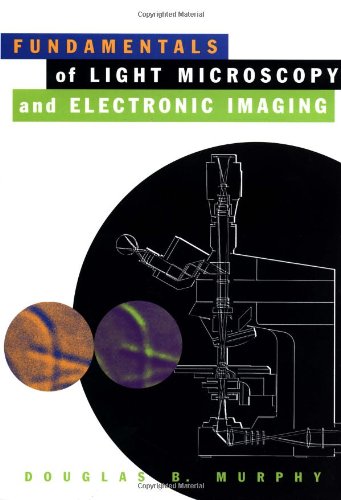
Fundamentals of Light Microscopy and Electronic Imaging
Authors:
Douglas B. Murphy
Publisher:
Wiley-Liss
Publication Date:
Not available
ISBN:
047125391X
Over the last decade, advances in science and technology have profoundly changed the face of light microscopy. Research scientists need to learn new... skills in order to use a modern research microscope–skills such as how to align microscope optics and perform image processing. Fundamentals of Light Microscopy and Electronic Imaging explores the basics of microscope design and use. The comprehensive material discusses the optical principles involved in diffraction and image formation in the light microscope, the basic modes of light microscopy, the components of modern electronic imaging systems, and the image processing operations necessary to acquire and prepare an image.Written in a practical, accessible style, Fundamentals of Light Microscopy and Electronic Imaging reviews such topics as:Illuminators, filters, and isolation of specific wavelengthsPhase contrast and differential interference contrastProperties of polarized light and polarization microscopyFluorescence and confocal laser scanning microscopyDigital CCD microscopy and image processingEach chapter includes practical demonstrations and exercises along with a discussion of the relevant material. In addition, a thorough glossary assists with complex terminology and an appendix contains lists of materials, procedures for specimen preparation, and answers to questions.An essential resource for both, experienced and novice microscopists.
Fundamentals of Linear Electronics
Authors:
James Cox
Publisher:
Delmar Cengage Learning
Publication Date:
Not available
ISBN:
0766830187
Keeping pace with the electronics industry, this edition of our popular Fundamentals of Linear Electronics combination text/lab manual now features... reduced coverage of discrete circuitry to allow readers more time to focus on integrated circuits. The first section of book introduces the building blocks - that is, the components used to build electronics circuits - such as the op-amp that provides the foundation for much of today's modern circuitry. The second section progresses logically into an exploration of the circuitry used to construct electronics systems, including: active filters, oscillators, differential amplifiers, voltage regulators, analog-to-digital converters, digital-to-analog converters, power amplifiers, and phase-control circuits using SCRs and Triacs. Pre-labs at the end of each chapter simulate the hardware lab experiments while requiring use of a calculator and, if possible, verification of results using MultiSIM or other electronic analysis software.
Fundamentals of Literacy Instruction and Assessment, Pre-K-6
Authors:
Martha Hougen
Publisher:
Paul H Brookes Pub Co
Publication Date:
Not available
ISBN:
1598572059
For future literacy teachers just beginning their professional education, nothing's more important than the first core text that builds their foundation... for classroom success. That's why every preservice teacher should start with this introductory reading textbook, ideal for teaching fundamental literacy skills to students in pre-K Grade 6.Based on cutting-edge research, best practices, and the newest professional standards, this core literacy textbook is a must for tomorrow's teachers because itFocuses on pre-K Grade 6 critical years for mastering the basics of literacy and becoming a successful readerCovers every key element of reading: oral language, phonemic awareness, phonics, alphabetic principle, vocabulary, fluency, comprehension, handwriting, spelling, and writingFully explains the new Common Core State Standards and links them explicitly with each key reading componentHighlights best assessment practices for each reading component and makes clear connections between assessment and effective instructionWeaves RTI guidance throughout, so teachers can implement this highly effective model in their own classroomsIncludes contributions from highly respected experts in reading instruction (see box)Advances differentiated instruction and inclusion, with guidance on teaching struggling students and English language learnersPrepares educators for the real world of teaching, with ready-to-use tips on addressing all the elements of reading instruction in their allotted classroom time Examines current legislation, including the reauthorization of the Early and Secondary Education Act (ESEA) and what it means for classroom instruction Expertly organized and student-friendly, this practical text makes complex material easy to learn with case studies and classroom examples, scripted demonstrations of lessons, in-class exercises, chapter objectives, glossary terms, engaging photos, and short summaries of key information. And each chapter includes sample assignments ideal for tutors or student teachers, so they can immediately translate their knowledge into effective instruction.The essential first step in every reading teacher's professional preparation, this accessible textbook lays a solid foundation for future coursework and for a successful career of shaping confident, competent readers.

Fundamentals of Litigation for Paralegals
Authors:
Marlene A. Maerowitz
Publisher:
Aspen Publishers
Publication Date:
Not available
ISBN:
0735568073
Fundamentals of Litigation for Paralegals is an established, highly successful text that provides paralegals with a comprehensive overview of the entire... litigation process. The sixth edition has been completely updated to reflect the December 2007 changes to the Federal Rules of Civil Procedure and also includes expanded treatment of mediation and the use of computers as tools in the litigation process. Distinctive features of this outstanding text: offers a complete understanding of the litigation process from the time the client walks into the office through trial and post-judgment, including settlements and alternative forms of resolutions balanced approach that does not oversimplify the litigation process but also does not cover so many rules and procedures that the learning process is thwarted clear, flexible organization allows the instructor to easily decide which areas to cover in the course pedagogical aids throughout the text make the material accessible to students. These include bold-face terms defined in the glossary; numerous examples, charts, checklists, and sample documents; chapter overviews and summaries; and review questions. a detailed appendix of an entire case file provides a reference for each of the areas discussed in the text, from the filing of a complaint through settlement and appeal the accompanying workbook on CD reinforces the concepts learned in the book. In addition to review questions, the workbook has case scenarios for the student to use in completing assignments for the course and for use by the instructor as case studies in class. Forms are included to give the student practice filling out the forms. Instructor s Manual provides answers to the questions posed in the workbook and book, as well as test questions for each chapter with answers and explanations New to the Sixth Edition: text completely updated to reflect the changes to Federal Rules of Civil Procedure enacted on December 1, 2007 new information on search tools on the Internet and the use of computers in the litigation process additional resources at the end of each chapter have been updated and revised section on ADR has been expanded to include additional information on mediation Fundamentals of Litigation for Paralegals has been an effective favorite of both students and instructors through five editions. The sixth edition continues to provide cutting-edge information in an extremely accessible format.

Fundamentals of Litigation for Paralegals, Seventh Edition with CD...
Authors:
Marlene A. Maerowitz
Publisher:
Aspen Publishers
Publication Date:
Not available
ISBN:
073559869X
Fundamentals of Litigation for Paralegals is a popular and widely-respected text that conveys to students a complete understanding of the litigation... process, from the time the client walks into the office, through trial and post-judgment, and including settlements and alternative forms of resolutions. Well-adapted to a range of teaching approaches, the revised Seventh Edition focuses on advances in technology and how it is used to support a litigation case. Distinctive features of Fundamentals of Litigation for Paralegals: thorough coverage of the entire litigation process a balanced treatment that presents the litigation process clearly , with accessible and cogent discussion of the litigation rules and procedures a user-friendly organization that lends itself to a variety of teaching approaches and objectives a rich pedagogy that includes bold-faced key terms, a glossary, numerous examples, charts, checklists, sample documents, chapter overviews, summaries, and review questions a litigation file in the appendix provides realistic examples of motions, pleadings, and discovery requests an accompanying workbook on CD reinforces the concepts learned in the book with review questions, case scenarios, and practice forms--the case scenarios support course assignments or may be used by the instructor as case studies in class Thoroughly updated throughout, the Seventh Edition provides: a fresh focus on recent the technological advances used in preparing litigation cases new and updated websites that offer litigation support recent Supreme Court cases and developments in the procedural rules
Fundamentals of Logic Design
Authors:
Charles H., Jr. Roth
Publisher:
Pws Pub Co
Publication Date:
Not available
ISBN:
0534954723
FUNDAMENTALS OF LOGIC DESIGN provides a thorough presentation of fundamental concepts for a first course in the logic design of digital systems for both... engineering and computer science students. The book covers in depth such essential concepts as the use of Boolean algebra to describe the signals and interconnections in a logic network, use of systematic techniques for simplification of a logic network, interconnection of simple components to perform a more complex logic function, analysis of a sequential logic network in terms of timing charts or a state graph, and use of a control network to control the sequence of events in a digital system. It offers a balance of theory and practical applications that prepares readers for more advanced studies in digital systems design and switching theory. Ideal for use in a self-paced course, FUNDAMENTALS OF LOGIC DESIGN provides self-study aids such as reading assignments and study questions within each of its 27 study units. A computer-aided logic design program, LogicAid(tm), is suggested for use with this text.
Fundamentals of Logic Design (Book Only)
Authors:
Jr. Charles H. Roth
Publisher:
CL Engineering
Publication Date:
Not available
ISBN:
0495668044
Updated with modern coverage, a streamlined presentation, and an excellent companion CD, this sixth edition achieves yet again an unmatched balance... between theory and application. Authors Charles H. Roth, Jr. and Larry L. Kinney carefully present the theory that is necessary for understanding the fundamental concepts of logic design while not overwhelming students with the mathematics of switching theory. Divided into 20 easy-to-grasp study units, the book covers such fundamental concepts as Boolean algebra, logic gates design, flip-flops, and state machines. By combining flip-flops with networks of logic gates, students will learn to design counters, adders, sequence detectors, and simple digital systems. After covering the basics, this text presents modern design techniques using programmable logic devices and the VHDL hardware description language.
Fundamentals of Logic Design (with CD-ROM)
Authors:
Jr. Charles H. Roth
Publisher:
CL-Engineering
Publication Date:
Not available
ISBN:
0534378048
Updated with modern coverage, a streamlined presentation, and an excellent CD-ROM, this fifth edition achieves a balance between theory and application.... Author Charles H. Roth, Jr. carefully presents the theory that is necessary for understanding the fundamental concepts of logic design while not overwhelming students with the mathematics of switching theory. Divided into 20 easy-to-grasp study units, the book covers such fundamental concepts as Boolean algebra, logic gates design, flip-flops, and state machines. By combining flip-flops with networks of logic gates, students will learn to design counters, adders, sequence detectors, and simple digital systems. After covering the basics, this text presents modern design techniques using programmable logic devices and the VHDL hardware description language.
Fundamentals of Logic Design (with Companion CD-ROM)
Authors:
Jr. Charles H. Roth
Publisher:
CL Engineering
Publication Date:
Not available
ISBN:
0495471690
Updated with modern coverage, a streamlined presentation, and an excellent companion CD, this sixth edition achieves yet again an unmatched balance... between theory and application. Authors Charles H. Roth, Jr. and Larry L. Kinney carefully present the theory that is necessary for understanding the fundamental concepts of logic design while not overwhelming students with the mathematics of switching theory. Divided into 20 easy-to-grasp study units, the book covers such fundamental concepts as Boolean algebra, logic gates design, flip-flops, and state machines. By combining flip-flops with networks of logic gates, students will learn to design counters, adders, sequence detectors, and simple digital systems. After covering the basics, this text presents modern design techniques using programmable logic devices and the VHDL hardware description language.
Fundamentals of Machine Component Design
Authors:
Juvinall Robert C./ Marshek Kurt M.
Publisher:
John Wiley & Sons Inc
Publication Date:
Not available
ISBN:
0471661775
Fundamentals of Machine Component Design
Authors:
Robert C. Juvinall
Publisher:
Wiley
Publication Date:
Not available
ISBN:
1118012895
The latest edition of Juvinall/Marshek's Fundamentals of Machine Component Design focuses on sound problem solving strategies and skills needed to... navigate through large amounts of information. Revisions in the text include coverage of Fatigue in addition to a continued concentration on the fundamentals of component design. Several other new features include new learning objectives added at the beginning of all chapters; updated end-of-chapter problems, the elimination of weak problems and addition of new problems; updated applications for currency and relevance and new ones where appropriate; new system analysis problems and examples; improved sections dealing with Fatigue; expanded coverage of failure theory; and updated references.
Fundamentals of Machine Elements
Authors:
Bernard Hamrock
Publisher:
McGraw-Hill Science/Engineering/Math
Publication Date:
Not available
ISBN:
0073341584
*********Text Available as of 5/21/2004!********** The second edition of Fundamentals of Machine Elements, second edition provides undergraduates... and praticing engineers with a clear understanding of the theory and applications behind the fundamental concepts of machine elements. The text is rich with examples and homework problems designed to test student understanding and build their skills in analysis and design. The engineering design process is stressed throughout the book through the use of Case Studies, open-ended problems, design procedure boxes, and in-text discussion. The book is divided into two parts: Part I (chs 1-8) covers fundamental background topics, and Part II (chs 9-20), presents the design of various machine components. Unique coverage of MEMS devices is provided in chapter 20, reflecting the importance of microsystems in today's industry. The book is complemented by extensive online resources for instructors and students.

FUNDAMENTALS OF MACHINE TOOLS ]CUTSOM[
Authors:
Not Available
Publisher:
Not available
Publication Date:
Not available
ISBN:
Not available

Fundamentals of Management
Authors:
Ricky W. Griffin
Publisher:
South-Western College Pub
Publication Date:
Not available
ISBN:
0618917071
This skills-based text from respected author Ricky Griffin gives instructors the flexibility to integrate their own cases, exercises, and projects while... continuing to provide them with a strong theoretical framework. Chapters are organized according to a strong pedagogy, featuring learning objectives, a chapter outline, a First Things First opening vignette, boldface key terms, a summary of key points, questions for review, questions for analysis, end of chapter exercises, and an end-of-the-chapter case with questions.
Fundamentals of Management
Authors:
Jit S. Chandan
Publisher:
Houghton Mifflin
Publication Date:
Not available
ISBN:
0618789391
 '





