production
/viewbook/list/all/?page=5037
/
/static/
None
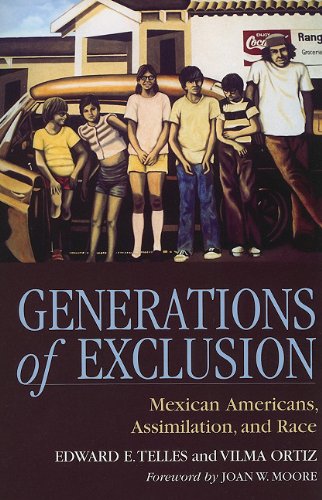
Generations of Exclusion: Mexican Americans, Assimilation, and Race
Authors:
Edward E. Telles
Publisher:
Russell Sage Foundation Publications
Publication Date:
Not available
ISBN:
0871548496
When boxes of original files from a 1965 survey of Mexican Americans were discovered behind a dusty bookshelf at UCLA, sociologists Edward Telles and... Vilma Ortiz recognized a unique opportunity to examine how the Mexican American experience has evolved over the past four decades. Telles and Ortiz located and re-interviewed most of the original respondents and many of their children. Then, they combined the findings of both studies to construct a thirty-five year analysis of Mexican American integration into American society. Generations of Exclusion is the result of this extraordinary project. Generations of Exclusion measures Mexican American integration across a wide number of dimensions: education, English and Spanish language use, socioeconomic status, intermarriage, residential segregation, ethnic identity, and political participation. The study contains some encouraging findings, but many more that are troubling. Linguistically, Mexican Americans assimilate into mainstream America quite well--by the second generation, nearly all Mexican Americans achieve English proficiency. In many domains, however, the Mexican American story doesn't fit with traditional models of assimilation. The majority of fourth generation Mexican Americans continue to live in Hispanic neighborhoods, marry other Hispanics, and think of themselves as Mexican. And while Mexican Americans make financial strides from the first to the second generation, economic progress halts at the second generation, and poverty rates remain high for later generations. Similarly, educational attainment peaks among second generation children of immigrants, but declines for the third and fourth generations. Telles and Ortiz identify institutional barriers as a major source of Mexican American disadvantage. Chronic under-funding in school systems predominately serving Mexican Americans severely restrains progress. Persistent discrimination, punitive immigration policies, and reliance on cheap Mexican labor in the southwestern states all make integration more difficult. The authors call for providing Mexican American children with the educational opportunities that European immigrants in previous generations enjoyed. The Mexican American trajectory is distinct--but so is the extent to which this group has been excluded from the American mainstream. Most immigration literature today focuses either on the immediate impact of immigration or what is happening to the children of newcomers to this country. Generations of Exclusion shows what has happened to Mexican Americans over four decades. In opening this window onto the past and linking it to recent outcomes, Telles and Ortiz provide a troubling glimpse of what other new immigrant groups may experience in the future. EDWARD E. TELLES is professor of sociology at the University of California, Los Angeles. VILMA ORTIZ is associate professor of sociology at the University of California, Los Angeles.
Generations of Exclusion: Mexican Americans, Assimilation, and Race
Authors:
Edward E. Telles
Publisher:
Russell Sage Foundation
Publication Date:
Not available
ISBN:
0871548488
When boxes of original files from a 1965 survey of Mexican Americans were discovered behind a dusty bookshelf at UCLA, sociologists Edward Telles and... Vilma Ortiz recognized a unique opportunity to examine how the Mexican American experience has evolved over the past four decades. Telles and Ortiz located and re-interviewed most of the original respondents and many of their children. Then, they combined the findings of both studies to construct a thirty-five year analysis of Mexican American integration into American society. Generations of Exclusion is the result of this extraordinary project. Generations of Exclusion measures Mexican American integration across a wide number of dimensions: education, English and Spanish language use, socioeconomic status, intermarriage, residential segregation, ethnic identity, and political participation. The study contains some encouraging findings, but many more that are troubling. Linguistically, Mexican Americans assimilate into mainstream America quite well--by the second generation, nearly all Mexican Americans achieve English proficiency. In many domains, however, the Mexican American story doesn't fit with traditional models of assimilation. The majority of fourth generation Mexican Americans continue to live in Hispanic neighborhoods, marry other Hispanics, and think of themselves as Mexican. And while Mexican Americans make financial strides from the first to the second generation, economic progress halts at the second generation, and poverty rates remain high for later generations. Similarly, educational attainment peaks among second generation children of immigrants, but declines for the third and fourth generations. Telles and Ortiz identify institutional barriers as a major source of Mexican American disadvantage. Chronic under-funding in school systems predominately serving Mexican Americans severely restrains progress. Persistent discrimination, punitive immigration policies, and reliance on cheap Mexican labor in the southwestern states all make integration more difficult. The authors call for providing Mexican American children with the educational opportunities that European immigrants in previous generations enjoyed. The Mexican American trajectory is distinct--but so is the extent to which this group has been excluded from the American mainstream. Most immigration literature today focuses either on the immediate impact of immigration or what is happening to the children of newcomers to this country. Generations of Exclusion shows what has happened to Mexican Americans over four decades. In opening this window onto the past and linking it to recent outcomes, Telles and Ortiz provide a troubling glimpse of what other new immigrant groups may experience in the future. EDWARD E. TELLES is professor of sociology at the University of California, Los Angeles. VILMA ORTIZ is associate professor of sociology at the University of California, Los Angeles.
Generations of Winter
Authors:
Vassily Aksyonov
Publisher:
Vintage
Publication Date:
Not available
ISBN:
0679761829
Compared by critics across the country to War and Peace for its memorable characters and sweep, and to Dr. Zhivago for its portrayal of Stalin's Russia,... Generations of Winter is the romantic saga of the Gradov family from 1925 to 1945. "A long, lavish plunge into another world."--USA Today.
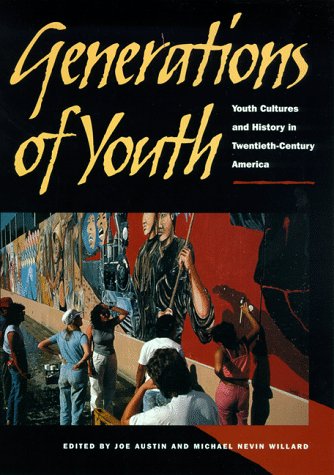
Generations of Youth: Youth Cultures and History in...
Authors:
Not Available
Publisher:
NYU Press
Publication Date:
Not available
ISBN:
0814706460
America has long been fascinated by youth and its cultural expressions. The notion of "youth" has played a central role in processes of social... reproduction and historical change throughout the twentieth century. But when we turn a critical eye to youth culture, we too often focus on youth as a passive and unchanging concept. In Generations of Youth, Joe Austin and Michael Willard have brought together leading cultural critics from history, sociology, and cultural studies to explore the cultural expressions of twentieth- century youth. The contributors to the volume explore diverse popular culture practices such as Chicano rock-and-roll dancing; the Boy Scouts and heroism; 'zines and community; Native American boxing; African American hip-hop; fan clubs and femininity; Malcolm X's zoot suit; Filipino Mcintosh suits; lesbian, bisexual, and gay Internet culture; Chicano lowriding; skateboarding and the production of urban space; graffiti and spatial mobility; Native American pow wows; and post-punk, Generation X, and downward mobility. Generations of Youth considers the ways in which young people's autonomy and "youth" itself is produced in negotiation with adult authority and institutions of socialization. The definitive volume on American youth cultures past and present, Generations of Youth traces the central ways in which historical meanings and experiences of youth intersect with other axes of the U.S. social hierarchy. We learn how race, ethnicity, sexuality, gender, class, and space intersect to affect our notions of youth and youth's notions of itself. Essays focus on the ways in which young people have appropriated and created cultural forms, practices, and social ideologies that are connected to changes in consumer and labor markets, to economies of prestige, and to received social hierarchies and traditions. Contributors to the volume include Victoria Getis, Jay Mechling, Mary Odem, John Bloom, Georganne Scheiner, Paula Fass, Linda N. España-Maram, Robin D. G. Kelley, Matt Garcia, James T. Sears, Beth Bailey, Ernesto Chàvez, Jeffrey Rangel, Ryan Moore, Kyra Gaunt, Robert Walser, William Wei, Susan Willis, David Roediger, Joanne Addison and Michelle Comstock, Rachel Buff, George Lipsitz, Brenda Bright, Stanley Aronowitz, and Steve Duncombe.
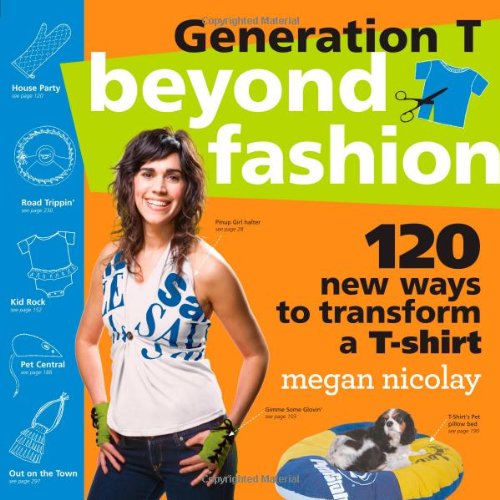
Generation T: Beyond Fashion: 120 New Ways to Transform a T-shirt
Authors:
Megan Nicolay
Publisher:
Workman Publishing Company
Publication Date:
Not available
ISBN:
0761154108
Megan Nicolay revolutionized the T-shirt. She repurposed it, reinterpreted it, reinvented it—and created the #1 craft book in the nation, Generation... T, which continues to dominate. Now she explores new ways to slash a tee, scrunch a tee, and sew a tee with Generation T: Beyond Fashion. A collection of 120 projects for every occasion, it takes the humble yet ever-malleable tee in dozens of new directions—from baby gifts to pet accessories, stuff for the home, the car, the road, the boyfriend. The rallying cry is: Don't buy; DIY. The result is hip, imaginative, crafty, and very green. There's a basic primer on techniques—knotting, sewing, braiding, lacing—plus a full tutorial on embellishing. And then an amazing range of projects. There’s fashion, of course: all-new halters and tank tops, sexy gaucho pants, a baby-doll dress, twisted shrug, and hooded scarf. But also baby gifts: Jumper for Joy, Baby Back Bib, Wild Thing Blankie. Home décor: plant hanger, wine cozy, toilet seat cover, ruffled apron, and Spastic Plastic (grocery tote). Grill mitts and bolo ties for the guys, doggie tee and stuffed cat toys, a steering wheel cover for the car, the Ants Go Marching (picnic blanket), and Beach Bum (beach caddy). Projects range from the simplest no-sew to intermediate, and all have easy-to-follow illustrated directions—plus, how to throw your own Tee Party. Time to get your craft on.
Generation WTF: From What the #$%&! to a Wise, Tenacious, and...
Authors:
Christine B. Whelan
Publisher:
Templeton Press
Publication Date:
Not available
ISBN:
159947347X
We all know what “WTF” usually stands for: it’s an exclamation of frustration and anger, and it’s an understandable reaction to the tough new... economic realities that have hit young adults harder than any other group. WTF happened to promises of a bright future? What happened to the jobs? And what do we do now that the rules have changed?Recent college grads were raised in a time of affluence and entitlement, lulled into thinking that a golden future would just happen. With few role models to teach values like thrift, perseverance, and self-control, young adults are ill-equipped to cope with sacrifice and failure, and their dismal employment prospects are merely the most visible symptom of greater challenges.Fortunately, it’s not too late to change course. This optimistic, introspective, and technologically savvy generation already possesses many of the tools they need to thrive—if only they learn to harness the necessary skills for success.In Generation WTF, Christine Whelan does just that. Dr. Whelan, one of the foremost authorities on the history of the self-help genre, worked with more than one hundred young people to test and tweak the very best old-school advice and personalize it for the modern twenty-something. After a decade of researching the industry—and years advising “WTFers” as they struggle to make their way in the “real world”—Dr. Whelan knows firsthand what advice works and what Generation WTF has to offer.Rather than focusing on the frustration that “WTF” usually stands for, Dr. Whelan leads the charge to reclaim the acronym as a battle cry for a positive future: Generation WTF will be a wise, tenacious, and fearless generation, strengthened by purpose and hope. This practical new guide will show these WTFers the way to success and instill lasting habits that will serve them well in both good times and bad.

Generation X Goes to College: An Eye-Opening Account of Teaching in...
Authors:
Peter Sacks
Publisher:
Open Court
Publication Date:
Not available
ISBN:
0812693140
This is an incredible, amusing, horrifying, yet true story, in which all names have been changed to protect the guilty.It tells how the author, a... journalist turned college professor, came face to face with Generation X: jaded, unachieving, highly demanding yet lacking any respect for standards or intelligence.To survive, the author had to give up old-fashioned educational goals in exchange for mindless titillation and coming across as a cool and unassuming guy. Partly as a wry experiment, Sacks decided to pursue this approach remorselessly, treating his twenty-something students like a kindergarten playgroup, and by so doing he became a spectacular 'success' as a 'teacher'."Peter Sacks's from-the-trenches account of contemporary college teachings makes for a disturbing read. But wake-up calls always are, and this one means to take no prisoners where the dumbing down of higher education is concerned. It will certainly shock and probably offend, but anyone who ignores its assessments does so at our collective peril". -- Sanford Pinsker Editor, Academic Questions"So far the best depiction of these attitudes is in the new book, Generation X Goes to College .... the book goes well beyond conventional arguments about slackers, entitlement and dumbing down". -- John Leo U.S. News & World Report
Generation X: Tales for an Accelerated Culture
Authors:
Douglas Coupland
Publisher:
St.martins
Publication Date:
Not available
ISBN:
031205436X
Generation X is Douglas Coupland's acclaimed salute to the generation born in the late 1950s and 1960s--a generation known vaguely up to then as... "twentysomething."Andy, Claire, and Dag, each in their twenties, have quit "pointless jobs done grudgingly to little applause" in their respective hometowns and cut themselves adrift on the California desert. In search of the drastic changes that will lend meaning to their lives, they've mired themselves in the detritus of American cultural memory. Refugees from history, the three develop an ascetic regime of story-telling, boozing, and working McJobs--"low-pay, low-prestige, low-benefit, no-future jobs in the service industry." They create modern fables of love and death among the cosmetic surgery parlors and cocktail bars of Palm Springs, disturbingly funny tales of nuclear waste, historical overdosing, and mall culture.A dark snapshot of the trio's highly fortressed inner world quickly emerges--landscapes peopled with dead TV shows, "Elvis moments," and semi-disposable Swedish furniture. And from these landscapes, deeper portraits emerge, those of fanatically independent individuals, pathologically ambivalent about the future and brimming with unsatisfied longings for permanence, for love, and for their own home. Andy, Dag, and Claire are underemployed, overeducated, intensely private, and unpredictable. Like the group they mirror, they have nowhere to assuage their fears, and no culture to replace their anomie.
Generative Phonology: Description and Theory
Authors:
Michael Kenstowicz
Publisher:
Emerald Group Publishing Limited
Publication Date:
Not available
ISBN:
0124051618
This volume explains the generative approach to phonological analysis and theory through a rigorous examination of data from a diverse sample of... languages. It will give students the theoretical background necessary to read the phonological literature critically, and the analytical tools required for describing phonological structure.

Generic ICD-9-CM 2012, Vols 1,2&3: Hospital Version
Authors:
Channel Publishing
Publisher:
CHANNEL PUBLISHING, LTD
Publication Date:
Not available
ISBN:
1933053364

GENERIC INT.PROCESS.+BALTZAN M:]PKG[
Authors:
Not Available
Publisher:
Not available
Publication Date:
Not available
ISBN:
Not available

Generic special education: Preparation manual for Texas educators
Authors:
Carolyn Cropper
Publisher:
Not available
Publication Date:
Not available
ISBN:
1893629066
Sorpresas is a graded intermediate-level literary reader that is designed to expand vocabulary, improve reading and writing skills, and stimulate... practical language discussion. Students gain cultural knowledge and insight through the content of native literature from Argentina, Bolivia, Colombia, Cuba, El Salvador, Mexico, Panama, Peru, Puerto Rico, Spain, and Uruguay.

Generosity: An Enhancement
Authors:
Richard Powers
Publisher:
Picador
Publication Date:
Not available
ISBN:
0312429754
A NEW YORK TIMES BOOK REVIEW NOTABLE BOOK OF THE YEARThe National Book Award-winning author of The Echo Maker proves yet again that "no writer of our... time dreams on a grander scale or more knowingly captures the zeitgeist." (The Dallas Morning News).What will happen to life when science identifies the genetic basis of happiness? Who will own the patent? Do we dare revise our own temperaments? Funny, fast, and magical, Generosity celebrates both science and the freed imagination. In his most exuberant book yet, Richard Powers asks us to consider the big questions facing humankind as we begin to rewrite our own existence.
Generous Betrayal: Politics of Culture in the New Europe
Authors:
Unni Wikan
Publisher:
University Of Chicago Press
Publication Date:
Not available
ISBN:
0226896854
All over Western Europe, the lot of many non-Western immigrants is one of marginalization, discrimination, and increasing segregation. In this bold and... controversial book, Unni Wikan shows how an excessive respect for "their culture" has been part of the problem. Culture has become a new concept of race, sustaining ethnic identity politics that subvert human rights—especially for women and children. Fearful of being considered racist, state agencies have sacrificed freedom and equality in the name of culture.Comparing her native Norway to Western Europe and the United States, Wikan focuses on people caught in turmoil, how institutions function, and the ways in which public opinion is shaped and state policies determined. Contradictions arise between policies of respect for minority cultures, welfare, and freedom, but the goal is the same: to create a society committed to both social justice and respect for human rights.Writing with power and grace, Wikan makes a plea for a renewed moral vitality and human empathy that can pave the way for more effective social policies and create change.

Generous Enemies: Patriots and Loyalists in Revolutionary New York...
Authors:
Judith L. Van Buskirk
Publisher:
University of Pennsylvania Press
Publication Date:
Not available
ISBN:
0812218221
In July 1776, the final group of more than 130 ships of the Royal Navy sailed into the waters surrounding New York City, marking the start of seven... years of British occupation that spanned the American Revolution. What military and political leaders characterized as an impenetrable "Fortress Britannia"—a bastion of solid opposition to the American cause—was actually very different.As Judith L. Van Buskirk reveals, the military standoff produced civilian communities that were forced to operate in close, sustained proximity, each testing the limits of political and military authority. Conflicting loyalties blurred relationships between the two sides: John Jay, a delegate to the Continental Congresses, had a brother whose political loyalties leaned toward the Crown, while one of the daughters of Continental Army general William Alexander lived in occupied New York City with her husband, a prominent Loyalist. Indeed, the texture of everyday life during the Revolution was much more complex than historians have recognized.Generous Enemies challenges many long-held assumptions about wartime experience during the American Revolution by demonstrating that communities conventionally depicted as hostile opponents were, in fact, in frequent contact. Living in two clearly delineated zones of military occupation—the British occupying the islands of New York Bay and the Americans in the surrounding countryside—the people of the New York City region often reached across military lines to help friends and family members, pay social calls, conduct business, or pursue a better life. Examining the movement of Loyalist and rebel families, British and American soldiers, free blacks, slaves, and businessmen, Van Buskirk shows how personal concerns often triumphed over political ideology.Making use of family letters, diaries, memoirs, soldier pensions, Loyalist claims, committee and church records, and newspapers, this compelling social history tells the story of the American Revolution with a richness of human detail.
 '





