production
/viewbook/list/all/?page=5039
/
/static/
None

Genesis (New Cambridge Bible Commentary)
Authors:
Bill T. Arnold
Publisher:
Cambridge University Press
Publication Date:
Not available
ISBN:
052100067X
This commentary is an innovative interpretation of one of the most profound texts of world literature: the book of Genesis. The first book of the Bible... has been studied, debated, and expounded as much as any text in history, yet because it addresses the weightiest questions of life and faith, it continues to demand our attention. The author of this new commentary combines older critical approaches with the latest rhetorical methodologies to yield fresh interpretations accessible to scholars, clergy, teachers, seminarians, and interested laypeople. It explains important concepts and terms as expressed in the Hebrew original so that both people who know Hebrew and those who do not will be able to follow the discussion. "Closer Look" sections examine Genesis in the context of cultures of the Ancient Near East. "Bridging the Horizons" sections enable the reader to see the enduring relevance of the book in the twenty-first century.
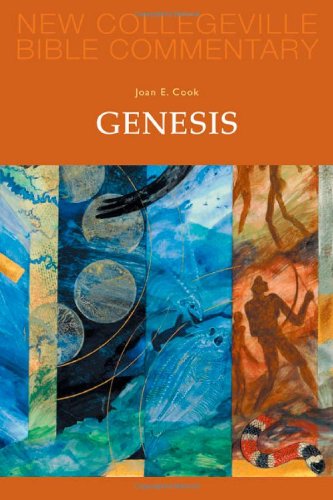
Genesis (New Collegeville Bible Commentary: Old Testament) (The New...
Authors:
Joan E. Cook
Publisher:
Liturgical Press
Publication Date:
Not available
ISBN:
0814628362
In the ongoing debate over the when and how our universe began, Genesis chooses to answer the theological question, "Who set in motion the beginning of... the heavens and the earth?" Once that question is answered by vivid and memorable stories, the focus moves to ancestral stories that identify the roots and early branches of the Jewish family tree. This same tree grows in Christian settings as the matriarchs and patriarchs of Genesis appear over and again in New Testament writings. Given the growing interest in family genealogies, in this commentary Joan Cook leads us to appreciate and delight in our ancient and awesome spiritual heritage as well. We should not be surprised, however, to discover that our earliest spiritual kith and kin were guilty of deceit, marital infidelity, jealousy, and murder. But readers will learn that the God who created the heavens and the earth is also a forgiving and protective God the God of ancient time, of our time, of all time.
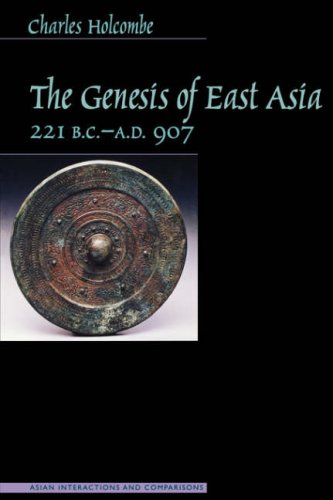
Genesis of East Asia, 221 B.C.-A.D. 907 (Asian Interactions and...
Authors:
Charles Holcombe
Publisher:
University of Hawaii Press
Publication Date:
Not available
ISBN:
0824824652

GENESIS ONE+THE ORIGIN OF THE EARTH
Authors:
Not Available
Publisher:
Not available
Publication Date:
Not available
ISBN:
Not available

Genesis (The Anchor Yale Bible Commentaries)
Authors:
E. A. Speiser
Publisher:
Yale University Press
Publication Date:
Not available
ISBN:
0300140258
"Genesis" is Volume I in the "Anchor Bible" series of new book-by-book translations of the Old and New Testaments and Apocrypha. Ephraim Avigdor Speiser... was University Professor and Chairman of the Department of Oriental Studies at the University of Pennsylvania. Using authoritative evidence from archaeology, linguistics, and comparative religion, the author presents some startling conclusions about the first book of the Bible. He proves, for example, that the famous opening phrase, 'In the beginning,' is not true to the meaning of the first word, that the designation 'Torah' for the Pentateuch is a misnomer, that the best-known stories of "Genesis" are grounded in pagan mythology. Speiser is an iconoclast in the tradition of Abraham; he exposes the false in order to help achieve truth. As he says in his introduction, he 'is not motivated by mere pedantry...but by the hope that each new insight may bring us that much closer to the secret of the Bible's universal and enduring appeal'.
Genesis: The Evolution of Biology
Authors:
Jan Sapp
Publisher:
Oxford University Press, USA
Publication Date:
Not available
ISBN:
0195156196
Genesis: The Evolution of Biology presents a history of the past two centuries of biology, suitable for use in courses, but of interest more broadly to... evolutionary biologists, geneticists, and biomedical scientists, as well as general readers interested in the history of science. The book covers the early evolutionary biologists-Lamarck, Cuvier, Darwin and Wallace through Mayr and the neodarwinian synthesis, in much the same way as other histories of evolution have done, bringing in also the social implications, the struggles with our religious understanding, and the interweaving of genetics into evolutionary theory. What is novel about Sapp's account is a real integration of the cytological tradition, from Schwann, Boveri, and the other early cell biologists and embryologists, and the coverage of symbiosis, microbial evolutionary phylogenies, and the new understanding of the diversification of life coming from comparative analyses of complete microbial genomes. The book is a history of theories about evolution, genes and organisms from Lamarck and Darwin to the present day. This is the first book on the general history of evolutionary biology to include the history of research and theories about symbiosis in evolution, and first to include research on microbial evolution which were excluded from the classical neo-Darwinian synthesis. Bacterial evolution, and symbiosis in evolution are also excluded from virtually every book on the history of biology.
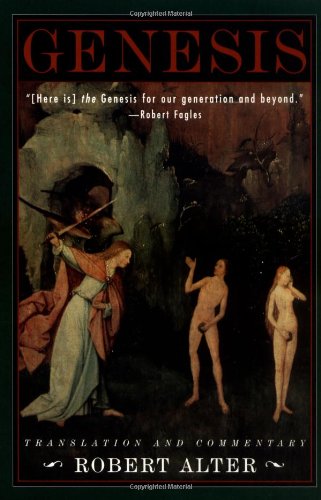
Genesis: Translation and Commentary
Authors:
Robert Alter
Publisher:
W. W. Norton & Company
Publication Date:
Not available
ISBN:
039331670X
Robert Alter sets a new standard in the translation of this formative book of the Hebrew Bible.Genesis begins with the making of heaven and earth and... all life, and ends with the image of a mummy—Joseph's—in a coffin. In between come many of the primal stories in Western culture: Adam and Eve's expulsion from the garden of Eden, Cain's murder of Abel, Noah and the Flood, the destruction of Sodom and Gomorrah, Abraham's binding of Isaac, the covenant of God and Abraham, Isaac's blessing of Jacob in place of Esau, the saga of Joseph and his brothers. In Robert Alter's brilliant translation, these stories cohere in a powerful narrative of the tortuous relations between fathers and sons, husbands and wives, eldest and younger brothers, God and his chosen people, the people of Israel and their neighbors. Alter's translation honors the meanings and literary strategies of the ancient Hebrew and conveys them in fluent English prose. It recovers a Genesis with the continuity of theme and motif of a wholly conceived and fully realized book. His insightful, fully informed commentary illuminates the book in all its dimensions.
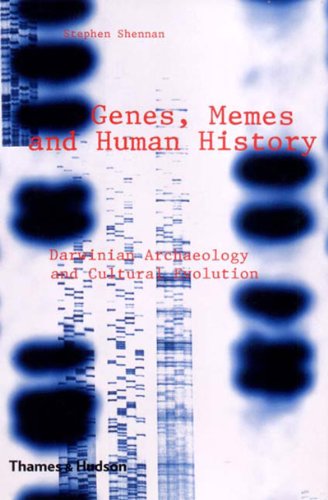
Genes, Memes and Human History: Darwinian Archaeology and Cultural...
Authors:
Stephen Shennan
Publisher:
Thames & Hudson
Publication Date:
Not available
ISBN:
0500051186
What is the history of human populations? How are cultural traditions maintained and changed over time? Why did people destroy their environments in the... past and were they ever conservationists? What led to the emergence of marked social inequalities? These are some of the questions that this text addresses and answers, in an application of neo-Darwinian evolutionary ideas to the human past. Stephen Shennan opens with the study of human behaviour, as acted upon by natural selection, and goes on to demonstrate that the same ideas can be applied to human societies, not just through the genes but through what Richard Dawkins has called "memes", units of cultural information which are passed on in our second inheritance system, culture. The book ranges from life history theory to game theory, and from the origins of farming to the collapse of societies.
Genes, Peoples, and Languages
Authors:
Luigi Luca Cavalli-Sforza
Publisher:
University of California Press
Publication Date:
Not available
ISBN:
0520228731
Luigi Luca Cavalli-Sforza was among the first to ask whether the genes of modern populations contain a historical record of the human species.... Cavalli-Sforza and others have answered this question--anticipated by Darwin--with a decisive yes. Genes, Peoples, and Languages comprises five lectures that serve as a summation of the author's work over several decades, the goal of which has been nothing less than tracking the past hundred thousand years of human evolution.Cavalli-Sforza raises questions that have serious political, social, and scientific import: When and where did we evolve? How have human societies spread across the continents? How have cultural innovations affected the growth and spread of populations? What is the connection between genes and languages? Always provocative and often astonishing, Cavalli-Sforza explains why there is no genetic basis for racial classification.
GENES X PACKAGE
Authors:
Not Available
Publisher:
Not available
Publication Date:
Not available
ISBN:
Not available

Gene Therapy
Authors:
Mary Colavito
Publisher:
Benjamin Cummings
Publication Date:
Not available
ISBN:
0805338195
KEY MESSSAGE: Will gene therapy one day become the ultimate application of genetic technology? Gene Therapy, the newest booklet in the Special Topics... in Biology Series, addresses this question by exploring gene therapy as a complex technology for delivering therapeutic genes as a way to treat and cure human genetic diseases. Author Mary Colavito provides an overview of the basic science involved in gene therapy methods and chronicles the history of gene therapy by discussing successful and ongoing gene therapy treatments as well as adverse outcomes in some cases of gene therapy. Also discussed are challenges that must be overcome for gene therapy to become a more reliable and readily accessible approach for treating a multitude of genetic diseases that affect humans. Gene Therapy: Methods Currently Employed, Partial Successes and Ongoing Trials, Setbacks, Challenges, Future Approaches For all readers interested in gene therapy as a complex technology for delivering therapeutic genes as a way to treat and cure human genetic diseases.

Gene Therapy: Treatments and Cures for Genetic Diseases (New Biology)
Authors:
Joseph, Ph.D. Panno
Publisher:
Facts on File (J)
Publication Date:
Not available
ISBN:
081606850X
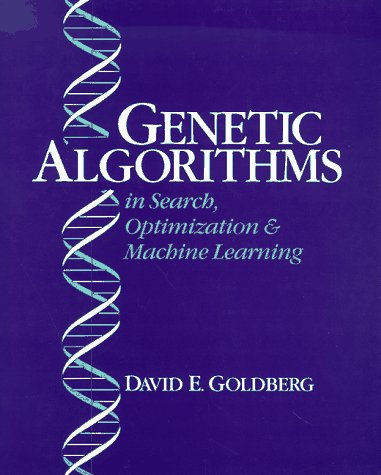
Genetic Algorithms in Search, Optimization, and Machine Learning
Authors:
David E. Goldberg
Publisher:
Addison-Wesley Professional
Publication Date:
Not available
ISBN:
0201157675
This book brings together - in an informal and tutorial fashion - the computer techniques, mathematical tools, and research results that will enable... both students and practitioners to apply genetic algorithms to problems in many fields. Major concepts are illustrated with running examples, and major algorithms are illustrated by Pascal computer programs. No prior knowledge of GAs or genetics is assumed, and only a minimum of computer programming and mathematics background is required. 0201157675B07092001
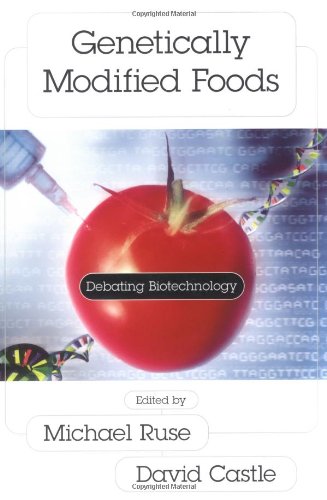
Genetically Modified Foods: Debating Biotechnology (Contemporary...
Authors:
Not Available
Publisher:
Prometheus Books
Publication Date:
Not available
ISBN:
1573929964
This lively collection of authoritative articles encompasses the many points of contention in the debate about genetically modified foods. The editors... set the context by organising the essays to deal first with the history and the science of genetically modified foods. The next section focuses on the morality of modifying organisms for human use. What factors should be considered in making value judgements about this technology? Succeeding sections include articles discussing religious attitudes toward genetically modified food, legal issues involving patenting and environmental damage, risk assessment, and possible environmental threats and benefits. Complete with a glossary and suggestions for further reading, this outstanding collection of recently published and brand new articles serves as a comprehensive introduction and a very useful reference work to an important technology with world-wide social consequences.
Genetically Modified Language: The Discourse of Arguments for GM...
Authors:
Guy Cook
Publisher:
Routledge
Publication Date:
Not available
ISBN:
0415314682
The GM debate is as much a war of words as of facts. Food and farming are being changed forever - yet whether for good or bad is the subject of an... increasingly bitter argument. Those promoting GM have mounted an intense campaign, characterising their opponents as terrorists and Luddites, governed by ignorance, irrationality and hysteria. Yet public opinion remains unconvinced and antagonistic. As the argument intensifies and the voices on all sides get louder, Genetically Modified Language cuts through the confusion and controversy to the issues and ideology at the heart of the disagreement.Guy Cook subjects the language of the case for GM to a careful and detailed examination. He looks in turn at the persuasive strategies used by politicians, scientists, the media, biotechnology corporations, and supermarkets, showing how their arguments mix together scientific, commercial, ethical and political criteria, and are seldom as factual and straightforward as they claim. Through analyses of recurrent words and phrases, and of the constant comparisons made with other international issues, he shows how the GM debate has become inseparable from the wider political conflicts of our time. In a final chapter he turns to public reactions to all of the arguments. Throughout this analysis, the campaign for GM is seen as exemplifying disturbing trends in the contemporary use of language for public information. Language which purports to seek clarity and neutrality, and to be a vehicle for informed democratic debate, is in fact achieving the opposite effects: obscuring the issues and manipulating opinion. Written in a clear, accessible style and drawing on illustrative examples, Genetically Modified Language is an insightful look at how language shapes our opinions.
 '





