production
/viewbook/list/all/?page=5047
/
/static/
None
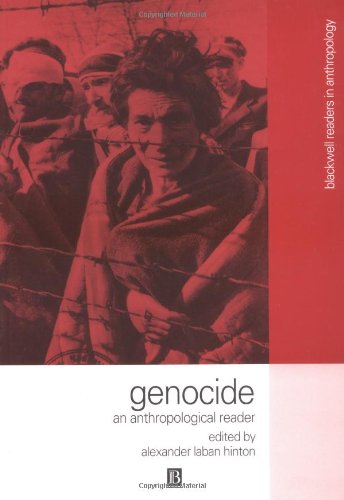
Genocide: An Anthropological Reader (Wiley-Blackwell Readers in...
Authors:
Not Available
Publisher:
Wiley-Blackwell
Publication Date:
Not available
ISBN:
063122355X
Genocide: An Anthropological Reader helps to lay a foundation for a ground-breaking "anthropology of genocide" by gathering together for the first time... the seminal texts for learning about and understanding this phenomenon.
Genocide and Resistance in Southeast Asia: Documentation, Denial,...
Authors:
Ben Kiernan
Publisher:
Transaction Publishers
Publication Date:
Not available
ISBN:
1412806690
Two modern cases of genocide and extermination began in Southeast Asia in the same year. Pol Pot's Khmer Rouge regime ruled Cambodia from 1975 to ... 1979, and Indonesian forces occupied East Timor from 1975 to 1999. This book examines the horrifi c consequences of Cambodian communist revolution and Indonesian anti-communist counterinsurgency. It also chronicles the two cases of indigenous resistance to genocide and extermination, the international cover-ups that obstructed documentation of these crimes, and efforts to hold the perpetrators legally accountable.

Genocide and the Politics of Memory: Studying Death to Preserve Life
Authors:
Herbert Hirsch
Publisher:
The University of North Carolina Press
Publication Date:
Not available
ISBN:
0807845051
More than sixty million people have been victims of genocide in the twentieth century alone, including recent casualties in Bosnia and Rwanda. Herbert... Hirsch studies repetitions of large-scale human violence in order to ascertain why people in every historical epoch seem so willing to kill each other. He argues that the primal passions unleashed in the cause of genocide are tied to the manipulation of memory for political purposes.According to Hirsch, leaders often invoke or create memories of real or fictitious past injustices to motivate their followers to kill for political gain or other reasons. Generations pass on their particular versions of events, which then become history. If we understand how cultural memory is created, Hirsch says, we may then begin to understand how and why episodes of mass murder occur and will be able to act to prevent them. In order to revise the politics of memory, Hirsch proposes essential reforms in both the modern political state and in systems of education.

Genocide at the Dawn of the Twenty-First Century: Rwanda, Bosnia,...
Authors:
Dale C. Tatum
Publisher:
Palgrave Macmillan
Publication Date:
Not available
ISBN:
0230621899
At the end of World War II, the international community deemed genocide a crime against humanity. Yet, at the dawn of the twenty-first century it has... occurred repeatedly. This book explains why genocide began to occur in the twenty-first century and why the United States has been ineffective at preventing it and stopping it once it occurs.
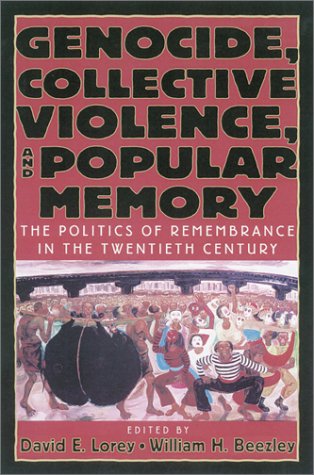
Genocide, Collective Violence, and Popular Memory: The Politics of...
Authors:
William H. Beezley (Editors) David E. Lorey
Publisher:
SR Books - Scholarly Resources Inc.
Publication Date:
Not available
ISBN:
0842029826
The twentieth century has been scarred by political violence and genocide, reaching its extreme in the Holocaust. Yet, at the same time, the century has... been marked by a growing commitment to human rights. This volume highlights the importance of history-of socially processed memory-in resolving the wounds left by massive state-sponsored political violence and in preventing future episodes of violence. In Genocide, Collective Violence, and Popular Memory: The Politics of Remembrance in the Twentieth Century, the editors present and discuss the many different social responses to the challenge of coming to terms with past reigns of terror and collective violence. Designed for undergraduate courses in political violence and revolution, this volume treats a wide variety of incidents of collective violence-from decades-long genocide to short-lived massacres. The selection of essays provides a broad range of thought-provoking case studies from Latin America, Africa, Europe, and Asia. This provocative collection of readings from around the world will spur debate and discussion of this timely and important topic in the classroom and beyond.
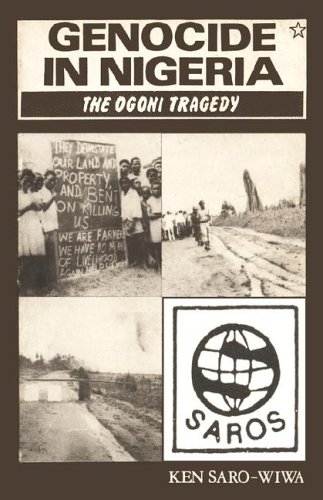
Genocide in Nigeria
Authors:
Ken Saro-Wiwa
Publisher:
Saros International Publishers
Publication Date:
Not available
ISBN:
1870716221
This collection of newspaper columns and articles mostly written in the 1970s and 1980s perhaps provides the best overview of Saro-Wiwa's political and... environmental concerns. The articles document his concerns about the fate of the Ogoni people and their mistreatment by multinational oil companies and collaborating Nigerian government. Saro-Wiwa argues that the Ogoni are a minority in Nigeria, exploited by the ruling ethnic majority, and that the Federal Government of Nigeria was threatening the Ogoni with genocide. At the time, this was a key publication in bringing the Ogoni tragedy to the attention of the international community. Nowadays, it is of continual relevance to present day concerns about the actions of the oil companies, indigenous and environmental rights in the Delta region.

Genocide in the Middle East: The Ottoman Empire, Iraq, and Sudan
Authors:
Hannibal Travis
Publisher:
Carolina Academic Press
Publication Date:
Not available
ISBN:
1594604363
Genocide in the Middle East describes the genocide of the Armenians, Greeks, and Assyrians of the Ottoman Empire in the nineteenth and early twentieth... centuries; of the Kurds and other persons living under Saddam Hussein in northern Iraq in the late 1980s; and of the Dinka, Nuba, Fur, Masalit, and Zaghawa peoples of Sudan from the 1970s to the present. It situates these crimes in their historical context, as outgrowths of intolerant religious traditions, imperialism and the rise of the nation-state, Cold War insurgencies and counterinsurgencies, and the global competition for resources and markets at the expense of indigenous peoples. This requires a more thorough investigation of the case law on genocide than has been attempted in the literature on genocide to date, including detailed accounts of the prosecutions of the leaders of the Ottoman Empire after World War I, of Saddam Hussein and other Iraqi officials after Operation Iraqi Freedom, and of President Omar Hassan al-Bashir and other leaders of Sudan by the International Criminal Court. Finally, the book explores emerging problems of genocidal terrorism, cultural genocide, and structural genocide due to starvation, disease, and displacement. The field of genocide studies has grown rapidly in recent years, fueled by interest in the Armenian genocide, the wars in the former Yugoslavia and Iraq, and the widespread massacres in southern Sudan and Darfur. While several comparative studies of the Armenian genocide, the Holocaust, and other genocides have been published, none of them focuses on genocide in the Middle East and North Africa since the nineteenth century. This book provides a comprehensive history of genocide in the broader Islamic world, with a particular focus on the twentieth century. It is of interest to general readers, undergraduates, graduate students, academics, journalists, and legal professionals, and will be useful as a text for courses on International Law, International Criminal Law, Law and Religion, Middle East Studies, International Relations, Public Policy, Criminal Justice, or World History.

Genocide of the Mind: New Native American Writing (Nation Books)
Authors:
Not Available
Publisher:
Nation Books
Publication Date:
Not available
ISBN:
1560255110
After five centuries of Eurocentrism, many people have little idea that Native American tribes still exist, or which traditions belong to what tribes.... However over the past decade there has been a rising movement to accurately describe Native cultures and histories. In particular, people have begun to explore the experience of urban Indians—individuals who live in two worlds struggling to preserve traditional Native values within the context of an ever-changing modern society. In Genocide of the Mind, the experience and determination of these people is recorded in a revealing and compelling collection of essays that brings the Native American experience into the twenty-first century. Contributors include: Paula Gunn Allen, Simon Ortiz, Sherman Alexie, Leslie Marmon Silko, and Maurice Kenny, as well as emerging writers from different Indian nations.
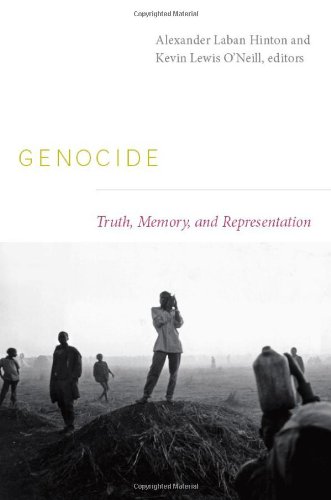
Genocide: Truth, Memory, and Representation (The Cultures and...
Authors:
Not Available
Publisher:
Duke University Press Books
Publication Date:
Not available
ISBN:
082234405X
What happens to people and the societies in which they live after genocide? How are the devastating events remembered on the individual and collective... levels, and how do these memories intersect and diverge as the rulers of postgenocidal states attempt to produce a monolithic “truth” about the past? In this important volume, leading anthropologists consider such questions about the relationship of genocide, truth, memory, and representation in the Balkans, East Timor, Germany, Guatemala, Indonesia, Nigeria, Rwanda, Sudan, and other locales.Specialists on the societies about which they write, these anthropologists draw on ethnographic research to provide on-the-ground analyses of communities in the wake of mass brutality. They investigate how mass violence is described or remembered, and how those representations are altered by the attempts of others, from NGOs to governments, to assert “the truth” about outbreaks of violence. One contributor questions the neutrality of an international group monitoring violence in Sudan and the assumption that such groups are, at worst, benign. Another examines the consequences of how events, victims, and perpetrators are portrayed by the Rwandan government during the annual commemoration of that country’s genocide in 1994. Still another explores the silence around the deaths of between eighty and one hundred thousand people on Bali during Indonesia’s state-sponsored anticommunist violence of 1965–1966, a genocidal period that until recently was rarely referenced in tourist guidebooks, anthropological studies on Bali, or even among the Balinese themselves. Other contributors consider issues of political identity and legitimacy, coping, the media, and “ethnic cleansing.” Genocide: Truth, Memory, and Representation reveals the major contribution that cultural anthropologists can make to the study of genocide.Contributors. Pamela Ballinger, Jennie E. Burnet, Conerly Casey, Elizabeth Drexler, Leslie Dwyer, Alexander Laban Hinton, Sharon E. Hutchinson, Uli Linke, Kevin Lewis O’Neill, Antonius C. G. M. Robben, Debra Rodman, Victoria Sanford

GENOGRAM ANALYTICS SOFTWARE: STUDENT EDITION
Authors:
Not Available
Publisher:
Not available
Publication Date:
Not available
ISBN:
Not available
Genograms: Assessment and Intervention
Authors:
Monica McGoldrick
Publisher:
W W Norton & Co Inc
Publication Date:
Not available
ISBN:
0393702944
Using famous families as case studies, this book explains how to draw, interpret and apply the genogram, a graphic way of organizing information... gathered during a family assessment. It explains how the use of genograms can bring to light a family's history of divorse, suicide, or estrangement, revealing inter-generational patterns that are more than coincidental. Widely used in the training of health and mental health professionals, this work is an introduction to the principles of family systems theory. This edition has been updated and expanded to include developments in genogram use.
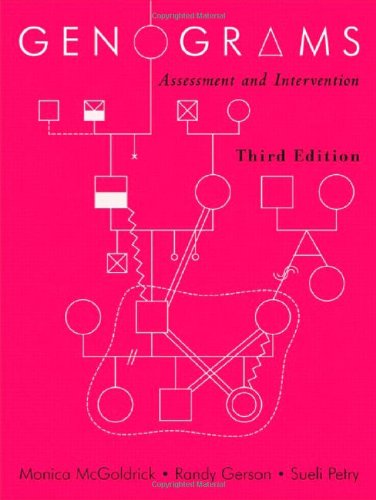
Genograms: Assessment and Intervention (Third Edition) (Norton...
Authors:
Monica McGoldrick
Publisher:
W. W. Norton & Company
Publication Date:
Not available
ISBN:
0393705099
Widely used by both family therapists and all health care professionals, the genogram is a graphic way of organizing the mass of information gathered... during a family assessment and finding patterns in the family system for more targeted treatment.Now updated and expanded in its third edition, and featuring revised genograms for easier reading, reflecting the growing and widespread use of genograms for clinical intervention, this best-selling text provides a standard method for constructing a genogram, doing a genogram interview, and interpreting the results. Genograms of famous families—Sigmund Freud, Woody Allen and Mia Farrow, the Kennedys, Jane Fonda and Ted Turner, Bill Clinton, Princess Diana, the Roosevelts, and Thomas Jefferson, to name a few—bring the text to life, and help to elucidate the principles of family systems theory and systemic interviewing, which form the basis of genogram work. Once these principles have been explained, the authors go on to present the important clinical applications of genograms in both family therapy and family medicine. These applications include the effective assessment of patients’ risk for emotional problems such as anxiety or depression; structural patterns among families such as divorce and remarriage; relationship patterns such as enmeshment, conflicts, and cut-offs; recent and chronic life stressors such as pregnancy, acute illness, poverty, and racism; and family life cycle transitions and developmental crises, among other uses. By providing a fascinating view into the richness of family dynamics, McGoldrick and her coauthors provide an invaluable guide to clinicians for accurately charting a family’s structure, making it easier to scan for potential problems and take proactive steps to utilize resources when necessary. 32-page color insert

Genomes 3
Authors:
T.A. Brown
Publisher:
Garland Science
Publication Date:
Not available
ISBN:
0815341385
Covering molecular genetics from the basics through to genome expression and molecular phylogenetics, Genomes 3 is the latest edition of this pioneering... textbook. Updated to incorporate the recent major advances, Genomes 3 is an invaluable companion for any undergraduate throughout their studies in molecular genetics. Genomes 3 builds on the achievements of the previous two editions by putting genomes, rather than genes, at the centre of molecular genetics teaching. Recognising that molecular biology research was being driven more by genome sequencing and functional analysis than by research into genes, this approach has gathered momentum in recent years.
Genome: The Autobiography of a Species in 23 Chapters
Authors:
Matt Ridley
Publisher:
Harper Perennial
Publication Date:
Not available
ISBN:
0060932902
The genome's been mapped. But what does it mean?Arguably the most significant scientific discoveru of the new century, the mapping of the twenty-three... pairs of chromosomes that make up the human genome raises almost as many questions as it answers. Questions that will profoundly impact the way we think about disease, about longevity, and about free will. Questions that will affect the rest of your life.Genome offers extraordinary insight into the ramifications of this incredible breakthrough. By picking one newly discovered gene from each pair of chromosomes and telling its story, Matt Ridley recounts the history of our species and its ancestors from the dawn of life to the brink of future medicine. From Huntington's disease to cancer, from the applications of gene therapy to the horrors of eugenics, Matt Ridley probes the scientific, philosophical, and moral issues arising as a result of the mapping of the genome. It will help you understand what this scientific milestone means for you, for your children, and for humankind.

Genome: The Autobiography of a Species in 23 Chapters (P.S.)
Authors:
Matt Ridley
Publisher:
Harper Perennial
Publication Date:
Not available
ISBN:
0060894083
The genome's been mapped. But what does it mean? Arguably the most significant scientific discovery of the new century, the mapping of the... twenty-three pairs of chromosomes that make up the human genome raises almost as many questions as it answers. Questions that will profoundly impact the way we think about disease, about longevity, and about free will. Questions that will affect the rest of your life. Genome offers extraordinary insight into the ramifications of this incredible breakthrough. By picking one newly discovered gene from each pair of chromosomes and telling its story, Matt Ridley recounts the history of our species and its ancestors from the dawn of life to the brink of future medicine. From Huntington's disease to cancer, from the applications of gene therapy to the horrors of eugenics, Matt Ridley probes the scientific, philosophical, and moral issues arising as a result of the mapping of the genome. It will help you understand what this scientific milestone means for you, for your children, and for humankind.
 '





