production
/viewbook/list/all/?page=510
/
/static/
None

(ALC) BIOCHEMISTRY + OWL PAC LOOSE LEAF
Authors:
Not Available
Publisher:
Not available
Publication Date:
Not available
ISBN:
Not available
ALC ENVIRONMENT: SCIENCE BEHIND CUSTOM
Authors:
Not Available
Publisher:
Not available
Publication Date:
Not available
ISBN:
Not available
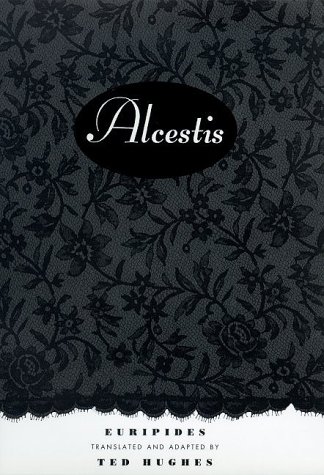
Alcestis: A Play
Authors:
Euripides
Publisher:
Farrar, Straus and Giroux
Publication Date:
Not available
ISBN:
0374527261
In the years before his death at age sixty-eight in 1998, Hughes translated several classical works with great energy and ingenuity. His Tales from Ovid... was called "one of the great works of our century" (Michael Hofmann, The Times, London), his Oresteia of Aeschylus is considered the difinitive version, and his Phèdre was acclaimed on stage in New York as well as London. Hughes's version of Euripides's Alcestis, the last of his translations, has the great brio of those works, and it is a powerful and moving conclusion to the great final phase of Hughes's career. Euripides was, with Aeschylus and Sophocles, one of the greatest of Greek dramatists. Alcestis tells the story of a king's grief for his wife, Alcestis, who has given her young life so that he may live. As translated by Hughes, the story has a distinctly modern sensibility while retaining the spirit of antiquity. It is a profound meditation on human mortality. Ted Hughes's last book of poems, Birthday Letters, won the Whitbread Book of the Year Prize. He was Poet Laureate to Queen Elizabeth II and lived in Devon, England until he died in 1998.
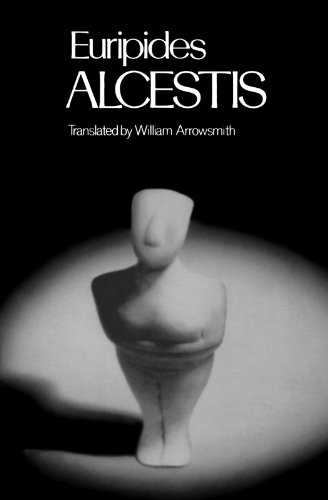
Alcestis (Greek Tragedy in New Translations)
Authors:
Euripides
Publisher:
Oxford University Press, USA
Publication Date:
Not available
ISBN:
0195061667
At once a vigorous translation of one of Euripides' most subtle and witty plays, and a wholly fresh interpretation, this version reveals for the first... time the extraordinary formal beauty and thematic concentration of the Alcestis. William Arrowsmith, eminent classical scholar, translator, and General Editor of this highly praised series, rejects the standard view of the Alcestis as a psychological study of the egotist Admetos and his naive but devoted wife. His translation, instead, presents the play as a drama of human existence-in keeping with the tradition of Greek tragedy-with recognizably human characters who also represent masked embodiments of human conditions. The Alcestis thus becomes a metaphysical tragicomedy in which Admetos, who has heretofore led a life without limitations, learns to "think mortal thoughts." He acquires the knowledge of limits-the acceptance of death as well as the duty to live-which, according to Euripides, makes people meaningfully human and capable of both courage and compassion. This new interpretation compellingly argues that, for Euripides, suffering humanizes, that exemption makes a man selfish and childish, and that only the courage to accept both life and death leads to the realization of one's humanity, and, in the case of Alcestis, to heroism.
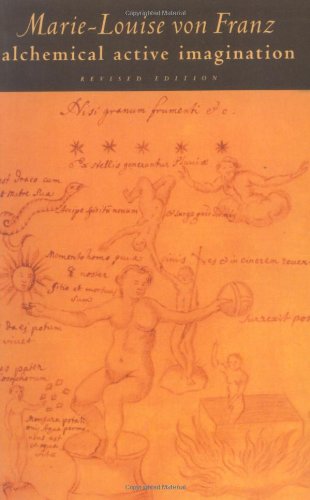
Alchemical Active Imagination: Revised Edition (C. G. Jung...
Authors:
Marie-Louise von Franz
Publisher:
Shambhala
Publication Date:
Not available
ISBN:
0877735891
Although alchemy is popularly regarded as the science that sought to transmute base physical matter, many of the medieval alchemists were more... interested in developing a discipline that would lead to the psychological and spiritual transformation of the individual. C. G. Jung discovered in his study of alchemical texts a symbolic and imaginal language that expressed many of his own insights into psychological processes. In this book, Marie-Louise von Franz examines a text by the sixteenth-century alchemist and physician Gerhard Dorn in order to show the relationship of alchemy to the concepts and techniques of analytical psychology. In particular, she shows that the alchemists practiced a kind of meditation similar to Jung's technique of active imagination, which enables one to dialogue with the unconscious archetypal elements in the psyche. Originally delivered as a series of lectures at the C. G. Jung Institute in Zurich, the book opens therapeutic insights into the relations among spirit, soul, and body in the practice of active imagination.

Alchemies of Distance
Authors:
Caroline Sinavaiana-Gabbard
Publisher:
Subpress/Tinfish/Institute of Pacific Studies
Publication Date:
Not available
ISBN:
1930068107
Poetry. Essay. Asian American Studies. "Sinavaiana-Gabbard draws her imaginative strength and mana from the fertile depths of her Samoan people's... mythologies, past, and wisdom, as well as from the cultural soil of North American and Tibetan Buddhism. Her voice is a new blend of Samoan, American, and widely ranging poetic and philosophical languages. A unique, vibrant, undeniable voice which shapes the now fearlessly, with profound understanding and forgiveness"--Albert Wendt, University of Auckland. Published by Subpress/Tinfish/Institute of Pacific Studies.
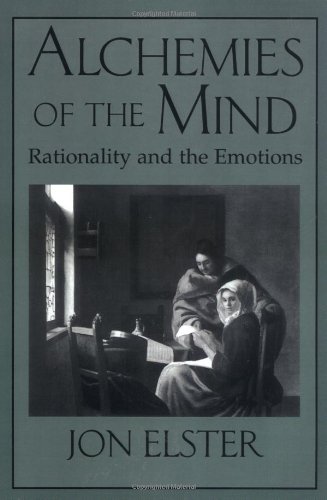
Alchemies of the Mind: Rationality and the Emotions
Authors:
Jon Elster
Publisher:
Cambridge University Press
Publication Date:
Not available
ISBN:
0521644879
Jon Elster has written a comprehensive, wide-ranging book on the emotions in which he considers the full range of theoretical approaches. Drawing on... history, literature, philosophy and psychology Elster presents a complete account of the role of the emotions in human behavior. Combining methodological and theoretical arguments with empirical case studies and written with Elster's customary verve and economy, this book will have a broad appeal to those in philosophy, psychology, economics, political science, as well as literary studies, history, and sociology.
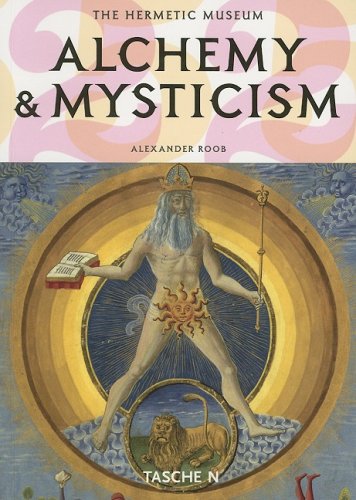
Alchemy & Mysticism: The Hermetic Museum (25th)
Authors:
Alexander Roob
Publisher:
Taschen
Publication Date:
Not available
ISBN:
3822850381
A fantastic journey through the history of esoteric lore: the great work of the alchemists (TASCHEN's 25th anniversary - Special edition) The Hermetic... Museum takes its readers on a magical mystery tour spanning an arc from the mediaeval cosmogram and images of Christian mysticism, through the fascinating world of alchemy to the art of the Romantic era. The enigmatic hieroglyphs of cabbalists, Rosicrucians and freemasons are shown to be closely linked with the early scientific illustrations in the fields of medicine, chemistry, optics and colour theory. The author: Alexander Roob studied painting at the University of Fine Arts, Berlin. From 2000 to 2002, he was a professor at the University of Fine Arts, Hamburg. He has been teaching at the Academy of Fine Arts, Stuttgart since 2002.
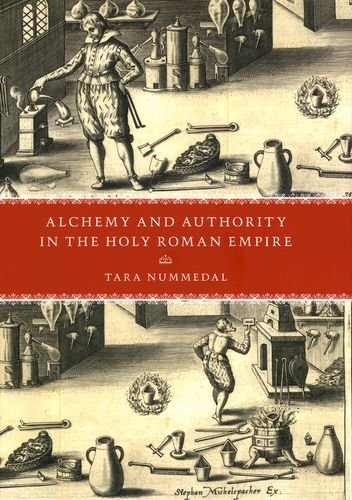
Alchemy and Authority in the Holy Roman Empire
Authors:
Tara Nummedal
Publisher:
University Of Chicago Press
Publication Date:
Not available
ISBN:
0226608565
What distinguished the true alchemist from the fraud? This question animated the lives and labors of the common men—and occasionally women—who made... a living as alchemists in the sixteenth- and seventeenth-century Holy Roman Empire. As purveyors of practical techniques, inventions, and cures, these entrepreneurs were prized by princely patrons, who relied upon alchemists to bolster their political fortunes. At the same time, satirists, artists, and other commentators used the figure of the alchemist as a symbol for Europe’s social and economic ills.Drawing on criminal trial records, contracts, laboratory inventories, satires, and vernacular alchemical treatises, Alchemy and Authority in the Holy Roman Empire situates the everyday alchemists, largely invisible to modern scholars until now, at the center of the development of early modern science and commerce. Reconstructing the workaday world of entrepreneurial alchemists, Tara Nummedal shows how allegations of fraud shaped their practices and prospects. These debates not only reveal enormously diverse understandings of what the “real” alchemy was and who could practice it; they also connect a set of little-known practitioners to the largest questions about commerce, trust, and intellectual authority in early modern Europe.
Alchemy of Race and Rights: Diary of a Law Professor
Authors:
Patricia J. Williams
Publisher:
Harvard University Press
Publication Date:
Not available
ISBN:
0674014715
Patricia Williams is a lawyer and a professor of commercial law, the great-great-granddaughter of a slave and a white southern lawyer. The Alchemy of... Race and Rights is an eloquent autobiographical essay in which the author reflects on the intersection of race, gender, and class. Using the tools of critical literary and legal theory, she sets out her views of contemporary popular culture and current events, from Howard Beach to homelessness, from Tawana Brawley to the law-school classrom, from civil rights to Oprah Winfrey, from Bernhard Goetz to Marth Beth Whitehead. She also traces the workings of "ordinary racism"--everyday occurences, casual, unintended, banal perhaps, but mortifying. Taking up the metaphor of alchemy, Williams casts the law as a mythological text in which the powers of commerce and the Constitution, wealth and poverty, sanity and insanity, wage war across complex and overlapping boundaries of discourse. In deliberately transgressing such boundaries, she persues a path toward racial justice that is, ultimately, transformative. Williams gets to the roots of racism not by fingerpointing but by much gentler methods. Her book is full of anecdote and witness, vivid characters known and observed, trenchant analysis of the law's shortcomings. Only by such an inquiry and such patient phenomenology can we understand racism. The book is deeply moving and not so, finally, just because racism is wrong--we all know that. What we don't know is how to unthink the process that allows racism to persist. THis Williams enables us to see. The result is a testament of considerable beauty, a triumph of moral tactfullness, The result, as the title suggests, is magic.
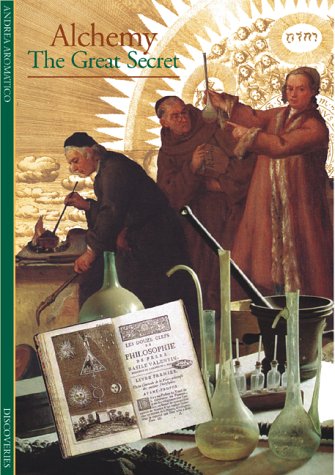
Alchemy: The Great Secret (Abrams Discoveries)
Authors:
Andrea Aromatico
Publisher:
Harry N. Abrams
Publication Date:
Not available
ISBN:
0810928892
Medieval alchemists, forerunners of today's chemists, sought to transmute base metals into gold. This lively illustrated history explores intriguing... aspects of this mix of science, philosophy, art, religion, and magic, whose roots go back to ancient Egypt. 158 illustrations, 109 in full color, 5 x 7"
ALCOHOL & DRUG ABUSE TREATMENT CONTINUM
Authors:
Not Available
Publisher:
Not available
Publication Date:
Not available
ISBN:
Not available
Alcoholics Anonymous 4TH EDITION
Authors:
Alchoholcs Anonymous World Servces
Publisher:
Alcoholics Anonymous World Service,2001
Publication Date:
Not available
ISBN:
1893007170
Alcoholics Anonymous: The Story of How Many Thousands of Men and...
Authors:
Editor
Publisher:
Alcoholics Anonymous World Services
Publication Date:
Not available
ISBN:
1893007162
Alcoholism and Substance Abuse in Diverse Populations
Authors:
Not Available
Publisher:
PRO-ED, Inc.
Publication Date:
Not available
ISBN:
1416404392
Addictions counselors as well as mental health professionals that treat Substance Abuse and addictions will find the book to be an invaluable resource... that will help them to address the many issues that diverse populations bring to treatment. The time when "one approach fits all" in addressing addictive disorders is gone. This book will help the practitioner develop treatment and prevention plans that are specific to the special needs for each diverse population."
 '
'