production
/viewbook/list/all/?page=5121
/
/static/
None
Given Time: I. Counterfeit Money (Vol 1)
Authors:
Jacques Derrida
Publisher:
University Of Chicago Press
Publication Date:
Not available
ISBN:
0226143147
Is giving possible? Is it possible to give without immediately entering into a circle of exchange that turns the gift into a debt to be returned? This... question leads Jacques Derrida to make out an irresolvable paradox at what seems the most fundamental level of the gift's meaning: for the gift to be received as a gift, it must not appear as such, since its mere appearance as gift puts it in the cycle of repayment and debt.Derrida reads the relation of time to gift through a number of texts: Heidegger's Time and Being, Mauss's The Gift, as well as essays by Benveniste and Levi-Strauss that assume Mauss's legacy. It is, however, a short tale by Baudelaire, "Counterfeit Money," that guides Derrida's analyses throughout. At stake in his reading of the tale, to which the second half of this book is devoted, are the conditions of gift and forgiveness as essentially bound up with the movement of dissemination, a concept that Derrida has been working out for many years.For both readers of Baudelaire and students of literary theory, this work will prove indispensable.

GIVES32 + FONER32R + WARLIBERTY
Authors:
Not Available
Publisher:
Not available
Publication Date:
Not available
ISBN:
Not available
Give Them Christ: Preaching His Incarnation, Crucifixion,...
Authors:
Stephen Seamands
Publisher:
IVP Books
Publication Date:
Not available
ISBN:
0830834672
Much preaching today begins with the hearer's "felt needs" and then moves to how Christianity can solve those problems. But this approach often results... in trite Christologies that merely use Jesus as a means to an end or a vehicle for self-improvement. While preachers might not dispense with Christ altogether, other things subtly take center stage and become more important than Christ himself. Pastoral theologian Stephen Seamands issues a stirring call to rediscover the centrality of Christ in preaching. Deftly blending doctrine and praxis, he revitalizes preaching by focusing on five key dimensions of Jesus' work: his incarnation, crucifixion, resurrection, ascension and return. Seamands highlights how preaching Christ crucified and risen speaks profoundly to the deepest dimensions of human existence. Addressing both the "what" and the "so what," this exposition helps church leaders declare afresh that Christ alone is supremely sufficient for Christian faith and practice. Pastors and preachers will find here significant resources for their churches' worship, life together and mission in the world. Become captivated once again by the glory of Christ, and find yourself compelled to proclaim his work anew.
Give Us This Day
Authors:
Sidney Stewart
Publisher:
W. W. Norton & Company
Publication Date:
Not available
ISBN:
0393319210
What happened to the survivors of the infamous Bataan Death March in World War II? In a new edition of this classic account, Sidney Stewart gives one... man's gripping answer.In April 1942, Sidney Stewart, a 21-year-old U.S. Army enlisted man, was captured at Bataan. For nearly three and a half years, until he was liberated by the Russians in Manchuria, he remained a prisoner of war. Here is his account of this long and terrifying captivity. "It is one of the most harrowing and debilitating chronicles that I have read. . . . He describes the ordeal brilliantly; he harbors no resentments apparently, and he has emerged from an inferno of bestiality with utter serenity." — Maxwell Geismar, Saturday Review "An impressive and moving book." — David Dempsey, New York Times "His is no ordinary prisoner-of-war story; better written than most, it contains no tales of swashbuckling defiance. . . . The force of this book is its testimony to the indomitable strength of the human spirit." — Manchester Guardian "The plain narrative of this story would by itself have been fascinating, but this book is far more than a story, it is a work of art." — André Siegfried, Academie Francaise "Sidney Stewart's composed narrative is one of the most noble documents ever penned by a prisoner of war. The companions he writes about remained men to the end, until at last only one man remained; he survived to write this unforgettable, this magnificent story." — George Slocombe, New York Herald Tribune [Paris]
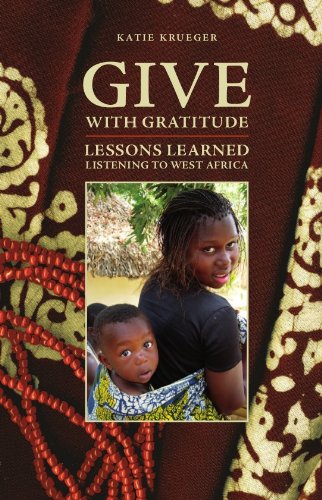
Give with Gratitude: Lessons Learned Listening to West Africa
Authors:
Katie Krueger
Publisher:
Gratice Press LLC
Publication Date:
Not available
ISBN:
0981956203
The uplifting true story of a young woman and her transformational journey into another culture. When 24-year-old Katie Krueger set out from Wisconsin... from Senegal, West Africa, on a Rotary Foundation Ambassadorial Scholarship, she was looking for adventure and an education. She had no idea what a profoundly new world she was entering and how completely her life and belief system would be overturned. Funny, tender, and illuminating, her memoir paints an unforgettable picture of the amazing highs and harrowing lows, bitter homesickness and soaring triumph she experiences as she learns to be at home in a whole new culture. With the help of two other Scholars and their commitment to embody the Rotary motto, "Service Above Self," Katie helps a local school feed the poorest of their students. She reminds us how big dreams and a desire to give back can change the world. Katie brings us along on her life-changing journey, which she tells in a series of stories and lessons learned by listening to West Africa -- and her own heart.

Give Your Speech, Change the World: How To Move Your Audience to...
Authors:
Nick Morgan
Publisher:
Harvard Business Review Press
Publication Date:
Not available
ISBN:
1591397146
This work takes public speaking to a higher level with a new audience-centered approach that combines aspects of ancient Greek rhetorical practice with... proven modern-day communication techniques. It fills a gap in this market with a more sophisticated treatment of public speaking. Most books in this genre are gimmicky, 'tips & tricks' books. Morgan's offers both a more historical treatment of public speaking alongside practical guidelines. 'Kinesthetic' speaking involves actively 'listening' to your audience with your whole body, and is the element of public speaking that moves audiences to action. This book teaches managers of all levels how to successfully use this type of public speaking to engage audiences of any size, intellectually, emotionally, as well as physically.
Giving - 1st Edition/1st Printing
Authors:
Bill Clinton
Publisher:
Alfred A. Knopf
Publication Date:
Not available
ISBN:
0307266745
Here, from Bill Clinton, is a call to action. Giving is an inspiring look at how each of us can change the world. First, it reveals the extraordinary... and innovative efforts now being made by companies and organizations—and by individuals—to solve problems and save lives both “down the street and around the world.” Then it urges us to seek out what each of us, “regardless of income, available time, age, and skills,” can do to help, to give people a chance to live out their dreams.Bill Clinton shares his own experiences and those of other givers, representing a global flood tide of nongovernmental, nonprofit activity. These remarkable stories demonstrate that gifts of time, skills, things, and ideas are as important and effective as contributions of money. From Bill and Melinda Gates to a six-year-old California girl named McKenzie Steiner, who organized and supervised drives to clean up the beach in her community, Clinton introduces us to both well-known and unknown heroes of giving. Among them:Dr. Paul Farmer, who grew up living in the family bus in a trailer park, vowed to devote his life to giving high-quality medical care to the poor and has built innovative public health-care clinics first in Haiti and then in Rwanda;a New York couple, in Africa for a wedding, who visited several schools in Zimbabwe and were appalled by the absence of textbooks and school supplies. They founded their own organization to gather and ship materials to thirty-five schools. After three years, the percentage of seventh-graders who pass reading tests increased from 5 percent to 60 percent;'Oseola McCarty, who after seventy-five years of eking out a living by washing and ironing, gave $150,000 to the University of Southern Mississippi to endow a scholarship fund for African-American students;Andre Agassi, who has created a college preparatory academy in the Las Vegas neighborhood with the city’s highest percentage of at-risk kids. “Tennis was a stepping-stone for me,” says Agassi. “Changing a child’s life is what I always wanted to do”;Heifer International, which gave twelve goats to a Ugandan village. Within a year, Beatrice Biira’s mother had earned enough money selling goat’s milk to pay Beatrice’s school fees and eventually to send all her children to school—and, as required, to pass on a baby goat to another family, thus multiplying the impact of the gift.Clinton writes about men and women who traded in their corporate careers, and the fulfillment they now experience through giving. He writes about energy-efficient practices, about progressive companies going green, about promoting fair wages and decent working conditions around the world. He shows us how one of the most important ways of giving can be an effort to change, improve, or protect a government policy. He outlines what we as individuals can do, the steps we can take, how much we should consider giving, and why our giving is so important.Bill Clinton’s own actions in his post-presidential years have had an enormous impact on the lives of millions. Through his foundation and his work in the aftermath of the Asian tsunami and Hurricane Katrina, he has become an international spokesperson and model for the power of giving.“We all have the capacity to do great things,” President Clinton says. “My hope is that the people and stories in this book will lift spirits, touch hearts, and demonstrate that citizen activism and service can be a powerful agent of change in the world.”
Giving 2.0: Transform Your Giving and Our World
Authors:
Laura Arrillaga-Andreessen
Publisher:
Jossey-Bass
Publication Date:
Not available
ISBN:
1118119401
Gold Medal Winner; Philanthropy, Charities, and Nonprofits; 2012 Axiom Business Book AwardsGiving 2.0 is the ultimate resource for anyone navigating the... seemingly infinite ways one can give. The future of philanthropy is far more than just writing a check, and Giving 2.0 shows how individuals of every age and income level can harness the power of technology, collaboration, innovation, advocacy, and social entrepreneurship to take their giving to the next level and beyond.Major gifts may dominate headlines, but the majority of giving still comes from individual households—ordinary people with extraordinary generosity. Even in 2009, at a time of deep recession, individual giving averaged almost $2,000 per household and drove 82% of the $300 billion donated that same year. Based on her vast experience as a philanthropist, academic, volunteer, and social innovator, Arrillaga-Andreessen shares the most effective techniques she herself pilots and studies and a vast portfolio of lessons learned during her lifetime of giving. Featuring dozens of stories on innovative and powerful methods of how individuals give time, money, and expertise—whether volunteering and fundraising, leveraging technology and social media, starting a giving circle, fund, foundation, or advocacy group, or aspiring to create greater social impact—Giving 2.0 shows readers how they can renew, improve, and expand their giving and reach their fullest potential.A practical, entertaining, and inspiring call to action, Giving 2.0 is an indispensable tool for anyone passionate about creating change in our world.
Giving Academic Presentations (Michigan Series in English for...
Authors:
Susan M. Reinhart
Publisher:
University of Michigan Press/ELT
Publication Date:
Not available
ISBN:
047208884X
Giving Academic Presentations provides guidance on academic-style presentations for ESL students and native speakers. One goal of this text is to make... presenters aware that giving an effective presentation requires mastery of a broad range of skills. Students will learn how to choose an appropriate topic, create effective visuals, and design a speech opening. This textbook provides:*helpful analyses of speeches*examination of major speech types, accompanying organizational strategies, and related language use*tips for improving nonverbal behavior*suggestions for speaker-listener interaction*an analysis of ways to qualify claims and strategies for improving them*opportunities for evaluating one's work and the work of others.

Giving an Account of Oneself
Authors:
Judith P. Butler
Publisher:
Fordham University Press
Publication Date:
Not available
ISBN:
0823225046
What does it mean to lead a moral life?In her first extended study of moral philosophy, Judith Butler offers a provocative outline for a new ethical... practice-one responsive to the need for critical autonomy and grounded in a new sense of the human subject.Butler takes as her starting point one's ability to answer the questions What have I done?and What ought I to do?She shows that these question can be answered only by asking a prior question, Who is this 'I' who is under an obligation to give an account of itself and to act in certain ways?Because I find that I cannot give an account of myself without accounting for the social conditions under which I emerge, ethical reflection requires a turn to social theory.In three powerfully crafted and lucidly written chapters, Butler demonstrates how difficult it is to give an account of oneself, and how this lack of self-transparency and narratibility is crucial to an ethical understanding of the human. In brilliant dialogue with Adorno, Levinas, Foucault, and other thinkers, she eloquently argues the limits, possibilities, and dangers of contemporary ethical thought.Butler offers a critique of the moral self, arguing that the transparent, rational, and continuous ethical subject is an impossible construct that seeks to deny the specificity of what it is to be human. We can know ourselves only incompletely, and only in relation to a broader social world that has always preceded us and already shaped us in ways we cannot grasp. If inevitably we are partially opaque to ourselves, how can giving an account of ourselves define the ethical act? And doesn't an ethical system that holds us impossibly accountable for full self-knowledge and self-consistency inflict a kind of psychic violence, leading to a culture of self-beratement and cruelty? How does the turn to social theory offer us a chance to understand the specifically social character of our own unknowingness about ourselves?In this invaluable book, by recasting ethics as a project in which being ethical means becoming critical of norms under which we are asked to act, but which we can never fully choose, Butler illuminates what it means for us as fallible creaturesto create and share an ethics of vulnerability, humility, and ethical responsiveness. Judtith Butler is the Maxine Elliot Professor of Rhetoric and Comparative Literature at the University of California, Berkeley. The most recent of her books are Precarious Life: The Power of Mourning and Violence and Undoing Gender.
Giving and Taking Help
Authors:
Alan Keith-Lucas
Publisher:
North Amer Assn of
Publication Date:
Not available
ISBN:
0962363456
Giving and Taking Help is a book which examines what is involved in the helping process in social work - giving and taking help. It shows how all good... helping is characterized by three fundamental dimension - reality (what we're up against), empathy (an act of the loving imagination), and support (I am here to help you if you want me and can use me). Giving and Taking Help draws a strong contrast between helping and controlling. It recognizes the role of choice and responsibility and that helping is not preventing choices or shielding from the consequences of choices.
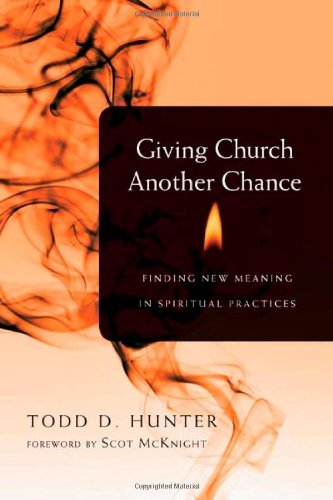
Giving Church Another Chance: Finding New Meaning in Spiritual...
Authors:
Todd D. Hunter
Publisher:
IVP Books
Publication Date:
Not available
ISBN:
0830837485
2011 Golden Canon Leadership Book Award winner! Everybody wants to be spiritual. But nobody wants to be religious. Everybody is looking for a rich... spiritual life. But nobody is looking to church. As a pastor, Todd Hunter found himself disillusioned, burned out and needing to drop out of traditional forms of church. He experimented with house churches and other options but was still dissatisfied. Eventually he found himself sneaking off to worship services on Sunday mornings with surprising results. What did the historic spiritual practices of church do for him? How did they lead to a life of centered peace, chart a path to simplicity and cause him to reach out to others while focusing on the glory of God? Walk with Hunter on this journey to find spiritual riches in a surprising place. You might just give church another chance.
Giving Feedback: Expert Solutions to Everyday Challenges (Pocket...
Authors:
Not Available
Publisher:
Harvard Business Review Press
Publication Date:
Not available
ISBN:
142210348X
Good feedback is essential to helping employees perform better at work. It lets people know when they are meeting or exceeding expectations, and when... they need to get back on the right track. This practical guide shows managers how to develop and refine this necessary skill.

Giving Glory To God Appalachia: Worship Practices Six Baptist...
Authors:
Howard Dorgan
Publisher:
Univ Tennessee Press
Publication Date:
Not available
ISBN:
0870496662
Contemporary artists have often clashed with conservative American evangelicals in recent years, giving the impression that art and religion are... fundamentally at odds. Yet historically, artistic images have played a profound role in American religious life. This superb collection of essays, with its unique assembly of images, challenges the apparent tension between religion and the arts by illustrating and investigating their long-standing and intriguing relationship from the early nineteenth century to the present day. The essays explore such varied topics as Sioux Sun Dance artifacts and paintings, American Jewish New Year postcards, the New Mexican santos tradition, roadside shrines, images of journey in African American pictorial traditions, the public display of religion, and the religious use of nineteenth-century technologies of mass reproduction.

Giving It Some Thought: Cases for Early Childhood Practice (Naeyc...
Authors:
Muriel K. Rand
Publisher:
Natl Assn for the Education
Publication Date:
Not available
ISBN:
0935989943
Dance, Turn, Hop, Learn! is a sourcebook for early childhood educators who are interested in adding a movement component to their curriculum. The book... includes thirty-eight fun and creative movement lessons built around basic early childhood themes and learning standards.
 '





